Mouthwashing: Horror on a Freighter Going Nowhere
Wrong Organ's three hours of workplace dread
Contents
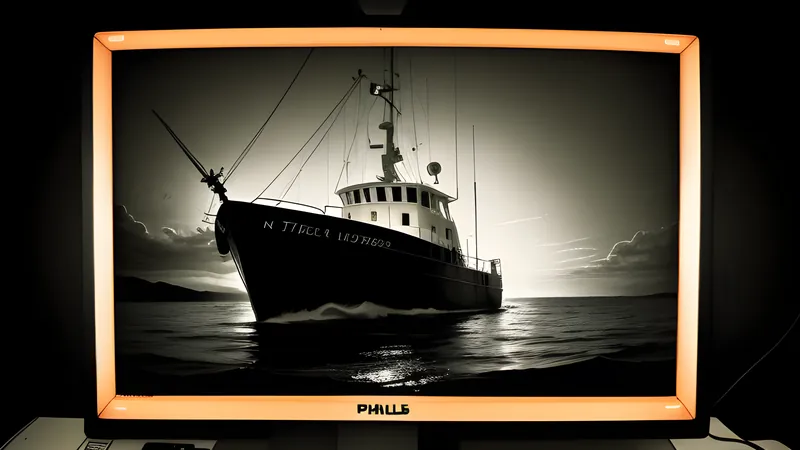
The Tulpar is a freight ship crewed by five people, and its cargo is mouthwash. Pallets of it, being hauled across a lot of empty space by a haulage company called Pony Express, because a logistics decision somewhere required it. The ship crashes in the opening minutes. Nobody is coming.
Mouthwashing, from the small team at Wrong Organ and published by Critical Reflex, came out on PC on 26 September 2024 and takes about three hours. It is the most efficient horror game I have played in years, and the efficiency is the whole design rather than an accident of budget.
Three hours is a structural decision
Horror has a well-documented decay curve. The first hour of any horror game is the good one, because you do not yet know the rules; by hour six you have learned the monster’s aggro radius and you are playing a stealth game with a costume on. Alien: Isolation, which I admire enormously, spends its last third fighting this and losing. The dread converts into competence, and competence is the opposite of fear.
Wrong Organ’s answer is to finish before the conversion happens. Three hours is long enough to learn the Tulpar’s geography and short enough that you never master it. You are kept permanently in the first act’s emotional register — the one where you are still working out what kind of thing this is — and then the game ends while you are still in it.
That decision cascades through everything else. There is no combat, no inventory management worth the name, no crafting, none of the systems that games reach for when they need to fill hours they have already sold. Mouthwashing has almost no verbs. You walk, you look, you interact when the game lets you. The absence is load-bearing: a game with no way to fight back has no route to competence, and therefore no route out of dread.
The ship is the timeline
The Tulpar is small. You will walk its length dozens of times, and this is where the design does its cleverest work.
The game cuts between before the crash and after it, and it uses the same corridors for both. The bridge you crossed as a functioning workplace is the bridge you cross as a tomb. Because you have physically walked it in both states, the comparison is stored in your legs rather than your head. Wrong Organ never has to tell you what has been lost, because you have the muscle memory of the version where it was fine.
This is spatial storytelling of a very old-fashioned kind, and it is enormously more effective than the audio-log approach that swallowed the genre after BioShock. A log is a thing a designer hands you. A corridor you have walked eighty times is a thing you own.
The crew are drawn with the same economy. Curly is the captain, wrapped in bandages after the crash and unable to speak. Jimmy is the co-pilot who is now in charge. Anya is the nurse. Swansea is the engineer, older than the rest, with the tired competence of a man who has watched several companies do this before. Daisuke is the intern, young and cheerful and the only person on board who seems to like his job. Five people, three hours, and every one of them lands. The writing gets there by giving each of them one thing they want and no way to ask for it.
The low-poly is an argument
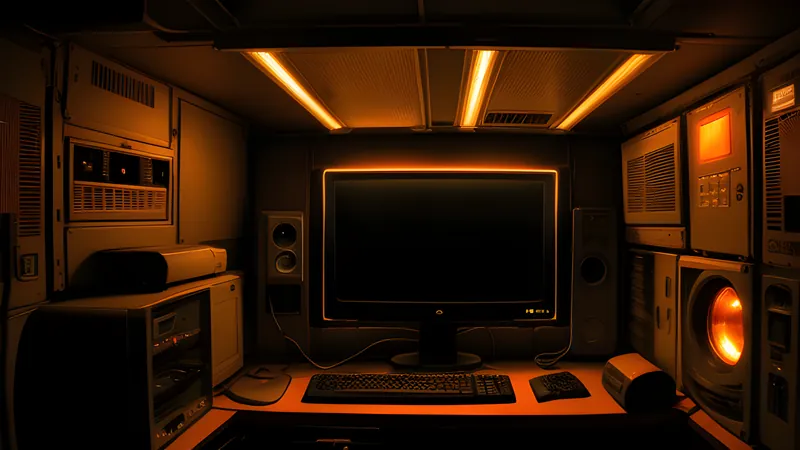
Mouthwashing renders in a deliberately PS1-ish register: chunky polygons, texture warp, faces built from about nine triangles. The lazy version of this in 2024 is a nostalgia filter slapped over modern geometry, and there is a lot of it about.
Here it is doing something specific. Low-poly faces cannot emote precisely, which means the game must convey a state of mind through framing, sound and behaviour instead — and the player’s brain, given a face that will not resolve, fills in the worst available reading. Horror has known this since the Nostromo’s corridors were dark because the lighting rig was cheap. Ambiguity is free fuel.
It also solves the gore problem. A high-fidelity rendering of what has happened to Curly would be an endurance test and a certification headache. At this resolution it is a suggestion you cannot look away from, which is worse. Crow Country uses the same era for warmth and toyishness; Mouthwashing uses it to withhold.
What it is actually about
The horror here is administrative.
The mouthwash is the thesis. Five human lives are on that ship because a company decided the mouthwash needed to be somewhere else. When the crash happens, the cargo is revealed to be as worthless as it sounds, and the crew are left with a finite larder and a rescue that has no commercial reason to be dispatched. Swansea eventually drinks the stuff, because it contains alcohol, and that image — a man drinking the cargo that killed him — is the whole game in a frame.
What Wrong Organ understand, and what most workplace horror misses, is that the company never appears. There is no evil executive, no memo from the villain, no boss fight with a CEO. There is a haulage contract and five people inside it. The pressure comes from the shape of the situation, and the situation is entirely ordinary. This is where the real ancestor lives: the Nostromo of Alien (1979) was a working ship with a crew arguing about bonuses, and the reason that film has outlived a thousand monster pictures is that the monster was the second-worst thing on board. Mouthwashing skips the first monster entirely and keeps the bonuses.
The other ancestor is closer to home. This is a game about being trapped in a small space with people whose jobs are collapsing around them, and it belongs alongside Still Wakes the Deep as evidence that the current wave of horror has worked out that labour is scarier than ghosts.
Where it fights itself
Two honest charges.
The non-linear structure is doing heavy lifting, and the cuts between timelines occasionally land as authorial rather than motivated — you can feel the writer choosing the moment to withhold. Most of the time this is fine, because the withholding is the point. Once or twice it reads as a magic trick rather than a choice.
And the interactivity is thin enough that a certain kind of player will reasonably ask what the game is doing that a short film would not. The answer is the corridors, and I think the answer holds — but it is a real question and it deserves a real answer rather than a shrug about “walking simulators”.
The verdict
Mouthwashing is three hours long, costs less than a takeaway, and will sit in your head for a fortnight. It works because every element of it is subordinated to one idea: keep the player in the state of not-yet-knowing, and then stop. There is no padding to defend, because there is nothing here that is not the point.
Play it on PC, in one sitting, at night, without reading anything else about it first — the discourse around this game gives away more than it realises. Then read Signalis for the other end of the same argument, where the low-poly frame is used for grief rather than dread.
Spoilers below
Jimmy is the reason to play this twice.
The game is narrated, structurally, by the crew member with the strongest possible motive to shape what you see. Jimmy caused the crash deliberately. Jimmy assaulted Anya. Curly, the captain, knew about the second thing and handled it by doing nothing at all — which is why the game’s most disturbing image is a man swaddled in bandages who cannot speak, being kept alive by the person he failed to stop. Curly is punished with a fate the game presents as unbearable, and it is unbearable precisely because you are asked to hold his complicity and his suffering at once.
The birthday sequence is what everyone remembers, and it is doing more than shocking you. Jimmy has spent the entire game constructing a version of events in which he is a man coping heroically with someone else’s disaster, and the cake is that fiction reaching its logical end: care and consumption performed as the same gesture. He is looking after Curly. He is also eating him.
On a second run, the earlier timeline stops reading as a workplace and starts reading as evidence. Every cheerful exchange has a second meaning. Daisuke’s enthusiasm becomes almost unwatchable, because you know what the ship is going to do with a person who is easy to like. And Anya’s scenes acquire a fury that the first playthrough has no way to register, because she is the only person on board who knows exactly what is happening and has already learned that saying so achieves nothing.
That is the trick, and it is a genuine one. The reveal does not rewrite the game. It rewrites you.
Related Content