Micro Machines: The Top-Down Racer That Fit on a Kitchen Table
Codemasters shrank the racetrack to a breakfast bowl and made the elimination rule the whole point
Contents
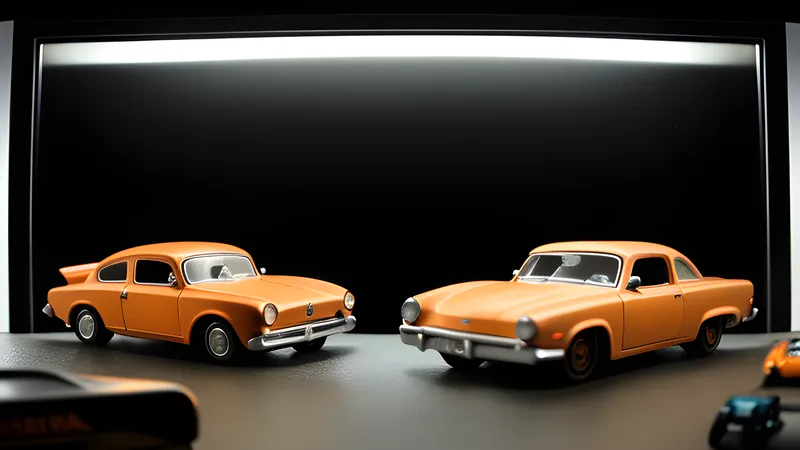
Codemasters released Micro Machines in 1991, built around a licence for the miniature toy-car line of the same name, and the smartest decision in the entire game is the one that has nothing to do with cars at all: scale. Every track in Micro Machines is a household surface rendered as a landscape — a kitchen table scattered with cereal bowls and cutlery, a garden lawn with hosepipes coiled into hairpin turns, a billiard table where the pockets are genuine hazards. Racing tiny cars across the objects a full-size person would barely register turns mundane domestic clutter into a genuinely inventive set of race tracks, and it gives Micro Machines a visual identity no full-scale racing game of the period could match, purely by shrinking the frame of reference rather than building anything technically remarkable.
The elimination rule that changes what a race is
The single mechanic that defines Micro Machines, more than the toy-scale settings or the top-down view, is its elimination rule: fall behind the screen’s leading edge by more than a set distance and your car is instantly destroyed, out of the race on the spot. That’s a genuinely unusual way to define a racing game’s failure state. Most racers punish a slow lap with a worse finishing position; Micro Machines punishes it with immediate removal, which means every single moment of a race carries the same stakes a normal racing game reserves for the final corner. There’s no comfortable mid-pack cruising, no lapped-but-still-racing status to fall back on. Fall too far behind once and the race is simply over for you, and that rule alone is what turns a game about racing toy cars around a table into something with real, constant tension.
That elimination rule does double duty as the game’s camera-management solution, and it’s worth being precise about why that matters. A split-screen top-down racer with multiple simultaneous cars has an inherent problem: how do you keep every car visible and readable on screen without the view becoming useless the moment the pack spreads out? Micro Machines’ answer is to simply never let the pack spread out past a fixed tolerance, because falling outside that tolerance ends the race for whoever fell behind. The elimination rule doubles as the reason the camera never has to solve a problem it would otherwise be unable to solve gracefully, working well past a difficulty mechanic bolted onto the racing, and recognising that the punishment mechanic and the technical camera constraint are the same design decision is the key to understanding why Micro Machines feels so tightly wound compared to a normal racer’s more forgiving pacing.
Split-screen as the whole social contract
Micro Machines was built from the ground up around split-screen multiplayer, up to four players simultaneously on later versions, and the elimination rule turns that split-screen format into something closer to a party game than a conventional racing sim. Falling behind in a four-player split-screen race doesn’t just cost a position, it removes your screen entirely, watching from the sidelines while your friends finish without you — a genuinely harsh social consequence for a racing game to build in, and one that gave Micro Machines a reputation as a game people specifically remember shouting at each other over rather than quietly enjoying alone. That reputation is earned: a shrinking screen that punishes hesitation in real time, watched by the exact people you’re losing to, produces a kind of table-side tension a solo time-trial mode never could.
The vehicle roster leans into that same party-game energy rather than pursuing racing-sim realism. Sports cars share track time with tanks, speedboats crossing a paddling pool, and helicopters navigating a windowsill, each handling distinctly enough that a track’s design has to account for genuinely different vehicle physics rather than reskinning the same car model. Stunt Car Racer, released a few years earlier, chased a completely different kind of racing tension built on physical weight and momentum over a genuine 3D track; Micro Machines went the opposite direction, treating the racing itself as a vehicle for chaos and household-scale spectacle rather than a simulation to be respected on its own terms.
A different answer to a genre-old problem
Split-screen racing wasn’t new when Micro Machines arrived — Pitstop II had already worked out how to keep two simultaneous racers readable years earlier, and its answer was to keep the racing itself relatively conventional, trusting a divided screen and a genuine pit-crew management layer to carry the tension. Micro Machines took the opposite route: rather than trusting split-screen alone to generate stakes, it built an elimination rule that made falling behind catastrophic, and stacked a completely novel scale gimmick on top to make sure every one of those elimination-adjacent moments had something visually inventive happening around it. Both games solved the fundamental problem of a racing game — how do you make a screen with more than one car on it consistently readable and consistently tense — but they solved it from opposite ends, one through mechanical realism and pit management, the other through toy-scale spectacle and a punishing camera rule.
Arcade conversions of full-scale racers struggled with a related problem that Micro Machines sidestepped entirely by never attempting realism in the first place. Out Run’s C64 conversion had to reproduce a genuine sense of speed and road-scale scenery on hardware that simply couldn’t manage it convincingly, and the compromise showed. Micro Machines never invited that comparison, because a toy car crossing a kitchen table was never trying to simulate a real road in the first place — the scale gimmick wasn’t just a visual novelty, it was a genuine escape from a technical problem that had dogged the wider racing genre on home hardware for most of the previous decade.
Beyond the standard elimination races, Micro Machines built in battle-mode variants that dropped the racing framing entirely in favour of direct confrontation — one variant has players trying to knock rivals off the same shrunk household surface rather than simply outrun them, turning the split-screen elimination tension into something closer to a demolition contest than a race. That mode swap mattered for the same reason the vehicle roster’s variety mattered: it gave a game built for repeat, shouting-match multiplayer sessions more than one way to generate a satisfying finish, rather than asking four players sitting round the same console to run the identical elimination-race structure every single time.
What the scale trick actually solved
It’s worth being honest about why the toy-car premise mattered beyond its visual novelty. A conventional top-down racing game, rendered at a realistic road scale, has a fairly limited palette of visually distinct track types — city street, mountain road, desert highway, the genre’s usual rotation. Shrinking the scale down to household objects handed Codemasters’s designers an enormous, genuinely fresh catalogue of hazards and track shapes that a full-scale racing game had no equivalent access to: a coiled hosepipe reads as a natural hairpin, a row of upturned teacups becomes a slalom, a billiard table’s felt becomes a frictionless surface unlike anything a normal road track offers. That’s the real design payoff of the toy-scale conceit, and it’s why Micro Machines’ tracks still feel inventive in a way a lot of period racing games, built at ordinary scale, simply don’t.
That inventiveness scaled with Codemasters’s own confidence across the game’s sequels, which kept mining new household environments — workshops, snooker halls, playgrounds — long after a lesser franchise would have exhausted the joke. The consistency of that expansion across multiple entries is itself evidence the original scale trick wasn’t a one-off gimmick that happened to work, but a genuinely reusable design principle the studio kept extracting fresh track ideas from for years afterward.
Spoilers below
The later tracks push the household-scale premise into genuinely hostile territory once the game trusts players to have learned the elimination rule’s rhythm — a garden shed level with power tools as moving hazards, and a bathroom level where a running tap becomes a genuine flood risk to any car that lingers near it too long, both escalate the “ordinary object as racing hazard” idea from clever staging into something closer to an obstacle course actively trying to kill you. The game’s final circuits stack multiple hazard types from earlier tracks together rather than introducing wholly new ones, which is a legitimate late-game test of whether a player has actually internalised every surface’s specific quirks rather than just the most recent one learned.
The verdict on Micro Machines, revisited now, is that its lasting appeal was never really about the racing mechanics in isolation — plenty of top-down racers of the period had comparable handling models. What made it distinct was recognising that shrinking the world to toy-car scale solved two problems simultaneously: it gave the track design an inexhaustible, genuinely novel source of hazards, and it justified an elimination rule harsh enough to make split-screen chaos feel like the entire point rather than an afterthought bolted onto a conventional racer. If you want a racing game built on a completely different kind of tension, one measured in physical weight and a genuine drop rather than household-scale spectacle, Stunt Car Racer is the next stop.
Related Content