Manor Lords: the medieval city-builder everyone wishlisted
One developer's burgage plots became the argument against the genre's grid
Contents
Manor Lords is being built by one person — Greg Styczeń, working under the name Slavic Magic and publishing through Hooded Horse — and as of this writing it still hasn’t had a full release. That hasn’t stopped it becoming one of the most wishlisted strategy games on Steam, riding almost entirely on trailer footage and a single Steam Next Fest demo released in June 2023. The engine choice is notable in its own right: Unreal Engine is a comparatively unusual foundation for a city-builder, a genre that more often runs on custom in-house engines tuned for simulating thousands of individual agents cheaply, and part of the demo’s technical interest was seeing whether an engine built primarily for rendering fidelity could still support a settlement simulation running hundreds of independently pathfinding villagers without buckling. It’s worth asking why a game nobody outside a demo slot has actually played has generated that much anticipation, because the answer isn’t hype for its own sake. It’s that Manor Lords is promising to fix a specific, long-standing frustration with the city-builder genre, and the promise is specific enough that players can evaluate it from footage alone.
It’s worth being precise about what “wishlisted” actually signals in a marketplace as crowded as Steam’s strategy section, because the word gets thrown around loosely enough to mean almost nothing. A wishlist add is a low-friction gesture — a single click, no financial commitment, no guarantee of an eventual purchase — and plenty of heavily wishlisted games have gone on to underwhelm on release once the gap between trailer promise and shipped simulation became apparent to players who’d only ever seen curated footage. What makes Manor Lords a more interesting case study than the average pre-release hype cycle is that the specific claim driving the wishlist momentum — organic, terrain-responsive settlement growth instead of a grid — is one a demo build can actually demonstrate or fail to demonstrate, rather than the vaguer aesthetic and vibes-based promises most trailers lean on.
The grid is the thing being argued with
Every mainstream city-builder since SimCity has organised its towns around a grid, or something close enough to one that the underlying logic is the same: roads are placed on a lattice, zones snap to that lattice, and a town’s shape is fundamentally a function of how efficiently you’ve tiled the available space. It’s an efficient system to simulate and a legible one to build against, and it’s also the reason city-builder towns tend to look like city-builder towns rather than like the organic, road-follows-the-land settlements a genuinely pre-industrial civilisation would have produced. Even a game as well-regarded as Cities: Skylines is, underneath its excellent traffic simulation, still a grid-and-zone game — the road curves are freer than most predecessors, but the underlying build logic is still “place a road, then place zoned plots along it.”
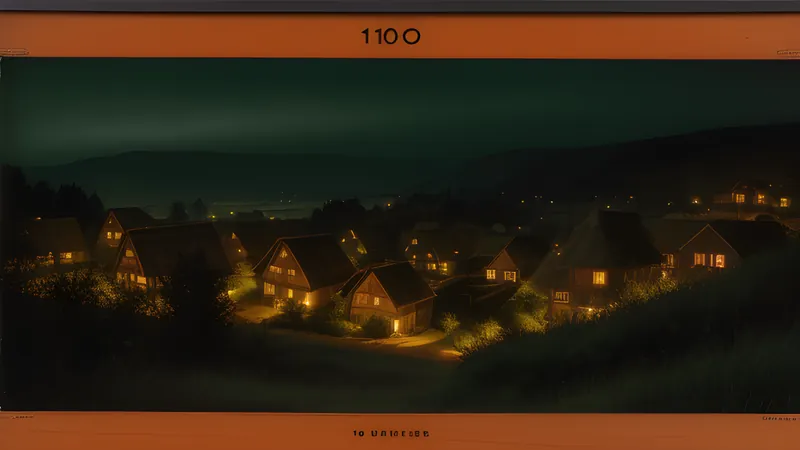
Manor Lords is built around a different unit: the burgage plot, a long, narrow strip of land running back from a road frontage, which is how actual medieval European towns were organised — ribbons of private land fronting a street rather than a grid of uniform blocks, deep enough that a household could keep a house, a garden, and small-scale production on the same strip. In Manor Lords, those plots aren’t fixed-size templates; a burgage plot can be extended backward as a family’s needs grow, converted to add a specific production building — a tannery extension, a bakery extension — without the player laying down a separate zoned building elsewhere on the map. The town that results looks like it grew there, roads bending around terrain rather than terrain being flattened to fit the roads, because the terrain itself is generated from real elevation data rather than a hand-authored flat build-plate, giving each map genuine, non-repeating topography for a settlement to actually respond to.
The June 2023 Steam Next Fest demo is the specific evidence worth dwelling on, because it’s the one hands-on data point separating this from a purely trailer-driven anticipation cycle. Players who spent time with that build could found a settlement, watch burgage plots reshape as households expanded them, and lay out roads that genuinely bent around hills and waterways rather than snapping to an invisible lattice — the demo was time-limited and covered only early-game settlement growth rather than the full political or military layer, but it was enough for players and outlets covering the demo to independently confirm that the organic-plot claims in prior trailers weren’t purely a marketing framing. That’s a meaningfully different situation from most heavily wishlisted, unreleased strategy games, where the entire case for the game rests on cinematic trailers a publisher fully controls the framing of.
What the promise is actually asking players to trust
That’s a genuinely different pitch from most of the genre, and it’s also the reason the wishlist enthusiasm reads as more specific than typical pre-release hype. Players aren’t responding to a vague “beautiful medieval village” aesthetic pitch — plenty of city-builders have shipped attractive medieval skins over a grid-based system underneath. They’re responding to footage that shows organic settlement growth as an actual mechanical output, not a cosmetic layer, which is a claim that’s much easier to fake in a trailer than to deliver in a shipping simulation. The demo build shown at Next Fest gave enough hands-on evidence — plots genuinely reshaping around terrain, roads genuinely following elevation rather than snapping to an invisible lattice — that the wishlist momentum reads as informed rather than blind.
The game folds a second system into that promise: real-time tactical battles fought on the same map as the settlement, rather than an abstracted combat resolution the way most city-builders handle conflict, if they model it at all. That’s a harder claim to evaluate from a demo built around peacetime settlement growth, and it’s the part of Manor Lords’s pitch that carries the most unproven risk — a solo developer building a competent settlement simulation is one achievement; the same developer also building tactical battles that hold up against a genre where Total War has spent two decades refining exactly that problem is a second, much larger one, and it’s not yet possible to say from public material how that half of the game will land.
The precedent that made a solo developer’s promise credible
Manor Lords isn’t the first time a single developer has built enough credibility to challenge a genre dominated by full studios. Banished, released in 2014 by the one-person outfit Shining Rock Software, built by developer Luke Hodorowicz working largely alone, made the same essentially unlikely case a decade earlier: a small-scale, mechanically dense settlement simulation with genuine resource scarcity and no safety net, built without a publisher’s marketing machine behind it, that found a substantial audience purely on the strength of the systems underneath it. Manor Lords is following a version of that same trajectory at a larger scale and with more visual ambition, and the wishlist enthusiasm around it is at least partly informed by that precedent — the genre has real, recent proof that a small team can out-design a larger studio’s city-builder when the underlying simulation is doing something the bigger studios haven’t bothered to attempt.
That precedent matters for calibrating expectations too. Banished’s own limitation was scope: a tightly balanced survival-economy loop that some players found thin once its central challenge had been solved a few times over. Manor Lords is reaching for something broader — settlement growth, regional trade, and real-time battles all in the same package — which raises the stakes on whether a comparably small team can sustain that breadth without any one system feeling underbuilt next to the others. The organic-plot city-building half of that promise has already been demonstrated convincingly enough to build a wishlist following on. The rest of it is still, as of this piece, a promise rather than a delivered result.
The lineage this is actually descended from
The instinct to simulate an individual, lived-in settlement rather than an abstracted grid of production tiles has surfaced in strategy gaming before, though it has rarely been the load-bearing pitch of a city-builder specifically. Little Computer People, the Commodore 64 release that modelled a single simulated household back in 1985, ran on the same underlying conviction that a system should feel inhabited rather than merely operated, just at a scale of one resident instead of a town. Manor Lords is applying that same “make it feel lived-in rather than administered” instinct to full settlement-scale simulation, and the reason it’s captured attention before release is that a solo developer betting an entire game on that conviction, rather than treating it as an aesthetic flourish over a conventional zoning system, is a rarer thing than the genre’s marketing usually promises.
What the trade layer is promising underneath the plots
Beyond the visible plot-and-terrain system, Manor Lords is also pitching a regional production-and-trade model more granular than most city-builders attempt: individual burgage households produce specific goods based on the crops or resources their extended plot backs onto, surplus goods move to a market square for sale or trade rather than vanishing into an abstracted city-wide resource pool, and a nearby region’s available trade goods shape what a settlement can realistically specialise in producing. That’s a meaningfully different economic model from the “global stockpile” approach most city-builders use, where a resource produced anywhere on the map is instantly available everywhere else in the same city. A trade-and-transport layer that has to be modelled explicitly, rather than assumed away, is exactly the kind of system that tends to reveal whether a small team’s ambitions have outpaced its ability to balance them, and it’s the piece of the pitch that’s had the least public hands-on demonstration relative to the settlement-growth half.
Whether the tactical-battle half of the game closes that gap as convincingly as the settlement half already has is the open question the wishlist number can’t answer. What it can answer is that a genuinely different structural idea — plots instead of grids, terrain that shapes the town rather than the other way round — was enough to build an audience on trailers and one demo alone, in a genre that had mostly stopped asking players to expect that much difference from the format at all.
Related Content