Lorelei and the Laser Eyes: The Puzzle Box With a Memory
Simogo built a fifteen-hour labyrinth in black, white and red, and then refused to take a single note for you
Contents
About six hours into Lorelei and the Laser Eyes I got up, went to the kitchen drawer, and came back with a pad and a biro. I hadn’t done that for a game in a very long time — long enough that the gesture felt archaeological. The pad filled up. By the end it had a page of four-digit numbers, a rough map of a hotel’s ground floor, two dates I could not stop seeing, and a doodle of a hedge maze with an arrow and the word WHY.
Simogo’s game, out on 16 May 2024 for Nintendo Switch and PC and published by Annapurna Interactive, is a fifteen-hour puzzle box that has made one enormous, deliberate, slightly rude decision: it will not remember anything on your behalf. That decision is the design. Everything else is decoration on top of it, admittedly some of the most beautiful decoration anyone shipped that year.
The invitation, spoiler-free
It is 1963. A woman is invited to a hotel in central Europe by a filmmaker named Renzo Nero, who wants her for a project he is not in a hurry to explain. The hotel is called the Letztes Jahr — Last Year — and if you have seen the Alain Resnais film that name is nodding at, you will know roughly what kind of trouble you are in before you have opened a single door.
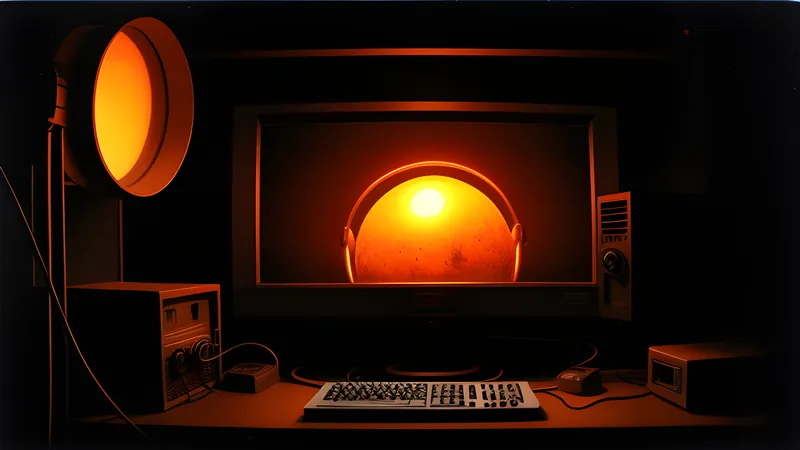
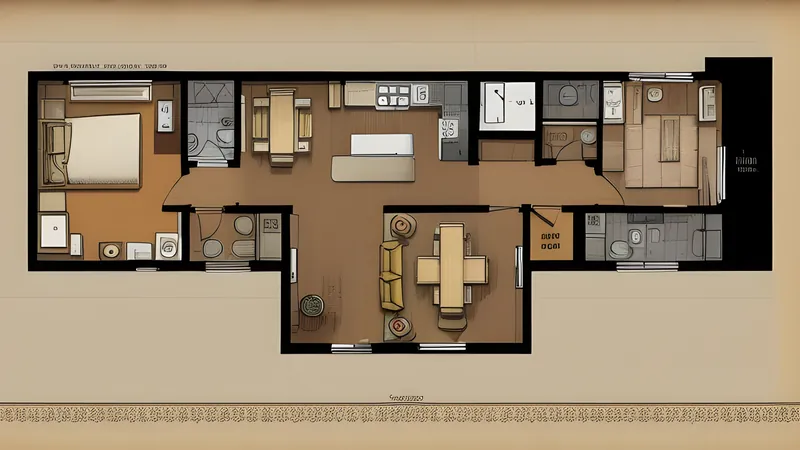
Inside, the place is a museum of itself. Rooms hold documents, exhibits, film equipment, correspondence, ledgers. There are locked doors with numeric keypads and locked doors with stranger requirements. There is a maze outside. There are machines running crude, chunky little programs that feel decades older than the hotel’s own fiction. And there is an escalating suspicion, gathering across hours, that the building is a single object with a single lock on it.
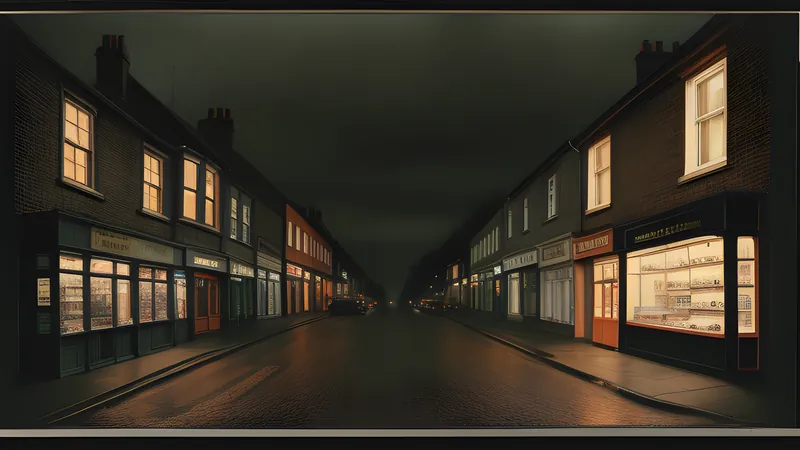
The presentation is black, white and one shade of red, rendered with fixed camera angles and a deliberately coarse resolution that makes a corridor look like a woodcut with a light on in it. It is the best-looking game Simogo has made, which for the studio behind Year Walk, Device 6 and Sayonara Wild Hearts is a genuine claim.
The mechanic is your notebook
Here is the systems read, and it is short, because the whole thing rests on one refusal.
Modern adventure design has spent fifteen years quietly assuming responsibility for your attention. You find a code; the game logs it. You find a clue; a journal entry appears, timestamped, cross-referenced, filed under the correct case. Some games go further and grey out the puzzle you’ve already got the answer to. The intent is kindness. The effect is that you stop holding anything in your head, because you have been trained — correctly, by the interface — that holding things is somebody else’s job.
Lorelei keeps a notebook. You can call it up. It contains almost nothing you would call a solution. It has a scattering of noted material and a great deal of white space, and the white space is deliberate: it is the exact shape of what the game has decided you should be carrying yourself.
So you carry it. You read a plaque in the east wing in hour three and use what it said in hour eleven, and the reason you can is that the plaque went into you rather than into a menu. Simogo understood something that a decade of quality-of-life features has obscured: the feeling people describe as “this game respects my intelligence” is usually the feeling of having been permitted to store something.
And the payoff is physical. When a door opens because you remembered a number from a room you left four hours ago, the sensation in your chest is your own memory working, which the game has arranged to happen and then stepped politely out of the way of. A solved puzzle feels like a solved puzzle. This feels like being handed proof that you still have the equipment.
The real ancestor of this is the code wheel
Everyone will tell you the ancestors are Myst and The Witness, and they’re in the family. But I loaded games off tape into a C64 when the industry’s answer to piracy was to make the game unplayable without the paper that came in the box, and Lorelei is descended from that far more directly than from anything Cyan built.
The code wheel, the manual lookup, the dark-red-on-black page you had to hold under a lamp: those were anti-copying measures, cynical in origin, and they had a completely accidental side effect. They put part of the game outside the machine. The desk you played at became part of the apparatus. You had stuff — a pad, a manual, a wheel — and the fiction leaked onto it.
That vanished, for good reasons, and what replaced it was the journal. The journal is more convenient and it is a smaller experience, because it moved the whole game back inside the box.
Lorelei puts it back on the desk, by choice this time, with no cynical motive at all. And because it’s a choice rather than a defence against piracy, it can be designed: the information you need to externalise is metered, the puzzles that depend on recall are placed at distances that a human memory can actually span, and nothing in the fifteen hours ever requires you to have transcribed something that wasn’t obviously worth transcribing. That last part is the craft. Plenty of games make you take notes. This one is fair about it.
Two other things are worth flagging for anyone who cares about how the parts fit. The camera is fixed, which is a survival-horror inheritance, and it functions here the way it did in 1996: the frame is chosen, so the frame is a statement, so an object placed in the corner of a composed shot is being pointed at. And the in-fiction machines, running their blocky little programs, do more than provide period colour — they let the game change what a puzzle is without breaking its own reality, which is a trick most games only manage by cheating.
Where it fights itself
The pacing sags. There is a stretch in the middle where the density of documents outruns the density of ideas, and the reading becomes a task rather than a pleasure — an inevitable hazard when your design principle is the player holds everything, because the moment the player’s arms are full, every new page feels like weight.
Some of the maths puzzles are maths puzzles. That sounds churlish; I mean it precisely. The best locks in this game are made of the fiction — you open them because you understood the hotel. A few are made of arithmetic, and those ones could be lifted out and dropped into any other game with no loss, which in a design this coherent registers as a seam.
And the fiction is dense in a way that will lose people. Simogo has never been afraid of obliquity, and the film-history apparatus around Nero rewards a particular kind of viewer. If you want the story to resolve, it will — the puzzle box is honest and it does open — but the game’s tolerance for you shrugging and moving on is lower than most.
The verdict
Lorelei and the Laser Eyes is the most confident piece of adventure design of 2024, and its confidence is expressed almost entirely through subtraction. No quest log. No highlighting. No greyed-out solved puzzles. No hand on your elbow. What it gives back for all that removal is the experience of your own head doing the work, which is the thing the genre used to sell and mostly forgot it was selling.
Play it on whatever you have — Switch and PC both do the monochrome justice, and the handheld option suits a game you will want to put down and think about. Play it with paper. The pad is the intended hardware.
If this is your shelf, Return of the Obra Dinn is the other great two-tone deduction machine and the obvious next stop; Tunic is the game that took the same 8-bit inheritance and made the manual the thing you assemble; and The Case of the Golden Idol trusts you in exactly the same way, at a fraction of the length.
Spoilers below
The single sharpest structural move in the game is that the hotel is itself the puzzle, and the individual locks are its teeth.
You feel this the first time a solution requires you to compose two things that the game never presented in the same room, the same hour, or the same register — a date from a document, a shape from a screen. At that moment the map in your head stops being a route and becomes a diagram, and everything you have written down reorganises itself around a centre you hadn’t noticed you were circling.
That is why the note-taking has to be real, and why a journal would have destroyed the game rather than eased it. An auto-log stores facts as a list. Lists have no shape. The pad on your desk, by the tenth hour, is full of arrows — you drew connections as you found them, and the drawing is the act of understanding. Simogo could not have given you that, because the whole value is that you made it.
The title, by then, has stopped being a piece of Simogo whimsy. Laser eyes cut through. Memory is what you cut with. The game hands you a labyrinth and withholds a thread, and the ending’s real trick is that when you finally see the centre, you understand you have been building the thread out of your own recall the entire time — which is, when you think about what a puzzle box is actually for, the only honest way it could ever have opened.
Related Content