Lies of P: The Soulslike That Read the Manual
Round8 Studio takes the genre's borrowed parts and assembles something that argues back

Contents
The soulslike has a reputation problem it earned honestly. For every game that finds a genuine idea inside FromSoftware’s template, a dozen ship with the stamina bar and the bonfire and nothing underneath — a costume worn because the costume sells, not because the designer had anything to say through it. Round8 Studio’s Lies of P, released in September 2023 for PC, PlayStation and Xbox and published by Neowiz, is the rare entry that read the genre’s greatest hits closely enough to notice which parts were interchangeable and which parts were load-bearing, and then had one genuinely new idea of its own to bolt onto the chassis.
The premise retells Carlo Collodi’s Pinocchio as gaslamp horror: the city of Krat, an Art Nouveau metropolis modelled on Belle Époque Paris, has been overrun by a puppet uprising after its stringless automatons turned violent. You play P, a puppet built to pass as human, sent to find the toymaker Geppetto while lying — literally, via a dialogue mechanic that tracks your fabrications — your way through a cast of survivors. It’s a strange needle to thread and the game mostly threads it, treating the fairy tale as source material to interrogate rather than a skin to slap over a generic dark-fantasy plot.
Krat as a haunted showroom
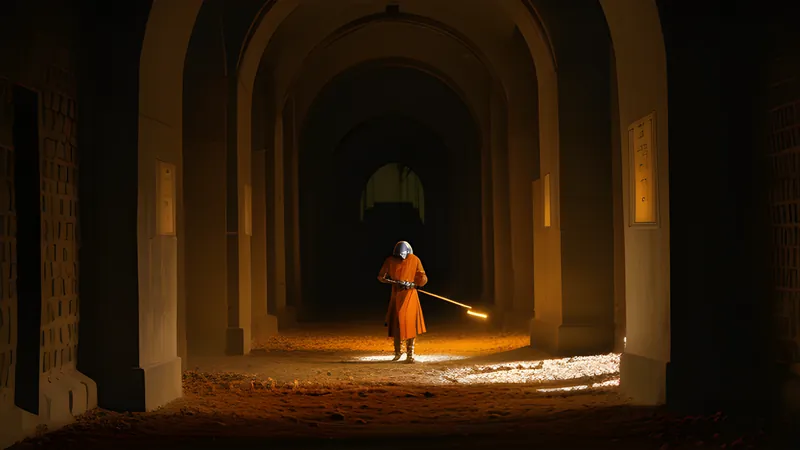
The city itself does a surprising amount of the atmospheric work. Krat’s Art Nouveau architecture — wrought-iron balconies, gaslit boulevards, ornate clock towers — is a deliberate departure from the grey stone castles the genre defaults to, and it gives Lies of P a visual identity distinct from its influences even where the mechanics are borrowed wholesale. The city’s automaton population, dressed as street performers and shopkeepers and abandoned mid-task where the uprising caught them, turns ordinary environmental storytelling into something closer to a wax museum after closing time. It’s one of the few soulslikes where the setting is doing real characterisation work rather than existing purely to house the next bonfire and the next corridor.
The environmental storytelling extends to the game’s item descriptions and the recorded gramophone messages scattered through Krat, which do the unglamorous work of filling in what the uprising actually cost the city’s human population before P ever arrives — a technique soulslikes have used since the genre’s earliest item-flavour text, but rarely with this much narrative discipline about withholding the full picture until the player has earned it.
The parry that Sekiro built and Lies of P sharpened
The combat’s spine is a perfect-guard system lifted, near-wholesale, from Sekiro: Shadows Die Twice. Block at the right instant and you deflect the blow entirely, chip the enemy’s posture meter, and open a window for a critical strike. Round8 doesn’t pretend otherwise — the parry timing, the emphasis on posture over raw health, the eventual “everyone before this point was a tutorial” difficulty spike are all inherited wholesale. What they add is a fabric of weight underneath it. Where Sekiro’s Wolf feels weightless and vertical, built for a ninja’s mobility, P feels like what he is: a machine built from someone else’s spare parts, heavier in the wind-up and heavier in the recovery. The parry window is tighter as a consequence, and missing it costs more, which turns the borrowed system into a different game to actually play even when the underlying rule is identical on paper.
Weapon assembly: the one new idea
The genuinely novel mechanic is the weapon-assembly system. Every weapon in Lies of P is built from two halves — a blade and a handle — salvaged separately and swapped freely at a workbench. A rapier blade on a hammer’s handle produces something with the rapier’s speed and the hammer’s stagger damage; a scythe blade on a spear’s handle turns a slow chopping weapon into a long-reach poking one. Twenty-odd blades and handles combine into well over a hundred distinct weapons, each with its own moveset rather than a reskinned animation set pretending to be new.
This solves a problem that soulslikes have quietly had since Demon’s Souls: a weapon roster is usually a shopping list, not a design space, because most players settle on one moveset early and never revisit the decision except to chase bigger numbers. Lies of P turns weapon choice into an ongoing puzzle instead of a one-time commitment, because the correct blade-handle pairing changes per boss — a fast blade against something that punishes long recovery windows, a heavy handle against something with breakable armour. It’s the same design insight Bloodborne’s transforming trick weapons chased, examined at length in Bloodborne: the aggression cure, pushed one further step: instead of two fixed forms per weapon, you get a combinatorial space you assemble yourself, and the game’s weapon-crafting NPC exists specifically to nudge you toward trying pairings you wouldn’t have guessed at.
The Legion Arm and the P-Organ
P’s left arm is a socket for interchangeable prosthetics — again, straight out of Sekiro’s playbook, where the shinobi prosthetic gave you a grapple, an axe, a firecracker. Lies of P’s version adds a flamethrower arm, a puppet string that yanks enemies into range, a saw-blade gauntlet for armoured targets. Where it diverges from its model is in how sparingly it’s used: Sekiro built entire boss fights around specific prosthetic counters, while Lies of P treats the arm as a situational tool rather than the required key to a specific lock, which keeps the core parry-and-strike loop the main event throughout.
The P-Organ, an upgrade tree literally installed into P’s chest cavity between rest points, handles the RPG-progression half of the formula — stamina, health, a handful of passive combat perks, plus a late unlock that lets you carry a second weapon into a fight. It’s the least narratively interesting system in the game, functionally similar to any Soulsborne stat allocation with a steampunk coat of paint, and its main job is smoothing the difficulty curve rather than offering meaningful build variety. That’s a fair trade: not every system needs to be a thesis statement, and the P-Organ correctly stays out of the way of the two mechanics that are.
Two stats, and the weapons that reward each
Underneath the blade-and-handle system sits a simpler decision that shapes it further: every weapon scales against one of two stats, Motivity or Technique, corresponding roughly to strength and dexterity builds in the wider genre. Because the assembly system lets you graft a Technique-scaling blade onto a Motivity-scaling handle, the game quietly supports hybrid builds the stat split would otherwise discourage, and a played-through Technique build feels like a genuinely different combat rhythm from a Motivity one rather than the same moveset with bigger damage numbers. It’s a small piece of design plumbing, but it’s the reason two players who both love the assembly system can describe completely different “best” weapons without either being wrong.
The Pinocchio conceit, taken seriously
The lying mechanic — dialogue choices where telling the truth or a fabrication shifts a hidden humanity meter — is a clever integration of the source material rather than a bolted-on morality slider. It rarely swings the plot on a hinge the way a full branching narrative would, and the genre’s obligation to end on a boss gauntlet means Lies of P’s back half spends less time on the moral texture that made its opening hours distinctive. But the choice to make lying the central verb of a Pinocchio story, rather than just referencing the blue fairy and the nose gag for texture, is the sign of a team that thought about their licence rather than merely licensing it.
Where it strains
Krat’s level design is the game’s weakest inheritance. FromSoftware’s levels fold back on themselves — a locked door near the start that turns out to be a shortcut from three hours later, a bonfire placed exactly where the next area’s difficulty spike needs a nearby reset point. Lies of P’s levels are, for the most part, corridors: linear paths with occasional side rooms, competent but rarely surprising in the way Dark Souls’ interlocking geography is surprising. The bosses carry most of the design weight as a result, and the game leans hard on a late escalation of speed and aggression that risks becoming a reflex test rather than a puzzle by the credits — a handful of late bosses lean on multi-phase health bars and heavy tracking rather than the readable openings the early game trained you to look for.
The performance issues at launch — stutter on PC, frame pacing hitches on console — were real and patched over the months following release; anyone picking the game up now on current patches won’t encounter what early reviews flagged.
The real ancestor
Everyone reaches for Bloodborne and Sekiro as the obvious parents, and they’re right to, but the deeper ancestor is the arcade fighting game’s moveset design: Lies of P succeeds because it treats “which weapon” as a build decision with as much weight as “which stance,” a lesson closer to Soul Calibur’s weapon-specific movesets than to anything Miyazaki’s team has shipped. Round8 didn’t invent a new soulslike mechanic so much as import a fighting game’s respect for moveset identity into a genre that had mostly forgotten weapons could feel like different games to play, and in doing so gave the genre its first genuinely new system since the soulslike as a genre nobody meant to make first crystallised as a category with a name.
Spoilers below
The late reveal that P’s own memories are manufactured — that his recollections of the “real” Carlo he’s meant to be replacing are implanted rather than lived — recontextualises every dialogue choice the lying meter tracked, since the player has been lying in a voice that was never entirely his to begin with. The game’s multiple endings hinge on whether P chooses to become human at the cost of the puppets who helped him, or reject the transformation Geppetto built him for, and the harshest ending denies him a body at all — a bleak note for a fairy tale that spent thirty hours pretending it might let him win cleanly.
Related Content