Kick Off 2: The Football Game That Split the Schoolyard From Sensible
Dino Dini's follow-up sharpened a ball physics model precise enough to start arguments that lasted years
Contents
Dino Dini built Kick Off 2 around a single stubborn idea: the ball is a physical object, and the player only ever touches it for an instant. Anco released it in 1991, an update to a 1989 original that had already sold in numbers nobody at the small British publisher expected, and the sequel did the thing sequels rarely manage. It kept the exact feel that made the first game a cult hit and fixed the parts that had made it exhausting to actually finish a match.
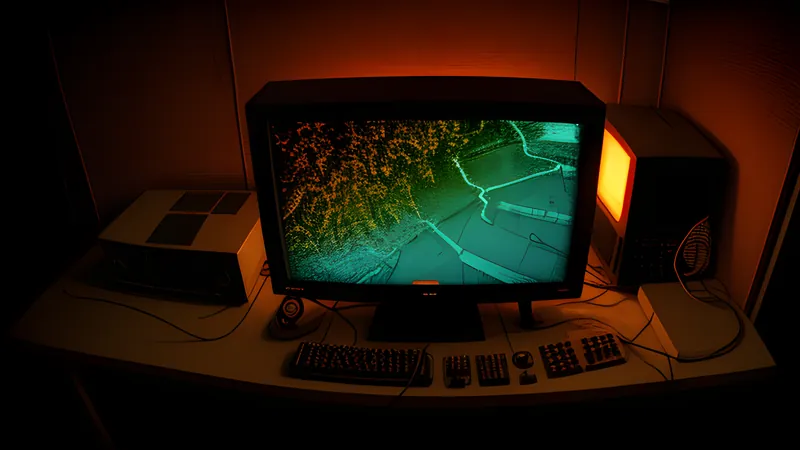
I had the Amiga version at fourteen, on a monitor propped on a bedroom desk too small for it, and I remember the specific sensation of the ball skidding away from a stationary player because the joystick waggle that was supposed to trap it arrived a frame late. That sensation is the entire design. Kick Off 2 is a football game with no assisted passing, no auto-tackle, no invisible hand nudging the ball toward your player’s feet. Every touch is a deliberate physical event, and the game trusts you to have practised enough to make it look easy.
The physics model as the whole game
Most football games of the era, and a fair few since, model the ball as an attachment: it snaps to whichever player is nearest, follows a scripted pass arc, and generally behaves like a prop the players are carrying rather than kicking. Kick Off 2 modelled the ball as a body with its own momentum, spin, and friction against the pitch, independent of the player sprites moving near it. A pass wasn’t a menu choice between “short” and “long” — it was a direction and a duration, a joystick held at an angle for exactly as long as the shot needed, translated into a vector the ball then obeyed regardless of what happened next.
This is why the game rewards practice in a way that still reads as legitimate skill decades later. There’s no difficulty slider softening the physics for a beginner; there’s a learning curve you either climb or you don’t, and climbing it means understanding that the joystick direction at the moment of contact matters more than anything else on screen. A through-ball threaded between two defenders wasn’t scripted by the game recognising a gap — it was the ball travelling in a straight line at a speed you chose, and the gap existed because you read it correctly before you moved the stick.
Kick Off 2 layered genuine improvements onto that spine: a better AI that could actually mount an organised attack instead of swarming the ball, a proper offside implementation, throw-ins and corners that worked as advertised, and crucially a visible on-pitch indicator showing which player you controlled, solving the original’s worst frustration of losing track of your own striker in a crowd of identical sprites. None of it touched the ball model. Dini understood which part of the game was load-bearing.
The joystick generation
None of this worked without the right hardware, and Kick Off 2 is inseparable from the Competition Pro microswitched joystick that most UK households eventually bought specifically because rubber-membrane sticks couldn’t register the waggle technique reliably. The dominant passing method — snapping the stick rapidly left-right while holding fire to build power on a lofted ball — needed switches that could survive being hammered several times a second for years, and the secondhand market in worn-out joysticks that summer says something about how seriously people took it. This is a detail that gets lost when the game is played today through an emulator and a modern controller with analogue sticks that can’t replicate the exact digital snap the original hardware demanded. The physics model wasn’t just software; it was a contract with a specific piece of plastic sitting on a desk.
Ports followed across the Atari ST, the Commodore 64, and the Amstrad CPC, each carrying the same ball logic scaled to weaker hardware, and the C64 version in particular is a small miracle of compression — the same momentum-driven ball on a machine with a fraction of the Amiga’s processing headroom, achieved by stripping the presentation to its bones and keeping every cycle for the physics. That a machine from 1982 could run recognisably the same football simulation as one from 1985 tells you how much of Kick Off 2’s identity lived in a handful of core routines rather than in graphical spectacle.
The multiplayer culture that grew up around the game deserves its own note. Kick Off 2 supported four-player matches through joystick adaptors that split a single port, and lunchtime tournaments organised around a single Amiga became a fixture in common rooms that had never previously bothered with a games console. Because the skill ceiling was genuinely high, a good player stayed good against strangers, which meant the game travelled between houses and schools as a shared reference point rather than a private hobby — you could turn up with your own joystick, plug into someone else’s Amiga, and the contest was fair, because the rules never bent for anyone.
The schoolyard argument
By the time Sensible Soccer arrived in 1992 from a different studio entirely, British teenagers had already split into two camps, and the split ran deeper than a preference between games — it was a preference between what football is. Kick Off 2’s camp valued precision: the ball behaved like a real ball, the skill ceiling was real, and a badly timed pass was your fault, not the game’s. Sensible Soccer’s camp, which would grow to include most of the country within a couple of years, valued flow: a wider camera showing more of the pitch, forgiving physics that let a mistimed pass still often find a teammate, and a pace built for entertainment over simulation. You can trace the shape of that debate straight back to Sensible’s own ancestor, MicroProse Soccer, where Jon Hare and the Sensible Software team had already worked out that an aerial camera and a curved shot were worth more to most players than strict physical accuracy.
Neither side was wrong, which is the interesting part. Kick Off 2 rewarded the players willing to put in the hours a fighting game demands, treating a corner kick with the same seriousness a beat-’em-up treats a special move — muscle memory built through repetition, not discovery through casual play. It’s a design philosophy that trusts the player completely and asks a lot in return, closer in spirit to a simulation than an arcade game, and it produced some of the tensest, most legitimately competitive multiplayer sessions the 16-bit era had to offer, precisely because a win meant something.
Why the ball still moves right
Playing Kick Off 2 today on an emulated Amiga, what strikes me is how rare that pure physical-simulation approach to a sports game remains, even now, well past any nostalgia. Modern football games have enormously more sophisticated engines, but most of them still lean on some layer of assistance: pass-completion weighting, auto-aim on shots, a degree of scripted momentum toward outcomes the designers judged fun over strictly physical ones. Kick Off 2’s uncompromising stance — the ball goes exactly where the physics say it goes — is a design choice that modern accessibility-minded design has largely moved away from, for good reason in most genres. But it’s worth recognising what got lost along the way: a sports game where every single goal felt entirely earned, because the alternative was a mis-hit that sailed harmlessly out of play.
The AI overhaul in the sequel deserves more credit than it gets. The original Kick Off’s computer opponents would frequently just chase the ball in a pack, a behaviour that made single-player matches feel like herding cattle rather than playing football. Anco’s rework gave the AI actual positional discipline — defenders held a line, midfielders tracked runners, strikers made the kind of forward runs that created the passing lanes the ball physics were built to exploit. It’s the difference between a tech demo and a football match, and it’s the reason Kick Off 2 rather than the original is the one still discussed as a genuine classic.
Dini himself never really let the idea go. He spent much of the 2000s and 2010s in dispute with EA over how closely FIFA’s earlier entries resembled his ball-physics patents, and eventually crowdfunded a spiritual successor, Kick Off Revival, released independently in 2016 to a much smaller audience than the original ever reached. It’s a poignant footnote: the designer most responsible for proving that a football game could be a physics simulation rather than a scripted spectacle spent decades afterward watching the industry choose the scripted version almost every time.
Spoilers below
There isn’t a plot to spoil in a football management-free arcade sim, but there are specifics worth flagging for anyone about to boot up an emulated copy expecting the modern Kick Off Revival or Sensible Soccer’s forgiving controls. The player-switching indicator, a small arrow above the controlled sprite, was a mid-cycle addition patched into later Amiga releases and some ports — early original pressings of Kick Off 2 lack it entirely, meaning some downloadable versions floating around today are meaningfully harder to parlay into a coherent match than the mechanic-complete edition most reviews were written about. The Player Manager spin-off, released the same year and sharing the match engine, is where Dini’s team pushed the simulation further into transfer markets and training — worth seeking out if the pure arcade physics of Kick Off 2 leave you wanting a longer campaign wrapped around them. And the much-loved expansion, Kick Off 2: Winning Tactics, added set-piece editing tools that let players design sixteen custom free-kick and corner routines — the deepest the ball-physics model was ever pushed before the series’ commercial momentum passed to Sensible Soccer for good.
The verdict, thirty-odd years on, is that Kick Off 2 earned its side of the schoolyard argument honestly. It isn’t the more approachable game, and it never tried to be — Sensible Soccer’s wider camera and gentler physics were a different, ultimately more commercially successful bet on what football should feel like on a home computer. But Kick Off 2’s commitment to a ball that obeys physics rather than scripting produced a tension no amount of AI sophistication in later games has quite replicated: the specific dread of a joystick waggle arriving a fraction late, and the specific satisfaction of one that doesn’t. If you want to feel where that argument started, play Kick Off 2 first, then go and see how Sensible World of Soccer answered it a few years later with an entirely different set of priorities.
Related Content