Half-Life: The Tram Ride and the Argument
Valve spent three minutes doing nothing, and reset what a shooter was allowed to be

Contents
Three minutes. That’s roughly how long the tram takes to get from the surface to the Anomalous Materials lab, and during it you can look around and nothing else. No gun. No enemies. No skip. A recorded voice reads you facility announcements while machinery you don’t understand grinds past the window and a man in a hazard suit waves at you from a gantry.
In 1998 this was close to insane. The competitive landscape for a first-person shooter was Quake II, which starts by dropping you out of a pod into gunfire, and every marketing instinct in the industry said your opening thirty seconds had to demonstrate the product. Valve — a company nobody had heard of, run by two ex-Microsoft people, shipping their first game — spent three minutes on a train.
It’s the most-quoted opening in the medium and it’s usually praised for atmosphere. The atmosphere is a side effect. The tram ride is an argument, made in the only language the game will use for the next twelve hours, and everything Half-Life is remembered for follows from it.
The argument: you never leave Gordon’s eyes
Here’s the rule Valve committed to. The camera never cuts away. There is no cutscene, no third-person shot of your character being heroic, no fade to a briefing screen. Whatever happens in the story happens in front of you, at your height, while you retain the ability to look wherever you want.
That constraint is severe, and the tram ride is where it gets established before you have anything to lose. You spend three minutes learning, without being told, that this game will show rather than cut — and so when the resonance cascade goes off an hour later, you don’t wait for the camera to take over, because you’ve been trained that the camera is yours. You’re standing in the chamber watching it happen with your own head.
Compare that to how everything before it worked. Doom’s narrative was text screens between episodes and Quake’s was less than that. The alternative on offer in 1998 was the pre-rendered cutscene, which meant your protagonist became a different character the instant the story mattered — competent, talkative, doing things you’d never chosen. Valve’s rule kills that stitch entirely. Gordon Freeman never speaks, which is often described as an absence of characterisation and is actually the mechanism: he can’t say anything you disagree with.
The scripted sequence is the technical answer that makes it possible. A scientist runs down a corridor and gets pulled through a vent. A marine tips over a filing cabinet. A helicopter drops troops behind you. All of it is authored, all of it is on rails, and all of it happens in the world where you are standing rather than in a film that replaces you. The lineage of that idea runs directly into the tutorial and the art of not explaining — Valve worked out that if you can’t cut away, you have to teach through staging, and staging teaches better than text does.
The Cabal
The process behind it is documented, which is unusual and useful. Valve’s design method — the “Cabal” — was written up publicly by Ken Birdwell about a year after release, and it explains more about why the game works than any amount of analysis of the finished product.
The short version: a small cross-disciplinary group, pulled from across the company, met for months and designed the game by consensus, then handed level designers a detailed spec and iterated with constant playtesting. The playtesting is the part people skip. Valve watched people play, watched where they got stuck, and rebuilt.
Two ideas came out of that which the industry then absorbed wholesale. First, the player should always be moving forward without ever feeling steered — the corridor should feel like a choice. Second, a fixed cadence: never leave the player doing the same thing for more than a few minutes. Combat, then a physical obstacle, then a set-piece, then a quiet corridor with a scientist in it, and around again. If you map Half-Life’s runtime you can see the metronome ticking.
And the honest context: Valve had originally targeted a release about a year earlier, looked at what they had, decided it wasn’t good enough, and rebuilt it. That’s a first-time studio with an outside publisher choosing to eat a year. Almost nothing about the finished game is explicable without that decision.
The marines, and a useful lie
The single most-praised thing in 1998 reviews was the enemy AI. The HECU marines flank you. They lay down suppressing fire while one moves. They lob grenades to flush you out of cover, they call to each other, and they retreat when the fight turns.
Subsequent analysis of the game has been fairly deflating about how much of this is genuine emergent squad behaviour and how much is careful scripting, tight arena design and audio cues doing the perceptual work. The marines shout what they’re about to do; the encounter spaces are built with flanking routes already in them; the tuning makes them retreat at legible moments.
I’d argue the deflation misses the point entirely, and this is the most transferable lesson in the game. AI in a shooter is a performance, and its quality is measured in the player’s head rather than in the state machine. Valve spent their effort on the part the player perceives — the callout, the readable flank, the geometry that makes the flank possible — instead of on simulation depth nobody would notice. Twenty-five years of shooters have failed to beat it, and a good number failed while running more sophisticated systems.
That’s the opposite bet from the one Deus Ex made two years later, where the systems are genuinely deep and genuinely breakable and the game will happily let you dismantle its own scenarios. Both are valid. Valve chose theatre and Ion Storm chose simulation, and the difference explains almost everything about the two games’ descendants.
The crowbar does the introduction
Your first weapon is a hand tool, handed to you by a security guard in a corridor that has already gone wrong, and it’s one of the great pieces of implicit characterisation in games.
Work through what it establishes. Gordon is a physicist in a research facility, so there are no guns lying around — the armoury is elsewhere and the marines haven’t arrived yet. The crowbar is what’s actually to hand. It arrives from a colleague, which tells you the NPCs in this facility are people who help rather than quest dispensers. And it’s a breaking tool, so the first thing you do with it is smash a jammed door and some crates, which teaches you that this world’s scenery is interactive before it ever asks you to shoot anything.
Compare it to a shooter that opens by giving you a pistol. The pistol says: you are a person who was expecting this. The crowbar says: you are a person improvising. Gordon’s escalation from prybar to pistol to shotgun to military hardware is the plot, told entirely through your inventory, and it lands because the first rung is so low.
It also does a straightforwardly mechanical job. A melee-only opening forces you close to the headcrabs, which is the only way to teach you how fast they leap. By the time you have a gun you’ve been jumped at from a vent, and the lesson is in your hands rather than in a hint box.
The engine, and the debt
Half-Life runs on GoldSrc, which is a Quake engine that Valve licensed and then took apart. Skeletal animation instead of vertex morphs, so characters could move like people. Reworked lighting. A rebuilt entity system to support all that scripting.
The debt is worth stating plainly, because the two games are usually filed as rivals: Half-Life exists because id sold the thing described in the engine that ate the industry. Valve’s whole company — including, eventually, Steam — is built on top of a purchased id codebase, and Valve then repeated id’s other trick by shipping the SDK. Counter-Strike, Team Fortress Classic, Day of Defeat and Natural Selection all came out of that decision, and Valve hired the mod teams. The open-toolchain playbook, run twice, ten years apart, and it worked both times.
Where to play it
The original is on PC for pocket change and runs fine. Black Mesa, the fan remake that went official, is the more comfortable modern route and its rebuilt Xen is a genuine improvement on the source material. Play the 1998 version first if you can stand the models — the pacing is the artefact, and remakes always sand pacing.
Spoilers below
Xen is bad. Let’s start there, because everyone knows it and the reasons are instructive.
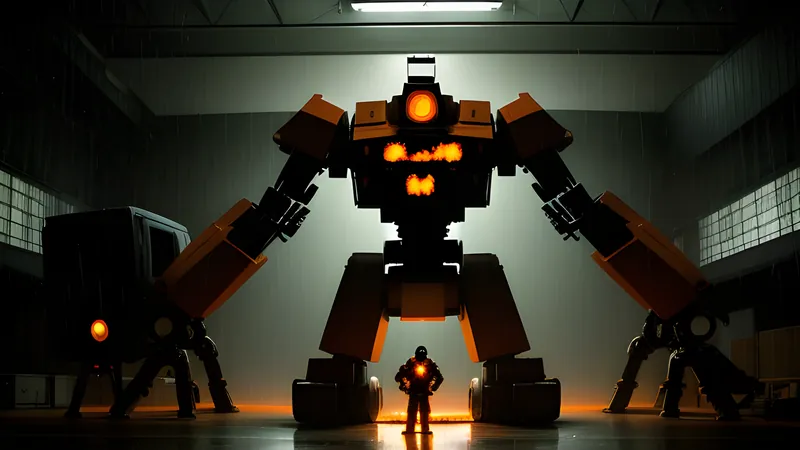
The last stretch of Half-Life takes you through a portal to the alien border world, and the game that has spent ten hours being a masterclass in staged, grounded, legible corridors becomes a low-gravity platformer with floating islands and imprecise jumps. Every strength inverts. The scripted sequence needs authored architecture and Xen is voids. The cadence needs varied encounter types and Xen has one. Even the camera rule works against it: you can’t judge a jump when you can’t see your feet.
The record says the Xen chapters were built late and fast, and it shows in a way that’s almost educational — this is what Half-Life looks like without the Cabal’s iteration passes. Then the Nihilanth, an enormous floating baby-headed thing in a chamber, is a boss fight in a game that has no boss-fight vocabulary, and the game visibly does not know what to do with itself.
And then it recovers completely, in about ninety seconds, with the G-Man.
The ending is the tram ride again and this is the bit of design I’d defend to the death. You’re pulled out of the fight, put back in a moving vehicle you don’t control, and the man in the blue suit who has been standing at the edges of every chapter — behind glass, down a corridor, always just leaving — finally talks to you. He offers you a job. Refuse and he drops you unarmed into a room full of aliens and you die. Accept and the screen goes dark and Valve gets a franchise.
Look at what that scene inherits. It’s the opening’s grammar, exactly: you have no gun, no control, and a voice explaining things while scenery you don’t understand goes past. The game’s first three minutes and its last three minutes are the same shot, and in between you learned that when Half-Life takes your gun away it’s about to tell you something.
The choice at the end is fake — one branch is a death screen. It still works, because after twelve hours of a game that never once lied to you about where the camera was, you believe you’re the one deciding. That’s the argument, closed.
Related Content