Ghostrunner: The One-Hit Parkour Shooter That Runs on Nerve
One More Level built a shooter where a single hit kills you and made the punishment feel fair anyway
Contents
A one-hit-kill combat system is usually a punishment mechanic bolted onto a game that’s otherwise about something else — a roguelike’s permadeath stakes, a stealth game’s failure state for getting spotted. Ghostrunner, developed by the small Polish-Slovak studio One More Level and released 27 October 2020 for PC, PlayStation 4, PlayStation 5, Xbox One and Xbox Series consoles, does something rarer: it makes one-hit-kill combat the entire point of a fast, vertical, first-person parkour game, and builds every other system specifically to make dying instantly feel like useful information rather than a cruelty.
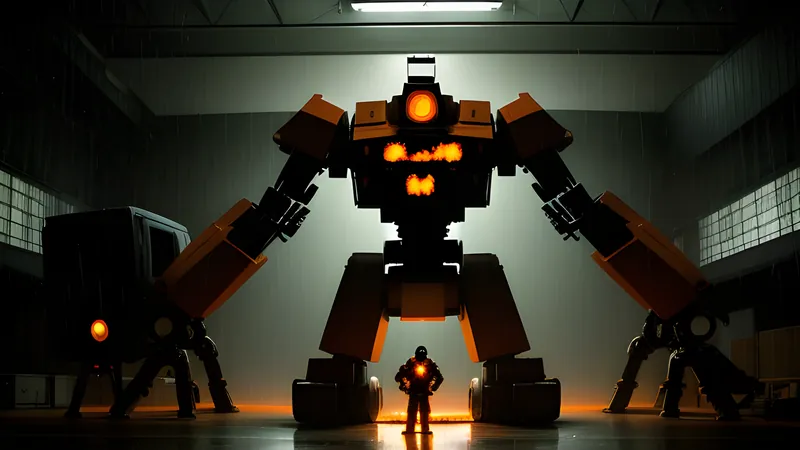
You play a cybernetic swordsman climbing Dharma Tower, a mile-high vertical slum-and-citadel run by a tyrant called the Keymaster, wall-running, double-jumping and grappling between platforms while enemies with hitscan weapons try to end your run in a single shot. You also die in a single shot. There is no health bar to manage, no shield regeneration to time — the entire combat loop is “see the threat, react correctly, or restart the encounter in under two seconds.” That last clause is the design’s real trick.
Instant respawn as the mechanic that makes instant death fair
Ghostrunner’s checkpoint and respawn system reloads you at the start of the current combat sequence in well under a second — no loading screen, no death animation to sit through, just a flash cut back to the last safe beat with full information about where the threat that killed you was standing. This is the detail that separates the game from a punishing difficulty spike and turns it into something closer to a rhythm-action puzzle: because the cost of failure is measured in seconds rather than minutes, the player’s actual relationship to death changes. You stop treating each attempt as precious and start treating the sequence as a puzzle you’re iterating on, learning enemy positions and timing windows through rapid trial rather than cautious, tentative advance. A traditional shooter with a five-second respawn delay and a loading screen would make the same one-hit-kill rule feel punitive; Ghostrunner’s near-zero-cost failure loop makes it feel closer to a fighting game’s training mode.
This only works because the levels are built with the respawn cadence in mind from the start. Combat sequences are short — typically fifteen to forty-five seconds between checkpoints — and enemy placement is almost always readable on a single pass if you’re paying attention, meaning failure is rarely about hidden information and almost always about execution. The game is honest with the player about what killed them, which is the precondition for instant retry feeling like progress rather than a slot machine.
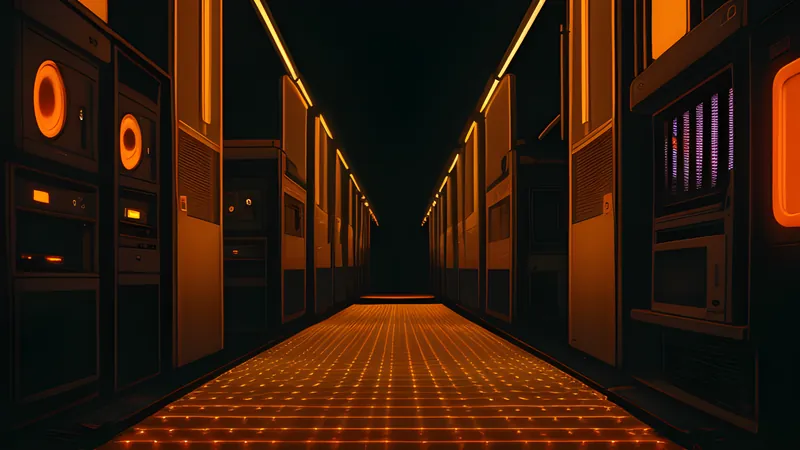
The Cyber Voice grid-runner sections — brief detours where you play a hacking minigame framed as running through a wireframe corridor dodging obstacles — are a smaller, quieter demonstration of the same principle. They strip away combat entirely and isolate pure timing and pattern recognition, which works as a palate cleanser between the tower’s denser combat floors precisely because the instant-respawn logic carries over unchanged: fail a jump, restart in a blink, try again with the pattern now half-memorised. The studio clearly understood that their core feedback loop — see, fail, retry instantly, improve — was strong enough to survive being stripped of weapons and enemies altogether, which is a useful tell about how load-bearing the respawn design really is to the whole game’s identity.
Momentum as the actual skill being tested
The parkour side of Ghostrunner — wall-running, air-dashing, grappling to hardpoints, a slow-motion dash that lets you thread bullets mid-air — isn’t cosmetic movement dressing on top of the combat; it’s the resource the combat is built around. Because you die in one hit, standing still to aim is almost always wrong; survival depends on staying in motion through cover, using wall-runs to break enemy sightlines, and treating vertical space (grapple points, ledges, overhead pipework) as an escape route as much as a route forward. The design borrows the “stop standing still or die” logic that made Vanquish’s cover-breaking dash work a decade earlier, but pushes it further: Vanquish gave you a health bar and a boost meter to manage as buffers against mistakes, where Ghostrunner removes the buffer entirely and makes the momentum itself the only defence you have. It’s a stricter, purer version of the same underlying argument — that a shooter is more interesting when standing still is the losing move.
The slow-motion deflect ability, which lets you briefly parry incoming projectiles at the cost of a limited-use resource, is the game’s concession that pure twitch reaction alone would be too punishing even by its own standards. It’s a release valve, sparingly available, that rewards recognising a specific threat pattern (a heavy gunner about to fire, say) rather than a general panic button, and its scarcity keeps it from undermining the core one-hit-kill tension.
A different answer to the same design question as Doom Eternal
It’s worth setting Ghostrunner next to Doom Eternal’s resource-triangle combat, because both games are chasing the same design goal — forcing constant, informed movement rather than static shooting — from opposite mechanical directions. Doom Eternal keeps a conventional health bar but ties ammo, health and armour recovery to specific offensive actions (glory kills, chainsaw executions, flame-belch armour), so the punishment for standing still is a slow resource death spiral rather than an instant one; the player has room to recover from a mistake if they read the arena correctly on the next few seconds. Ghostrunner removes the buffer entirely: there’s no resource spiral to recover from, because there’s no health to spiral in the first place. Both design philosophies produce “keep moving or lose,” but Doom Eternal’s version is forgiving of a single bad read and punishing over an encounter’s full length, where Ghostrunner’s is forgiving of the time cost of a bad read (the instant respawn) and utterly unforgiving of the read itself. Neither approach is objectively superior; they’re answers to the same question tuned for different tolerances, and seeing both side by side clarifies what “aggressive shooter design” actually means as a category rather than a single recipe.
The sword as a design constraint, not a power fantasy
Ghostrunner’s melee weapon is a single katana with no upgrade tree, no combo system, and exactly one function: it kills whatever it touches, on both sides of the encounter. That flatness is deliberate. A conventional action game would build a skill tree around the blade — heavier strikes, area attacks, a parry chain — because more options usually reads as more depth. One More Level instead kept the sword mechanically simple and put all the game’s actual complexity into the level geometry and enemy placement around it, which means mastering Ghostrunner is entirely about spatial reading rather than input execution. There’s no combo string to memorise, no attack-cancel timing to learn; there’s only “is this enemy in my line of approach, and can I reach them before their gun reaches me.” That’s a much narrower design space than most character-action games work in, and the game’s success is a reasonable argument that narrow, well-tuned spaces beat broad, under-tuned ones — a lesson plenty of bigger-budget action games with sprawling but shallow skill trees would benefit from taking seriously.
The case against — the story is scaffolding, and the puzzle rooms interrupt the rhythm
Ghostrunner’s narrative — a cyberpunk resistance-against-a-tyrant plot delivered through an AI mentor called Zoe and a handful of mid-tier boss antagonists — exists mostly to justify moving from one vertical slice of Dharma Tower to the next, and the game doesn’t pretend otherwise; dialogue is sparse and mostly functional. That’s a defensible choice for a game this mechanically focused, but the handful of puzzle interludes — sections built around the Blink-style short teleport ability solving environmental logic problems rather than combat — genuinely slow the game’s core rhythm without offering a comparably tight design in exchange. They’re competently built, and they still interrupt a momentum-and-nerve loop that the rest of the game has spent real care building; a tighter edit would have trimmed most of them in favour of more combat-and-parkour sequences, which is unambiguously where the studio’s design talent was concentrated.
The other honest limitation is difficulty-curve unevenness in the back third: a handful of late encounters stack multiple hitscan enemy types with overlapping sightlines in spaces that don’t offer enough cover geometry to parkour through cleanly, which tips a few fights from “hard but fair” into “memorise the one correct path,” undercutting the improvisational feel the earlier levels do a better job of preserving.
Spoilers below
The late-game reveal that Zoe, your AI guide throughout the climb, has been quietly manipulating you toward a specific outcome that serves her own agenda against the Keymaster complicates what had been a straightforward mentor relationship, though the game doesn’t dwell on the betrayal’s emotional weight for long before moving to the next combat sequence — consistent with a story that’s clearly subordinate to the moment-to-moment design throughout. The final confrontation with the Keymaster, fought across a genuinely dramatic collapsing-tower set-piece, resolves the plot cleanly enough without overstaying its welcome, and the ambiguous ending — the tower’s fate left open rather than tidily resolved — suits a game that was never really trying to land a thesis about its cyberpunk setting so much as prove a thesis about movement and reaction time.
The verdict, and what to play next
Ghostrunner’s achievement is proving that one-hit-kill combat doesn’t have to be a stealth game’s failure state or a roguelike’s stakes mechanic — it can be the whole engine of a fast, propulsive action game, provided the studio builds every surrounding system (respawn speed, level length, sightline readability) to support that single hard rule rather than fighting against it. It’s readily available across PC and console platforms and runs comfortably on modest hardware given its focused scope, and it belongs on a shortlist with Vanquish as one of the clearest arguments the desk has for “momentum as the actual difficulty setting” — two different studios, a decade apart, reaching the same conclusion about what makes a shooter feel dangerous in the right way.
Related Content