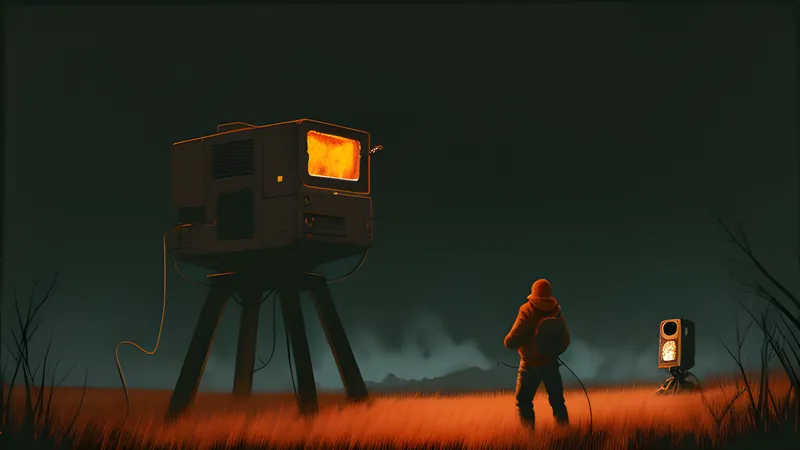
Ghost of Yotei: Sucker Punch Sharpens the Blade
The sequel to Tsushima trades a shogunate invasion for a single revenge list, and the smaller frame is the improvement
Contents
Atsu writes six names into a journal early in Ghost of Yotei, and the game never really asks you to think about anything else for the rest of its runtime. Six people killed her family. Six people are going to die for it. Everything the open world offers — every camp, every fox shrine, every side character with a grievance — either feeds that list or gets out of its way. It’s a small, brutal, disciplined premise for a game this size to commit to, and the commitment is the reason it works better than its predecessor did.
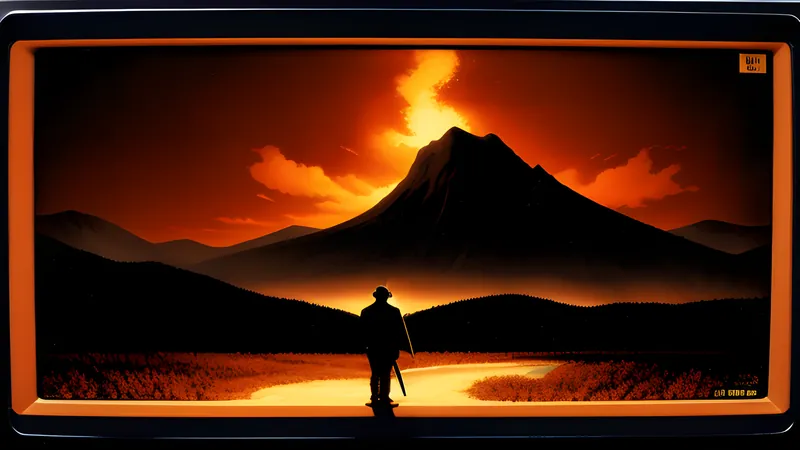
Sucker Punch Productions released Ghost of Yotei on 2 October 2025 for PS5, a follow-up to 2020’s Ghost of Tsushima set roughly three hundred years later and an ocean’s width away, on Ezo — the historical name for Hokkaido — rather than Tsushima Island. Atsu, a lone ronin rather than Tsushima’s Jin Sakai, hunts the six members of a group called the Yotei Six, responsible for murdering her family beneath the mountain the game is named for. Where Tsushima’s story was ultimately about a samurai code bending under the weight of a foreign invasion, Yotei’s is a revenge story with a fixed, named target list, and that structural difference reshapes almost everything built around it.
Why it works: a checklist with six specific answers
Open-world design has a well-documented icon problem — a map cluttered with undifferentiated markers that reward completion rather than curiosity, a failure mode this desk has written about at length. Ghost of Yotei’s answer is structural rather than cosmetic: the six Yotei Six targets are each attached to their own region, their own supporting cast, and their own investigation chain that has to be worked through before a confrontation becomes available, so the open world’s content funnels toward six specific, mutually exclusive endpoints rather than an undifferentiated checklist. The player can tackle the six in almost any order, and Ezo’s regional design flexes to support that non-linearity without losing the sense that every side activity is in service of a named, personal goal.
It’s a structural bet that pays off precisely because the studio resisted the temptation to make the map bigger than the story could justify.
That focus changes the emotional register of exploration. A fox shrine or a hot spring in Tsushima was a stat bonus wrapped in scenery; in Yotei the same activities are still there, but the surrounding region’s connection to one of the six targets means finding a hidden camp or a informant’s hut reads as detective work advancing the revenge plot rather than a checklist item existing for its own sake. The map is still full of things to find. It just has an actual reason for most of them to matter.
The combat: Tsushima’s stance system, made to answer six different problems
Sword combat retains Tsushima’s stance-switching core — different guards suited to different enemy archetypes, a parry-and-counter rhythm at its centre — and Yotei builds each of its six named antagonists as a personal, one-on-one confrontation rather than a reskinned encounter with a bigger health bar, staged apart from the open world’s more conventional mob fights. Building six memorable duels around one core stance-and-parry moveset is a harder design problem than it sounds — plenty of open-world action games solve boss variety by adding new movesets faster than the player can learn them, and Yotei instead asks the player to get better at reading the same system against increasingly personal, story-freighted opponents.
That’s the correct lesson to draw from Sekiro’s parry-driven combat design, which proved a samurai action game’s stance-and-parry rhythm carries more weight when the whole roster of enemies is built to interrogate it from different angles rather than simply escalating numbers. Yotei doesn’t copy Sekiro’s posture system directly, but the structural instinct — a small combat vocabulary, tested exhaustively rather than expanded carelessly — is the same, and it’s the instinct Tsushima only partially committed to.
The ancestor: what a fixed list buys that an open map doesn’t
The deeper design ancestor here isn’t a samurai game at all — it’s the principle argued at length in the case against the quest marker: that a smaller, named set of goals produces better spatial memory and stronger narrative stakes than a sprawling, undifferentiated one. Elden Ring proved a version of the same lesson by trusting players to navigate an open world FromSoftware earned through legible landmarks rather than icons; Yotei proves the narrative half of the same argument, that six named enemies with personal history attached generate more investment than sixty anonymous outposts ever could, because the player can hold six grudges in their head in a way sixty markers never allow.
The setting is doing real historical work
Ezo is the historical name for Hokkaido before its formal annexation, and setting the story around 1603 places Atsu’s hunt at the very start of the Edo period, a genuine historical hinge point distinct from Tsushima’s 1274 Mongol-invasion setting by three and a half centuries. That gap isn’t cosmetic. Hokkaido in this period was governed differently from the rest of Japan and was home to the Ainu, an indigenous people with a distinct language and culture from the Yamato Japanese who populate the rest of the series’ geography — a genuinely different cultural frontier from Tsushima Island’s more directly Mongol-threatened coastline. Building a revenge story against that specific historical backdrop, rather than reusing Tsushima’s setting wholesale, is what lets Yotei’s world feel like a real change of scenery rather than a reskinned map with a new coat of snow.
Tsushima’s guiding-wind navigation — letting the player follow a wind-swept trail toward an objective instead of a HUD marker — was one of that game’s most quietly influential ideas, adopted since by other open-world titles looking for a way to point players somewhere without breaking immersion with an icon. Ezo’s harsher, more mountainous terrain gives that same navigational language a different physical character here, and it remains one of the clearest examples in the genre of solving the wayfinding problem with in-fiction environmental cues instead of interface clutter.
The genre ancestor beyond games
The six-target revenge structure also has a lineage well outside video games worth naming, because Sucker Punch is clearly drawing on it: the Japanese revenge-film tradition of a wronged protagonist working through a fixed, named list of killers one at a time, the structural backbone of films like Lady Snowblood and the samurai-cinema tradition Kurosawa himself worked in. Ghost of Tsushima leaned on Kurosawa’s visual grammar mostly as homage — wide shots, wind-driven framing, a black-and-white viewing mode named for the director. Yotei’s six-target structure borrows something more load-bearing from that same cinematic tradition: the narrative discipline of a story that knows exactly how many chapters it has left and builds toward each one specifically, rather than the open-world genre’s more typical instinct to keep generating content until the map is empty.
Atsu against Jin: two protagonists, two different pressures
It’s worth being specific about how different Atsu’s position is from Jin Sakai’s, because the contrast explains why the two games can share a combat foundation and still feel like separate stories rather than a reskin. Jin’s arc in Tsushima was fundamentally about institutional pressure — a samurai bound by a code, weighing that code against the practical demands of guerrilla warfare against an invading army, with the island’s fate riding on the outcome. Atsu’s fight in Yotei has no institution behind it at all: no lord to answer to, no island to save, just six names and a personal debt. That’s a smaller stage in every objective sense, and it’s precisely the smallness that gives the combat and the writing a sharper, more personal edge than Tsushima’s wider political stakes always managed to sustain across its own runtime.
What holds it back
Ezo’s world design draws on Hokkaido’s real geography — snow country and volcanic foothills distinct from Tsushima Island’s more temperate coastline — but the tension between “six focused targets” and “an open map still wants filling” never fully resolves. There are stretches where the six-target structure gives way to more conventional open-world side content that doesn’t carry the same weight as the main hunt, a familiar friction for any game trying to marry a tightly authored central plot to a sprawling traversable map, and one Yotei manages better than most without quite eliminating it.
The verdict, and where to go next
Ghost of Yotei is worth playing for proving that a samurai open-world game gets better, not worse, when its scope shrinks to a specific list of names rather than expanding to a bigger map. The stance-based combat finally gets antagonists worth building six distinct puzzles around, and the revenge structure gives exploration a reason to matter beyond completion percentage.
Anyone who wants the purest distillation of stance-and-parry combat this genre has produced should also play Sekiro; anyone drawn to the argument that fewer, better-authored goals beat more, shallower ones should read the quest-marker piece alongside this review, because Yotei is the clearest recent proof of that argument the genre has produced.
It’s also worth playing as a direct comparison against its own predecessor. Returning to Tsushima after finishing Yotei makes the earlier game’s map-icon density noticeably harder to forgive, in the way a sequel that fixes a specific problem retroactively sharpens the complaint about the original. Sucker Punch didn’t need a bigger island or a bigger invading army to make a better game the second time; it needed six names, a mountain, and the discipline to stop there.
Spoilers below
The six-target structure means the order in which Atsu confronts the Yotei Six changes what she knows about the group’s full history by the time she reaches the last of them, and the mountain itself — Yotei, visible from across Ezo for most of the game as a fixed landmark — is the natural site the story builds its final confrontation toward. Beyond that structural shape, the specific fates of individual targets and the precise circumstances of the family killing at the story’s centre are exactly the kind of late-game detail worth experiencing without a synopsis in front of you; the value of this game’s central mystery is in how the six confessions and confrontations recontextualise each other as they accumulate, not in any single twist that summarises cleanly outside of playing it.
Related Content