Ghost of Tsushima: The Wind Knew Where I Was Going
Sucker Punch solved the open-world map problem by deleting the map
Contents
Sucker Punch released Ghost of Tsushima in July 2020, set during the actual 1274 Mongol invasion of Tsushima Island, following Jin Sakai as he abandons samurai convention to fight a war he can’t win by honourable means. A Director’s Cut followed in 2021 with the Iki Island expansion, and a PC port arrived in 2024, introducing the game to an audience who’d mostly experienced it through screenshots and word of mouth. Revisiting it now, well clear of the launch-week comparisons to Sekiro and Assassin’s Creed, the thing that’s aged best isn’t the combat, good as it is. It’s a single interface decision: there is no quest marker on Jin’s map, only wind, and that one substitution changes what it feels like to move through an open world more than any other system in the game.
The guiding wind
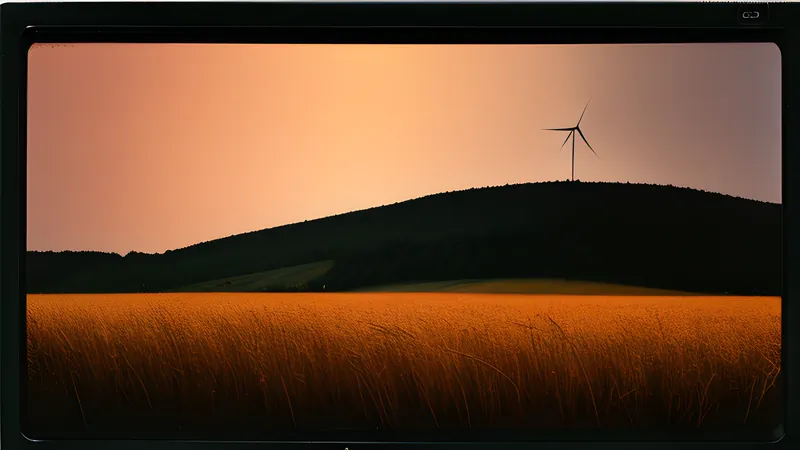
Hold a direction button and a gust of wind sweeps across the screen, bending grass and blossom petals toward your next objective. That’s the entire navigation system for most of the game — no waypoint, no minimap arrow, just a directional cue you invoke and then act on with your own judgement about the terrain between here and there. It sounds like a small thing until you notice what it removes: the compulsion to stare at a corner of the screen instead of the world in front of you. Ghost of Tsushima bets that a samurai game is better served by making you look at Tsushima than at a UI element, and the bet pays off completely.
It’s a close cousin to the sightline-navigation idea FromSoftware built Elden Ring around two years later — Jay covered that game’s approach to letting geometry replace the checklist here — but the wind is a gentler, more directly diegetic version of the same philosophy. Where Elden Ring asks you to navigate by what you can see on the horizon, Tsushima gives you a summoned cue that still requires you to read the actual landscape to follow it. Both solutions share the same underlying conviction: that a map full of icons teaches players to stop looking at the game itself, and that the fix is to route information through the world rather than around it.
Four stances, one legible answer
Combat outside standoffs runs on four sword stances, each tuned against a specific enemy archetype — Stone against swordsmen, Water against shield-bearers, Wind against spearmen, Moon against the brute enemies wielding heavy weapons. It’s a rock-paper-scissors system, but it’s rock-paper-scissors made legible in the fiction: switching stance mid-fight reads as a warrior adjusting his footing and grip rather than as a menu selection, and the animation transitions are fast enough that stance-switching becomes part of the combat’s rhythm rather than an interruption of it. Against a mixed group, reading the enemy composition and cycling stances correctly is the actual skill test the game is asking for, underneath the more famous standoff spectacle.
It’s a simpler toolkit than Sekiro’s posture-and-parry system, which asks for tighter reflexes and punishes misreads harder, and Tsushima is better for not chasing that comparison too literally. Where Sekiro is about a single unforgiving rhythm, Tsushima is about matching tools to problems, which suits a game built around Jin adapting his methods rather than mastering one discipline to its limit.
Standoffs as a duelling ritual
The quick-draw standoff — approach an enemy, wait for the prompt, and time a single sword-draw to land a killing blow before they can react — is Tsushima’s best piece of pure mechanical tension, and it works because it’s built on rhythm rather than reflexes alone. You can trigger a standoff against a lone enemy or, in the game’s showiest set pieces, walk toward an entire group and let them send fighters one at a time, cutting each down with a single timed press while the others watch. It’s melodrama as mechanic, lifted straight from the genre cinema Sucker Punch has been open about studying, and it earns its theatricality because the timing window is tight enough to carry real stakes even on repeat viewings.
Kurosawa mode and the honesty of the homage
The option to play the entire game in black and white, film grain overlaid, with an optional Japanese dub and repositioned subtitles, is more than a nostalgia filter. Named for Akira Kurosawa, whose samurai films are the game’s most obvious visual reference point, the mode recomposes lighting and colour grading specifically for monochrome, which means it isn’t simply a desaturation slider — Sucker Punch built lighting passes that read correctly in both colour and black-and-white presentations. It’s a genuinely rare level of craft investment in what could have been a marketing gimmick, and it changes how several vistas read: a burning village that’s merely attractive in colour becomes genuinely unsettling in grain and contrast. The mode also reframes the game’s genre lineage honestly — Tsushima borrows Kurosawa’s compositions and telephoto duel framing more than it borrows any specific plot, and letting players switch that reference on and off makes the homage a stated choice rather than a background influence you’d have to already recognise to notice.
Haiku, hot springs, and stillness as pacing
The haiku-writing spots scattered across the island are a small, unusual piece of design: stand at a composed vista, and the game invites you to select from a handful of word choices to complete a short poem, which then becomes a permanent piece of Jin’s journal and, in a nice touch, a cosmetic charm. Mechanically it’s trivial — pick from a short menu, watch calligraphy animate across the screen — but the pacing effect is real. Every open-world game needs deliberate stillness built into its rhythm somewhere, and Tsushima found one that fits its setting instead of borrowing a generic meditation minigame from elsewhere in the genre. The same is true of the hot springs, which pair a stat-boosting soak with a quiet, unhurried camera move that asks nothing of the player except to sit still for a moment in a beautiful place.
Photo mode deserves a mention on its own terms, because Tsushima’s is one of the tools that helped establish photo mode as a genre expectation rather than a novelty — a fully adjustable camera, weather and time-of-day controls, and pose options detailed enough that the mode generated its own secondary audience of screenshot artists independent of anyone actually playing the combat. Jay’s essay on photo mode and the player as cinematographer covers the broader trend; Tsushima is one of its clearest and earliest full expressions, built by a studio that understood its own art direction was strong enough to reward that level of player-directed attention.
Where the open-world formula still shows through
For all its interface courage, Tsushima keeps a fair amount of standard open-world furniture — Shinto shrines to climb for cosmetic charms, hot springs for stat boosts, bamboo strikes for a combat minigame, fox dens that lead to more charm slots. None of it is disguised as anything other than what it is, and unlike the wind system, none of it required Sucker Punch to solve a genuinely hard design problem; it’s the genre’s default collectible scaffolding, present because players expect activities to fill a map this size. The wind makes travelling between those activities feel purposeful even when the activities themselves are ordinary, which is a neat bit of design triage — spend the innovation budget on the connective tissue, not on reinventing every individual node.
Legends, the co-op mode nobody expected
Sucker Punch added Ghost of Tsushima: Legends, a free multiplayer expansion, after launch — a separate co-op mode with its own class-based progression, wave survival, and a longer raid built for four players, set in a supernatural, more overtly folkloric version of the same island. It’s a strange but generous addition to a game that shipped as a purely single-player experience, and it demonstrates Sucker Punch treating the world they’d built as a resource worth extending rather than a one-off. Legends never overshadows the main campaign’s design ideas, but it’s proof the studio saw more in Tsushima’s systems than a single story needed to use.
What to play now
The Director’s Cut and Iki Island expansion add a second island with its own eagle-guided navigation twist and a darker, more personal side story for Jin, and they’re worth the time if the base game’s wind and standoffs held up for you the way they should. The eagle works differently to the wind — a physical creature you follow rather than a cue you invoke — and the shift is a small but deliberate signal that Iki Island is meant to feel like a different, wilder register of the same world, appropriate for a story that digs into Jin’s past rather than his present war. Sucker Punch’s own sequel, Ghost of Yotei, picks up the same navigational philosophy in a new setting and is worth reading against this one directly. For the broader argument about why marker-free navigation matters, Jay’s essay on the tower-map formula makes the case that Tsushima’s wind is one of the few genuine rebuttals the genre has produced.
Spoilers below
Jin’s arc culminates in a forced choice between honouring his uncle Lord Shimura’s demand that he either submit to arrest for violating the samurai code or die by his hand in a final duel — a confrontation the game frames as the true cost of everything Jin adopted to become the Ghost, stealth and poison and assassination in a culture that considered those methods dishonourable. The Director’s Cut epilogue on Iki Island recontextualises Jin’s late mother’s death at the hands of raiders years earlier, giving the choice between his uncle’s code and his own methods a second, more personal echo rather than resolving it outright.
Related Content