Elden Ring Nightreign: A Battle Royale Timer in a Souls Game
FromSoftware bolts a shrinking circle onto the Lands Between and the friction is the point
Contents
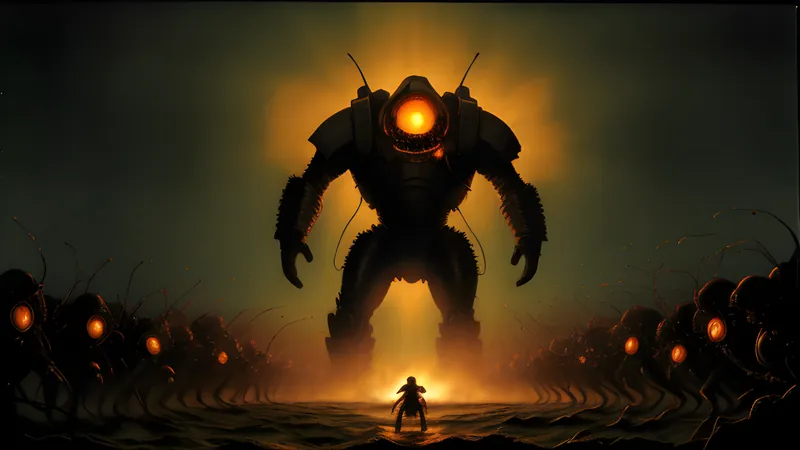
Elden Ring Nightreign released in May 2025 as a standalone spin-off, and its premise sounds, on paper, like a marketing department’s idea of a joke: take FromSoftware’s meticulously paced open world, the one built entirely around the player choosing when and how to approach every fight, and put a battle-royale storm circle on it that forces the pace instead. Three players, one compressed map lifted and rearranged from the Lands Between, a night-and-day cycle running down a clock, and a closing ring that eventually corrals everyone toward a boss fight against a Nightlord whether they’re ready or not. It should not work. It mostly does, and the reason it does is more interesting than the premise makes it sound.
What a Souls game trades away when you add a timer
The entire design language of a FromSoftware game since Demon’s Souls has been built around player-controlled pacing: you approach a bonfire, you scout an area at your own speed, you retreat and grind or reroute when a fight is too hard, you return when you’re ready. That patience — cousin to the discipline the wider roguelike canon has always demanded — is the genre’s core promise — the game will wait for you to get good enough. Nightreign removes that promise almost entirely. An expedition runs roughly forty minutes; the storm closes on a schedule regardless of whether your three-person team has found the right gear, learned the boss patterns, or even finished exploring the compressed map. You either adapt to the clock or the clock ends the run for you.
That sounds like it should break everything the studio’s design is known for, and it’s worth being honest that it does trade away real things a Souls veteran will miss — the slow, private mastery of a single punishing encounter, learned over dozens of solo attempts, isn’t really available here. What Nightreign gets in exchange is a different kind of tension that the mainline games have never had room for: the pressure of a shared, ticking resource. Three strangers or friends have to decide, in real time and often without much discussion, whether to detour for a better weapon or beeline for safety before the ring closes. That’s not a worse kind of pressure than a Souls boss fight. It’s a different one, and it’s one the format genuinely couldn’t produce any other way.
Classes as a solved matchmaking problem
Nightreign’s eight playable characters — each built around a distinct kit, from the mobility-focused Wylder to the tanking Iron Eye — solve a problem that’s plagued co-op action games for years: what happens when three players all want to play the same way. A Souls game has always let you build any character into any playstyle given enough time, which is a wonderful freedom in a forty-hour solo campaign and a genuine liability in a forty-minute co-op run where nobody has time to discover that all three players brought the same strategy. By fixing kits to characters upfront, Nightreign guarantees a run has some role variety without forcing players through a menu of loadout options they don’t have time to evaluate mid-storm. It’s a smaller, more legible version of the class-selection problem that hero shooters solve with cooldown-gated ultimates — Nightreign solves it by making the character choice itself the build.
The Nightlord fight is where the whole loop resolves
Every expedition ends the same structural way: the storm forces the three-player team into a final arena against one of several Nightlords, oversized boss encounters that ask for the coordinated positioning and pattern-reading FromSoftware bosses have always demanded, but compressed into a fight that has to resolve in minutes rather than the extended war of attrition a mainline Souls boss allows. This is the clearest place the roguelite chassis and the Souls combat engine actually reinforce each other rather than fighting: the boss doesn’t need forty minutes of learning because the run around it has already taught you, implicitly, how your class handles pressure, and the fight becomes a test of whether the team gathered enough gear during the expedition to survive contact rather than a test of whether any one player has memorised a moveset. Losing doesn’t feel like failing to learn a boss. It feels like the run before the boss went wrong somewhere, which is a more forgiving and more legible kind of failure for a format this short.
The real ancestor
The obvious comparison is to Returnal or Hades — both roguelikes that took an action combat engine and wrapped a run structure around it — but Nightreign’s actual closest relative is Apex Legends’ ring, transplanted wholesale into an entirely different combat grammar. The storm doesn’t create tension by threatening elimination the way a battle royale’s ring does; it creates tension by threatening to end the expedition before the team is equipped enough to survive what’s waiting at the centre. That’s a subtler use of the mechanic than most battle royales bother with, because the ring isn’t there to force player-versus-player conflict — Nightreign has no other human opponents — it’s there purely to force decision-making under a deadline, which turns out to be exactly the ingredient a co-op Souls game was missing.
Why the compression works better than expected
The Lands Between, rebuilt and rearranged for Nightreign’s map, loses most of what made Elden Ring’s open world remarkable — the slow accumulation of vistas, the sense of a continent you were mapping in your own head over sixty hours. What it gains is legibility at speed: because every expedition uses the same underlying geography with different randomised events layered on top, players build genuine map knowledge run over run, the way a roguelike veteran learns a seed’s logic rather than its specific layout. That’s a different kind of mastery than the original game rewarded, but it’s real mastery, and it’s the thing that keeps a forty-minute format from feeling disposable after the tenth run.
Solo play exposes what the co-op format was hiding
Nightreign supports solo runs alongside its three-player default, and playing it alone is the clearest way to see exactly how much of the design’s tension depends on other people. Solo, the storm timer becomes a pure resource-management puzzle against the clock rather than a coordination problem, and it’s noticeably less compelling that way — the game visibly wants the friction of three people making imperfect, half-communicated decisions under pressure, the same way a Souls boss wants a player who hasn’t yet learned its patterns. FromSoftware clearly built the difficulty curve around the assumption of a full team, and solo players are given some compensation for the missing bodies, but the format’s best moments — a teammate grappling in behind a boss while you draw its attention, a mid-run argument over whether to loot one more chest before the ring closes — simply can’t happen without other people. That’s not a flaw so much as an honest admission of what kind of game this is: a co-op game first, with a solo mode included because FromSoftware understands not everyone can find two friends on demand, not because the design was built around solitude.
Where the roguelite structure actually earns its repetition
The strongest evidence that Nightreign understands roguelite design, rather than just borrowing its trappings, is in how it handles run-to-run knowledge. A weaker version of this game would reset everything between expeditions and ask players to relearn the map from scratch each time; Nightreign instead keeps the underlying geography stable across runs while randomising which events, item caches and secondary bosses populate it, so a player’s map knowledge compounds the way a Hades player’s knowledge of the Underworld’s room connections compounds, even though no two runs play out identically. That’s the correct way to build repetition into a format this short — the player feels smarter on run twenty because they’ve built an intuition for how the game’s systems tend to behave, the same kind of learning a mainline Souls game rewards over a much longer single playthrough, compressed here into an afternoon of runs instead of a week of one.
Item scarcity does work a mainline Souls game delegates elsewhere
A standard Elden Ring playthrough lets a patient player eventually acquire nearly everything the game offers, given enough exploration time; Nightreign’s forty-minute clock makes that impossible, and the resulting scarcity changes what an item means. A flask upgrade or a talisman found mid-run isn’t just a stat increase, it’s a decision about which of several possible builds this specific expedition is going to commit to, made under time pressure with incomplete information about what the run’s Nightlord fight will demand. That’s a meaningfully different relationship to loot than the mainline game’s slower, more deliberate itemisation, and it’s the clearest sign that Nightreign’s designers understood a roguelite needs its scarcity to generate decisions, not just difficulty.
The map itself teaches a different kind of geography lesson
Because every expedition reuses the same base terrain with randomised events layered over it, Nightreign quietly trains players to read the Lands Between’s compressed geography the way a speedrunner reads a familiar level rather than the way an open-world tourist reads a new region. A ruined keep in the northwest corner of the map means roughly the same thing run to run even when its specific loot table changes, and that stability is what lets three strangers coordinate a route in seconds rather than minutes. It’s a small piece of design credit worth giving directly to FromSoftware’s environmental art team, who had to build a map dense enough to reward that kind of memorisation without making it feel repetitive on the twentieth pass.
Spoilers below
Later expeditions unlock additional Nightlords beyond the roster available in the opening hours, including variants that combine mechanics from earlier bosses in ways that punish teams who’ve only learned to fight them in isolation. The eighth and final class, unlocked through a specific run of side-objectives rather than simple playtime, ties back to a named character referenced only obliquely in mainline Elden Ring’s endings — the connection is light-touch rather than a direct sequel hook, and FromSoftware has been careful, as ever, not to over-explain it in the game’s own text.
Related Content