Doom Eternal: The Shooter as Puzzle
id Software took the ammo away and turned every arena into a problem with a correct answer
Contents
I played Doom in 1993 on a beige tower that a friend’s older brother had talked his parents into, and what I remember is the width of it — you strafed, you circled, you emptied a shotgun into a room and the room emptied back. The game asked for nerve and spatial sense. It did not ask for a plan.
Doom Eternal asks for a plan. id Software released it on 20 March 2020 for PC, PS4, Xbox One and Stadia, with a Switch port arriving that December, and it remains the most divisive big-budget action design of its generation for one reason: game director Hugo Martin and his team took a shooter and built a puzzle game inside it. Five years on, the people who bounced off it have not come back, and the people who clicked with it have never really stopped playing. Both camps are responding to the same mechanic. They just disagree about whether a first-person shooter is allowed to have a correct answer.
The triangle
Here is the design, stated as plainly as it deserves.
Ammunition is scarce, and the reserves are small enough that you will empty a weapon during any serious fight. Your refill is the chainsaw, which regenerates one fuel pip on a timer, and one pip is enough to open a small demon and spray ammo across the floor.
Health is scarce, and the pickups are thin. Your refill is the Glory Kill — stagger a demon, punch it apart, take the health it drops.
Armour is scarce. Your refill is the Flame Belch, which sets a demon burning so that everything you subsequently land on it sheds armour shards.
Three needs, three verbs, each verb requiring you to be inside the fight rather than backing out of it. That is the whole engine, and it is why Eternal moves the way it does. The 2016 reboot introduced the Glory Kill and called the philosophy push-forward combat. Eternal takes the same idea and closes every exit. You cannot turtle, because turtling starves you. You cannot hoard, because the reserves are too small to hoard into. The only route to resources runs through the demon standing in front of you, and the game has arranged for a demon to always be standing in front of you.
Why the arena is a lock
The second layer is where the argument really lives: weapon-specific weaknesses.
The Mancubus has arm cannons that come off to a precise shot. The Revenant has shoulder launchers. The Arachnotron has a turret on its back that can be sheared away, which stops it suffering you at range. The Cacodemon will swallow a grenade fed into its open mouth and go straight into a stagger. The Carcass throws up a barrier that the Super Shotgun tears down. The Pain Elemental floats where only certain tools reach.
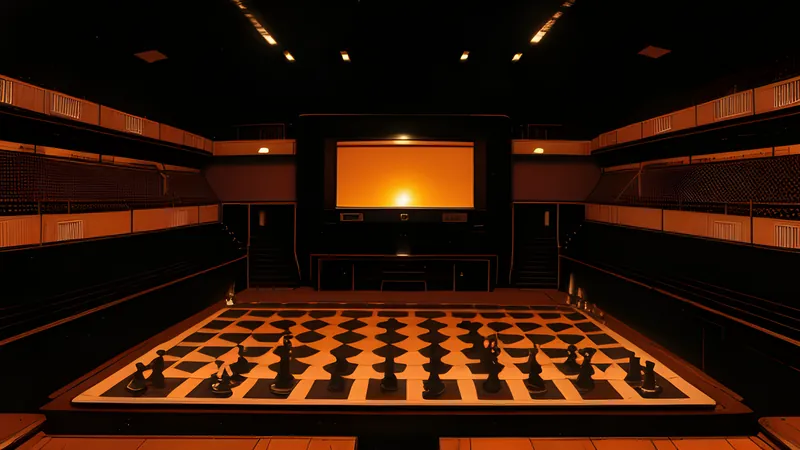
Every demon, then, is a lock with a named key, and an arena is a queue of locks opening at you simultaneously. The mental loop that results is genuinely strange for a shooter: the dominant activity is sorting. Which threat resolves fastest, which weapon is loaded, do I have the fuel to open a fodder demon for ammo before the Mancubus commits, can I dash twice to reposition before the Revenant’s second volley lands. The pace is frantic and the thinking is turn-based. Hugo Martin has described the fantasy as being an apex predator running a chess board at 200 miles an hour, and that is an accurate description of what the pad is doing.
The result is a combat system where two competent players can look completely different. One is playing Doom Eternal. The other is playing Doom (2016) in Doom Eternal’s costume, running out of ammo every fifteen seconds, and hating every minute.
Why people hate it
The complaint is coherent, and dismissing it is lazy. Eternal removes freedom from a series whose entire cultural memory is freedom. If you want to solve a room with the rocket launcher because the rocket launcher is fun, the game will punish you for it, and the punishment arrives as an empty magazine with a Mancubus attached. The design has an opinion about how you should play and it enforces that opinion through the economy rather than through a difficulty slider. Some players experience that as being taught. Others experience it as being managed.
The Marauder is where the argument gets loudest, and it is the fairest test case. He blocks everything outside a specific range band, and he opens for exactly the window in which his eyes flash green — a window you cannot rush, cannot bait early, and cannot skip. He is a rhythm-game boss dropped into a shooter. Fight him correctly and he is the best encounter id has ever built; fight him the way you have fought everything else since 1993 and he is a wall that laughs at you. He is a purer version of what Sekiro does to people, and he provokes the same split: some players hear the game telling them the tempo, and some hear it telling them off.
The platforming is a weaker defence. The monkey bars and the jump pads exist to give the arenas breathing room, and they largely do, but they also drag a game whose best quality is momentum into stretches where the momentum is a chore. Nothing in the traversal is as interesting as the worst fight.
What it is actually descended from
The easy read is that Eternal descends from Doom II (1994), and it does in the sense that combined-arms encounter design — an archvile behind a crowd, a revenant on a ledge — is where id first learned to make a room think. The deeper ancestor is elsewhere.
Eternal’s real lineage runs through the resource-economy roguelike. The question the game asks you every four seconds — what do I spend, what do I have left, what do I need to be holding twenty seconds from now — is the question Risk of Rain 2 asks with its clock, which I wrote about in Risk of Rain 2: The Difficulty Curve as a Clock. It is also the question every good arena-shooter map asked in 1999, when the armour and the quad respawned on timers and the entire skill of Quake was knowing where the resources would be before they existed. id’s insight in 2020 was to move that timer off the map and onto the demons. Once the ammo is inside the enemy, spatial control and resource control become the same act, and the shooter collapses into a single verb.
For the boss-rush reading of a similar idea — encounters as locks, each with a tool — the mech that best rhymes with it is in Armored Core VI: The Boss Rush Hiding in a Mech Game.
The verdict
Doom Eternal is the most rigorously designed action game of its era, and the rigour is the reason it will never be universally liked. It is a game with a thesis, and it spends eighteen hours proving the thesis at you. When the loop locks in — chainsaw, Glory Kill, Belch, Super Shotgun into a Cacodemon’s mouth, meat hook to the next problem — nothing else in the genre produces that specific feeling of a hard system dissolving into instinct. When it does not lock in, you are standing in a car park with no bullets, and the game feels like homework someone set you.
The post-launch record backs the thesis. The Ancient Gods, Part One (October 2020) and Part Two (March 2021) tightened the screws rather than loosening them, adding encounters aimed at players who had already internalised the economy. Update 6 added Horde Mode in 2021 — pure arenas, no story, no monkey bars — which is id quietly agreeing about what the game is for. The Denuvo Anti-Cheat component added in May 2020 was pulled within days after players objected, a small episode that says more about the PC community than the game.
Play it on anything that will run it at a high frame rate; the design assumes your inputs are instant and it becomes a different, worse game when they are not. If the economy irritates you in the first two hours, it will irritate you in the last two. That is a real answer, and it is not a failure of the game.
What to play next: Risk of Rain 2 for the same resource pressure expressed as time, and Sekiro: The Rhythm Game With a Sword for the other 2019–20 combat system that insists there is a correct answer and refuses to accept anything else.
Spoilers below
The campaign’s structure is the weakest thing about it, and the lore is where Eternal most conspicuously loses its nerve. The 2016 reboot understood that the Slayer worked because he was a blank — a man who threw a monitor across a room rather than listen to exposition. Eternal answers questions nobody had: the Maykrs, Urdak, Argent D’Nur, the Slayer’s origin as Doom Guy pulled out of a Night Sentinel order, the whole Father-and-Khan-Maykr theology. The joke of 2016 was that the story was an obstacle the protagonist wanted removed. Making the protagonist the centre of a cosmology retires the joke.
The Ancient Gods, Part Two closes it out with a duel against the Dark Lord, a one-on-one that strips away the arena entirely and asks you to parry — the final statement of the Marauder’s argument, aimed directly at the players who spent two years insisting the Marauder was badly designed. It is a fight only somebody who had accepted the game’s terms could enjoy, and it is the most honest ending Eternal could have had.
Related Content