Dizzy: The Egg That Carried a Whole UK Franchise
How the Oliver Twins turned a single bouncing egg with boxing gloves into Codemasters' longest-running series
Contents
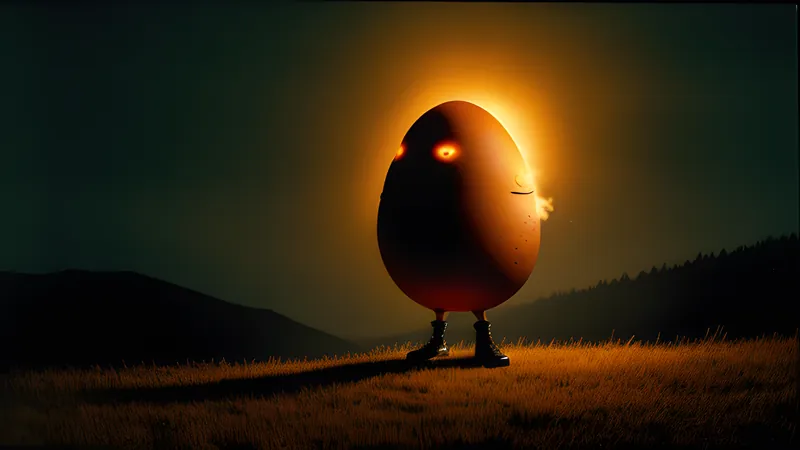
An egg with a face, boxing gloves for hands, and a pair of stubby boots is not an obvious foundation for a decade-long franchise. Codemasters built one anyway. Dizzy, created by twin brothers Philip and Andrew Oliver and first published in 1987, went on to spawn more than a dozen sequels and spin-offs across the Spectrum, the C64, the Amstrad CPC, and eventually the Amiga and Atari ST, at a time when most British budget-software houses were happy to ship a single hit and move on. The series became one of the defining household names of UK home-computer gaming, and it did it with a character whose entire physical vocabulary was rolling, bouncing, and standing very still while carrying an inventory.
The platformer that wasn’t quite a platformer
Dizzy games look like platformers and control like platformers, but the genre they actually belong to is closer to the graphic adventure, restaged with jumping instead of typed verbs. The core loop of Treasure Island Dizzy and its many successors was never about reflexes in the way a Spectrum contemporary like Jet Set Willy demanded. It was about carrying the right object to the right place. Dizzy could hold only a small number of items at once, so the game’s real challenge was working out which puzzle needed solving first, given a limited inventory and a world that rarely gave second chances at collecting something you’d walked past.
This inventory-management structure, wrapped in platform-game clothing, is what let a physically simple character carry so many games. The Oliver twins didn’t need to keep inventing new movement abilities to keep the series fresh, because the challenge was never really in the movement. It was in the world design: a witch who wanted a very specific object before she’d hand over a key, a locked door somewhere on the far side of the map, a rope bridge that needed repairing with a plank found three screens away. Later entries, particularly Fantasy World Dizzy and Prince of the Yolkfolk, layered fairy-tale logic onto this structure — talking animals, cursed princes, a witch’s cottage lifted wholesale from Grimm — giving each game a loose narrative shell even though the underlying puzzle-box mechanics barely changed release to release.
Why the simplicity was the point
It’s tempting to read Dizzy’s limited move set — walk, jump, that’s essentially it — as a technical constraint of cheap 8-bit hardware, and there’s truth in that. But the design decision to keep Dizzy mechanically simple long after the hardware could have supported more was deliberate, and it’s the reason the series stayed accessible to a genuinely young audience without becoming a chore for older players working through the puzzles. A game that asks you to remember where you saw a key and figure out which of three held items unlocks a particular door doesn’t need combat, doesn’t need a jump with variable height, doesn’t need anything beyond a character who can move left, right, and up onto the next platform. The Oliver twins understood that the puzzle was the game, and everything else was scaffolding to present it.
This is also why the series translated so cleanly across formats with wildly different hardware capability. A C64 or Spectrum player and an Amiga player playing the same Dizzy title a year apart were experiencing near-identical challenges dressed in different amounts of colour and detail. Compare that to a game built around precise platforming — something like Rick Dangerous, where frame-perfect timing on one machine’s exact scroll speed genuinely doesn’t transfer to another — and Dizzy’s puzzle-first structure looks like a shrewd bet on portability as much as a creative choice.
A budget-label business model with a face
Codemasters made its name in the mid-1980s on cheap, cassette-only budget titles sold through newsagents rather than specialist computer shops, undercutting full-price publishers with games that cost a fraction as much and, crucially, still sold in enormous numbers. Dizzy gave that business model something it hadn’t previously had: a recognisable mascot who could anchor a whole shelf of related titles, the way a licensed cartoon character anchored a toy range. Where most budget labels lived and died on individual game quality with no brand loyalty carrying over between titles, Codemasters could put an egg with boxing gloves on a box and rely on an established audience recognising exactly what kind of experience they were buying.
I had Treasure Island Dizzy on cassette for the C64 the year it came out, a birthday present that took the better part of an afternoon just to load, and the first thing that struck a twelve-year-old used to arcade conversions was how quiet it was. No enemies chasing you across the screen, no timer ticking down. Just an island, a locked door somewhere, and the slow accumulation of the specific objects that would open it. That patience, asking a child to explore rather than react, was unusual for a budget cassette game in 1987, and it’s a large part of why the format stuck rather than being a one-off gimmick.
That mascot strategy predates the more famous console mascot wars of the early 1990s by several years, and the economics behind it were strikingly different. Sonic and Mario were built to sell specific hardware platforms and justified enormous development budgets because a console manufacturer’s entire business model depended on the character’s success. Dizzy was built to sell cheap cassettes to children with modest pocket money, on hardware the Oliver twins didn’t own and didn’t need to subsidise. The scale was tiny by comparison, and the series’ longevity is more impressive for it — Codemasters kept the well productive for the better part of a decade on the strength of a puzzle structure and a face, not a marketing budget.
The version you actually played
Because Dizzy shipped across so many incompatible 8-bit and 16-bit machines, the game a given reader remembers depends heavily on which computer their family owned, and the differences were not cosmetic. The Spectrum originals ran in stark, high-contrast colour blocks dictated by that machine’s attribute clash, giving Dizzy’s world a flat, almost stained-glass look. The C64 conversions, built around the SID chip and a wider colour palette, added a warmer, more detailed presentation with proper sprite-based parallax in places, at the cost of the Spectrum version’s occasionally faster loading. The Amstrad CPC releases split the difference, and the later Amiga ports, arriving well after the character’s peak popularity, offered redrawn, more detailed artwork that some longtime fans found lost the chunky, hand-drawn charm of the original sprite work.
None of these versions changed the underlying puzzle logic, which is itself a demonstration of how little Dizzy’s design depended on any single machine’s strengths. Compare that portability to a game built around a specific chip’s capabilities — the SID-driven soundtrack work explored in pieces on the C64’s sound chip couldn’t simply be ported flat to a Spectrum’s basic beeper — and Dizzy’s cross-platform consistency looks less like a limitation of the design and more like evidence the Oliver twins had built something that worked independent of any one machine’s party trick.
The Yolkfolk world as a shared universe
By the time later entries like Kwik Snax and Bubble Dizzy arrived, the Oliver twins had built out a whole cast — Grand Dizzy, Daisy, Denzil, Dylan — populating a fictional Yolkfolk kingdom with its own internal continuity, family relationships, and recurring locations. It’s a lightweight version of the shared-universe approach that other franchises would later spend enormous resources building, achieved here with a handful of recoloured egg sprites and some consistent naming. The world never got complicated enough to need a lore bible, but it was consistent enough that returning players recognised Dizzy’s family and friends game to game, which mattered more than it might sound for a series aimed largely at children building their first sense of a game world as a persistent place rather than a one-off setting.
The series also experimented, sometimes to its detriment, with genre departures that abandoned the puzzle-adventure structure entirely in favour of straight arcade action — a reminder that even a successful formula tempts its owners to chase whatever’s commercially fashionable. The entries that stuck to the inventory-puzzle template are, without exception, the ones that still hold up. The ones that didn’t are mostly remembered as curiosities.
Fast Food and Kwik Snax, both released as the series looked for ways to broaden its audience beyond the puzzle-adventure crowd, dropped Dizzy into single-screen collect-em-up formats closer to a maze game than an inventory puzzle. They sold reasonably on the strength of the character alone, which says something about how much brand loyalty the Oliver twins had built by the early 1990s, but neither is remembered with anything like the affection reserved for Treasure Island Dizzy or Fantasy World Dizzy. The lesson sits alongside a familiar pattern across the industry: a mascot can carry a game people don’t love for a while, but it can’t make them love it, and the entries that trusted the original puzzle structure are the ones people still boot up an emulator for today.
What Dizzy left behind
The direct commercial lineage petered out by the mid-1990s as the UK budget-software market that sustained it collapsed under pressure from console gaming and CD-ROM-era production costs neither Codemasters nor its imitators could match on cassette-tape margins. But the design idea underneath Dizzy — a simply controlled character whose real challenge is object-based puzzle logic layered over platforming movement — never went away. You can see its structural fingerprints in later inventory-driven platform-adventures far removed from Codemasters’ budget roots, wherever a game asks a player to carry a limited toolkit through a connected world rather than testing reflexes alone.
Revisiting the series now, what holds up best isn’t the humour, which is gentle and occasionally dated, or the presentation, which was always modest even by contemporary standards. It’s the confidence of the design restraint: a decade of sequels built almost entirely on the strength of “walk, jump, carry the right object,” never once needing to bolt on a combat system or a skill tree to justify another entry. That’s a harder trick to pull off than it looks, and it’s why an egg with boxing gloves earned a shelf of its own in British computing history rather than a single memorable summer. The Oliver twins went on to found Blitz Games and work across far larger productions, but neither of them has ever quite matched the specific cultural footprint of an egg standing on a fantasy hillside, waiting patiently for someone to bring it a key.
Related Content