Delta: The C64 Shooter as Music Video
Stavros Fasoulas built a competent scrolling shooter and Rob Hubbard turned it into something people still talk about
Contents
There is a version of games criticism that treats the soundtrack as garnish. You do the mechanics, you do the visuals, you do the structure, and then somewhere near the bottom you note that the music is nice. It’s a defensible order of business for most games.
Delta breaks it, and Delta breaks it so completely that any honest write-up has to start at the SID chip and work outwards.
Stavros Fasoulas wrote it and Thalamus published it in 1987 for the Commodore 64. It is a horizontally scrolling shooter with a genuinely interesting weapon mechanic and a solid, unremarkable body. Rob Hubbard wrote the music. Nearly forty years on, the number of people who can hum the Delta theme vastly exceeds the number who can describe a single level of the game, and I don’t think that’s a failure of anyone’s memory. I think it’s an accurate reflection of where the thing’s centre of gravity sits.
The theme
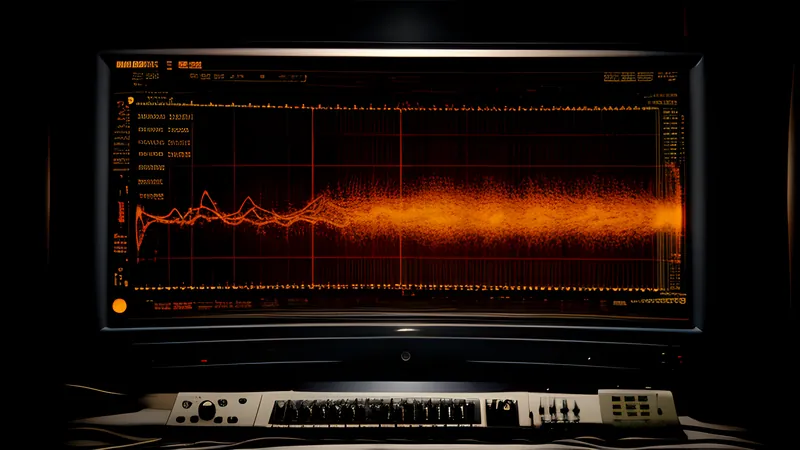
Hubbard’s title tune runs for minutes — a long, sectional piece that keeps moving through movements, arpeggios stacking and unstacking, a bassline that behaves like a sequencer patch on hardware that had three voices and a filter of dubious temperament.
It owes a well-documented debt to Philip Glass, and specifically to the minimalism of the Koyaanisqatsi period: the same insistent cycling figures, the same slow harmonic drift underneath, the same trick of making repetition feel like motion. Which is a remarkable thing to find on a games cassette in 1987. Hubbard was writing a piece of minimalist composition and using a sound chip designed by Bob Yannes as the instrument, on a platform whose other composers were mostly writing jingles to cover the loading.
Understand what the SID could actually do and the achievement sharpens. Three voices. That’s the budget. A bassline, an arpeggio and a lead is your entire orchestra, and if you want a chord you fake it by arpeggiating so fast the ear smears it together — the technique that gives every great C64 tune that distinctive bubbling shimmer. Hubbard was among the small handful of people who treated those limits as a compositional frame instead of an obstacle, and Delta is the piece where the frame and the ambition line up best.
The C64 is the only machine of its era where the composers were famous. Hubbard, Galway, Follin, Daglish — teenagers knew the names, magazines ran interviews, and people bought games for the soundtrack, which is behaviour we’d now associate with film scores. Monty on the Run is remembered chiefly for its music and Delta is the same phenomenon at a larger scale.
The game underneath
Fasoulas had form. Sanxion, in 1986, was his first for Thalamus, and it’s the one whose loading screen became more famous than the game — a fate that tells you something about the studio’s priorities and the era’s. Thalamus itself was a Newsfield operation, set up by the people who published ZZAP!64, which made it a games label founded by games critics. Whatever you think of that as a business model, it produced a house style: technically flash, musically enormous, designed by people who’d read a lot of reviews.
Delta is the follow-up, and it’s better than Sanxion. You fly a ship rightwards over scrolling starfields and installations, shooting waves of enemies that arrive in formation and leave capsules behind. The scrolling is smooth, the sprites are clean, the backgrounds are more restrained than the era’s fashion demanded. It moves well. As pure shooter design it’s competent and slightly anonymous — a good example of the thing rather than an argument about the thing.
What Fasoulas brings is precision. He was a Finnish programmer working alone, and his three Thalamus games all share a certain cold cleanliness — Quedex, the odd one out, is a puzzle game about rolling a ball through geometry, and it has the same fingerprint: tight collision, no wasted pixels, an unwillingness to be cute. Delta’s ship handles exactly the way it looks like it should, which is a low bar that a surprising number of its contemporaries failed to clear.
The bar
Except for the weapon selector, which is a proper idea and deserves better than the footnote it usually gets.
Along the bottom of the screen runs a bar of weapon and upgrade icons, and it cycles. Continuously. Collect the capsules the enemies drop and you have currency; press the button and you buy whatever the bar happens to be showing at that instant.
It’s a shop with a moving counter. Which means every purchase in Delta is a timing challenge layered on top of an economic one — you decide what you want, you watch the bar, you wait for it to come round, and you commit at the right frame while the game is still trying to kill you. Miss it and you’ve bought a shield when you wanted a speed-up, and you’re waiting another cycle you might not survive.
Compare the alternative. Gradius put the same shop on a bar and let you walk along it at your leisure, which turns upgrading into a menu decision. Delta puts the decision under time pressure and inside the action, and the result is that arming your ship feels like part of playing rather than a pause from it. You can be good at the bar. You can develop a rhythm with it. It’s the one system in the game with a genuine skill ceiling beyond dodging.
There’s a musical logic to it too, whether or not Fasoulas intended one. A cycling bar you have to hit on the beat is a rhythm-action mechanic four years before anyone had the phrase, running underneath a soundtrack built out of cycling figures. The game’s best idea and its best-known feature are the same shape.
The capsule economy underneath the bar is quietly well judged too. Capsules are finite and enemies are not, so there’s a real decision about which formations are worth engaging — some waves are a threat to be avoided, others are a wage. Working out which is which is most of what separates a player who survives Delta from one who merely starts it.
What it isn’t
Honest limits, because Delta collects a lot of unexamined affection.
The level design is thin. The enemy patterns repeat more than they develop, and the game’s difficulty comes largely from density and from the fact that dying strips your upgrades and hands you back a naked ship in the middle of a hard section — a design choice that was standard for the genre and is punishing rather than interesting. There’s no equivalent of the structural cleverness that Uridium found in a reversible scroll, and nothing like the scale Armalyte would throw at the C64 the following year. Delta is a very well-made ordinary shooter with one excellent mechanic and a soundtrack from another category of achievement.
Which raises the fair question: is a game with a great score and an average body a great game? I’d argue Delta is a genuine artefact rather than a great design, and that the distinction is worth keeping. The reason to load it now is to sit through the title tune, which is a piece of music that stands up entirely without the game, and then to play the thing and find that the bar at the bottom is smarter than you remembered.
It’s also worth being precise about what the affection is for. Ask around and people will tell you Delta was one of the great C64 shooters. Load it and you’ll find a game that would be a footnote on any other machine. The gap between those two facts is where the interesting criticism lives — a soundtrack can retroactively promote a design, permanently, in the collective memory, and the promotion is not a mistake anyone should want corrected. The tune genuinely is that good. The game genuinely is its delivery mechanism, and the delivery mechanism has a nice mechanic in it.
Where it fits
The C64 is the machine that proved a game’s identity could live in its audio, and Delta is the clearest single case. Fasoulas’s ship, Fasoulas’s capsules and Fasoulas’s scrolling would be a decent minor entry in the shooter shelf. Hubbard’s theme made it a thing people still name.
That should be uncomfortable for anyone who wants design to be the whole story, and it’s a useful corrective. Something similar happens with Elite, where the wireframe austerity is half the atmosphere — the aesthetic surface of these machines was never separable from what they were doing underneath. The composers were designers. They were shaping how the thing felt at a level the code couldn’t reach.
Playing it now
The C64 original, obviously; there were 16-bit ports and they carry none of the point, because the point is a specific sound chip being pushed by someone who understood it better than its designers expected anyone to. Emulation handles it fine as long as the SID emulation is decent, and if it isn’t you will know immediately.
Give it the full title screen. Don’t skip. The tune is the game.
Related Content