Cyberpunk 2077: The Launch, the Patches, and the Game Underneath
Three years and one 2.0 update later, the argument about what CD Projekt Red actually built has an answer
Contents
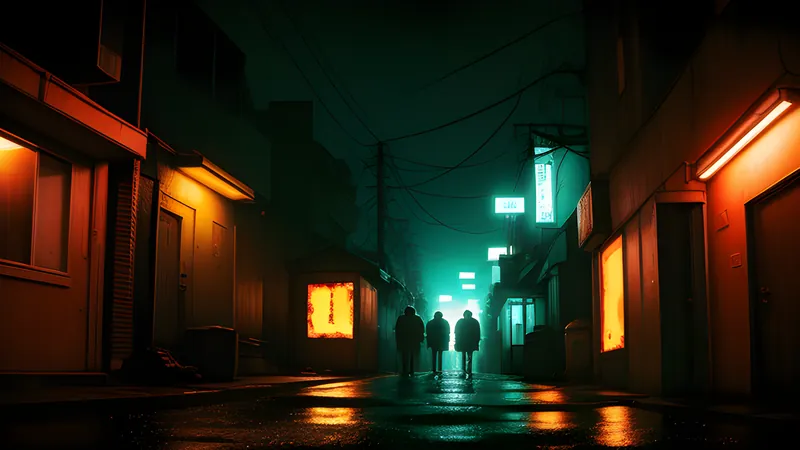
Cyberpunk 2077 launched on 10 December 2020 in a state bad enough that Sony pulled it from the PlayStation Store entirely for the following six months — an almost unprecedented move for a first-party storefront to take against a major third-party release. Last-gen console versions crashed regularly, ran at framerates in the low teens, and shipped with bugs severe enough to break quest progression outright. CD Projekt Red issued a public apology, offered refunds outside the platforms’ normal policies, and spent the better part of three years rebuilding the game underneath the launch reputation. That rebuild culminated in the 2.0 update and the Phantom Liberty expansion, both released in September 2023, and together they make the case that the game the marketing had promised in 2020 existed the whole time — it just wasn’t finished, and it wasn’t running on the hardware most people were playing it on.
What was actually broken, and what wasn’t
It’s worth separating the two failures that got flattened into one narrative at launch, because they call for different verdicts. The technical failure was real and specific to last-generation consoles: Night City’s density — the crowd simulation, the traffic AI, the sheer number of interactive systems layered into every block — was built for hardware the PS4 and Xbox One didn’t have, and CD Projekt Red shipped it there anyway rather than delaying the last-gen versions separately. That’s a production and business decision, not a design one, and the studio owned it publicly.
The design failure was narrower and less discussed: the RPG systems underneath the open world — the perk trees, the cyberware slotting, the police response when you broke the law in the street — were shallow relative to what the game’s own fiction promised. Committing crimes in front of a cop in 2020’s version of Night City simply spawned enemies behind you rather than triggering any pursuit logic, which broke the entire fantasy of Night City as a living, reactive place the moment you tested it. That’s the part 2.0 actually fixed, and it’s worth treating as a separate story from the framerate crashes, because a patch can fix a framerate and can’t retroactively give a game systems it never had.
What 2.o actually rebuilt
The 2.0 update, released alongside Phantom Liberty in September 2023 for current-gen and PC only, rewrote the perk and skill trees from scratch, replacing the original’s sprawling, loosely-connected web of minor bonuses with a smaller set of build-defining choices tied to distinct playstyles — netrunner, solo, techie — each with a clearer identity than the 2020 version offered. It rebuilt vehicle combat, added a genuine police pursuit system with escalating wanted levels, and overhauled the cyberware slotting system so that a build actually felt like it was assembling a coherent character rather than stacking incremental percentages. None of this required new writing or new content; it required going back into systems that had shipped half-finished and finishing them, which is a rarer and more expensive kind of post-launch work than the cosmetic patches most live-service disasters settle for.
Phantom Liberty is the studio arguing back
Phantom Liberty, the paid expansion bundled with the 2.0 relaunch, is where CD Projekt Red gets to make its case directly rather than through patch notes. It’s a spy thriller bolted onto a new district, Dogtown, with a tighter narrative frame than the base game’s sprawling main quest — fewer factions competing for the player’s attention, a clearer central relationship between V and the new characters introduced for the expansion, and a plot that borrows the structural discipline of a heist film rather than an open-world checklist. It’s the clearest evidence in the whole three-year arc that the writing team CD Projekt Red assembled for the base game’s better character work — the Judy and Panam romance threads, the Johnny Silverhand relationship that carries the whole story — was never the problem. The problem was always the systems around that writing failing to hold up their end.
Why the base game’s ambition was real, not overpromised in the way it’s usually described
It’s become shorthand to describe CD Projekt Red as a studio that “overpromised” on Cyberpunk 2077, and there’s a public-record case for that framing in the marketing specifically — the pre-launch demos and interviews described AI and world-reactivity systems more ambitious than what shipped, and CD Projekt Red has acknowledged as much in post-mortems and interviews since. But it’s worth being precise about what that means as a fair comment on a body of decisions rather than a verdict on any individual: the studio’s public communications set expectations the 2020 build didn’t meet, and the crunch reporting around the project’s final years — extensively covered by outlets like Bloomberg at the time — describes a production under significant time pressure in its last stretch, which is a separate and well-documented story from the marketing gap. Both are matters of public record about how the game was made; neither requires guessing at anyone’s intentions.
The real ancestor
Cyberpunk 2077’s actual design lineage runs back through Deus Ex more than through Grand Theft Auto, despite the open-world marketing framing at launch — the emphasis on hacking, multiple approaches to the same objective, and a cyberware system that lets the player rebuild their own body as a toolkit is much closer to the immersive-sim tradition than to a crime sandbox. The 2.0 update’s police system and vehicle combat are the parts that gesture toward GTA; the core loop of scanning a room, picking a route through it, and choosing which systems to exploit has always been Deus Ex’s structure wearing a different city’s skin.
What the modding community kept alive during the worst of it
Between the December 2020 launch and the 2.0 relaunch nearly three years later, Cyberpunk 2077’s PC modding community did something worth recording as its own small piece of the story: while CD Projekt Red worked through the console-focused stabilisation patches, modders built systemic fixes of their own — expanded police AI, deeper cyberware customisation, quality-of-life overhauls to the HUD and inventory — years before the official 2.0 update addressed the same complaints. Some of that modding talent’s ideas visibly rhyme with what 2.0 eventually shipped, which isn’t unusual for a game with an active PC scene, but it’s a reminder that the base game’s systemic bones were sound enough to be built on immediately, even during the period when the official version was at its most compromised. A game that’s fundamentally broken at the design level doesn’t attract that kind of sustained community investment; a game that’s broken at the technical and systems-depth level, with good bones underneath, does.
The comparison the industry kept making, and what it got wrong
Cyberpunk 2077’s turnaround got compared constantly, in the years after 2.0, to No Man’s Sky’s own multi-year recovery from a disastrous 2016 launch, and the comparison is useful mainly for where it breaks down. No Man’s Sky’s launch failure was almost entirely a promises-versus-delivered-features problem — a smaller studio had oversold scope it hadn’t built yet, and the fix was years of free content additions restoring what had been promised. Cyberpunk 2077’s failure was different in kind: the scope was mostly there at launch, buried under broken systems and a console port that shouldn’t have shipped when it did. The fix accordingly looked different too — less about adding promised features from scratch, more about finishing systems that already existed in rough form. Both recoveries get cited as proof that “a bad launch can be redeemed,” which is true as far as it goes, but the two studios were solving genuinely different problems, and treating them as the same story flattens what’s actually instructive about each.
The refund policy set a precedent the industry still points to
Sony and Microsoft’s decision to offer refunds for Cyberpunk 2077 outside their platforms’ normal windows, and Sony’s further step of pulling the game from sale entirely for six months, remains one of the most direct platform-level interventions into a single third-party game’s launch in the current console generation. It’s a precedent other publishers and platform holders have since had to reckon with when their own launches went badly, and it’s worth crediting as a genuine consumer-protection moment even though it came at CD Projekt Red’s direct financial and reputational expense. Few launch failures have produced a policy response that concrete, and fewer still have been followed by a redemption arc thorough enough to make the platform holders’ original intervention look, in hindsight, like a reasonable calibration rather than an overreaction.
Night City’s crowd systems finally do what the marketing promised
One specific, testable claim from Cyberpunk 2077’s original marketing was that Night City’s population would react convincingly to the player’s presence — flee gunfire, call police, remember recent events. At launch, none of that held up under scrutiny; NPCs vanished when the player looked away and reappeared behind them, and crowd reactions to violence were minimal. The 2.0 update’s police and crowd overhaul is the clearest single point where the game closes the gap between its original pitch and its delivered systems, and it’s worth measuring the update against that specific 2020 promise rather than against a vague sense of “the game got better,” because it’s one of the few places where a concrete pre-launch claim and a concrete post-patch feature can be lined up directly against each other.
Spoilers below
Phantom Liberty’s ending forks meaningfully depending on choices made throughout its central espionage plot, including a late decision about whether to trust a key NSA-adjacent handler that changes which of the base game’s own multiple endings becomes available to V afterward — a deliberate piece of retroactive narrative repair, tying the new expansion’s outcome back into the original 2020 ending structure that many players found the weakest part of the base campaign. The 2.0 update also quietly recontextualises the base game’s “Panam” ending path, giving it slightly more closure than it had at launch, without altering the underlying choice structure that determines which ending a player reaches.
Related Content