Cyberpunk 2077 Phantom Liberty: The Expansion That Finished the Argument
CD Projekt Red spent three years fixing a broken launch. The expansion is where the fix became a thesis
Contents
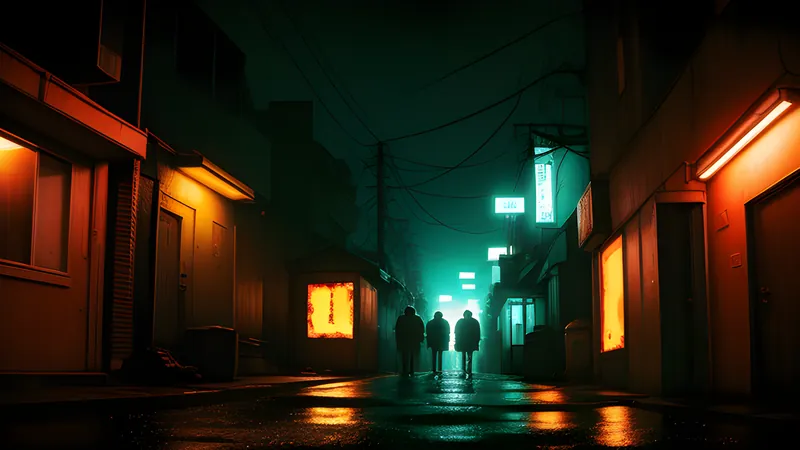
Dogtown looks worse than the rest of Night City on purpose. Every other district in Cyberpunk 2077 has a corporate hand somewhere on the thermostat — even the slums are somebody’s zoning decision. Dogtown is what’s left when a corporation walls off a neighbourhood, calls it a special economic zone, and then loses interest in it. The walls are still there. The interest never came back.
CD Projekt Red shipped Phantom Liberty on 26 September 2023, alongside the free 2.0 update that rebuilt the base game’s perk trees, police response and vehicle combat underneath it — a rare case of a paid expansion and a free foundational patch landing on the same day, aimed squarely at the version of this game that existed before launch went wrong. Idris Elba plays Solomon Reed, an FIA agent who recruits V into a plot to save the president of the New United States of America after her plane goes down over Dogtown. It’s a spy thriller grafted onto an RPG that was never quite sure, at launch, what genre it wanted to be. The graft takes.
Why it works: a district with one landlord problem
The mechanical trick of Dogtown is that it has exactly one political fact governing it — Kurt Hansen, an ex-NCPD officer turned warlord, runs the district through his Barghest militia, and every quest either works through that fact or works around it. Night City proper is chaos distributed across half a dozen competing factions; Dogtown is chaos with a landlord, and a landlord is something a story can build pressure against.
That focus lets the writing do something the base game’s sprawl couldn’t: build a genuine three-way tension between Reed’s spy agency, Hansen’s militia and the mercenary underworld you’re nominally part of, and let V’s loyalties actually cost something depending on which way you lean. The quest structure rewards attention to who’s lying to you and why, rather than rewarding the player who simply picks the highest numbers on a gear check. That’s the spy-thriller genre doing actual design work, not just supplying a paint job for the same open-world checklist.
The relic skill tree bolted on with the expansion reinforces the same idea mechanically. Where the base game’s cyberware was mostly stat-additive, the relic tree gives V short, powerful active abilities — a berserk mode, a short-range teleport-blink, a device that turns enemies against each other — tied to the techno-thriller premise that V’s body is running someone else’s engram. The abilities read as narrative consequence rather than loot-table filler, which is the standard the immersive sim canon sets and which the base game, at launch, mostly missed.
The ancestor: Deus Ex’s problem, solved with a smaller map
Phantom Liberty’s real ancestor is Deus Ex, and the inheritance is structural: the bet that a single well-instrumented district beats an open map stuffed with icons. Deus Ex proved in 2000 that a level built around multiple, genuinely different solutions to the same locked door (hack it, talk your way past it, climb over the wall behind it) produces more replay value than ten times the square footage of undifferentiated content, an argument made properly here. Dogtown takes that lesson and applies it at the scale of a whole borough: it’s smaller than Night City’s other districts, but every building in it has been authored with a specific infiltration answer in mind, verticality and netrunning and straightforward gunplay all treated as equally legitimate ways through.
The other ancestor worth naming is Syndicate — Bullfrog’s 1993 corporate-dystopia game, which is the earliest place this site has traced the specific aesthetic of a Persuadertron turning civilians into a following mob. Phantom Liberty doesn’t borrow the mechanic, but it borrows the moral posture: a world where the corporations and the state security apparatus are equally willing to use you and equally unbothered by your death, and the player’s only leverage is information nobody else has yet.
What 2.0 changed underneath it
None of the above works if the base systems fight you, and this is where the free 2.0 update matters as much as the paid content sitting on top of it. Police response before 2.0 was a punchline — officers materialising behind you mid-crime with no travel time, a joke the community had been making since launch week. The rebuilt system gives Night City’s police an actual response curve: reports come in, units have to travel, and a getaway is a real skill rather than a loading-screen reset. Vehicle combat, near-absent before, became a genuine option, which matters directly to Dogtown’s geography — a walled district with checkpoints is exactly the kind of space where a shootout on wheels changes what a mission can look like.
The perk trees were rebuilt around build identity rather than a single stat-stacking optimal path, which sounds like a small technical note until you notice what it does to Phantom Liberty’s own difficulty curve: because a stealth-netrunner build and a gunslinger build now diverge meaningfully in the early game, Dogtown’s missions read differently depending on what you specced into, rather than converging on the same solution regardless of build. That’s the same principle Deep Rock Galactic’s loop applies to class variety — differentiated builds are worth more than balanced ones — arrived at here by a studio patching its own three-year-old mistake in public.
The performance layer
Elba’s Solomon Reed is doing something the base game’s cast rarely got to attempt: he plays an entire character arc through restraint. Reed spends most of the expansion underplaying a man who has spent decades deciding, professionally, which lies to tell and to whom, and the performance-capture work lets that show in small things — a held glance, a pause before a lie lands — rather than in the exposition-heavy monologuing that a lot of open-world writing defaults to when it wants you to understand a character quickly. The choice pays off because V, voiced by either Gavin Drea or Cherami Leigh depending on the player’s pick, spends the whole plot reacting to a man who’s harder to read than anyone else in Night City, and that imbalance is the actual tension driving every scene between them, independent of the guns.
A large share of Dogtown’s storytelling happens through the district’s architecture rather than through cutscenes at all. The checkpoint gates, the scavenged NUSA military hardware repurposed as barricades, the half-finished skyscraper that Barghest fighters have colonised floor by floor — all of it reads as a place that was mid-construction when the wall went up and has been improvising ever since. That’s environmental storytelling doing the job dialogue usually has to carry, and it’s a stronger version of world-building than most of the base game’s Night City proper manages, precisely because the district is small enough for every corner of it to have been authored on purpose.
Reading the launch against the fix
It’s worth being honest about the distance travelled. Cyberpunk 2077 launched in December 2020 to a well-documented run of bugs, missing systems and a last-generation console version pulled from PlayStation’s store entirely for months. CD Projekt Red spent the years since on a public, unusually transparent repair job — patch 1.5, then 1.6, then the 2.0 rebuild — before spending on new content at all. Phantom Liberty is the payoff of that order of operations: it only reads as confident because the foundation under it stopped moving first.
That’s a genuinely unusual studio decision, treating the paid expansion as the reward for finishing the free repair rather than the other way round, and it’s the reason the expansion earned the kind of critical and awards attention — a BAFTA for Narrative among them — that the base game, whatever its ambitions, never quite collected at launch.
The order matters for a specific reason: most studios that ship a broken launch either abandon the game or move straight to paid content to recoup the cost of the disaster, and either choice reads as giving up on the original promise. CD Projekt Red instead spent years shipping free structural work with no new content attached to it at all — the kind of unglamorous engineering that doesn’t generate a trailer or a store page, only patch notes most players skim past. That the studio kept doing it anyway, for three years, before charging for anything new, is the reason Phantom Liberty gets read charitably by players who had every reason to have stopped trusting the brand. Trust, once spent, is usually the most expensive thing in this industry to rebuild, and the rebuilding here happened in public, patch by patch, with no guarantee anyone would still be watching by the end of it.
The verdict, and where to go from it
Phantom Liberty argues, successfully, that Night City’s best writing needed a smaller box to happen in. The espionage plot gives Solomon Reed and Kurt Hansen room to be specific antagonists rather than diffuse setting texture, and the relic tree gives the player’s own body a stake in the outcome. It’s not a fix for everything the base game reached for and missed — the open world’s icon density is still an open world’s icon density — but it’s proof the studio learned the actual lesson from its own launch, which is that a tightly authored district beats a wide shallow one every time.
Play it on PC or current-generation consoles with the 2.0 update installed; the last-generation version never received the expansion at all, which is itself a fact worth knowing before buying. Anyone who bounced off the game at launch and never went back has more reason to return now than any patch note alone could argue for. If Dogtown’s spy-thriller focus is the draw, Deus Ex is still the sharper version of the same idea, and it’s worth playing both to see how much distance a single well-bounded map can cover.
Spoilers below
Reed’s actual loyalty splits the expansion into two structurally different endgames depending on whether V sides with the FIA or with Songbird, the netrunner Reed is secretly protecting. Songbird’s own arc — a defector whose neural degradation is the game’s clearest metaphor for what Night City’s implant economy actually costs a body over time — resolves in at least three distinct ways depending on choices made across the whole questline, including an ending that lets V choose a version of survival the base game’s original endings never offered. The Barghest’s Kurt Hansen is killed or spared depending on how the player handles the district’s political balance, and that choice ripples into which of Dogtown’s factions control the district in the epilogue slides — a level of downstream consequence the base game’s main story rarely modelled this precisely.
Related Content