Control: Remedy's Brutalist Office Horror
The Oldest House is a government building that has read too much Borges, and the physics engine is the reason it works
Contents
The first hour of Control is a woman walking into an office. There is a janitor with a Finnish accent, a reception desk, a directory board, and a pyramid of concrete overhead that goes up further than the building’s exterior allows. Remedy Entertainment released it on 27 August 2019 — PC via the Epic Games Store for its first year, plus PS4 and Xbox One — under director Mikael Kasurinen with Sam Lake writing alongside Anna Megill and Brooke Maggs, and published by 505 Games. Six years on it is the studio’s most complete piece of world-building, and the reason is architectural rather than narrative.
The Oldest House is the best level in any game of its decade, and it is a level about bureaucracy.
The building is the design document
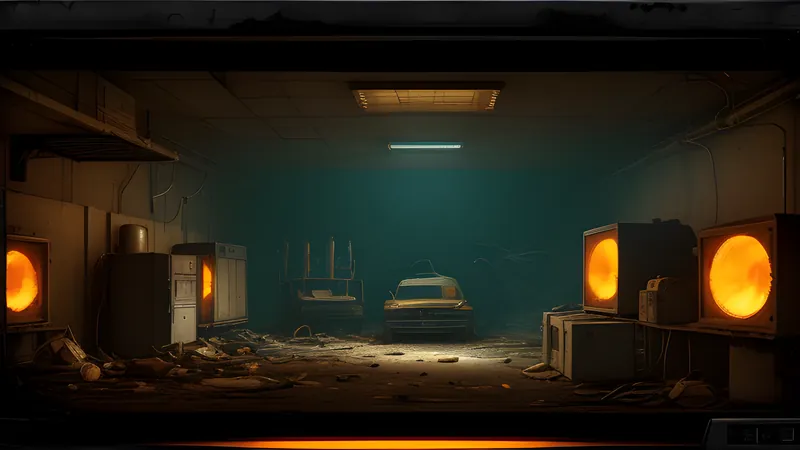
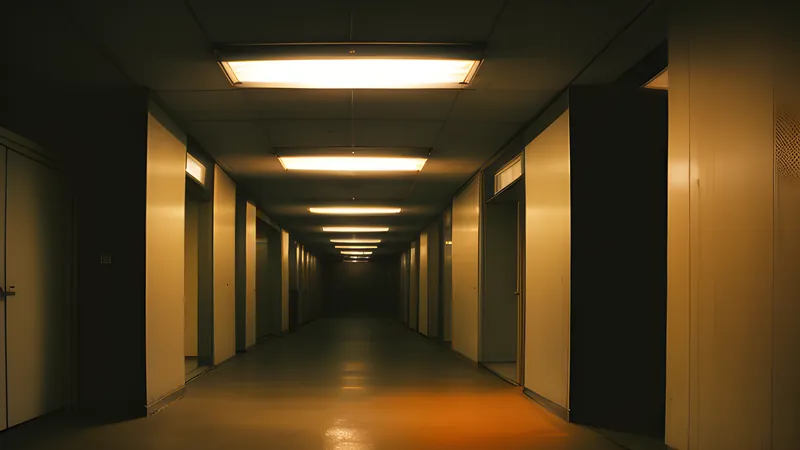
Brutalism is a real aesthetic argument: the structure is the ornament, the concrete is left showing, the building declares its own systems. Remedy took that literally. The Federal Bureau of Control occupies a mid-century concrete government block, all board-marked walls, terrazzo floors, wood panelling, green-shaded lamps and an internal mail system, and then the building starts behaving like an Object of Power. Corridors reconfigure. A stairwell delivers you somewhere geometry says it should not. The Ashtray Maze rearranges itself faster than you can walk it.
This is a very specific horror, and it is the reason the game sticks. Haunted mansions are exhausted; a haunted administrative facility is not. The dread in Control comes from paperwork — a redacted case file describing a rubber duck that killed six people, a research memo written in the flat voice of a civil servant who has stopped being surprised. The building’s uncanniness is legible only because everything around it is so aggressively ordinary. You believe the impossible pyramid because the noticeboard next to it has a poster about workplace ergonomics.
The lineage is legible and Remedy has never hidden it: the SCP Foundation’s clinical containment prose, Mark Z. Danielewski’s House of Leaves for the building that is larger inside, Jeff VanderMeer’s Annihilation for the New Weird tone, Twin Peaks for the FMV inserts and the Finnish rock band. What Remedy added is the thing prose cannot do: you walk it. A house that is bigger on the inside is a conceit on the page and a spatial fact in an engine.
Why the combat holds
The Service Weapon is the second-best idea in the game. It is a single pistol that reconfigures into five forms — Grip, Shatter, Spin, Pierce, Charge — with no ammunition, only a recharge, so the weapon is a tool you select rather than a resource you manage. Beside it sits Launch: telekinesis, on a cooldown, which tears a chunk of the building loose and throws it at somebody.
The reason this feels good is Northlight, Remedy’s engine, and specifically the destruction. The Oldest House is built out of debris waiting to happen. Every desk, chair, filing cabinet, monitor, partition wall and potted plant is a projectile, and a serious fight in the Bureau’s open-plan offices ends with the room reduced to particulate. The combat loop therefore runs: shoot to build energy, Launch to spend it, watch the office disassemble. Levitate, added later in the ability tree, lifts the whole thing into three dimensions and turns the atria into arenas with a Z-axis.
The real ancestor here sits outside Remedy’s own catalogue. It is Psi-Ops: The Mindgate Conspiracy (Midway, 2004), which built a whole third-person shooter around telekinesis and physics objects and which nobody bought, alongside Half-Life 2’s gravity gun (2004), which taught a generation that a physics object in your hands is more interesting than a bullet. Both games arrived when physics middleware was new enough to be the selling point, and both understood the same thing: the pleasure of throwing a filing cabinet is that the cabinet was furniture a second ago. Control is the first game to give that idea a budget, an art director and a building worth destroying.
Where it fights itself: the enemy variety is thin. The Hiss are men in hard hats and body armour, floating, chanting, and by hour twelve you have seen the roster. The encounters escalate through numbers and health pools, which is the least interesting axis available to a game with this much physics under it.
The ability tree compounds it. Jesse’s powers arrive on a schedule tied to Objects of Power, and each is excellent on arrival, yet the game rarely builds an encounter that demands two of them together. Seize — turning an enemy to your side — is the clearest waste: a mechanic with real tactical depth, deployed against enemies who die too quickly for the investment to matter. Remedy built a sandbox and then mostly asked you to clear rooms in it.
The map is a genuine failure
I take the map seriously because Control takes navigation seriously and then sabotages it.
The Oldest House is a Metroidvania — gated sectors, clearance levels, ability locks, backtracking — and it ships with a map that does not rotate, does not sensibly express vertical relationships, and is close to unreadable in the multi-level sectors it most needs to explain. In a game whose entire subject is a building that will not hold still, being lost is thematically perfect and practically miserable. Compare Metroid Dread, where the map is the interface the whole game is played through.
The launch checkpointing was worse and Remedy fixed it. Control Points were sparse, and a boss death could send you on a long walk back through cleared rooms; the studio patched in additional checkpoints — including around the Anchor fight and the mould sequence — after the complaints landed. Base-console performance was rough at launch too, and the Ultimate Edition in August 2020 brought ray tracing to PS5 and Xbox Series consoles, though existing owners on older consoles found the upgrade path handled badly enough to become its own small scandal.
The verdict
Control is a game whose ideas outrun its systems, and it is worth playing for the ideas. The Oldest House is a genuine achievement of environmental design — the rare fictional space you could navigate in your head years later — and the Bureau’s tone, that mixture of cosmic horror and departmental procedure, is Remedy’s most original register. The physics give the combat a texture nothing else quite matches, even when the enemies opposing you are dull.
What it does not have is a second act with the confidence of its first. The Hiss are a weak antagonist for a building this strange, and the mid-game settles into a rhythm of side missions that ask you to clear a room with the same three enemy types you cleared the last room with. The Ashtray Maze is the correction — a scripted, musical, twelve-minute sequence where the level design and the soundtrack take over completely — and its presence in the last quarter is a reminder of how much more the building had left in it.
The Foundation (March 2020) and AWE (August 2020) expansions are worth taking. The second folds Alan Wake into the Bureau’s case files and turns Remedy’s back catalogue into a shared universe, which they then cashed in properly with Alan Wake 2: Remedy’s Swing at the Fence. Remedy bought the full Control rights back from 505 Games in 2023 and a sequel is in development, which is the correct outcome for a studio that finally built a world worth owning.
Play the Ultimate Edition on PC or a current console. It is cheap, it is everywhere, and there is nothing else like the Oldest House.
What to play next: Alan Wake 2 for what Remedy did once it stopped apologising for being strange, and Signalis: The Survival Horror That Reads Like a Poem for bureaucratic dread on a fraction of the budget and twice the compression.
Spoilers below
The Ashtray Maze is the game’s high point and it is instructive to say why, because the sequence works by taking things away. For twelve minutes Control removes navigation entirely — the maze folds and unfolds itself, you cannot get lost because there is no choice to make — puts Poets of the Fall’s Old Gods of Asgard over the top of it, and hands you a corridor of fights to walk through while the building performs for you. Everything the game has been fumbling (pacing, legibility, the sense that the Oldest House is doing this deliberately) snaps into focus the moment the player’s agency is narrowed.
Which raises the awkward question: Control’s best sequence is the one where it behaves least like Control.
Jesse’s internal monologue — the second voice she has been talking to since childhood, revealed as Polaris, a benign Object of Power riding along — is the structural gag that pays off the FMV inserts and Dr Darling’s increasingly unhinged research films. Trench’s suicide, delivered as the game’s opening beat and understood only later as a man refusing to become a vector for the Hiss, is the sharpest piece of writing Sam Lake has done. And Dylan, the brother, is the Bureau’s real indictment: an agency that studies children as containment risks and calls the paperwork ethics.
The ending withholds resolution deliberately — Jesse is Director, the Hiss are contained rather than defeated, the building keeps its secrets. That was a sequel hook in 2019 and it looks like patience in 2025.
Related Content