Cannon Fodder: The Anti-War Game That Sang
Sensible Software named every soldier, then made you walk past their graves
Contents
Cannon Fodder opens with a song, and the song is the reason the game got into the newspapers and the reason most people misread it for thirty years.
Sensible Software shipped it in 1993 through Virgin, Amiga first, with a title screen that plays a cheerful, jaunty, thoroughly hummable track written by Richard Joseph with Jon Hare on vocals, over the slogan “War has never been so much fun”. The tune is genuinely good. It is also doing something specific: it is putting you in the mood that recruitment posters put people in, and it is doing it on purpose, and the very next screen you see is a hill covered in graves.
That sequencing is the whole design. Everything Cannon Fodder wants to say, it says by putting two things next to each other and letting you draw the line.
The hill does the arguing
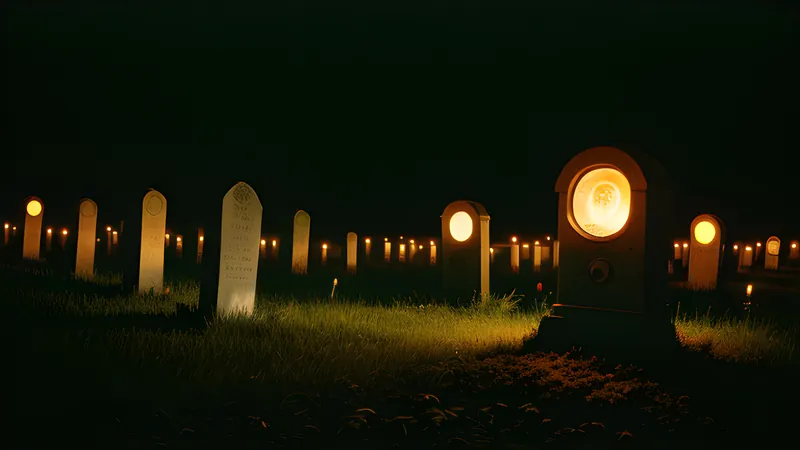
Between missions the game shows you a hillside. At the bottom, a queue of tiny recruits waiting to be called up, stretching back further than you can see. Partway up, the ones currently serving. Behind them, planted in the grass, a grave marker for every soldier who has died under your command, each with a name on it.
The hill is persistent. It grows. It never resets. And every single mission briefing makes you look at it.
I want to be precise about why this works, because “named characters with permadeath” has become a genre convention and most implementations of it are sentimentality machines. The trick here is that Cannon Fodder gives you almost nothing else about these men. They have a name and a rank and a sprite about four pixels tall. No dialogue, no backstory, no relationship system. The game does not attempt to make you love them. It just refuses to let them be anonymous, and it does the accounting in public.
That restraint is the reason it lands. Attachment you are argued into is resistible. What Sensible engineered instead is arithmetic you cannot dodge: the hill is a running total, and you did that, and it is bigger than you thought. Jools and Stoo — the first two recruits, named after Sensible’s own Jools Jameson and Stoo Cambridge — go on the marble like everybody else the first time you get careless with a grenade.
Promotion tightens it further. Soldiers who survive missions gain rank, and rank makes them measurably more capable. So the veterans are your best assets, which means you use them, which means they are the ones in front, which means they die and get replaced by a recruit from the bottom of the hill who is bad at this. The system quietly recreates the actual attritional logic of an infantry war without a word of commentary. The good ones get used up first. That is the game’s thesis and it never states it.
The mouse is the weapon
Underneath the argument is a genuinely superb control scheme, and it deserves crediting on its own terms because it is why the game is playable rather than a lecture.
You command up to four men from a top-down view. Left button moves the squad to a point. Right button fires at a point. Both together lobs a grenade or a rocket. You can split the squad into two groups and issue them separate orders. That is essentially the whole interface, and it is operable entirely with a mouse held in one hand while the other rests on a single key.
The elegance here is that move and shoot are the same gesture at different buttons. There is no mode. There is no unit selection ritual. You point at where you want to be and you point at what you want dead, and the difference between the two is a finger. Real-time squad control in 1993 was largely a menu problem — Dune II was in the same year, teaching the world to click a unit and then click a destination, two actions for one intent. Sensible’s version costs one action, and the speed that buys is what allows the game to kill you in a quarter of a second and still feel fair.
Because it does kill you in a quarter of a second. A single rifle round ends a soldier. There is no health bar. The enemy sprites are as small as yours and shoot as hard, and a man in a hut you did not scout will delete your sergeant before the sound plays. The lethality is symmetrical and total, and it is what converts the control scheme into a stealth-and-flanking game: you cannot trade fire, so you must approach from an angle, use the terrain, send one man to be looked at while three men walk around the side.
That is a tactics game, played at arcade speed, with a two-button interface. Very few things since have managed that combination, and the ones that have — the more merciless end of modern squad roguelikes — arrive at the same place by the same route: make death instant and cheap to administer, and the player will start planning.
The mission structure and where it strains
Twenty-four missions, each split into several phases, and the difficulty curve is honest for about two-thirds of its length. Early maps teach verbs — the grenade arc, the vehicle, the hostage, the enemy building that must be entered. The middle is the game at its best: open maps with multiple approaches, a squad you have grown attached to by ordeal, and a real decision about whether to split.
The late game is where I would push back. The maps get longer and denser and start relying on the player having memorised where the ambush is, which is the same padding tax the era applied to everything — the difficulty stops being a skill test and starts being a repetition test. Losing a phase deep into a long mission and restarting it with fresh recruits is where the design’s cruelty stops being thematic and becomes merely tedious. Sensible built an argument that only needed two-thirds of its running time to land.
The presentation stays remarkable throughout. The sprites are tiny and legible, the terrain reads instantly, the deaths are quick red punctuation. There is comedy in it — the physics of a grenade, the way a squad follows you into a river — and the comedy is load-bearing. A game that was solemn about this would have been unbearable and unplayed. The joke is what gets you to the hill.
The poppy
The public record: ahead of Remembrance Day in November 1993, Cannon Fodder’s promotion — the poppy imagery alongside “War has never been so much fun” — drew objections from the Royal British Legion, and the British tabloid press, the Daily Star prominently, ran with the story. Sensible and Jon Hare defended the game as anti-war. That is what happened, and it is worth leaving at that, because the incident has accumulated a lot of retold detail over three decades and the plain version is sufficient.
What is analytically interesting is that the objection and the game were arguing the same side and could not hear each other. The Legion’s position was that the poppy is a symbol of remembrance and does not belong on entertainment. The game’s position is that war grinds up named individuals and hands the survivors a promotion. The disagreement was about the marketing, and the marketing was the part of Cannon Fodder that was doing the ironic voice with no context attached to it. On a shelf, “War has never been so much fun” next to a poppy is a slogan. In the game, it is the first half of a sentence the hill finishes.
There is a lesson in there about where irony is safe to put. Inside the work, next to its counterweight, it is an argument. On a poster, alone, it is just the thing it was parodying.
Where it sits
Cannon Fodder holds up because its mechanics and its meaning are the same object. The theme is what the permadeath computes; the hill is the output of the system rather than a comment on it. Games have spent thirty years trying to say something about violence with cutscenes, and this one said it with a leaderboard of the dead and a song you cannot get out of your head.
Its truest descendant is Sensible’s own next trick. Sensible World of Soccer shares the DNA exactly — tiny sprites for readability, an interface reduced to almost nothing, and a simulation of enormous depth running underneath a screen that looks like a toy. The studio’s whole method was to hide a serious system inside something that looks like it is joking.
Play the Amiga version if you can; the mouse is the game and the console ports had to solve that problem without one, with mixed results. Bring a friend for the two-player mode, which is a co-op game about accidentally shooting each other. That is thematic too.
Related Content