Alan Wake 2: Remedy's Swing at the Fence
Thirteen years, two protagonists and a musical number — the most ambitious thing Remedy has ever shipped
Contents
There’s a moment, some way into Alan Wake 2, when the game stops being a game and becomes a music video — a full-blown, choreographed, live-action rock number with the studio’s own creative director hoofing about in it, staged inside a survival horror published by the company that makes Fortnite.
Nobody made Remedy do that. That’s the whole review, really. Alan Wake 2 is a studio taking the biggest swing available to it, with somebody else’s money, on a sequel to a game from 2010 that most publishers would have quietly filed under “fondly remembered”.
It shipped on 27 October 2023 for PC, PlayStation 5 and Xbox Series X/S, published by Epic Games Publishing, digital-only, no disc. Directed by Sam Lake and Kyle Rowley. It is Remedy’s first actual survival horror after twenty-odd years of making third-person shooters that were secretly about something else, and it is the least compromised thing they have ever put out.
Two games in a trench coat
You play two people.
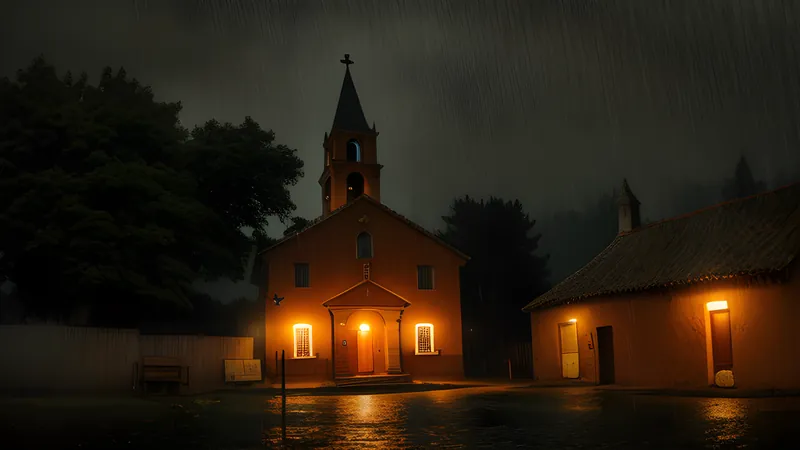
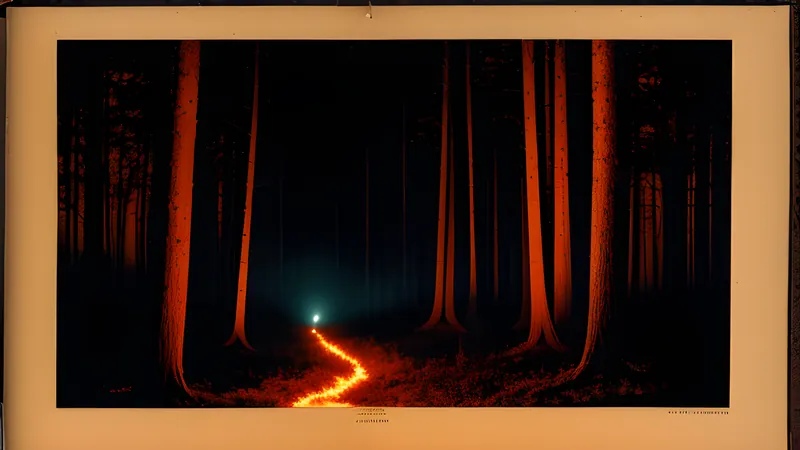
Saga Anderson is an FBI agent who arrives in Bright Falls to investigate a series of ritual killings, and her half is the procedural: rain-soaked Pacific Northwest towns, a caravan park, a flooded resort called Watery, a lot of walking through woods with a torch. Her signature system is the Mind Place, a mental room she can step into at any moment to pin evidence to a case board, connect threads, and profile suspects by sitting in an imaginary chair opposite them.
Alan Wake has been in the Dark Place for thirteen years, writing a story to get out, and his half is a nightmare version of New York where the geometry lies. His system is the Writer’s Room, where he swaps out plot elements — pick a different angle for a scene, and the physical space rearranges to match the new draft. He also carries an angel lamp that can lift light out of one place and drop it into another, changing the whole state of a level between two versions of itself.
You can switch between them almost freely after the opening hours. Two protagonists, two structures, two visual languages, one story that only closes if you’ve been in both.
The reason this works, when it works, is that the two halves are arguing. Saga’s method is evidence: things happened, they can be established, a board can hold them. Alan’s method is authorship: things happen because someone wrote them, and the board is where you decide what’s true. Putting a detective and a novelist in the same plot and giving each of them a corkboard is a genuinely good joke, and the game is smart enough to know it’s a joke and serious enough to build both systems properly anyway.
The Mind Place problem
Except one of those boards doesn’t actually work, and it’s worth being specific about why, because it’s the clearest case in the game of the design fighting itself.
Saga’s case board cannot be wrong. You collect a piece of evidence, you go into the Mind Place, you drag it to the slot that lights up, and a thread appears. The game will not let you connect the wrong things. There’s no failure state, no dead end, no bad theory. It is a ritual of deduction rather than deduction — the pleasure of tidying, dressed as the pleasure of thinking.
Compare it with Return of the Obra Dinn, where being wrong is the entire texture of the experience and the game only confirms you in batches of three so you can’t brute-force it. Obra Dinn treats you as a reasoning adult who might fail. The Mind Place treats you as a reader who needs the plot restated in a nice room.
And yet — I don’t hate it, and here’s the honest complication. Alan Wake 2’s story is deliberately hard to hold, and the case board is where Saga says out loud what she’s just worked out. It’s a comprehension aid with a lovely UI. As a puzzle system it’s theatre. As a narrative instrument, it’s the reason a plot this strange stays legible for twenty hours, and I’d rather have the legibility than a fake puzzle I’d have looked up anyway.
The Writer’s Room is the better system for the reverse reason: swapping a plot beat visibly changes the level. The idea has consequences you can walk through. It’s the same trick Alan’s angel lamp pulls with light, and the same trick Control pulled with the Oldest House rearranging itself behind you. Remedy have been building the “the building is the plot” mechanic for years, and here it finally has a novelist in it, which is what it always wanted.
The horror, and the shooting
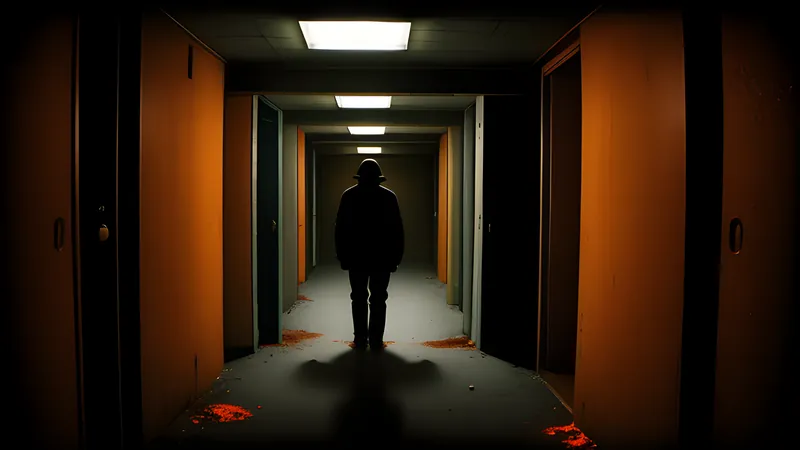
Survival horror, properly. Small inventory, real ammunition scarcity, save rooms with a locker, enemies that require a light-then-shoot two-step that makes every encounter cost something.
The light mechanic from the first game returns and is finally load-bearing. Enemies wear a shadow shield; you burn it off with the torch, and the torch has batteries. So a fight has a resource sequence — light, then bullets, then run — and the horror comes from the arithmetic breaking down halfway through. That’s a good system, borrowed knowingly from the genre, and the sound design sells it: the Taken don’t shamble so much as mutter, and the muttering arrives before they do.
The shooting itself is the weakest thing here, and Remedy know it. The guns are deliberately heavy and imprecise, dodging is a lurch, and after eight hours the encounters stop escalating — you fight the same handful of shapes in the same handful of ways, with more of them. Remedy have made some of the best third-person combat ever built. They have chosen, correctly, to make the combat in their horror game feel bad. The problem is that they didn’t cut enough of it, and a system you’ve deliberately made unpleasant should be rationed like the ammunition is.
The other soft spot is the middle. Alan’s Dark Place chapters are the most inventive material in the game and also the most repetitive traversal — the light-swapping is a puzzle you solve about nine times, and by the sixth it’s a chore with a beautiful skybox on it.
Why the swing lands anyway
Because of the confidence. Alan Wake 2 is full of things that should not survive a pitch meeting.
It has live-action FMV cut into it constantly — Ilkka Villi’s face, Matthew Porretta’s voice, a whole in-fiction talk show, an in-fiction TV anthology. FMV has been a punchline since the CD-ROM boom in the mid-90s, when every studio with a camcorder shoved grainy actors into a DOS game and called it cinema. Remedy have spent twenty years quietly refusing to let the idea die, from Max Payne’s photo-comic panels onward, and Alan Wake 2 is where it stops being a stylistic tic and becomes the actual grammar. The live-action isn’t cheaper than the engine. It’s another layer of the fiction, deployed because a story about an author trapped in his own draft should keep showing you the seams.
The nearest recent relative is Immortality, which also understood that footage of a real face carries a charge no rendered model can fake. Immortality is the more rigorous experiment. Alan Wake 2 is the one that got a AAA budget and used it to stage a musical.
And the Remedy Connected Universe finally justifies itself. Alex Casey — Sam Lake’s face, James McCaffrey’s voice, a hard-bitten cop from a series of novels inside a game whose protagonist wrote them, played by the man who made Max Payne — is the kind of joke that only works if you’ve been paying attention for two decades. Control’s Federal Bureau of Control is here too, and it lands as a payoff rather than a homework assignment.
The verdict
Alan Wake 2 is the most interesting big-budget game of the year and it is not the most enjoyable one, and I think Remedy would take that trade every time.
The combat drags, the middle sags, the case board is a magic trick pretending to be a mind. Against that: a studio that got handed serious money and spent it on a wordless twenty-hour argument about authorship, with a rock opera in the middle and a live-action talk show host doing the exposition. It is strange in a way games at this budget essentially stopped being around 2012, and the strangeness is not decoration — it’s structural, it’s the point, and it is worth more than another well-tuned shooting gallery.
Play it in the dark, in chunks, and let Saga’s board do the remembering for you.
What to play next: Control for the same studio building the same idea with concrete instead of ink, and Immortality for the purest version of the live-action gamble.
Spoilers below
The structural gag is that Alan is writing Saga’s story and Saga is investigating Alan’s, and both of them are right. Remedy commit to the loop hard enough that the game’s own chapters start behaving like drafts — the Initiation and Return labels aren’t flavour, they’re the manuscript’s table of contents, and the whole thing folds into a spiral where the ending is a beginning that’s been through a rewrite.
The chapter that makes the case for the whole project is We Sing. You walk into the Old Gods of Asgard material expecting a set-piece and get “Herald of Darkness”: a full musical number, live-action, that recaps thirteen years of a fictional writer’s biography in verse while you’re still holding a torch. It is the most expensive thing in the game and it has zero mechanical purpose, and it’s also the only sequence I’ve seen this year that made me put the controller down and grin at a wall. That’s the swing. A studio with a publisher breathing on it does not make We Sing.
The Dark Place’s rewriting of New York is where the Writer’s Room finally goes from clever to frightening — the moment the plot element you swap starts changing things you didn’t intend, and the tool you’ve been using to escape becomes the thing keeping you in. Alan’s arc lands because the mechanic is the theme: an author whose only power is authorship, in a place that grants it too literally.
The ending is a hinge into whatever comes next, and it’s the one place the ambition cashes a cheque it hasn’t earned yet. Remedy have built a universe and now owe it a resolution, and Alan Wake 2 closes on the confidence that they’ll get to make it. On this evidence, they’ve earned the benefit of the doubt.
Related Content