Zigni: The Eritrean Berbere Stew
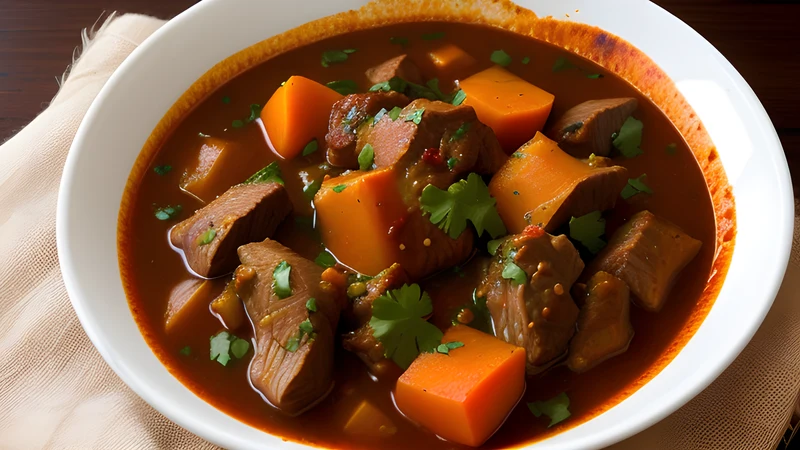
The deep red beef stew at the centre of the Eritrean table
Contents
↓ Jump to recipeZigni is what Eritreans mean when they say they are cooking something proper. It is the deep red, slow-simmered berbere beef stew that anchors a celebration table, the dish a household makes for a wedding, a christening, a homecoming, or a Sunday when there is time to let a pot murmur on the back of the stove for two hours. Rich, fiery, glossy with spiced butter and the colour of dark brick, zigni is Eritrea’s answer to the great long-cooked meat stews of the world, and it belongs firmly in the same conversation as its close Ethiopian cousin.
Zigni: The Eritrean Berbere Stew
Ingredients
- 800g beef shin or chuck, cut into 3cm cubes
- 4 large onions (about 800g), very finely chopped
- 4 tbsp niter kibbeh, or 3 tbsp oil plus 1 tbsp butter
- 6 garlic cloves, crushed
- 4cm fresh ginger, grated
- 3–4 tbsp berbere spice blend, to taste
- 2 tbsp tomato purée
- 2 fresh tomatoes, grated or finely chopped
- 600ml warm water or beef stock, plus more as needed
- 1.5 tsp salt, plus more to taste
- 2 green chillies, slit
- 4 eggs, hard-boiled and peeled (optional, traditional)
- Injera or flatbread, to serve
Method
- Cook the finely chopped onions in a dry heavy pot over medium heat for 12–15 minutes, stirring, until deeply collapsed and jammy, adding splashes of water if they catch.
- Add the niter kibbeh and cook 5 minutes more until the onions turn glossy and deep gold; this base is the foundation of the stew.
- Stir in the garlic and ginger for 1 minute, then the berbere and tomato purée, and fry gently for 3 minutes to bloom the spices.
- Add the grated fresh tomatoes and cook 3–4 minutes until the mixture darkens and thickens to a paste.
- Stir in the beef, turning to coat every cube in the red sauce, and let it fry gently for 5 minutes.
- Pour in the warm water or stock, add the salt, bring to a simmer, then cover and cook on low for 1.5 to 2 hours, stirring occasionally, until the beef is fork-tender.
- Add the slit green chillies and, if using, the whole peeled hard-boiled eggs in the last 15 minutes, letting them warm through and take on colour.
- Adjust salt, loosen with hot water if needed to a glossy stew, and serve hot with injera.
Zigni and its cousin
Anyone who knows Ethiopian food will look at zigni and see doro wat, and they would be half right. Eritrea and the northern Ethiopian region of Tigray share a language, Tigrinya, and a kitchen, so berbere-based stews and injera are common ground. Zigni is the Eritrean name for the beef version of that great red stew; the chicken version, with its hard-boiled eggs, is more or less the same dish that Ethiopians call doro wat, served with injera from scratch. The techniques, the spiced butter, the mountainous quantity of onion, the fermented flatbread underneath: all shared. What Eritreans will tell you, with a smile, is that theirs came first, or at least came separately, and that the balance of spices is subtly their own. It is a friendly argument, and both sides win, because the food is superb whichever flag it flies.
Zigni traces to the highlands of Eritrea and the food culture of the plateau cities like Asmara, where Italian colonial history left an unexpected legacy of pasta alongside the ancient injera. You will still find Eritreans eating zigni over spaghetti as happily as over injera, a genuinely delicious collision of two food worlds on one plate. But the classic, festive way is injera, torn and dipped and scooped by hand.
The two-hour patience of it
What separates zigni from a weeknight stew is the commitment to the two slow foundations. The first is the onion. Eritrean and Ethiopian stews use a genuinely startling quantity of onion, and they cook it dry, without fat, until it collapses into a sweet jammy mass before any butter joins the pot. Four large onions for 800g of beef sounds excessive until you understand that the onions form the very body of the sauce here rather than sitting in the background as an aromatic. As the stew cooks they melt entirely, thickening it and lending a deep sweetness that balances the fierce berbere. Cooking them dry first, for a full twelve to fifteen minutes, drives off their water and concentrates that sweetness. Skip it and the stew tastes thin and sharp.
The second foundation is the berbere bloom. Berbere, the rusty-red Horn of Africa spice blend of chilli, paprika, fenugreek, ginger, cardamom, coriander and more, needs to be fried gently in the fat before liquid arrives. Those three minutes cook out the raw, dusty edge of the spices and deepen the whole thing to that signature dark red. Keep the heat moderate, because berbere scorches and turns bitter over high heat. This is the same berbere logic that drives zigni’s sizzling cousin, tibs, except here the spice has hours to settle and mellow rather than seconds.
Niter kibbeh, again
As with almost every dish from this part of the world, the fat is niter kibbeh, clarified butter infused with garlic, ginger, fenugreek, cardamom, nigella and korarima. It is the flavour that says Horn of Africa, and it rewards keeping a jar in the fridge. If you have made it for kitfo, the Ethiopian steak tartare, you already have the key to zigni too. Without it, oil and butter make a good stew, just a less perfumed one. For the record, zigni is traditionally a meat-day dish, so it is rarely made vegan, but the same method with mushrooms or chunks of firm squash in place of beef, and spiced oil instead of butter, gives a fine fasting-day stew.
Cooking it, step by step
Begin with the onions, finely chopped, in a dry heavy pot over medium heat. Stir them patiently for twelve to fifteen minutes, adding a splash of water whenever they threaten to catch, until they have collapsed into a soft golden jam. Now add the niter kibbeh and cook another five minutes until the mass turns glossy and deepens in colour.
Stir in the crushed garlic and grated ginger for a minute, then add the berbere and tomato purée and fry gently for three minutes, letting the spices bloom and the colour darken. Add the grated fresh tomato and cook it down for another three or four minutes until the whole thing thickens to a rich paste and the fat begins to separate at the edges, a sign the base is properly cooked.
In goes the beef. Turn every cube to coat it in the red paste and let it fry gently for five minutes, then pour in the warm water or stock, add the salt, and bring it to a simmer. Cover and cook on low for an hour and a half to two hours, stirring occasionally and topping up with a little hot water if it gets too tight, until the beef is fork-tender and the sauce is thick and glossy. In the last fifteen minutes, slip in the slit green chillies and, if you want the traditional touch, the whole peeled hard-boiled eggs, turning them to take on the red colour. Check the salt, loosen to a glossy stew, and serve.
The eggs and the heat
The hard-boiled eggs are worth explaining, because they surprise people. In festive zigni and doro wat, whole peeled eggs are simmered in the sauce at the end, where they soak up the berbere and turn a burnished red. They are a prized part of the dish, symbolic of celebration and generosity, and there is often a small competition at the table for one. Score each peeled egg lightly with a knife before adding it and the sauce works its way in a little deeper. If eggs in a beef stew feel odd to you, leave them out; the stew is complete without them.
On heat: three tablespoons of berbere give a warm, sociable burn, four make it properly fierce in the Eritrean spirit. Berbere brands vary wildly in strength, so start at three, taste after the base is built, and add more if your blend is mild. The slit green chillies at the end add a fresh, grassy heat on top of the deep dried-chilli warmth of the berbere.
Zigni over spaghetti, and the Italian layer
The stranger and lovelier corner of zigni’s story is the pasta. Italy colonised Eritrea from the 1880s until the Second World War, and Asmara still looks in places like a preserved Italian modernist city, all cafés and Fiat showrooms and art-deco cinemas. The kitchen absorbed the influence deeply, and one of the happiest results is pasta al sugo the Eritrean way: spaghetti dressed in zigni, dusted with berbere and sometimes a little grated cheese. It is genuinely common home food, and it is worth cooking at least once, because the rich, spiced beef sauce clings to pasta beautifully and the collision of two proud food cultures on one plate is a small delicious history lesson. If you make it this way, loosen the zigni a touch more than you would for injera so it coats the strands like a ragù. The same Italian layer gave Eritrea a love of good bread, tomato sauces and even a local lager, and it sits comfortably beside the ancient injera-and-berbere tradition rather than replacing it. That doubleness, ancient highland and twentieth-century Mediterranean, is exactly what makes Eritrean food distinct from its Ethiopian sibling, and zigni is the dish that carries both stories at once.
Building your own berbere
If you want to go all the way, blend your own berbere, because a fresh batch transforms any Horn-of-Africa stew. Toast whole dried chillies (a mix of hot and mild), coriander seed, cumin, fenugreek, black peppercorns, allspice berries, cloves and cardamom in a dry pan until fragrant, then grind them with dried ginger, garlic powder, sweet and hot paprika, dried onion and a little cinnamon and nutmeg. The exact proportions are a matter of family pride and vary from house to house, but chilli and paprika should dominate by volume, with the warm spices as a background chorus. Fenugreek is the one people forget and the one that gives berbere its distinctive slightly bitter, maple-savoury depth, so do not leave it out. A homemade berbere keeps its punch for a couple of months in a sealed jar away from light, after which it fades and you should make more. The reward is a stew that tastes noticeably brighter and more complex than one built on a tired supermarket blend, and once you have a jar you will find yourself reaching for it constantly, in lentils, on roast vegetables, rubbed into meat before grilling. Berbere is one of the world’s great spice blends and worth the afternoon it takes to make properly.
Serving, storing and getting it right
Serve zigni on injera, spooned into the centre so people can tear, dip and scoop by hand, with maybe a mild lentil dish and some garlicky greens alongside to round out the platter. Over spaghetti, Asmara style, it is a revelation worth trying at least once. A dollop of plain yoghurt or Ethiopian ayib cheese on the side tempers the heat for anyone who wants it.
Zigni is a make-ahead dream. Like most long-cooked stews it is better the next day, once the spices have settled and married, and it keeps for four days in the fridge and freezes for three months. Reheat gently with a splash of water to loosen it back to a glossy sauce; if you have added eggs, they keep their texture well through one reheat.
The faults to watch for are the same as any berbere stew: a thin, sharp taste means the onions were rushed, so give them their full slow start next time; a bitter edge means the berbere scorched, so keep that early frying gentle; and tough meat simply means it needs longer, so cover it and give it another half hour, because shin and chuck only surrender their toughness to time. Get the onions slow, the spices bloomed and the beef properly tender, and zigni delivers exactly what it promises: a deep, generous, celebratory pot that tastes like the highlands it comes from.
Related Content