Zapiekanka: The Polish Street Baguette
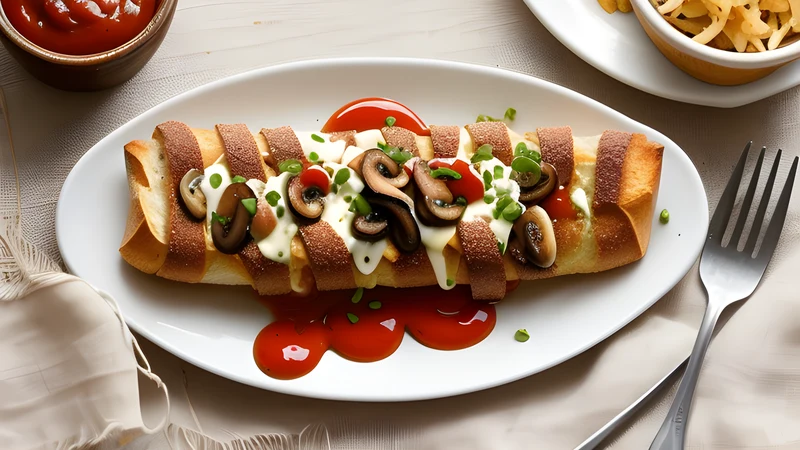
toasted half-baguette, buttery mushrooms, melted cheese, a zigzag of ketchup
Contents
↓ Jump to recipeZapiekanka is the taste of a Polish night out, the thing you eat standing at a hatch after midnight, wrapped in a paper napkin, cheese still molten and ketchup zigzagged across the top. At its simplest it is an open-face half-baguette piled with mushrooms and melted cheese and grilled until the bread crisps and the cheese browns, and it is one of the great cheap pleasures of Polish street food. There is nothing refined about it, and that is exactly the point: it is fast, hot, filling and cheerful, a snack designed to be eaten on your feet and to soak up a late evening.
What makes zapiekanka worth writing about, rather than dismissing as cheese on toast, is its history, because this humble baguette is a genuine artefact of communist-era Poland. It appeared in the 1970s, during the Gierek years, when the state relaxed its grip enough to allow small private catering stalls, and the zapiekanka became one of the first widely available convenience foods in the People’s Republic. For a generation it was a small, affordable luxury in an economy of shortages, sold from kiosks and milk bars, and it is soaked in nostalgia for anyone who grew up then. It never went away, and today it lives a double life as both cheap student fuel and, in its gourmet incarnations, a hipster street-food darling.
Zapiekanka: The Polish Street Baguette
Ingredients
- 2 baguettes, halved lengthwise and crosswise (4 long open pieces)
- 40g butter, softened
- 300g chestnut or white mushrooms, finely sliced
- 1 small onion, finely diced
- 2 garlic cloves, minced
- 1 tbsp oil
- 200g Edam or Gouda, grated (or a mix with mozzarella for the stretch)
- 0.5 tsp dried marjoram
- Salt and black pepper
- To finish: ketchup, or garlic sauce (see note)
- Small bunch chives or spring onion, finely chopped
- Optional: 100g diced ham or cooked kielbasa
Method
- Heat the oil in a frying pan and cook the onion for 4 minutes until soft. Add the mushrooms and a pinch of salt and cook over medium-high heat for 8-10 minutes until they release their water and it evaporates, then add the garlic and marjoram and cook 1 minute more. Season and cool slightly.
- Heat the grill (broiler) to high, or the oven to 220°C. Butter the cut faces of the baguette pieces and arrange on a tray.
- Spread the mushroom mixture evenly over each baguette, add ham or kielbasa if using, then cover generously with the grated cheese right to the edges.
- Grill or bake for 8-12 minutes until the cheese is fully melted, bubbling and browned in spots and the bread edges are crisp and golden.
- Finish each with a zigzag of ketchup or garlic sauce and a scatter of chives. Eat hot, ideally standing up.
The okrąglak, and zapiekanka’s spiritual home
If zapiekanka has a capital, it is a round building in the middle of Plac Nowy, the old market square in Kraków’s Kazimierz district. The okrąglak, as it is known, was once a Jewish poultry slaughterhouse, and its ring of small hatches now sells zapiekanki late into the night to a permanent crowd of students, clubbers and tourists. The versions there run to comical lengths and baroque toppings, half a metre of bread groaning under mushrooms, cheese, ham, pickles, sauces and herbs. A trip to Kraków is not complete without eating one there at an unreasonable hour, and the place has done more than anywhere to keep the dish alive and turn it into a minor icon of the city.
That gourmet turn is worth knowing about because it frees you up in your own kitchen. The classic and original zapiekanka is mushroom and cheese, full stop, and it is the version I would make first. But the modern stall menus prove the format takes almost anything, and once you have the basic method you can build whatever you like on top of the bread. The rules are few: a sturdy base, a savoury topping that will not slide off, cheese that melts well, and a sauce to finish.
Getting the mushrooms right
The mushrooms are the heart of the classic zapiekanka, and the single most common mistake is to put them on raw or barely cooked. Mushrooms hold a great deal of water, and raw ones sitting under grilling cheese will steam and weep, leaving you with a soggy, watery baguette. The fix is to sauté them properly first. Slice them fairly finely, cook them with a little onion over a medium-high heat, and, crucially, keep cooking past the point where they release their liquid, until that liquid has fully evaporated and the mushrooms are golden and concentrated. This drives off the water and deepens their flavour, and it is the difference between a limp zapiekanka and a good one.
A little garlic and a pinch of dried marjoram, the herb that runs through so much Polish cooking, stirred in at the end lifts the mushrooms further. Season them well at this stage, because the bread and cheese underneath are relatively bland and the mushrooms carry most of the savour. Let the mixture cool slightly before it goes on the bread so it does not make the crumb soggy while you wait for the grill. Chestnut mushrooms give more flavour than plain white ones, and a handful of rehydrated dried wild mushrooms folded through the mix makes a noticeably richer, more grown-up zapiekanka.
The bread and the cheese
The base is a baguette or a long, crusty white roll, split lengthwise into open boats. You want bread with enough structure to crisp at the edges and hold its topping without collapsing; a soft supermarket sandwich loaf will not do. Butter the cut faces before topping, which both adds flavour and helps the surface crisp and turn golden under the heat, giving you that essential contrast between crunchy toasted bread and soft molten topping. A slightly stale baguette actually works better than a very fresh one, as it crisps rather than toughens, so this is a fine use for yesterday’s bread.
The cheese needs to melt smoothly and brown a little. In Poland the everyday choice is a mild yellow cheese, ser żółty, typically an Edam or Gouda style, grated generously. These melt well and brown nicely, and they are what gives the authentic flavour. If you want more of a stretch and pull, blend in some mozzarella; if you want more punch, a little mature cheese in the mix helps. Whatever you use, grate it rather than slicing it so it melts evenly, and take it right to the edges of the bread, because the bits that overhang and crisp against the tray into lacy, browned cheese are the best part of the whole thing.
Grill it hard, then the finishing flourish
Zapiekanka wants high, direct heat. Cook it under a hot grill or in a very hot oven until the cheese is fully melted, bubbling and browned in patches and the edges of the bread are crisp and deep gold. This usually takes eight to twelve minutes; watch it, because the line between beautifully browned and burnt is a short one under a fierce grill. You are aiming for real colour on the cheese, with browned, blistered spots right across the top, because those browned patches are where the flavour is.
Then comes the finish, and here is where I depart a little from the ketchup orthodoxy. The traditional, nostalgic, absolutely correct topping is a zigzag of tomato ketchup straight from the bottle, and I would never tell a Pole it is wrong, because it is the authentic taste of the dish. But the modern stalls have popularised a garlic sauce, sos czosnkowy, a simple mix of mayonnaise or thick yoghurt with crushed garlic, lemon and herbs, and a cool, sharp, garlicky drizzle over the hot cheese is genuinely excellent, so make a small bowl of it and offer both. A scatter of finely chopped chives or spring onion over the top adds freshness and colour and cuts the richness. Eat it immediately, while the cheese is still stretchy and the bread still crisp; a cold zapiekanka is a sad thing.
The milk bar and the taste of the PRL years
To really understand zapiekanka you have to picture the Poland it grew up in. In the People’s Republic, the bar mleczny, or milk bar, was the backbone of cheap public eating: state-subsidised cafeterias serving simple dairy and flour-based dishes to workers for next to nothing. When private catering was cautiously permitted in the 1970s, the zapiekanka slotted straight into this world of affordable, unfussy food, sold from kiosks and stalls to people who wanted something hot, quick and cheap. It carried a small glamour precisely because so much else was scarce, and eating one was a modest, ordinary pleasure in a system that offered few of them.
That history is why the dish provokes such fondness in Poles of a certain age, and why the plain mushroom-and-cheese original still feels more authentic to many than the loaded gourmet versions. It tastes of student years, of late buses, of a particular vanished era. Knowing that context will not change how you cook it, though it does explain why a simple grilled baguette carries more cultural weight in Poland than its ingredients could ever suggest, and why the stalls that sell it have become quietly beloved landmarks.
Making them for a crowd
Zapiekanki are brilliant party and gathering food, easy to scale and quick to cook. Do all the prep ahead: cook the mushrooms, grate the cheese, split and butter the bread, and mix the garlic sauce, then keep everything ready to assemble. When people arrive, top the baguettes and grill them in batches, because they take only ten minutes and are best eaten the moment they come out. Lay out bowls of ketchup, garlic sauce, chopped chives and pickles and let everyone finish their own. For a casual crowd you can also part-cook them, melting the cheese most of the way, then finish under the grill just before serving to crisp them up. They do not reheat well once fully cooked and cooled, going leathery and losing the crisp-soft contrast that makes them good, so cook only what will be eaten straight away and hold the rest at the assembled, ready-to-grill stage.
Toppings and variations
Once you have the method, the zapiekanka is a canvas. Diced ham or sliced cooked kielbasa scattered under the cheese makes it heartier. Sliced pickled cucumbers, added after grilling, bring a sharp crunch that cuts the richness beautifully and is very traditional on the Kraków stalls. Caramelised onions, sweetcorn, jalapeños, tinned pineapple for the brave, a fried egg on top, or a handful of rocket after cooking all have their place. Vegetarians are well served by the classic mushroom version, which needs nothing added. The one constant is the structure: cooked topping, generous melting cheese, hard grill, cool sauce, fresh herbs.
Zapiekanka is the fast, cheerful end of Polish home cooking, the everyday counterpoint to the slow, serious dishes that define the cuisine. It is what you make on a lazy evening when a pot of bigos, the hunter’s stew, or a batch of żurek in a bread bowl would be far too much effort. It sits at the opposite pole from the labour of pierogi ruskie made from scratch or a carefully pounded kotlet schabowy, and a good Polish cook loves all of them, the fifteen-minute grilled baguette and the all-afternoon project alike. Make one late at night with the grill roaring, and you will understand exactly why a whole country feels sentimental about a piece of cheese on bread.
Related Content