Yukgaejang: Spicy Shredded Beef Soup
The court-kitchen substitute that became a hangover cure in its own right
Contents
↓ Jump to recipeYukgaejang translates roughly to “meat gaejang,” and the second half of that name carries a history worth knowing, because it isn’t flattering on the surface. Gaejang, or boshintang, is a dog-meat soup with a long and now largely faded history in Korean cooking, prepared in a specific spicy, gochugaru-heavy style that was believed in traditional medicine to help the body withstand summer heat. As dog meat fell out of common use through the twentieth century, cooks adapted the same spicy preparation and seasoning logic to beef instead, producing a soup that borrows gaejang’s name and its stamina-restoring reputation while using an entirely different protein. Yukgaejang, then, is literally “beef, prepared the way gaejang is prepared” — a substitution dish whose name preserves the memory of what it replaced.
That stamina-restoring reputation has stuck around in a more modern form: yukgaejang today is one of the more commonly cited Korean hangover foods, alongside soups like haejangguk more explicitly named for the purpose. Its combination of a rich, long-simmered beef broth, real heat from the gochugaru, and the sheer volume of a full bowl makes it a plausible candidate regardless of the specific physiological claims, and it’s ordered widely for exactly that reason at lunch counters near business districts the morning after a heavy night of company dinners and soju.
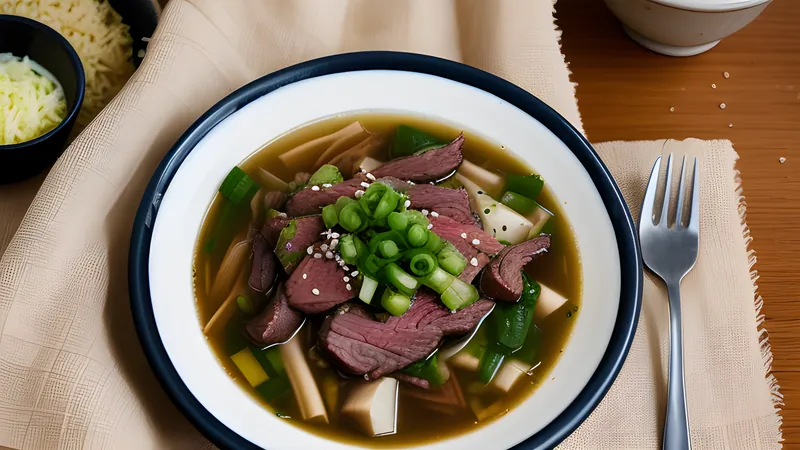
Yukgaejang: Spicy Shredded Beef Soup
Ingredients
- 600g beef brisket, in one piece
- 2.5 litres water
- 1 onion, halved
- 4 spring onions, whites and greens separated
- 4 garlic cloves, crushed
- 80g dried gosari (bracken fern), soaked overnight and drained
- 150g mung bean sprouts
- 4 tbsp gochugaru
- 3 tbsp neutral oil
- 3 tbsp soy sauce
- 1 tbsp minced garlic
- 1 tsp sesame oil
- 1 egg, beaten
- salt, to taste
Method
- Place the brisket in a large pot with the water, onion halves and 4 whole crushed garlic cloves, bring to the boil, then skim off any scum.
- Reduce to a low simmer, cover, and cook for 1 hour 30 minutes to 2 hours, until the brisket is fully tender and shreds easily with a fork.
- Remove the brisket and set aside to cool slightly, then shred it into thin strips by hand along the grain.
- Strain the cooking liquid through a fine sieve and reserve; discard the solids.
- Mix the gochugaru with the neutral oil in a small bowl to make a chilli oil paste, letting it sit for 5 minutes.
- Return the strained broth to the pot, add the shredded beef, gosari, bean sprouts, spring onion whites, chilli oil paste, soy sauce and minced garlic.
- Simmer for 20-25 minutes, until the gosari and sprouts are tender and the broth has taken on a deep red colour.
- Season with salt to taste, drizzle in the beaten egg in a thin stream while stirring gently, and let it set into ribbons for 1 minute.
- Finish with the sesame oil and spring onion greens before serving hot.
Gosari, the ingredient most cooks outside Korea don’t know
Gosari, dried bracken fern shoots, is central to yukgaejang’s texture and its most distinctive ingredient to source. Sold dried in Korean grocers, it needs a long soak — overnight at minimum — to rehydrate into something with a slightly chewy, almost meaty bite, closer in texture to a dried mushroom once reconstituted than to a leafy vegetable. Its flavour is earthy and a little bitter in a way that plays specifically well against the richness of long-simmered beef and the heat of the gochugaru, providing a textural and flavour anchor that a soup built purely from beef, bean sprouts and chilli oil would lack.
If you can’t find dried gosari, pre-soaked or frozen gosari sold in vacuum packs at larger Korean grocers is a reasonable substitute needing no additional soaking — just a rinse. There isn’t a good substitute from outside Korean or East Asian pantries; dried shiitake, sometimes suggested as a stand-in, brings a completely different flavour profile and shouldn’t be treated as equivalent, though it’s a defensible fallback if gosari genuinely isn’t available anywhere near you.
Getting the beef right
Brisket is the standard cut, chosen because its structure of muscle and connective tissue holds together through a long simmer and then shreds cleanly along the grain once fully tender, rather than falling apart into fragments the way a leaner cut would. Simmer gently rather than at a rolling boil — the same logic that applies to bossam’s pork belly holds here: a hard boil toughens muscle fibres before the connective tissue has broken down, while a patient simmer over ninety minutes to two hours renders the tissue properly and leaves you with meat that pulls apart with just a fork.
Test doneness by trying to shred a small piece with two forks rather than relying on time alone — brisket varies enough in size and marbling that the exact minute isn’t as reliable a guide as the texture itself. It should come apart with almost no resistance; beef that still requires real effort to shred needs more time regardless of how long it’s already been in the pot.
Shred the beef by hand once it’s cooled enough to handle, pulling along the grain into thin strips rather than chopping across it with a knife — hand-shredding gives a stringier, more absorbent texture that holds the broth better than knife-cut pieces do, and it’s the texture the dish is specifically known for.
Building the red oil base
The gochugaru-in-oil step, mixing the chilli powder with neutral oil before it goes into the broth, is a small technique that makes a real difference to the finished soup’s colour and flavour. Blooming gochugaru in oil rather than adding the dry powder straight to a watery broth extracts more of the chilli’s colour and aromatic compounds — the fat-soluble parts of the chilli’s flavour dissolve into oil far more readily than into water, so the same amount of gochugaru gives a deeper red colour and a rounder, less raw chilli flavour when bloomed first. Skipping this step and just stirring gochugaru directly into the simmering broth gives a paler, slightly grittier result with a sharper, less integrated heat.
Let the gochugaru sit in the oil for a few minutes before adding it to the pot, rather than combining and immediately pouring it in — a short rest lets the powder fully absorb the oil rather than just floating in it, which affects how evenly it disperses through the broth.
The egg ribbons
Drizzling beaten egg into the simmering broth at the very end, in a thin stream while stirring gently, produces the characteristic egg ribbons found in most bowls of yukgaejang. The technique matters: pour too fast or too much at once and you get large, unattractive clumps rather than fine ribbons; pour in a thin, steady stream while the broth is at a gentle simmer, not a rolling boil, and stir just enough to distribute it without breaking the ribbons into shreds. Let it sit undisturbed for the final minute of cooking so the egg fully sets rather than remaining loose and cloudy in the broth.
Bean sprouts and timing
Mung bean sprouts go in with the gosari rather than at the very end, since yukgaejang wants them tender rather than crunchy, unlike some other Korean soups where a brief cooking time preserves more bite. Twenty to twenty-five minutes of simmering alongside the shredded beef and gosari softens them fully while letting them absorb the broth’s chilli heat and the beef’s savouriness, which is the texture and flavour balance this specific soup is built around.
Common mistakes worth naming
Skipping the gosari soak, or shortening it significantly, is the most common error and the hardest to fix afterwards — under-soaked bracken fern stays tough and fibrous even after twenty-five minutes of simmering in the broth, since the soup simply isn’t hot or long-cooked enough at that stage to finish softening a fern that hasn’t already been properly rehydrated. Plan the soak the night before rather than trying to rush it with hot water on the day.
Adding the gochugaru dry, straight into the broth, is the second frequent shortcut, usually taken to save a few minutes. The soup will still taste recognisably like yukgaejang, but the colour comes out duller and the chilli flavour sits more on the surface than integrated through the broth — the oil-blooming step is quick enough that skipping it saves very little time for a real loss in the finished result.
Overcooking the egg ribbons, or adding the egg while the broth is still at a hard boil, produces tough, rubbery strands rather than the silky ribbons the dish is known for. Bring the heat down to a bare simmer specifically for this final step, even if you’ve been cooking at a slightly higher heat through the rest of the process.
A note on the dish’s court-kitchen adjacent history
Beyond the dog-meat substitution story, yukgaejang has occasionally been linked to royal court cooking through its use of careful, labour-intensive preparation techniques — hand-shredding beef rather than slicing it, blooming chilli oil rather than adding raw powder — that mirror methods documented in Joseon-era palace kitchens for other dishes, even though yukgaejang itself as a named dish is better understood as a twentieth-century popular evolution rather than a direct palace recipe. The techniques carried over regardless of the dish’s exact lineage, which is part of why a well-made bowl takes noticeably more care than its rustic, everyday reputation might suggest.
Serving and pairing
Yukgaejang is traditionally served with a bowl of plain steamed rice either alongside or spooned directly into the soup, and it holds its own as a single substantial dish rather than needing much beyond a few banchan on the side — a plate of kkakdugi works particularly well, its clean crunch and acidity cutting through the soup’s richness in a way that a softer, longer-fermented cabbage kimchi doesn’t quite achieve as sharply. If you’re serving it as part of a colder-weather Korean spread, it sits comfortably alongside samgyetang as another example of a Korean soup built explicitly around restoring strength and warmth, even though the two draw on completely different traditions to get there.
Building the broth base further
Some cooks add a splash of the brisket’s simmering liquid back to the strained broth rather than starting the second stage entirely fresh, which deepens the beef flavour further without needing to simmer longer than the twenty-five minutes the gosari and sprouts require. If your strained broth tastes thinner than you’d like once the second round of simmering starts, a spoonful of doenjang whisked in adds savoury depth without overpowering the chilli, though it’s a departure from the more common straightforward version built purely on beef stock, gochugaru and soy sauce.
Taste the broth at the halfway point of the second simmer rather than waiting until the very end to season — gochugaru brands vary significantly in heat and saltiness, and it’s easier to correct a broth that’s slightly under-seasoned with ten more minutes to integrate added salt or soy sauce than to fix one that’s gone too far in either direction right before serving.
Storage
Yukgaejang keeps exceptionally well, arguably improving over a day or two in the fridge as the beef, gosari and chilli oil continue to integrate into the broth. Store for up to four days refrigerated and reheat gently on the stovetop rather than in a microwave, which tends to heat unevenly through a soup this dense with solid ingredients. If you’re planning to keep a large batch for several days, hold back the egg step and add fresh beaten egg to each portion as you reheat it, since pre-set egg ribbons lose their texture and turn rubbery after a second reheating.
Related Content