Youvetsi: Lamb and Orzo From a Clay Pot
Slow lamb, tomato, cinnamon, and orzo toasted in brown butter before it goes in
Contents
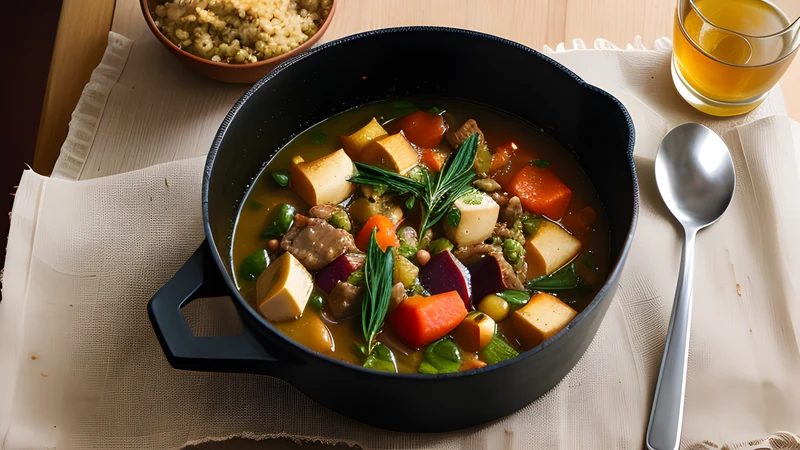
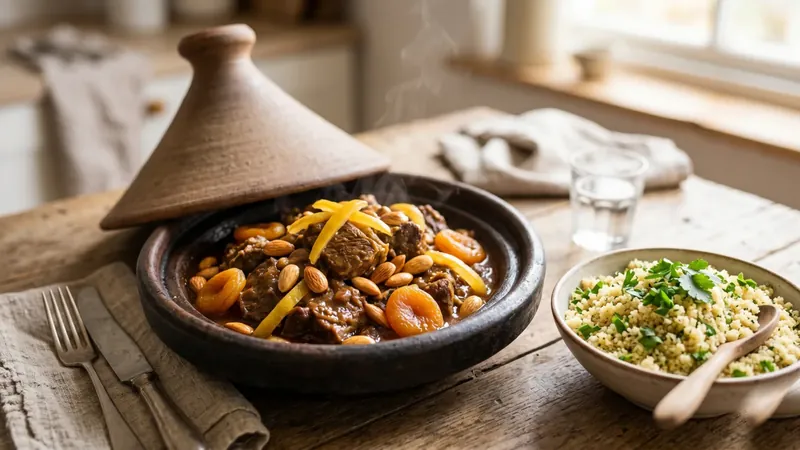
↓ Jump to recipeYouvetsi is named after the pot rather than the food. A güveç in Turkish, a youvetsi in Greek, is a shallow, wide, lidless earthenware dish, and the name travelled from the pot to the thing habitually cooked in it, which is what happens to casserole and tagine and paella too. It means the dish has no fixed recipe. It has a fixed shape: something slow, something starchy, something baked open at the end until the top catches.
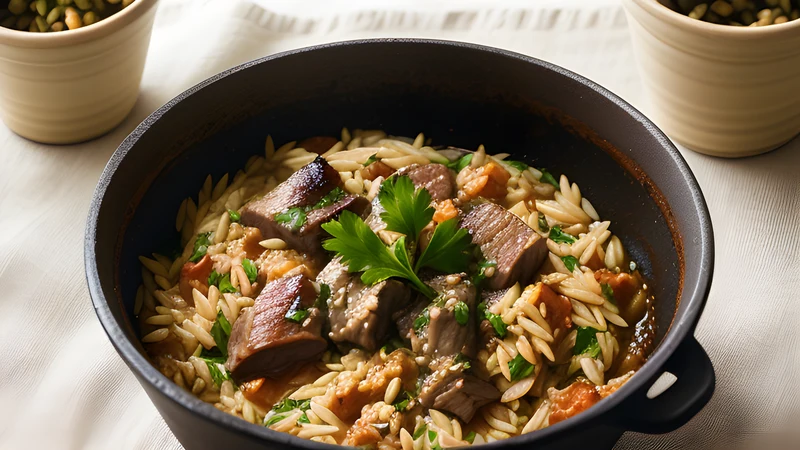
The version everybody in Greece means is lamb and orzo. It arrives at the table looking like a shepherd’s idea of risotto, the pasta having drunk two hours of lamb braise and swollen into it, with a crust of hard sheep’s cheese on top. My one change is that the orzo is toasted in brown butter before it goes in.
Youvetsi: Lamb and Orzo From a Clay Pot
Ingredients
- 1.2 kg boneless lamb shoulder, cut into 5 cm chunks
- 2 tsp fine sea salt
- 3 tbsp olive oil
- 2 onions, finely chopped
- 5 garlic cloves, sliced
- 2 tbsp tomato purée
- 150 ml dry red wine
- 400 g tin chopped tomatoes
- 500 ml hot water, plus 700 ml more for the orzo stage
- 1 cinnamon stick
- 3 whole cloves
- 2 bay leaves
- 1 tsp dried Greek oregano
- 1 strip orange peel, pared with a peeler
- Black pepper
- 60 g unsalted butter
- 400 g orzo (kritharaki)
- 120 g kefalotyri or pecorino, finely grated
- Flat-leaf parsley, chopped, to serve
Method
- Heat the oven to 160C fan / 180C conventional. Pat the lamb dry and season with the salt.
- Heat the olive oil in a large ovenproof casserole over a high heat. Brown the lamb in three batches, 4-5 minutes a batch, until each piece is deeply coloured on at least two sides. Set aside. Crowding the pan here costs you the whole dish.
- Lower the heat to medium. Add the onions to the same pot with a pinch of salt and cook for 10 minutes until soft and pale gold, scraping up the browned residue as they release water.
- Add the garlic and cook for 1 minute, then the tomato purée and cook for 2 minutes more, until it darkens to brick red.
- Pour in the red wine, raise the heat and let it bubble hard for 3 minutes until the raw alcohol smell has gone.
- Return the lamb and any resting juices. Add the tinned tomatoes, 500 ml hot water, cinnamon stick, cloves, bay leaves, oregano, orange peel and plenty of black pepper. Bring to a simmer.
- Cover and transfer to the oven for 2 hours, until the lamb pulls apart under light pressure from a spoon.
- Lift out and discard the cinnamon stick, cloves, bay leaves and orange peel. Break the larger lamb pieces into rough shreds with two forks, leaving plenty of texture. Taste and adjust the salt now, while you can still judge it.
- Melt the butter in a frying pan over a medium heat. Let it foam, subside, and turn nut-brown with a toasted smell, about 4 minutes. Tip in the dry orzo and stir constantly for 3-4 minutes until the grains are the colour of pale toast.
- Raise the oven to 180C fan / 200C conventional. Stir the toasted orzo and all the brown butter into the lamb along with 700 ml hot water. The mixture should look far too loose.
- Return, uncovered, to the oven for 20 minutes. Stir once at the 10-minute mark to stop the orzo welding to the base.
- Scatter the grated cheese over the surface and bake for a further 10-12 minutes, until the top is blistered and gold and the orzo is tender with a faint bite.
- Rest for 10 minutes off the heat, then serve straight from the dish with parsley over the top.
What kritharaki actually is
The pasta is kritharaki in Greek — “little barley”, because that is what it looks like. Italians call the same shape orzo, which also means barley, and the coincidence tells you something: this shape existed as a barley-mimicking wheat pasta across the Mediterranean before anyone standardised it. The shape is a Levantine and Anatolian idea that both peninsulas absorbed and then each claimed.
What matters for cooking is the surface-to-volume ratio. Orzo has an enormous amount of surface for its size, which is why it goes gluey faster than any other dry pasta and why it thickens a sauce so aggressively. Every gram of starch on those surfaces dissolves into whatever liquid is around it. In youvetsi that is a feature — it is what turns a thin braise into something that clings — but it is also the failure mode, and the reason the toasting step earns its place.
The clay pot, and whether you need one
Real güveç clay is unglazed or partly glazed, porous, and heats slowly and evenly with almost no hot spots. It also stays hot for a long time after it leaves the oven, which matters because the last ten minutes of a youvetsi involve residual heat finishing the orzo while the cheese sets.
You do not need one. A wide, shallow enamelled cast-iron casserole gets you 90 per cent of the way, and the missing 10 per cent is mostly evaporation surface. The thing you genuinely cannot substitute is width. A deep narrow pot gives the orzo a thick column of liquid to sit in, the bottom layer overcooks before the top layer softens, and the whole point is lost. If your braising pot is tall, move everything to a roasting tin for the orzo stage.
The braise: cinnamon, cloves, and a strip of orange
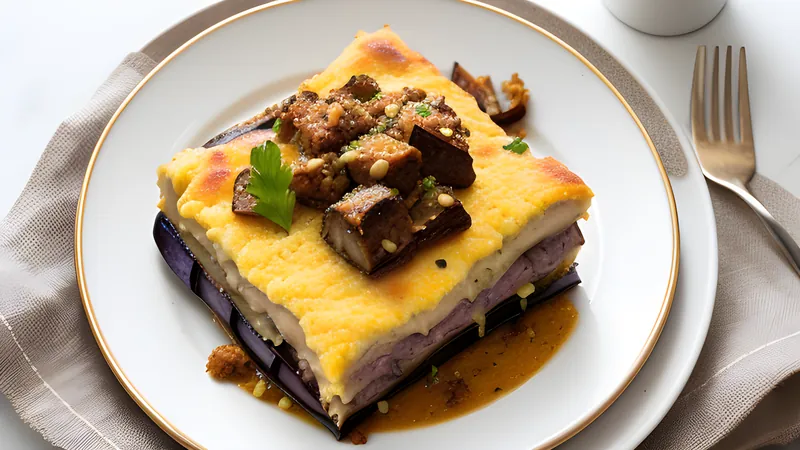
Greek meat braises go sweet-spiced in a way that surprises people who expect Mediterranean cooking to stop at oregano. Cinnamon and cloves in a savoury lamb pot are the eastern signature that runs through the whole region — the same instinct that puts nutmeg in the béchamel of moussaka with aubergine and nutmeg béchamel. One stick and three cloves for 1.2 kg of lamb is the level I have settled on: present, but you would struggle to name it blind.
The orange peel is my own habit, borrowed from Provençal daube. Lamb shoulder at two hours produces a lot of rendered fat and a lot of glutamate, and citrus oils in the peel cut the richness in a way lemon juice cannot, because they are aromatic rather than acidic — you smell them instead of tasting them. Pare it thin, avoid the white pith, and pull it out before the orzo goes in. Left in, it turns bitter.
Use shoulder. Leg is leaner and goes stringy over two hours rather than gelatinous. Shoulder carries the connective tissue that melts to gelatine somewhere north of 70C over a long hold, and gelatine is what gives the finished sauce its glossy, lip-sticking body. The same logic governs Greek slow-baked lamb in paper, where the cut does most of the work and the cook mainly waits.
Why brown butter, and why toast the orzo
Two things happen in that frying pan.
The butter first. Heating butter past the water-boil-off point lets its milk proteins and lactose brown, producing the same nutty, caramel compounds you get from browning anything else. Sixty grams of it, poured into the pot with the toasted grains, gives the finished dish a dairy sweetness that hard sheep’s cheese alone will not supply. Greek cooks would normally use plain butter or nothing; this is the small liberty I take.
The toasting is the technical one. Dry-toasting pasta gelatinises and partly dextrinises the outer starch layer before it ever meets liquid, which slows the rate at which that starch dissolves into the sauce. Toasted orzo holds its shape at the twenty-minute mark where untoasted orzo has begun surrendering its edges. It is the same reason the Spanish toast fideos and the Levantines toast vermicelli for rice. Take the grains to pale toast colour, no further — dark orzo tastes bitter and refuses to soften.
The liquid ratio, and the thing that looks wrong
Seven hundred millilitres of water for 400 g of orzo, on top of a braise that is already wet, will look like a mistake when you stir it in. It should. Orzo absorbs roughly two and a half times its weight in liquid, evaporation from an open dish in a hot oven is significant, and the cheese crust needs there to be a little liquid still moving underneath when it goes on. Trust the loose look.
If it emerges too dry, stir in 100 ml of boiling water off the heat and give it five minutes. If it emerges soupy, the fix is the resting period rather than more oven — ten minutes standing lets the starch set.
Browning the lamb, and the mistake everyone makes
Three batches. Not two, and certainly not all of it at once, and this is where most home versions of youvetsi quietly lose half their flavour.
Lamb shoulder is around 60 per cent water by weight, and that water has to leave the surface before the surface can exceed 100C and start browning. Load a pan with 1.2 kg of meat and the escaping steam has nowhere to go: it condenses, the pan temperature crashes to boiling point, and the lamb sits there greying in its own liquid for ten minutes. You end up with meat that is cooked, pale and flavourless, and a pot with none of the browned residue the whole braise is supposed to be built on.
Give each batch room. There should be visible pan floor between the pieces. Four to five minutes, and resist turning them for the first two — a piece of lamb releases from the pan when it is ready and welds itself down when it is not. Two properly coloured faces per chunk is the target; six is showing off and burns the fond.
That fond, the browned crust on the base of the pot, is the actual objective. When the onions go in and release their water, they dissolve it, and every one of those compounds ends up in the sauce. Scrape it up with a wooden spoon while the onions sweat. If the base has gone past dark brown to black in a patch, deglaze with a splash of the wine early and get it off before it turns bitter.
Pat the lamb dry first with kitchen paper. It takes thirty seconds and it removes the surface moisture that would otherwise have to boil off on your time.
The cheese, and the crust
Kefalotyri is a hard, salty, sheep-and-goat cheese from Greece and Cyprus, aged at least three months, and it is the traditional finish here. Pecorino romano is the closest widely available substitute and behaves almost identically under a grill. Parmesan works and tastes faintly wrong — it is a cow’s milk cheese and the dish wants the barnyard sharpness of sheep.
What you need mechanically is a cheese low enough in moisture to brown rather than melt into grease. Hard sheep’s cheeses are around 30 per cent water; a young cheese at 45 per cent will slump, separate and pool oil across the surface. Grate it finely so it forms a continuous sheet rather than islands, and put it on for the last ten to twelve minutes only. Any longer and the proteins tighten past browned into leathery.
The blistering you want comes from the cheese’s own fat and the proteins beneath it browning together. If your oven has a weak top element, thirty seconds under a hot grill at the very end finishes the job, watched continuously — the gap between gold and burnt at that stage is about twenty seconds.
Mizithra, if you find the hard aged version rather than the fresh, is what a Cretan would use and is worth the trip. Fresh mizithra is a different product entirely and will turn to water on top of your dish.
The wine, and the two hours
A hundred and fifty millilitres of dry red, bubbled hard for three minutes before anything else joins it. Three minutes is enough to drive off most of the ethanol and, more importantly, to boil away the harsh, solventy low-boiling compounds that make an under-reduced wine braise taste sour. What stays behind is the wine’s acid and its tannins, and both earn their place: the acid brightens two hours of lamb fat, and the tannins bind to the meat proteins and contribute the dry, structured finish that separates a braise from a stew.
Use something you would drink, within reason. A Greek Agiorgitiko or Xinomavro is the local answer and a cheap Rioja does the job. Avoid anything oaked heavily or sweetened; cooking concentrates both faults about fourfold.
The two hours at 160C fan is the other number worth defending. Collagen in lamb shoulder converts to gelatine at a rate that roughly doubles for every 10C, and the useful window runs from about 70C upwards. At a covered oven braise the meat sits around 85-90C, which is slow enough that the muscle fibres do not squeeze out all their water before the connective tissue has melted. Push the oven to 200C to save time and the fibres contract hard, expel their moisture, and you get lamb that is simultaneously dry and swimming — the classic fast-braise failure. Two hours is not a suggestion.
Faults, notes and variations
The bottom welded to the pot. You skipped the stir at ten minutes, or your dish was too deep.
It went to porridge. Overcooked orzo, usually from an oven running hotter than it claims. Pull it while there is still a faint chalky centre to the grain; the residual heat takes it the rest of the way.
Make-ahead. The braise, up to the orzo, is better after a night in the fridge and can be made three days early. The orzo stage must happen just before eating — reheated youvetsi is a different, softer, still pleasant thing.
Variations. Chicken thighs cut the braise to 50 minutes. Beef shin works and gives a heavier, darker pot. Vegetarian versions with mushroom and a heavy hand on the tomato purée are common during Lent, though you lose the gelatine and want an extra spoon of purée to compensate. Grated mizithra, if you find it, is more traditional on top than pecorino.
Serve it with something green and sharp and nothing else. Bread is redundant, and everyone will want it anyway.
Related Content