Xiao Long Bao: Shanghai Soup Dumplings
The dumpling that carries its own broth inside the wrapper
Contents
↓ Jump to recipeXiao Long Bao: Shanghai Soup Dumplings
Ingredients
- 500g pork skin, or 4 chicken feet, for the stock
- 1kg pork bones, chopped
- 3 slices fresh ginger, plus 1 tbsp finely minced
- 2 spring onions, plus 2 tbsp finely minced
- 2 litres water
- 2 tbsp Shaoxing wine
- 400g pork shoulder, minced, 20% fat
- 1 tbsp light soy sauce
- 1 tsp dark soy sauce
- 1 tsp sugar
- 1/2 tsp white pepper
- 1 tsp sesame oil
- 300g plain flour, plus extra for dusting
- 150ml just-boiled water
- black rice vinegar and shredded ginger, to serve
Method
- Blanch the pork skin or chicken feet and the pork bones in boiling water for 3 minutes, then drain and rinse off the scum.
- Return the bones and skin to a clean pot with 2 litres water, the ginger slices, whole spring onions and Shaoxing wine. Bring to the boil, then reduce to a bare simmer for 3 hours, topping up water so the bones stay covered.
- Strain the stock through muslin into a container. You need at least 500ml. Chill it for 6 hours or overnight until it sets into a firm jelly.
- Once set, chop the jelly into small dice, roughly 5mm. Keep it cold until you fill the dumplings.
- Mix the minced pork with the light soy, dark soy, sugar, white pepper, sesame oil, minced ginger and minced spring onion. Beat the mixture in one direction with a wooden spoon or chopsticks for 3 minutes until it turns pale and slightly sticky.
- Fold the diced jelly through the meat mixture just before you start wrapping, so it doesn't melt from the friction of mixing.
- For the dough, put the flour in a bowl and pour in the just-boiled water while stirring with chopsticks. Once cool enough to touch, knead for 8 minutes until smooth and elastic. Rest, covered, for 30 minutes.
- Roll the dough into a rope and divide into 24 pieces. Roll each piece into a thin circle, roughly 8cm across, thinner at the edges than the centre.
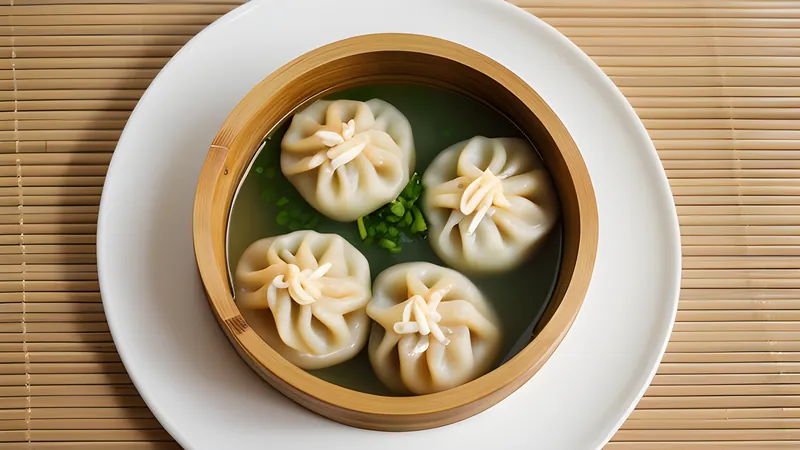
- Place a heaped teaspoon of filling in the centre of each wrapper. Pleat the edge around your thumb, working in one direction, making 16 to 18 folds, then twist and pinch the top closed.
- Line a bamboo steamer with baking paper or cabbage leaves, punched with a few holes for steam. Space the dumplings 2cm apart so they don't stick together as they cook.
- Steam over rapidly boiling water for 8 minutes. Rest for 1 minute before serving so the soup inside settles and doesn't scald the first bite.
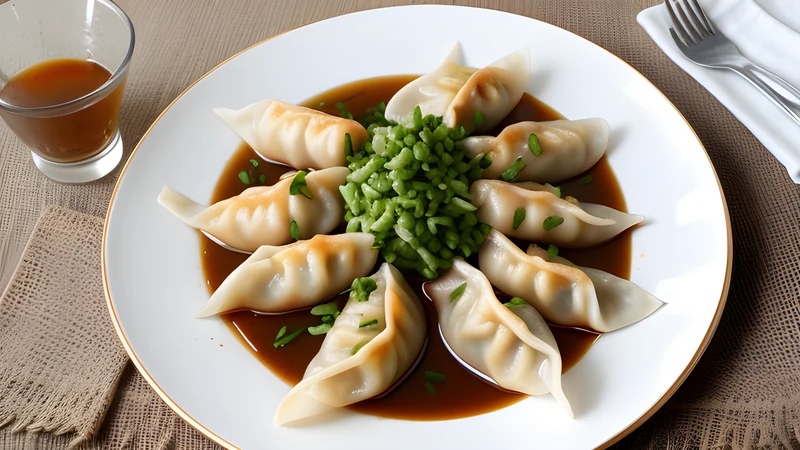
- Serve immediately with a small dish of black rice vinegar and shredded ginger for dipping.
A dumpling that arrives with its own broth
Most dumplings ask you to dip them in sauce. Xiao long bao skip that step because the sauce is already inside, sealed in with the meat, waiting to spill out the moment you bite through the wrapper. That’s the entire trick of the dish and the reason it takes a bit more planning than a normal dumpling night: the soup has to exist as a solid before it can become a liquid again in the steamer. Get that stage right and everything downstream is straightforward pleating and timing. Get it wrong and you end up with a perfectly nice pork dumpling that just happens to have no soup in it, which is a different, lesser thing.
I make a batch of these every couple of months, usually on a weekend when I’ve got the stock going in the background while doing something else. The bones simmer for three hours, the stock chills overnight, and then the actual wrapping and steaming takes under an hour. It rewards patience more than skill. Anyone who can fold a decent gyoza can fold a xiao long bao; the harder part is trusting the process enough to let the jelly set properly instead of rushing the fridge stage.
Nanxiang, a market town outside old Shanghai
Xiao long bao are usually traced to Nanxiang, a town that’s now part of Shanghai’s Jiading district but was a separate market town when the dumpling took its modern shape in the 1870s. A steamed bun seller there named Huang Mingxian is credited with the innovation of adding jellied meat aspic to a bun filling, a technique borrowed from the older “soup-filled buns” tradition that had existed in the Yangtze delta for a couple of centuries before him. His shop, Nanxiang Mantou Dian, became famous enough that the dumplings themselves eventually took the name of the steamer they were served in: xiao long, the small bamboo basket, plus bao, the bun.
What made Nanxiang’s version different from earlier soup buns was restraint. Older versions used a thick, doughy bun skin that couldn’t show off the broth inside; Huang’s recipe used a thinner wrapper and a leaner, more concentrated aspic, so the dumpling stayed compact enough to eat in two bites rather than needing a bowl and spoon. That thin-skin, high-soup ratio is still the benchmark today, and it’s why a good xiao long bao restaurant will tell you their skins are rolled to a specific thinness rather than just bought in bulk from a wholesaler.
The dish spread from Nanxiang into central Shanghai through teahouses and then into the wider Jiangnan region, picking up small regional variations along the way — some cooks add crab roe in autumn, some use a mix of pork and chicken stock for a lighter aspic, some prefer a slightly sweeter filling in the Suzhou style. The Nanxiang original stays close to plain pork, ginger and a clean, savoury broth, which is the version this recipe follows.
The trick is the jelly, not the wrapper
Home cooks who’ve never made xiao long bao tend to assume the hard part is the folding, and it isn’t — pleating twenty-four dumplings is repetitive but not difficult once you’ve done four or five. The part that actually determines whether you get soup or just a wet dumpling is the aspic.
Pork skin and pork bones both contain collagen that breaks down into gelatine during a long simmer. Chill that stock and the gelatine sets it into a firm, cuttable jelly, the same principle behind a classic pork terrine or a well-made stock for aspic. Dice that jelly small and fold it through raw minced pork, and as the dumpling steams, the jelly melts back into liquid inside a sealed wrapper. There’s nowhere for it to go except to sit there as soup until you break the skin with your teeth or a spoon.
Skipping this stage and just adding a splash of stock to the filling doesn’t work — liquid stock makes the mixture impossible to wrap, and most of it leaks out during pleating rather than staying put until the steamer. The jelly has to be solid at wrapping time and only turn liquid once heat gets to it, which is why the dice-and-chill step matters more than any amount of pleating technique.
If you don’t want to render your own stock, chicken feet give you a faster route to the same set gelatine, since they’re almost pure skin and cartilage and need less simmering than a full pot of pork bones. Either way, don’t skip the overnight chill — a stock that’s merely cool but not properly set will be too soft to dice and will smear into the meat rather than sitting as distinct cubes.
Wrapping: eighteen folds, more or less
Traditional counts put a proper xiao long bao pleat at eighteen folds, though restaurant chefs vary anywhere from fourteen to twenty-two depending on house style and wrapper size. What matters more than hitting an exact number is consistency: each fold should be roughly the same size, angled slightly so the pleats spiral rather than stack straight up, and the whole thing twisted closed at the top so no soup escapes during steaming.
Roll your wrappers thinner at the edge and thicker in the centre. The centre needs to support the weight of the filling without tearing when you lift the dumpling with chopsticks; the edge needs to be thin enough that eighteen layers of pleated dough don’t turn into a doughy knot at the top. A rolling pin used in short, off-centre strokes — turning the wrapper a quarter turn between each stroke — gets you that shape faster than trying to roll a perfectly even circle and thin it afterwards.
Work with cold filling and warm hands moving quickly; the jelly starts softening the moment it touches room-temperature meat, and the whole point is for it to stay solid until the steamer takes over.
Steaming and the ritual of eating one
Line your steamer with something that won’t let the dumplings stick, and give them real space, because they will puff and their bottoms will spread slightly during cooking. Eight minutes over a rolling boil is enough for a batch of thin-skinned dumplings this size; go longer and the wrapper starts to overcook and the delicate balance between chewy skin and liquid filling tips towards mushy.
The classic way to eat one: lift it with chopsticks, rest it on a soup spoon, nibble a small hole in the side to let the steam and a little soup escape and cool for a few seconds, then sip the broth from inside before eating the rest. Biting straight in without a pause is the fastest route to a scalded mouth — the filling inside stays significantly hotter for longer than the wrapper suggests, because it’s genuinely liquid stock rather than just moist meat.
What goes wrong and why
The most common failure is a dumpling with no soup at all, which almost always traces back to jelly that either wasn’t set firm enough to dice cleanly or was left out too long before wrapping and melted into the meat mixture before it ever reached the steamer. The fix is patience at the chilling stage and working the filling cold, ideally with the bowl sitting in a larger bowl of iced water if your kitchen runs warm.
The second most common failure is a torn wrapper, usually from rolling it too thin at the centre or overfilling. A torn dumpling leaks all its soup into the steamer basket instead of your mouth, and there’s no fixing it once it’s happened — better to under-fill slightly on your first batch until you get a feel for how much a wrapper can hold.
Gummy, tough skin comes from over-kneading the dough or steaming for too long. This dough doesn’t need the same workout as a bread dough; eight minutes of kneading is plenty, since you’re after elasticity for rolling thin, not the same gluten development you’d want in a chewy noodle.
Variations worth making
Crab roe xiao long bao, popular in autumn when crab roe is at its most orange and flavourful, swap a portion of the pork for crab meat and stir a spoonful of crab roe and its rendered fat into the filling. The result is richer and slightly sweeter, and worth trying once you’re comfortable with the base recipe.
A lighter version uses chicken stock instead of pork stock for the aspic, giving a cleaner, less fatty broth that pairs well if you’re serving these as one course among several rather than the main event. You lose a little of the traditional richness but gain a dumpling that doesn’t sit as heavy.
For a vegetarian take, mushroom stock thickened with agar rather than gelatine can stand in for the aspic, paired with a filling of finely chopped shiitake, tofu and water chestnut for crunch. It won’t taste identical, but the mechanism — solid stock melting to liquid inside a sealed wrapper — works the same way.
Storage and make-ahead
Wrapped, unsteamed dumplings freeze well. Lay them on a tray dusted with flour so they don’t touch, freeze until solid, then transfer to a bag. Steam straight from frozen, adding two to three extra minutes to the steaming time. Don’t thaw them first — the jelly will start to soften and the wrappers can turn soggy waiting around at room temperature.
Steamed dumplings don’t reheat well; the wrapper turns gummy and a good portion of the soup has usually already escaped once cooled and reheated, so only steam what you plan to eat in that sitting. The stock itself keeps for up to four days in the fridge or three months in the freezer, so it’s worth making a double batch and freezing half for a faster dumpling session next time.
If you like the pleating and filling work of this style, the same patience pays off in har gow prawn and chive dumplings, where the wrapper is a scalded wheat-starch dough instead of a yeasted one, or in wonton soup with prawn and pork dumplings, which uses a looser wrapping technique and skips the aspic step entirely in favour of a bowl of broth on the side.
Related Content