Walnut and Espresso Rugelach
Buttery little crescents with a grown-up coffee hit
Contents
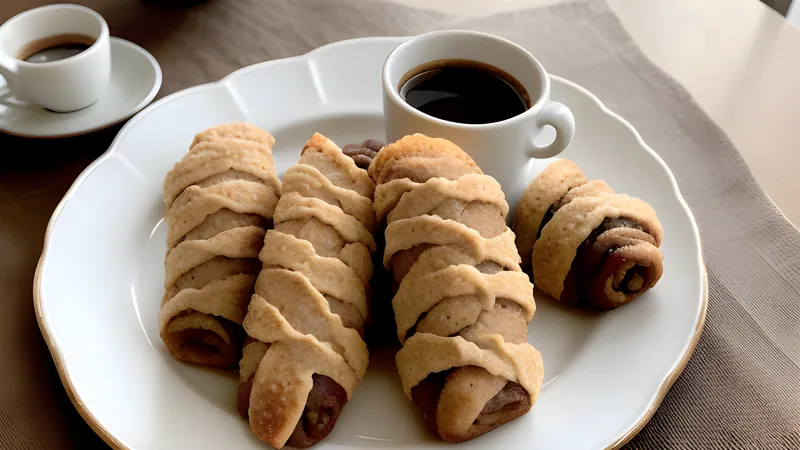
↓ Jump to recipeRugelach are the kind of biscuit-pastry hybrid that disappears off a plate before you have quite worked out what you are eating. Each one is a little rolled crescent of impossibly tender, faintly tangy cream-cheese pastry wrapped around a sweet, nutty filling. They are a fixture of Jewish bakeries, sold by the bagful, and once you have made your own you will understand why people are evangelical about them. The twist here is espresso: a tablespoon of instant espresso powder folded through the classic walnut-and-cinnamon filling gives these a deep, slightly bitter, grown-up edge that pairs perfectly with the coffee you will inevitably want alongside them.
Walnut and Espresso Rugelach
Ingredients
- 250g plain flour
- 225g cold unsalted butter, cubed
- 200g full-fat cream cheese, cold
- 0.5 tsp fine salt
- 1 tbsp caster sugar (for the dough)
- 150g walnuts, finely chopped
- 75g soft light brown sugar
- 1 tbsp instant espresso powder
- 1 tsp ground cinnamon
- 60g apricot jam, warmed and sieved
- 1 egg, beaten, to glaze
- 2 tbsp demerara sugar, to finish
Method
- Pulse the flour, salt and 1 tbsp caster sugar in a food processor, then add the cold butter and cream cheese and pulse just until the dough comes together in clumps.
- Tip out, gently bring together, divide into four discs, wrap and chill for at least 2 hours or overnight.
- Mix the chopped walnuts, brown sugar, espresso powder and cinnamon together for the filling.
- Working with one disc at a time and keeping the rest chilled, roll out on a floured surface into a circle about 25cm across.
- Spread thinly with warmed apricot jam, then scatter over a quarter of the walnut filling and press it down lightly.
- Cut the circle into 8 wedges like a pizza, then roll each wedge up from the wide outer edge towards the point.
- Place point-side down on a lined baking tray, curving into crescents, and chill the formed rugelach for 20 minutes.
- Heat the oven to 175C fan. Brush each rugelach with beaten egg and sprinkle with demerara sugar.
- Bake for 22 to 25 minutes until deep golden, then cool on the tray for a few minutes before moving to a rack.
A pastry that crossed an ocean
Rugelach come from the Ashkenazi Jewish kitchens of central and eastern Europe, where versions were made with a yeasted or sour-cream dough and filled with whatever was to hand: nuts, jam, poppy seeds, dried fruit. The name comes from a Yiddish word meaning little twists or little corners, a nod to their rolled crescent shape. They were, and are, a Sabbath and holiday treat, the sort of thing baked in big batches to have around for guests.
The version most people know today, made with a rich cream-cheese pastry, is largely an American invention, refined in the Jewish bakeries of New York where rugelach became a deli-counter staple alongside black-and-white cookies and babka. Cream cheese was abundant and cheap there, and it transformed the dough into something more like a tender shortcrust than the older yeasted style, easier to make and quicker too. That is the dough I use here, because it is forgiving and reliably delicious, and it carries the coffee-walnut filling beautifully.
The espresso is my own addition, and it is not just for show. Walnuts and coffee share a bitter, roasted backbone, so a tablespoon of instant espresso powder folded through the filling deepens the nuts rather than fighting them, the same trick that makes coffee such a natural partner for chocolate. Use instant espresso powder specifically, not ground coffee beans, which stay gritty and taste raw; the instant kind dissolves in the residual moisture of the jam and the baking sugar, so you get flavour without texture.
What you need
For the dough: 250g plain flour, 225g cold unsalted butter cut into cubes, 200g cold full-fat cream cheese, ½ tsp fine salt and 1 tbsp caster sugar. Full-fat cream cheese matters here; the low-fat kind is wetter and makes a slack, sticky dough.
For the filling and finishing: 150g walnuts finely chopped, 75g soft light brown sugar, 1 tbsp instant espresso powder, 1 tsp ground cinnamon, 60g apricot jam warmed and sieved, 1 beaten egg to glaze and 2 tbsp demerara sugar to finish.
You will need a food processor for the dough, a rolling pin, and two baking trays lined with baking parchment. A pizza wheel makes cutting the wedges quick, though a sharp knife is fine.
Rolling and shaping
The dough is the heart of it, and the trick is to keep everything cold. Cold butter and cold cream cheese, pulsed into the flour just until it clumps, then chilled hard before rolling. Warm pastry turns sticky and impossible to handle, so work with one disc at a time and keep the rest in the fridge. Roll each disc into a rough circle, spread it thinly with warmed, sieved apricot jam, which acts as glue and adds a fruity tang, then scatter over the espresso-walnut filling and press it in gently.
Cutting and rolling is the satisfying part. Slice each circle into wedges as if cutting a pizza, then roll each wedge up from the wide outer edge towards the point, so it curls into a little crescent with the seam tucked underneath. Chill the shaped rugelach again before baking; this keeps them from spreading and slumping. A brush of beaten egg and a sprinkle of crunchy demerara sugar gives them a glossy, crackly finish.
Bake until they are properly deep golden. Underbaked rugelach are pale and a touch doughy; you want them well coloured so the pastry shatters. The filling will likely leak and caramelise on the tray, which is normal and delicious, so line your trays well.
Why the cold matters
If there is one thing to understand about this pastry, it is that the temperature of the dough governs everything. The tenderness comes from butter and cream cheese held in small, cold flecks through the flour; when they hit the oven, those flecks release steam and melt, leaving the flaky, shortcrust texture that makes rugelach so more-ish. Let the dough warm on the counter and those fats smear into the flour instead of staying separate, and you lose both the flakiness and the ability to roll cleanly. That is why the recipe chills the dough hard before rolling, why you work with one disc while the rest wait in the fridge, and why the shaped crescents go back to chill before baking. Skip those steps and the biscuits spread into flat, greasy blobs.
The apricot jam does two quiet jobs. Sieved and warmed to a spreadable glaze, it glues the dry filling to the pastry so it does not all tumble out as you roll, and its fruity acidity cuts the richness of butter and nuts. Spread it thinly; a thick layer boils, bubbles out of the seams and welds the rugelach to the tray.
Tips, fillings and getting ahead
This is a recipe that rewards making ahead at every stage. The dough can be made and chilled up to three days in advance, or frozen for a month. You can even shape the rugelach completely, freeze them raw on a tray, and bake them straight from frozen with a couple of extra minutes, which makes them a brilliant thing to have stashed away for unexpected guests.
The filling is wide open to experiment. Skip the espresso for the classic, or swap in pecans or hazelnuts for the walnuts. A spoonful of cocoa and some dark chocolate chips makes a chocolate version; dried sour cherries or chopped dates add chewy sweetness; raspberry jam in place of apricot turns them fruity. Whatever you choose, keep the filling fairly fine and not too wet, or it will burst out as they bake.
Chop the walnuts by hand rather than blitzing them in a processor if you can face it. The machine tends to produce a mix of dust and a few big lumps, whereas a knife gives you an even, gravelly texture that rolls up tidily and distributes through each crescent. Toasting the walnuts first, five minutes in a moderate oven until fragrant, deepens their flavour and drives off any staleness, which is worth doing if your nuts have been in the cupboard a while; walnuts turn rancid faster than most, so taste one before you commit a batch.
A word on shaping, since it trips people up. When you cut each rolled-out circle into eight wedges, you are aiming for triangles with a wide base at the rim and a point at the centre. Roll from the wide base inward, so the point ends up tucked underneath; that seam, pressed against the tray, stops the crescent unrolling in the heat. Curve the ends gently towards each other as you set them down to get the classic crescent shape. If a few unroll anyway, they will still taste wonderful, and nobody eats the ugly ones any slower.
Two honest pitfalls to avoid. First, do not overfill, however tempting; a thin, even layer rolls up neatly, while a thick one bursts and unrolls. Second, do not skimp on the chilling steps, because soft dough and warm-shaped rugelach are the two reasons home batches go wrong. Get those right and you will have a tin of buttery, coffee-scented crescents that taste like a very good bakery and vanish twice as fast.
Store the baked rugelach in an airtight tin at room temperature, where they keep well for four or five days, though the pastry is at its shatteringly crisp best on the first two. A few seconds in a warm oven revives any that have softened. They freeze cheerfully once baked, too; thaw at room temperature and crisp briefly in the oven.
The single most useful thing to know about rugelach is that they are built for freezing raw. Shape the whole batch, arrange them on a tray and freeze until solid, then bag them up. When guests appear, or when you simply want two with your coffee, you bake straight from frozen, adding two or three minutes to the time and glazing them just before they go in. Fresh-baked rugelach from a bag in the freezer is one of the great low-effort luxuries of home baking, and it is the reason I almost never bake a batch to eat all at once.
A note on the oven, because colour is everything here. Bake at 175C fan and resist the urge to pull them early; pale rugelach are doughy and disappointing, while a proper deep golden-brown gives you the crisp, biscuity snap you are after. If your oven runs cool or crowds the trays, rotate them halfway through so they colour evenly. The filling will leak and caramelise into little dark puddles on the parchment, which is not a fault but a feature; those crisp, toffee-ish edges are the baker’s reward, best eaten warm before anyone else spots them.
If you have taken to that coffee-and-nut pairing, it runs through a couple of other things I bake: the same espresso hit turns up in these tahini-swirl espresso brownies, and if you want to lean fully into the grown-up coffee direction, a dark chocolate mousse with espresso and flaky salt makes a fittingly bittersweet end to a meal. For another walnut-forward bake with a savoury edge, a fig, walnut and blue cheese galette uses the same tender pastry logic in a completely different register.
Related Content