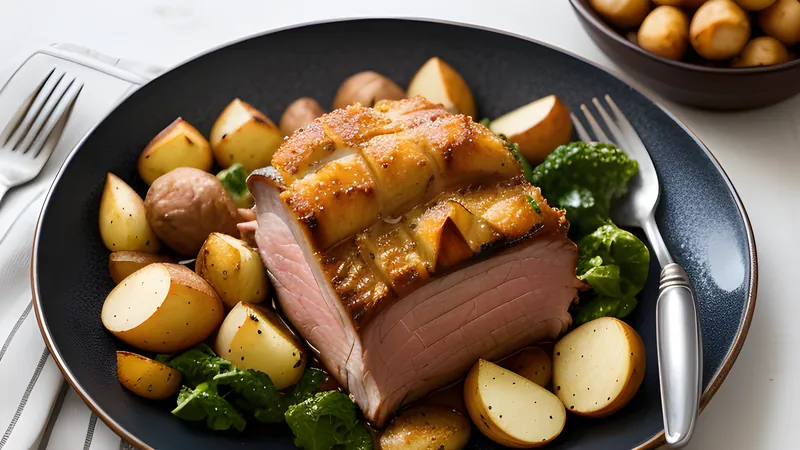
Vepřo-Knedlo-Zelo: Czech Roast Pork With Dumplings and Sauerkraut
The three-word national dish, and the caraway that holds it together
Contents
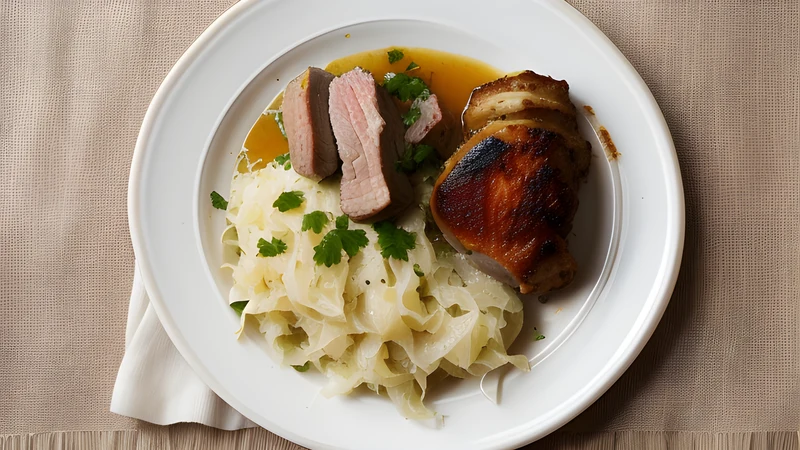
↓ Jump to recipeVepřo-knedlo-zelo is a shopping list that became a national dish. Pork, dumpling, cabbage — three words, said as one, and every Czech knows exactly what is on the plate. It is the thing served at every hospoda in the country, at every family Sunday, and it is what Czechs abroad describe when someone asks them what their food is actually like.
The trick of it is that all three components are seasoned with caraway. The pork rub has it, the sauerkraut braise has it, and its warm, faintly aniseed, faintly bitter note is the thread that makes three separate things read as one dish. Take the caraway out and you have roast pork with a side of cabbage and some bread. Leave it in and you have a Czech plate.
Vepřo-Knedlo-Zelo: Czech Roast Pork With Dumplings and Sauerkraut
Ingredients
- 1.6 kg boneless pork shoulder, skin on and scored
- 3 tsp fine salt
- 2 tbsp caraway seeds, lightly crushed
- 4 garlic cloves, crushed to a paste
- 1 tsp black pepper
- 2 onions, thickly sliced
- 300 ml water, plus more as needed
- 1 tbsp plain flour
- For the dumplings: 500 g strong white flour
- 7 g fast-action dried yeast
- 1 tsp caster sugar
- 1 tsp fine salt
- 280 ml whole milk, warmed to 35C
- 1 large egg
- 150 g stale white bread rolls, cut into 1 cm cubes
- For the sauerkraut: 700 g sauerkraut, drained but not rinsed
- 50 g lard or pork dripping
- 1 onion, finely chopped
- 1 tbsp plain flour
- 1 tsp caraway seeds
- 2 tbsp caster sugar
- 200 ml water
Method
- Rub the pork all over with the salt, crushed caraway, garlic and pepper, working it into the scored skin. Refrigerate uncovered for at least 8 hours, ideally 24.
- Sit the pork skin-up on the sliced onions in a roasting tin. Pour the 300 ml water into the tin around it, keeping the skin dry.
- Roast at 160C fan for 2 hours 30 minutes, topping up the water if the tin dries. The meat should give completely to a fork.
- Raise the oven to 220C fan and roast a further 20-25 minutes until the skin blisters and crackles. Rest the joint 25 minutes.
- Meanwhile make the dumpling dough: mix the flour, yeast, sugar and salt. Add the warm milk and egg and knead for 6 minutes to a soft, smooth dough. Fold through the bread cubes. Cover and prove 60 minutes until doubled.
- Divide the dough in two and roll each into a log about 20 cm long and 7 cm across. Prove a further 20 minutes.
- Simmer the logs in a wide pan of gently boiling salted water for 12 minutes, turn, and simmer 12 minutes more. Lift out and pierce each in three places with a skewer to release steam.
- For the sauerkraut: melt the lard, fry the onion for 8 minutes until soft, stir in the flour and cook 2 minutes. Add the sauerkraut, caraway, sugar and water. Cover and simmer 40 minutes, stirring occasionally.
- Skim the fat from the roasting tin, whisk the 1 tbsp flour into the remaining juices and onions, add 200 ml water and simmer 5 minutes. Sieve into a jug.
- Cut the dumpling logs into 1 cm discs using a length of sewing thread pulled through, never a knife.
- Slice the pork, shard the crackling, and serve with dumplings, sauerkraut and the pan gravy.
Pork, cabbage and the Bohemian century
Czech cooking is pork cooking, and the reason is agricultural. Bohemia and Moravia sit on good barley and beet land with mixed farming, and a pig converts kitchen waste, whey and windfall into meat more efficiently than any other animal a smallholder could keep. The zabijačka — the winter pig slaughter — was the fixed point of the rural year, and everything on the animal was used within a fortnight: blood into jitrnice sausages, fat rendered to lard, the shoulder roasted, the rest salted or smoked. The pork roast is the good bit, and it is what the family ate on the day.
Cabbage is the other half of the equation for the same reason. It grows in Central European soil, it yields enormously per square metre, and fermenting it in salt turns a crop that spoils in weeks into one that keeps until spring. The Czech word zelí covers both fresh and fermented cabbage, and the distinction matters — kyselé zelí, sour cabbage, is what this dish wants. The same logic runs from Alsace’s choucroute garnie right across to the sauerkraut barrels of northern Germany.
The dumpling is the Austro-Hungarian contribution and the youngest of the three. Houskový knedlík — bread dumpling — uses up stale rolls, extends a small amount of meat across a large family, and is engineered specifically to soak up gravy. It is Bohemia’s answer to the same problem Bavaria solved with semmelknödel, and the two are close relatives, though the Czech version is rolled into logs and sliced rather than shaped into balls.
The name, and what it says
Vepřo-knedlo-zelo is a contraction, and a slightly jokey one. The full names are vepřová pečeně, houskový knedlík and dušené zelí — roast pork, bread dumpling, braised cabbage. Czech clipped all three down to a single breathless compound, the way English does with fish-and-chips, and the shortening tells you how often it gets ordered. Ask for it by the long name in a Prague pub and you will be understood, and also marked as someone trying.
It has been the informal national dish for as long as there has been a nation to have one. It survived the Habsburgs, the First Republic, forty years of state canteens — which is where the modern portion size and the slightly grey version come from — and the arrival of every global cuisine since 1989. The pub version has barely moved.
Caraway is doing more than you think
Caraway seed contains carvone and limonene, and it behaves differently depending on what you do to it. Crushed and rubbed onto meat, it releases its oils into the fat during roasting, where they mellow into something warm and slightly sweet. Left whole in a sauerkraut braise, the seeds soften and each one delivers a discrete burst when you bite it. This dish wants both, which is why the pork rub uses crushed seed and the cabbage uses whole.
Crush it lightly — a pestle, four or five taps, until the seeds crack rather than powder. Ground caraway goes bitter and dusty, and it will make the crackling taste of dust.
There is also a folk-medicine reason it sits with cabbage, and it is real: carvone is a carminative, which is to say it reduces intestinal gas. Central Europe worked this out empirically a very long time ago and put caraway in every fermented cabbage dish on the continent.
The three components, done properly
The pork. Shoulder over loin, always. Loin is lean and a three-hour roast turns it to string; shoulder is threaded with fat and collagen and gives way completely. The water in the tin is the Czech technique that confuses people — it keeps the underside of the joint in a moist environment for two and a half hours so the meat stays succulent, while the skin sits above the waterline and dries. Then the final blast at 220C blisters the skin. Keep water off the skin the entire time or you will get leather.
Score the skin at 1 cm intervals, cutting through the fat and stopping at the meat. The 24-hour uncovered salt rest dries the rind, and dry rind crackles. A wet one steams.
The dumplings. The dough is soft, wetter than a bread dough, and it should be — 280 ml of milk to 500 g of flour plus an egg gives a hydration that stays tender after 24 minutes in water. Knead six minutes and stop. The bread cubes fold in at the end and must stay in visible pieces; work them too long and they dissolve into the dough and you lose the mottled cross-section that defines the thing.
Simmer, never boil. A hard boil batters the log’s surface into a skin before the centre sets, and you get a raw seam through the middle. And pierce each log the instant it comes out — trapped steam condenses as it cools and turns the crumb gummy.
The thread rule is not folklore. A knife blade compresses the crumb and drags the bread cubes, closing the pores that are supposed to hold gravy. Thread cuts without pressure.
The sauerkraut. Do not rinse it. Rinsing washes off the lactic acid, which is the entire point, and leaves you with limp cooked cabbage. Drain it and use it. The roux of lard and flour thickens the braise so it clings to a dumpling instead of flooding the plate, and the two tablespoons of sugar are there to round the acid, not to make it sweet. Forty minutes is enough — sauerkraut is already fermented and needs softening rather than cooking.
Timing three things onto one plate
The joint governs everything, because it needs three hours and a 25-minute rest and neither is negotiable. Work backwards from when you want to eat.
Three and a half hours out, the pork goes in. Two hours out, mix the dumpling dough and set it to prove — the 60-minute prove and the 20-minute second prove land it in the water at about the right moment. Ninety minutes out, start the sauerkraut; it wants 40 minutes of braising and it holds happily on a low heat for an hour after that, improving as it goes. Fifty minutes out, the oven goes up to 220C for the crackling. Twenty-five minutes out, the pork comes out to rest and the dumplings go into the water. That rest is your window to make the gravy.
The dumplings are the fragile part of the schedule, since they go downhill within minutes of leaving the water. Everything else waits for them. If the timing is slipping, make the dumpling logs the day before, refrigerate them whole and uncut, and steam the slices for four minutes to bring them back — this is what most Czech kitchens actually do and it costs you very little.
Use a wide pan for the boil. The logs swell by roughly half again and two of them in a narrow saucepan will fuse into one lump and cook unevenly.
What goes wrong
The crackling is chewy. Moisture. Either the skin got wet from the tin, or you skipped the uncovered fridge rest, or the final blast was too short. If it comes out soft, cut the whole rind off in one sheet and put it under a hot grill for four minutes.
The dumplings are gummy. Boiled too hard, or not pierced, or cut with a knife. Also check the yeast proved — an underproved dough gives a dense, wet crumb.
The sauerkraut is aggressive. Yours is a strong one. Add another tablespoon of sugar and a knob of lard. Some Czech cooks add a grated apple, which is legitimate.
The gravy is greasy. Skim harder. A 1.6 kg shoulder renders 100 ml of fat or more into the tin, and it wants to go into a jar for roast potatoes another day.
Variations and the honest case against
Moravian versions use red cabbage braised with apple, which is closer to German rotkohl and gives a sweeter plate. Some cooks serve bramborový knedlík, the potato dumpling, which is denser and holds gravy less well. A spoonful of dark beer in the sauerkraut is common in Plzeň.
The honest objection is that this is a beige plate with one flavour axis: fat versus acid, with caraway across both. There is no fresh element anywhere on it, no herb, no crunch beyond the crackling, and the portion sizes served in Czech pubs are frankly punishing. It is also three separate cooking projects that must land at the same time, which is why most Czech households make the dumplings the day before.
Serving, and the beer
Two or three dumpling discs, laid flat and slightly overlapping. Three or four slices of pork across them. Sauerkraut heaped on one side, gravy over the pork and the dumplings, crackling shards on top. Czech plating puts the dumplings under the meat deliberately so they take the gravy first.
The drink is Czech lager and it is part of the recipe rather than an afterthought. A pale Bohemian pilsner is heavily hopped with Saaz and has a bitterness that cuts straight through the pork fat, while the carbonation scrubs the palate between mouthfuls. Czechs drink more beer per head than anyone on earth and this plate is a significant part of the explanation. A dark lager works too and pushes the whole thing sweeter.
Storage
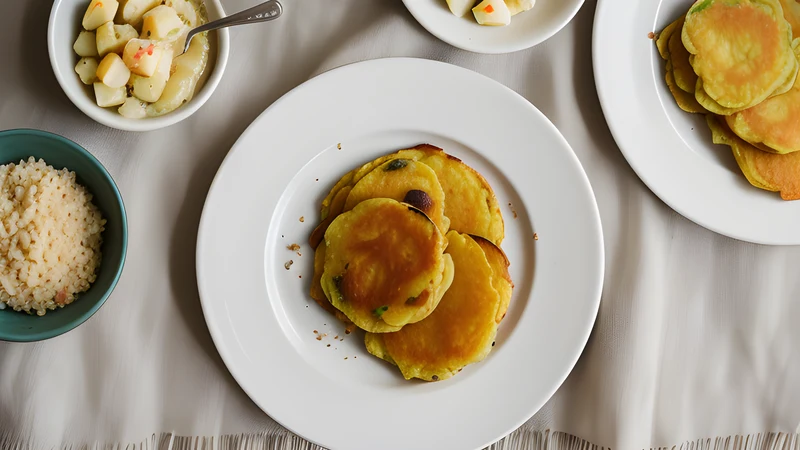
The pork keeps four days refrigerated and reheats well covered at 150C with a splash of water; the crackling should be removed and re-crisped separately under a grill. Sauerkraut keeps a week and improves. Dumplings are best on the day, though the classic second-day use is to fry the discs in butter with a beaten egg — a dish called knedlíky s vejci, which is arguably better than the original.
Related Content