Ven Pongal: Rice and Moong with Cracked Pepper
Rice and lentils cooked soft, then finished in browned ghee and pepper
Contents
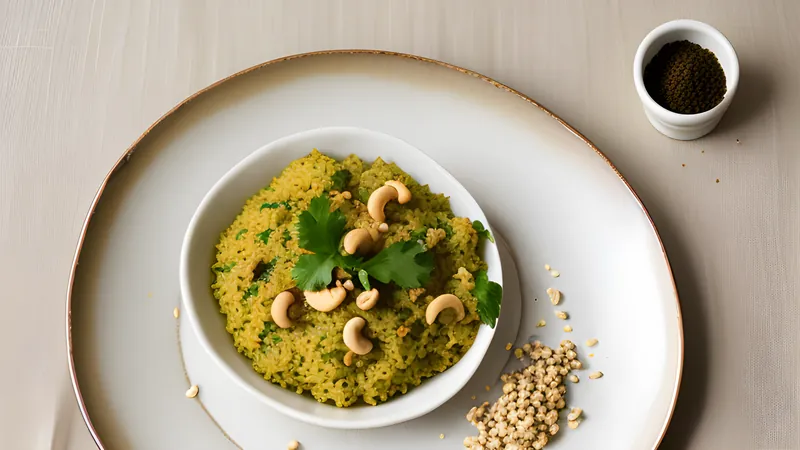
↓ Jump to recipeVen pongal is the savoury half of a dish most people outside South India only know, if they know it at all, in its sweet form: rice and lentils cooked down together into a soft, loose porridge, then finished with a hot tempering of ghee, cashews, pepper and curry leaf. It is breakfast food in Tamil homes and temple canteens alike, gentle enough for a child or an upset stomach and, done properly, savoury enough to make you go back for a second bowl.
My twist sits entirely in the ghee. Most versions melt it just enough to fry the cashews and spices; I take it further, cooking it down until it browns and turns properly nutty in the way European brown butter does, then use that darker, more complex fat to carry the pepper and cumin into the porridge. It is a small change with an outsized effect — the toasted-milk-solid depth of browned ghee against the sharp crack of black pepper is what separates a good pongal from a merely competent one.
Ven Pongal: Rice and Moong with Cracked Pepper
Ingredients
- 200g short-grain rice (idli rice or sona masoori)
- 100g split yellow moong dal
- 1.2 litres water, plus more if needed
- 1/2 tsp ground turmeric
- 1 tsp fine sea salt, or to taste
- 5 tbsp ghee, divided
- 40g cashews, halved
- 2 tbsp black peppercorns, coarsely cracked
- 1.5 tbsp cumin seeds
- 1 thumb ginger, finely chopped
- 2 sprigs fresh curry leaves
- 1/4 tsp asafoetida
- 1 green chilli, slit (optional)
Method
- Dry-roast the moong dal in a dry pan over medium heat for 3-4 minutes, stirring, until it smells nutty and takes on faint golden spots. Tip out and cool slightly.
- Rinse the rice and toasted dal together until the water runs mostly clear. Combine with 1.2 litres water and the turmeric in a heavy pot.
- Bring to the boil, then reduce to a low simmer, cover partly and cook 25-30 minutes, stirring occasionally and mashing some of the grains against the side of the pot, until soft, porridge-thick and no individual grains remain distinct. Add hot water in splashes if it thickens too fast before the rice is fully soft.
- Stir in the salt once the rice and dal are cooked through, then keep warm on the lowest heat.
- Melt 3 tbsp of the ghee in a small pan over medium heat and let it continue cooking, swirling often, for 3-4 minutes past melting until it turns a deep amber-brown and smells toasted and nutty. Watch closely in the last minute; it goes from browned to burnt quickly.
- Add the cashews to the browned ghee and fry 1-2 minutes until golden, then add the cracked pepper, cumin seeds, ginger, curry leaves, asafoetida and green chilli if using. Fry 1-2 minutes more until the cumin darkens and the leaves crisp.
- Pour the entire tempering, ghee included, into the pongal and fold through. Loosen with a splash of hot water if it has thickened past a soft, spoonable porridge.
- Finish with the remaining 2 tbsp ghee stirred through just before serving, for extra shine and richness.
A dish named for boiling over
Pongal is the Tamil verb for “to boil over,” and the dish shares its name with the January harvest festival at which it is the centrepiece — Thai Pongal, the Tamil new year celebrating the rice harvest and the sun’s turn back toward longer days. On the festival’s second morning, rice is traditionally cooked in an earthenware pot outdoors, and the moment the milk-and-rice mixture bubbles up and spills over the rim is treated as an omen of prosperity for the coming year, greeted with the shout “Pongalo Pongal.” The dish made that morning is usually the sweet version, jaggery and cardamom rather than pepper and cumin, called chakkarai pongal or sakkarai pongal.
Ven pongal — ven means white or plain — is its everyday, savoury sibling, and it is arguably the more widely eaten of the two, served year-round rather than tied to the festival calendar. It is also one of the standard offerings, or naivedyam, made daily at Tirupati and many other South Indian temples, where enormous quantities are prepared in temple kitchens and distributed to pilgrims; the version served at Tirupati is famous enough among Tamil and Telugu cooks that people specifically try to replicate “Tirupati-style” ven pongal at home, usually meaning extra ghee and a heavier hand with pepper and cumin than a plainer household version.
The point of toasting the dal first
Dry-roasting the moong dal before it goes anywhere near water is the step home cooks most often skip, and it is the one that does the most for the finished texture and smell. Raw moong dal simmered straight has a slightly grassy, flat quality; toasted first, even briefly, it develops a nuttiness that carries through the whole pot and gives the porridge a rounder, more savoury base note before a single spice is added. It also firms the dal’s structure very slightly, which paradoxically helps it break down more evenly once it does soften, rather than turning to sludge in patches while other grains stay stubbornly whole.
The ratio of rice to dal is worth getting right rather than eyeballing. Two parts rice to one part dal is standard and gives a porridge that holds together without turning gluey; push the dal higher and pongal starts to taste more like a savoury dal itself and loses the specific soft-grain texture that defines it. Short-grain rice, ideally the same par-boiled idli rice used for medu vada’s southern cousins, breaks down more readily than a long-grain basmati, which tends to stay too separate and never quite achieves the porridge consistency the dish needs.
Why the ghee gets browned
Browning butter or ghee is a Maillard reaction happening in the milk solids that remain even after clarification — small proteins and sugars that toast and caramelise once the water content cooks off and the fat gets properly hot. Ghee, being already clarified, has fewer of these solids than whole butter, which is part of why it takes longer to burn and gives you a wider window to catch it at the nutty stage rather than the acrid one. Watch for colour and smell together: it goes from pale gold to amber over a couple of minutes, and the smell shifts from simply melted-butter to toasted and faintly caramel. Pull it the moment you catch that smell — thirty seconds more and it tips into bitter.
This browned ghee is what carries the pepper. Black pepper’s aromatic compound, piperine, is fat-soluble, so frying cracked peppercorns in hot fat rather than simply stirring them into the finished porridge extracts far more of their heat and fragrance into the dish. Crack the peppercorns coarsely rather than grinding them fine — pongal is meant to have distinct pockets of pepper heat through the soft rice rather than a uniform, evenly distributed warmth.
Serving and keeping
Ven pongal is traditionally served with sambar and coconut chutney, or alongside a cup of rasam for a full South Indian breakfast, the pepper in both dishes reinforcing rather than competing with each other. A crisp side of medu vada rounds the plate out with the textural contrast the soft porridge is missing on its own.
It thickens considerably as it cools and sits, since the rice starch keeps absorbing liquid, so keep a kettle of hot water nearby if you are not eating it immediately. Leftovers keep two days refrigerated in a sealed container; reheat gently with a generous splash of hot water or milk stirred in to loosen it back to its original soft, spoonable consistency, and finish with a fresh scattering of pepper, since the ground spice mellows noticeably overnight. It does not freeze well — the rice starch breaks down unevenly on thawing and the texture turns gluey rather than smooth.
Getting the consistency right
The single biggest variable in ven pongal is water. It should end up looser than a risotto and closer to a soft, spoonable porridge that slumps rather than holds a shape on the plate; if it firms up into something you could cut with a knife, the liquid needed adding earlier, during the simmer itself. Add hot water in stages rather than all at once toward the end if you find the pot has thickened faster than the grains have softened — cold water added late will drop the temperature and slow the rice down just when it needs the last push to fully break down.
Regional names, same idea
Karnataka has its own version of this porridge called huggi or pongal huggi, generally milder on the pepper and often made with a touch of extra ginger, while in Andhra Pradesh the same dish frequently goes by khara pongal, “khara” simply meaning spicy or savoury as a marker against the sweet version. None of these differ much in method from the Tamil original; the differences sit almost entirely in the pepper-to-cumin ratio and how much ginger a given family likes, which is a useful reminder that the base technique — toast the dal, simmer rice and dal together until soft, temper hard in fat — travels across South India largely intact even as the seasoning shifts from kitchen to kitchen.
Cashews, and why whole is worth it
Buy whole cashews and halve them yourself rather than using pre-broken pieces. Whole nuts fried in the browned ghee hold their shape and give a genuine bite against the soft porridge; pre-broken pieces, which are usually offcuts from processing, brown unevenly and turn to crumbs faster, losing the textural payoff that makes people specifically pick cashews out of the bowl. Fry them first, ahead of the spices — cashews need a slightly longer, gentler fry to colour through without scorching, while cumin and curry leaf only need a fast fifteen to twenty seconds, and the wrong order means choosing between undercooked nuts and burnt spices.
What goes wrong
The most common mistake is undercooking the rice and dal before adding salt and calling it done — both should be fully soft enough to mash easily against the side of the pot with a spoon, with no distinct grains of dal still holding their shape. Judging doneness by time alone is unreliable, since it depends on how old the rice is and how hard your water is; judge by texture instead; you are looking for a mixture that falls apart under light pressure. The second common mistake is under-salting the base porridge and trying to fix it with extra salt in the tempering, which never distributes evenly. Salt the rice and dal properly while it simmers, and use the tempering purely for its own job of pepper, fat and aromatics.
A less obvious failure is adding the tempering too early, before the porridge has reached its final consistency, and then having to keep cooking it afterward, which drives off the fresh crackle of the curry leaves and mutes the sharp bite of the black pepper. Cook the pongal to done, take it off direct high heat, and only then finish the tempering and fold it through, so the aromatics you worked to get right actually survive to the table.
Milk instead of water
Some temple kitchens and Andhra households cook the rice and dal partly or wholly in milk rather than water, which gives a richer, slightly sweeter base that plays well against the sharp pepper tempering. If you want to try it, replace a third of the water with whole milk from the start rather than stirring it in at the end, since milk added late to already-thick porridge tends to split slightly against the hot pot rather than incorporate smoothly. It is not the everyday version most Tamil households cook, but it is worth knowing the option exists if you want a softer, more indulgent bowl for a weekend breakfast rather than a quick weekday one.
Ginger is another place to adjust to taste without breaking the dish. A single finely chopped thumb gives a background warmth that most recipes assume, but doubling it pushes the pongal toward something closer to a ginger-forward kanji, the rice gruel eaten across South India when someone is unwell. Both are legitimate; decide based on whether you want pongal as a standalone breakfast or as something closer to a restorative dish for a bad stomach or a cold, in which case the extra ginger earns its place alongside the pepper as genuinely useful rather than just more heat.
Related Content