Spiced Vegetable Samosas with Mint Chutney
Crisp pastry parcels with a fresh dip
Contents
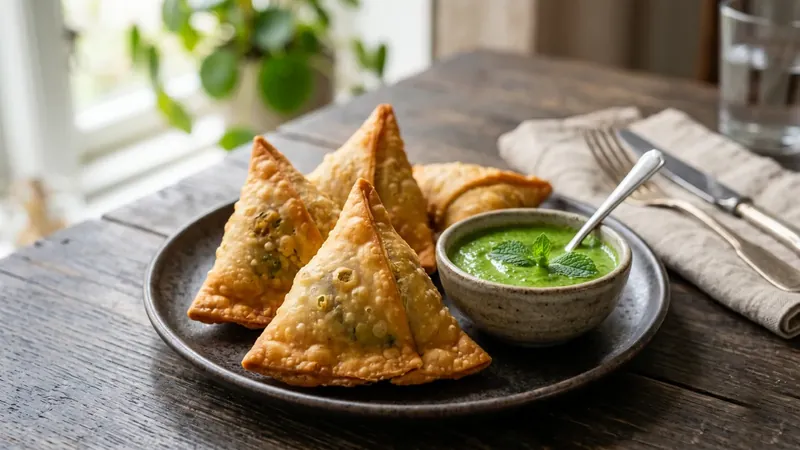
↓ Jump to recipeThe samosa needs no introduction: a crisp, golden triangle of pastry around a warmly spiced filling. The twist here is in the detail — a classic pea-and-potato filling sharpened with amchur for a gentle tang, served with a vivid, zingy mint-and-coriander chutney that cuts through the richness of the fried pastry. Made from scratch they are deeply satisfying, and the homemade dough fries up far crisper and flakier than anything from a packet. Perfect with tea.
Spiced Vegetable Samosas with Mint Chutney
Ingredients
- 250g plain flour, plus extra for dusting
- 4 tbsp vegetable oil, plus more for frying
- 0.5 tsp salt
- 100ml warm water, approximately
- 400g floury potatoes, peeled and diced
- 150g frozen peas
- 1 tsp cumin seeds
- 1 tsp grated fresh ginger
- 1 green chilli, finely chopped
- 1 tsp ground coriander
- 0.5 tsp garam masala
- 0.5 tsp ground turmeric
- 0.5 tsp amchur (dried mango powder)
- Salt, to taste
- Large bunch fresh mint leaves
- Small bunch fresh coriander
- 1 tbsp lemon juice
- 0.5 tsp sugar
- 2 tbsp natural yoghurt
Method
- Rub the 4 tbsp oil into the flour and salt, then add enough warm water to form a firm, smooth dough; knead briefly, cover and rest for 30 minutes.
- Boil the diced potatoes until just tender, adding the peas for the final 2 minutes, then drain well.
- Heat 2 tbsp oil in a pan, fry the cumin seeds for 20 seconds, then add the ginger and green chilli for 1 minute.
- Add the ground coriander, garam masala, turmeric, the potatoes and peas, amchur and salt; mash coarsely and cook for 2-3 minutes, then cool.
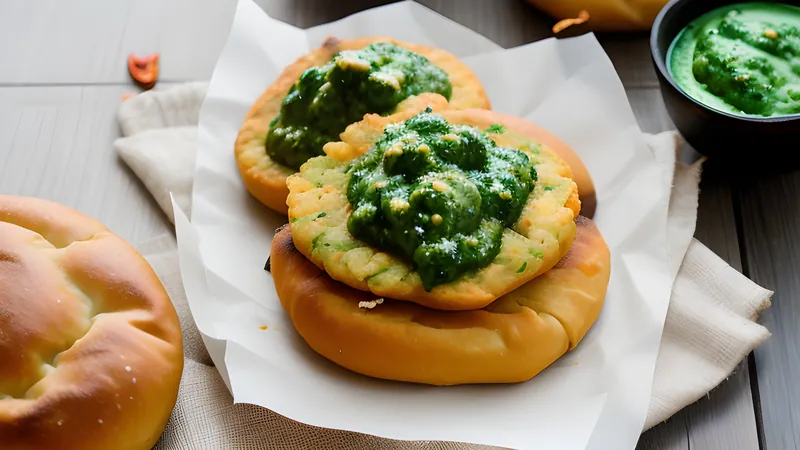
- For the chutney, blitz the mint, coriander, lemon juice, sugar, yoghurt and a pinch of salt to a smooth green sauce; chill.
- Divide the dough into 6 balls, roll each into a thin oval, and cut in half to make 12 half-circles.
- Form each half-circle into a cone, fill with the potato mixture, and seal the top edge with a little water, pressing firmly.
- Heat oil to 170C and fry the samosas in batches for 5-6 minutes, turning, until deep golden and crisp; drain and serve with the chutney.
A snack that travelled the trade routes
The samosa is one of the most well-travelled snacks there is. Its ancestors are traced to the Middle East and Central Asia, where triangular pastries filled with minced meat were known by names such as sambusak or sanbusaj. The Persian historian Abolfazl Beyhaqi described a similar pastry, the sanbosag, at a royal court in the eleventh century, and the fourteenth-century Moroccan traveller Ibn Battuta recorded eating small triangular meat pastries called sambusak at the court of the Delhi Sultanate. Carried along trade and conquest routes into the Indian subcontinent, the form was thoroughly adapted, most distinctively into the vegetarian potato-and-pea version that is now the default across much of India. Potatoes are a relatively recent arrival, brought to India by Portuguese traders in the sixteenth or seventeenth century, so the classic aloo samosa is younger than the pastry that holds it.
The filling: why floury potatoes
That spiced potato filling is the heart of the Indian samosa, and the choice of potato is not incidental. Floury varieties (Maris Piper, King Edward, russet) mash to a fluffy, absorbent texture that drinks up the spice, while waxy potatoes stay firm and slightly wet, giving a dense, clumpy filling that never quite takes on the seasoning. Boil them until just tender, no more, or they turn gluey. Peas add sweetness and colour, cumin seeds fried for 20 seconds until fragrant bring warmth, and a good pinch of amchur, dried green-mango powder, supplies the bright, tart edge that stops the whole thing tasting heavy. Cool the filling completely before you shape the samosas; a warm filling steams the inside of the pastry and softens it. Regional versions add their own touches: paneer, lentils, raisins and cashews in the richer Punjabi style, or a coarser, chunkier mash further east.
Pastry, and the frying that makes it crisp
The pastry deserves as much attention as the filling. A proper samosa shell is firm and shatteringly crisp rather than soft or bready, and two things get you there. The first is working a generous amount of fat into the flour before adding water, a step Indian cooks call moyan; that fat coats the flour and limits gluten development, giving a short, crisp crust rather than a chewy one. Keep the dough firm and slightly dry, and rest it for 30 minutes so it rolls thin without springing back.
The second is the frying temperature, and this is where most home samosas go wrong. Fry at a moderate 170C, not a fierce heat. Too hot and the outside browns and blisters before the interior of the pastry has cooked, leaving a raw, doughy layer inside; at 170C the shell cooks through slowly and forms the fine bubbles and pale-gold crunch you are after. Use a thermometer or test with a scrap of dough, which should sizzle gently and rise after a couple of seconds rather than browning instantly. Fry in small batches so the oil temperature does not crash.
Shaping the cone, and sealing it properly
The triangular samosa shape comes from working with a cone, and it is easier than it looks once you see the logic. Roll each ball of dough into a thin oval, then cut it clean in half across the middle. Take one half-circle, brush a little water along the straight cut edge, and fold it around into a cone, overlapping the two ends of the straight edge and pressing them together into a seam. You now have a pointed pocket. Fill it about two-thirds full with the cooled potato mixture, leaving room at the top to close it. Dampen the open rim, pinch it shut, and for a proper seal, press the closing edge into small flutes or crimps with your fingers. That crimp is not just decoration; a firmly pinched, slightly ruffled seam is far less likely to spring open in the hot oil and let the filling escape.
Do not overfill, however tempting. A bulging samosa splits along its seams as the filling expands and the pastry sets, dumping potato into the fryer and turning the oil cloudy. Aim for a plump but closed parcel that sits flat on its base. If you are making a batch, keep the shaped samosas under a slightly damp cloth so the pastry does not dry and crack before it goes in to fry.
The chutney, make-ahead and baking
The mint chutney alongside is the cooling, herbaceous counterpoint to the rich fried pastry, and it is a workhorse of Indian and Pakistani cooking in its own right, appearing with grills, chaat and street foods everywhere. Built on fresh mint and coriander, sharpened with lemon and given body with a spoonful of yoghurt, it takes barely a minute in a blender. If you want it hotter, add half the green chilli you deseeded from the filling. It is close kin to the herb sauces in basil and mint pesto, and the same spice-frying instinct runs through a warming bowl of spiced carrot and ginger soup.
You can shape the samosas several hours ahead and keep them covered in the fridge, or freeze them raw on a tray then bag them and fry straight from frozen (add a couple of minutes). To bake instead of fry, brush the shaped samosas with oil and bake at 200C (180C fan) for 25 to 30 minutes, turning once; they will be crisp but lighter, without the deep-fried richness. Either way, serve them hot with the chutney and, ideally, a pot of tea.
Getting the spicing right
The spice blend here is deliberately restrained so the potato still tastes of potato, but it repays a few small habits. Fry the whole cumin seeds in hot oil for about 20 seconds until they darken a shade and smell toasty; this blooming step releases their aromatic oils and gives a rounder, nuttier flavour than adding them raw to the mash. Add the ground spices, the coriander, garam masala and turmeric, only after the ginger and chilli have softened, and cook them for barely a minute, because ground spices scorch and turn bitter far faster than whole ones over direct heat. The amchur goes in near the end, off the fierce heat, so its fruity sourness stays bright rather than cooking away.
Season the filling assertively while it is warm and taste it before you shape a single samosa, because the pastry around it is unseasoned and will dull the whole thing if the potato is bland. It should taste a touch saltier and sharper than you might expect on its own; once wrapped and fried it settles into balance. If you like more heat, leave the seeds in the green chilli or add a second one. A scatter of chopped fresh coriander stirred through the cooled filling lifts it further, though keep the leaves out of anything you intend to freeze, as they discolour.
Made well, from a firm dough fried patiently at a moderate heat, these are a world away from the greasy, thick-shelled versions that give the humble samosa a bad name. Serve them with the mint chutney, and if you are laying on a spread, a bowl of spiced carrot and ginger soup alongside makes an easy, warming lunch.
Related Content