Vatapá: Bahia's Bread, Prawn and Peanut Purée
A thick, dendê-stained purée of bread, dried shrimp, peanuts and coconut milk that anchors Bahian cooking and its Candomblé table
Contents
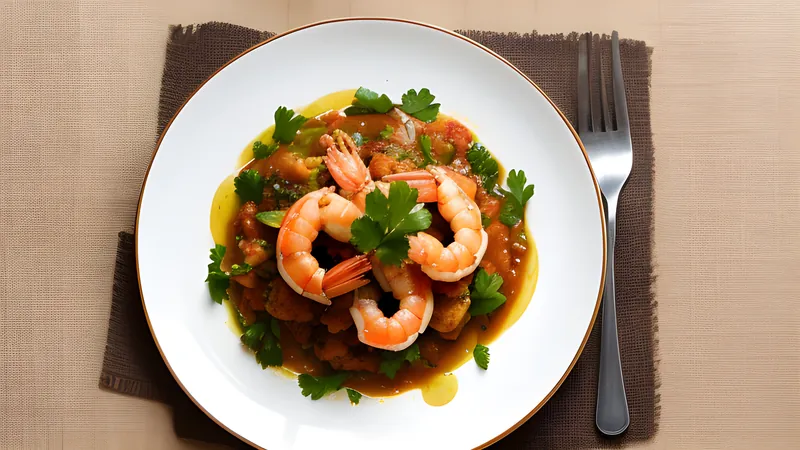
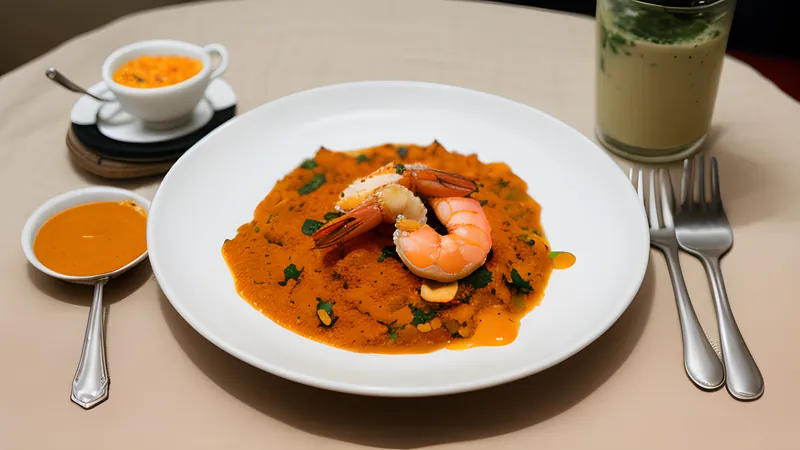
↓ Jump to recipeVatapá is a thick, glossy, orange-stained purée built from stale bread, dried shrimp, roasted peanuts and coconut milk, cooked down in dendê oil until it holds a spoon standing upright. It sounds like an unlikely combination on paper: bread as a thickener, dried shrimp doing double duty as both seasoning and protein, peanuts and cashews ground fine enough to disappear into the texture rather than announce themselves. In practice it’s one of the most complete flavours in Bahian cooking, and once you’ve made it once, the logic behind every ingredient becomes obvious.
Vatapá: Bahia's Bread, Prawn and Peanut Purée
Ingredients
- 200g stale white bread (crusts removed), torn into chunks
- 400ml coconut milk, divided
- 50g dried shrimp, rinsed
- 100g roasted unsalted peanuts
- 50g raw cashews
- 1 large onion, roughly chopped
- 4 garlic cloves
- 2cm piece fresh ginger, peeled
- 2 tomatoes, roughly chopped
- 1-2 malagueta or bird's-eye chillies, to taste
- 60ml dendê (palm) oil
- 500g raw prawns, peeled and deveined
- 1 tsp fine salt, plus more to taste
- Small bunch coriander, chopped, to finish
Method
- Soak the torn bread in 250ml of the coconut milk for 15 minutes, until fully softened.
- Meanwhile, tip the dried shrimp, peanuts and cashews into a food processor and blitz to a coarse, oily paste.
- Add the onion, garlic, ginger, tomatoes and chillies to the processor and blitz again until you have a rough, wet paste.
- Add the soaked bread (with its soaking liquid) to the processor and blend until smooth; you may need to do this in batches depending on your processor's size.
- Heat the dendê oil in a heavy-based pot over medium heat until shimmering and faintly smoking.
- Pour in the blended paste carefully (it will splatter) and stir constantly for 5 minutes, until it darkens slightly and smells toasted rather than raw.
- Stir in the remaining 150ml coconut milk and 200ml water, then season with the salt.
- Reduce the heat to low and simmer, stirring often to prevent catching on the base, for 20 minutes, until thick enough that a spoon leaves a clear trail across the bottom of the pot.
- Season the prawns lightly and stir them into the purée, cooking for 4-5 minutes until just opaque and cooked through.
- Taste and adjust salt and chilli, then finish with chopped coriander and serve hot, ideally over white rice.
Salvador, dendê oil and a dish with West African bones
Vatapá belongs to Bahia, the northeastern Brazilian state whose capital, Salvador, was the largest port for the Portuguese transatlantic slave trade in the Americas for roughly three centuries. The cooking that emerged there carries the direct culinary inheritance of West Africa, principally Yoruba foodways from what is now Nigeria and Benin, adapted with New World ingredients but never diluted into something generically “Brazilian.” Dendê oil, pressed from the fruit of the African oil palm and reintroduced to Brazil through the slave trade after the same palm had earlier made the reverse journey to West Africa via Portuguese ships, is the ingredient that marks a dish as unmistakably Bahian rather than from anywhere else in the country. Its colour, a deep orange-red, and its distinct, slightly fermented, faintly smoky flavour are non-negotiable in a genuine vatapá; there is no substitute that gets you the same result, though a mix of a neutral oil with a little paprika will at least get you the colour if dendê genuinely isn’t available where you are.
The dish sits within Bahian Candomblé religious practice as much as within everyday eating. Candomblé, the Afro-Brazilian religion that developed among enslaved Yoruba, Fon and Bantu peoples and their descendants, assigns specific foods to specific orixás, the deities at the centre of its practice, and vatapá is offered to Oxum and to Iansã depending on regional tradition, prepared according to rules about ingredients and cooking vessels that go well beyond ordinary kitchen practice for a terreiro (temple) feast. You don’t need any of that context to cook vatapá for dinner, but knowing it explains why the dish carries a formality and a sense of occasion in Bahia that its humble ingredient list might not suggest to an outsider.
Why bread, and why it works
The bread is the part that trips people up on paper and makes complete sense on the stove. Stale white bread, soaked until soft and blended smooth, gives vatapá its body in a way that flour or cornstarch can’t replicate: it thickens without turning gluey, and it carries the oil and the ground nuts into a genuinely creamy, cohesive purée rather than a starchy sauce with solids suspended in it. This is the same logic behind gazpacho’s bread-thickened body or Catalan romesco’s ground almonds and stale bread base, a reminder that using yesterday’s loaf as a thickener is a much older and more widespread technique than most modern kitchens give it credit for. Use a plain white sandwich loaf or a country bread with the crust removed; anything too dense or too sour will fight the coconut milk rather than melting into it.
Dried shrimp is doing more work than its small quantity suggests. Rehydrated and blended into the base paste, it brings a concentrated, almost cured savouriness that fresh shrimp alone can’t provide, closer to the way fish sauce or dried anchovy works in other cuisines than to fresh seafood flavour. Look for it in Brazilian, Portuguese, Chinese or Southeast Asian grocers; it’s usually sold whole and shell-on in small bags, and you want the smaller, more concentrated variety rather than the large, mild ones sold for direct eating. Peanuts and cashews together, rather than either alone, give a rounder fat and a less one-note sweetness than peanuts by itself; if you can only get one, peanuts are the more essential of the two.
Getting the texture and the toast right
The step people rush is toasting the blended paste in the hot dendê oil before adding any liquid. This isn’t optional and it isn’t just for colour: raw, unblended peanut and bread paste tastes flat and slightly chalky, and five minutes of vigorous stirring in hot oil develops the same kind of deep, nutty flavour that toasting raw peanuts in a dry pan would, except distributed through the whole base rather than sitting on the surface. Don’t walk away during this stage; the paste catches on the bottom of the pot quickly once the water content starts to reduce, and a scorched patch will taste bitter through the whole finished dish.
Getting the final consistency right takes patience rather than skill. Vatapá should be thick enough to hold a defined ridge when you drag a spoon through it, closer to a very thick soup or a loose porridge than a sauce you’d pour. If it’s too thin after 20 minutes of simmering, keep reducing over low heat, stirring regularly; if it’s too thick, loosen with a splash more coconut milk or water rather than stock, which will muddy the coconut-and-peanut flavour balance.
Serving vatapá and what it belongs alongside
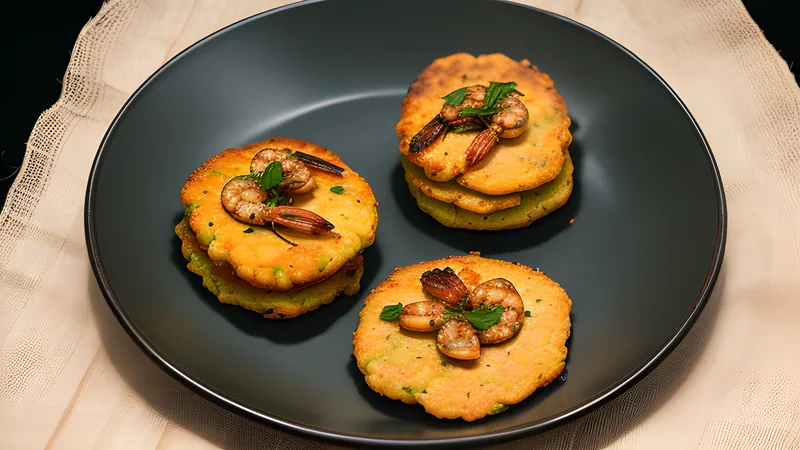
Vatapá is traditionally served over white rice, often alongside bobó de camarão, Bahia’s other great prawn dish, this one thickened with cassava rather than bread, and the two make sense on the same table because they show two different Bahian approaches to the identical core flavours of dendê, coconut milk and prawn. It’s also the traditional filling stuffed inside acarajé, the split-open black-eyed pea fritter sold from street stalls across Salvador, where a scoop of vatapá and a scoop of the drier caruru go into the fritter alongside fresh salad and chilli, making it one of the very few dishes in the world that functions equally well as a stand-alone stew and as a sandwich filling.
A scattering of farofa, toasted cassava meal, is the standard textural counterpoint on a Bahian plate that includes vatapá, adding the crunch that the purée itself entirely lacks. Leftover vatapá keeps well in the fridge for up to three days and often tastes better the following day, once the flavours have had time to settle; reheat gently on the stove with a splash of water or coconut milk to loosen it back to its original consistency, since it thickens considerably once cold.
Chicken vatapá, and why the shrimp version is the one to learn first
Vatapá de galinha, made with shredded chicken instead of or alongside the prawns, is common further inland in Bahia and across other parts of Brazil where fresh seafood is harder to source reliably, using the same bread-and-peanut base with poached, shredded chicken folded through at the end instead of prawns. It’s a legitimate and popular variation rather than a lesser one, but I’d learn the prawn version first: the combination of dried shrimp in the base and fresh prawn stirred through at the end gives you a doubled seafood flavour that the chicken version can’t replicate, and once you understand how the toasting and reduction stages behave with this recipe, swapping in shredded chicken for the prawns is a straightforward adaptation rather than a separate dish to learn from scratch.
Buying and storing dendê oil
Dendê oil turns up in most Brazilian, Portuguese and African grocers, usually sold in glass bottles under the name azeite de dendê, and it solidifies into a waxy, opaque red-orange fat below around 20C, which is completely normal and not a sign of spoilage; gently warm the sealed bottle in a bowl of hot water if it’s set solid and you need to pour it. It has a relatively short shelf life once opened compared to more neutral oils, so buy it in the smaller bottles if you only cook Bahian food occasionally, and store it away from direct light. A small amount goes a long way in this recipe and in most others that call for it; resist the urge to add more than the quantity given here on the assumption that more colour or more flavour is automatically better; too much and the finished purée tastes waxy and one-dimensional rather than rounded.
Make-ahead and freezing
The base purée, up to the point just before the prawns go in, can be made up to two days ahead and kept covered in the fridge, which is genuinely useful if you’re cooking vatapá as part of a larger spread alongside acarajé or bobó de camarão and don’t want everything finishing at once. Reheat the base gently, loosening with a little water or coconut milk, bring it back to a steady simmer, and only then add the raw prawns so they cook fresh rather than reheating already-cooked seafood, which turns rubbery fast. The finished dish, prawns included, also freezes reasonably well for up to two months in an airtight container, though the texture softens slightly on thawing; a brief blast in the food processor after reheating brings it back to something close to its original smoothness if that bothers you.
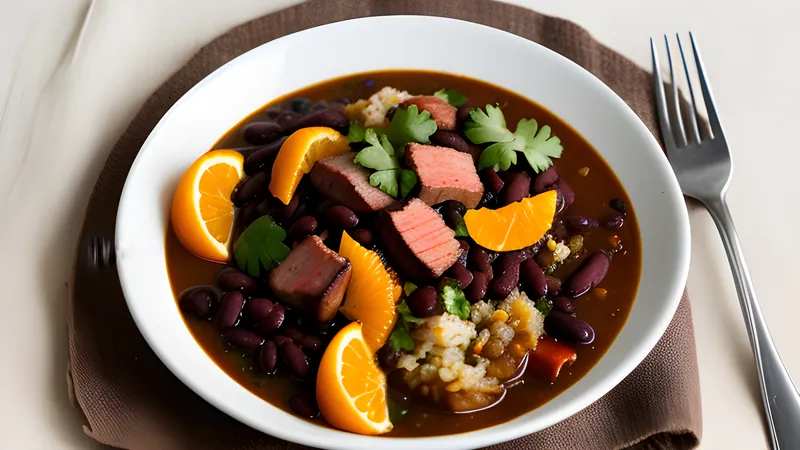
If vatapá is your introduction to Bahian and wider Brazilian cooking, it’s worth setting it alongside a proper pão de queijo for the table and, for a very different regional weekend spread, feijoada completa, the black bean and pork stew that anchors Rio’s Saturday lunches the way vatapá anchors Bahia’s.
Related Content