Varenyky: Ukrainian Filled Dumplings With Cherry or Potato
A boiled-water dough, two fillings, and browned butter over the top
Contents
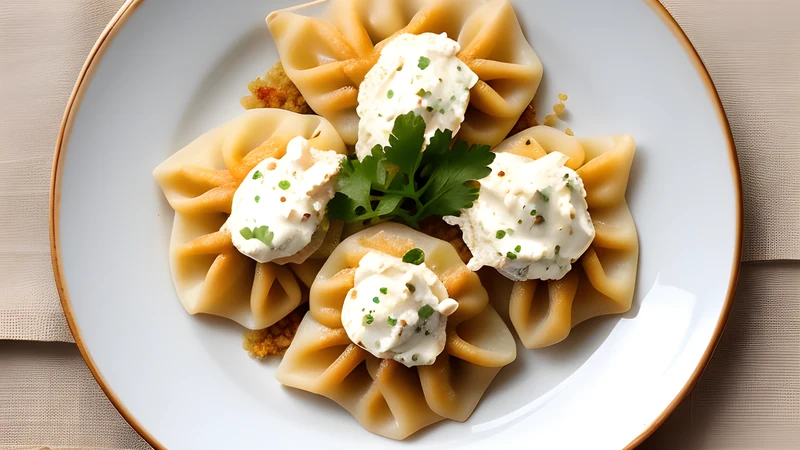
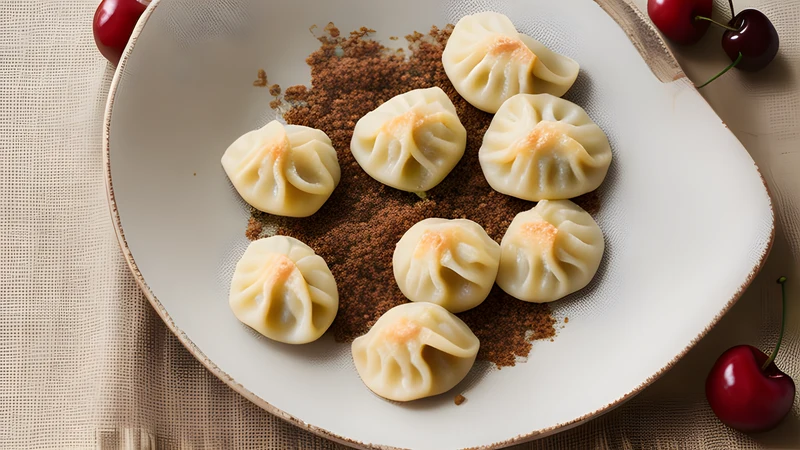
↓ Jump to recipeVarenyky are the dumpling that anchors the Ukrainian table. Half-moons of soft, pale dough around a filling that is sweet or savoury depending on the season, boiled, drowned in browned butter, and eaten with soured cream so cold it steams where it meets them. They arrive at Christmas Eve dinner as one of the twelve dishes, they arrive on a Tuesday because there were potatoes, and every family has an opinion about the crimp.
Two things make my version work. The dough is scalded — made with boiling water rather than cold — which gives a wrapper you can roll thin and seal without it fighting you or splitting in the pan. And the cherry filling gets semolina rather than cornflour, which soaks up the juice without turning it to jelly.
Varenyky: Ukrainian Filled Dumplings With Cherry or Potato
Ingredients
- 450g plain flour, plus extra for dusting
- 1 tsp fine sea salt, for the dough
- 250ml boiling water
- 2 tbsp sunflower oil
- 1 large egg, beaten
- 500g floury potatoes (Maris Piper or King Edward), peeled and cut into chunks
- 150g full-fat curd cheese (syr) or dry curd cheese
- 1 large onion, finely diced
- 60g unsalted butter, for the filling
- 1 tsp fine sea salt, for the filling
- 0.5 tsp white pepper
- 400g pitted sour cherries, fresh or frozen and thawed
- 80g caster sugar, for the cherry filling
- 2 tbsp fine semolina
- 100g unsalted butter, for browning
- 200g soured cream, to serve
- 1 tbsp coarse salt, for the cooking water
Method
- Make the dough: whisk 450g flour with 1 tsp salt in a bowl. Pour in the 250ml boiling water and the oil all at once and stir hard with a wooden spoon for 30 seconds until it forms a rough, steaming mass.
- Let it cool for 10 minutes until you can handle it, then add the beaten egg and knead on a board for 8 minutes until completely smooth and soft.
- Wrap the dough tightly and rest for 30 minutes at room temperature.
- For the potato filling: boil the potatoes in salted water for 18-20 minutes until a knife slides through with no resistance. Drain and leave in the hot pan for 2 minutes to steam dry, then mash smooth.
- Fry the diced onion in the 60g butter over a medium heat for 10-12 minutes until deep gold. Stir two-thirds of it into the mash with the curd cheese, 1 tsp salt and the white pepper. Reserve the rest for serving. Cool completely.
- For the cherry filling: toss the pitted cherries with the caster sugar and the semolina and leave for 10 minutes. Do not cook them.
- Roll the dough 2mm thick on a floured board, working with a quarter at a time and keeping the rest wrapped. Cut 8cm rounds with a cutter or a glass.
- Place 1 heaped tsp of filling on each round. Fold into a half-moon and pinch the edge firmly closed, working from the centre outwards and pressing out all air. Then crimp the sealed edge into a rope by folding small pleats over each other.
- Lay the finished varenyky on a floured tray in a single layer, not touching.
- Bring 4 litres of water to a rolling boil with 1 tbsp coarse salt. Cook in batches of 10-12 so the pan is never crowded.
- Cook for 3 minutes from the moment each dumpling floats. Lift out with a slotted spoon and drain briefly.
- Brown the 100g butter in a pan over a medium heat for 4-5 minutes until the milk solids turn hazelnut-brown and it smells nutty. Pour it over the drained varenyky.
- Serve the potato ones with the reserved fried onion and soured cream; the cherry ones with soured cream and any juices from the pan.
The name, and the cousins
The word comes from varyty, to boil. Ukrainians have been making them at least since the fourteenth century, and the popular story traces the shape to Turkish dush-vara travelling north — plausible, unproven, and repeated everywhere.
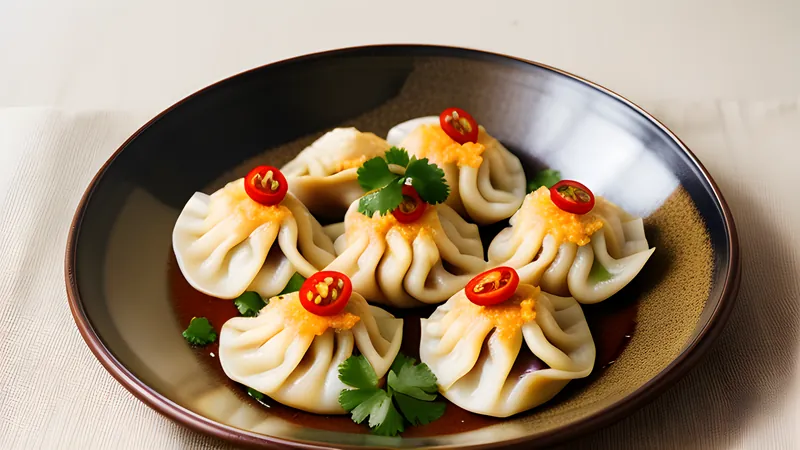
You will see them called pierogi. That is the Polish name for the Polish version, and the two are close cousins with real differences: Polish pierogi traditionally lean savoury and are often finished with pork fat and onion, while varenyky are as likely to arrive full of sour cherries with sugar on them. The Russian pelmeni are a genuinely different creature — smaller, meat-filled, raw filling cooked through in the boil, thinner dough, eaten in broth. The Georgian khinkali is a third branch entirely, pleated at the top and full of liquid.
The regional Ukrainian variations are real. Poltava makes them large. Western Ukraine fills them with bryndza sheep’s cheese, which puts them near the Carpathian dishes on the other side of the mountains. Around Kyiv the potato-and-curd combination dominates. And vyshneviy varenyky — sour cherry — belong to July, when the trees in every village garden come in at once and someone has to deal with forty kilos of fruit.
The twelve dishes, and where varenyky sit
On Sviata Vecheria, Ukrainian Christmas Eve, the table carries twelve dishes, one for each apostle, and every one of them is meatless and dairy-free because the day falls at the end of the Nativity fast. This is the constraint that shapes the whole meal, and it shapes the varenyky too.
The Christmas Eve version is made without egg in the dough and without curd cheese in the filling. Potato and fried onion, or sauerkraut, or dried mushrooms soaked and chopped, or ground poppy seed — all bound with oil instead of butter. They arrive dressed with fried onion in sunflower oil and no soured cream anywhere near them. The rest of the year the egg and the dairy come back.
They sit on that table alongside kutia, the wheat-berry pudding that opens the meal, and a beetroot borscht made without the usual bone stock. The sequence matters: kutia first, a spoonful each, then the soup, then everything else including the varenyky, and the table stays laid overnight.
A small piece of folklore worth knowing: the half-moon shape is widely read as a young moon, and varenyky carry old associations with fertility and with the harvest. In some regions they were thrown at the ceiling at Malanka — if one stuck, the year would be good. Whether anyone believed this by 1900 is doubtful. People still did it.
Making them on Christmas Eve is a whole-family job that starts mid-afternoon. Someone rolls, someone fills, someone pinches, and the person who pinches badly gets told about it.
The scalded dough is the whole trick
Most home dumpling failures are dough failures: it tears when you roll it thin, it springs back, it refuses to seal, and it splits in the water and empties itself into the pan. A scalded dough solves all four.
Pour boiling water onto flour and two things happen at once. The starch granules absorb water and swell — gelatinise — which makes the dough soft, pliable and slightly tacky in a way that is very good at sticking to itself. Simultaneously, the heat partially denatures the gluten proteins, so the dough has much less elastic snap-back. You can roll it to 2mm and it stays at 2mm instead of shrinking back to 3mm the moment you lift the pin.
The egg goes in after the mass has cooled for ten minutes. Add it to steaming dough and you scramble it, and you get pale yellow lumps through the wrapper.
Then rest it for thirty minutes. This lets the remaining gluten relax and the hydration even out. A rested scalded dough rolls like fabric.
It must be kept wrapped. A scalded dough dries out faster than a cold one, and a dried edge will not seal. Work with a quarter at a time and keep the rest under a bowl.
Sealing, which is where they fail
The pinch has two jobs: exclude air and bond the dough to itself.
Air is the enemy. A pocket of trapped air expands in boiling water, pushes on the seam from the inside, and blows the dumpling open. So press the filling flat, fold the half-moon over, and seal from the centre of the arc outwards, chasing the air ahead of your fingers to the two corners.
Then crimp. The decorative rope edge that Ukrainian grandmothers produce at a rate of one every four seconds is a mechanical reinforcement: each small pleat folded over the last doubles the dough thickness along the seam and turns a butt-joint into a lap-joint. A plain pinched edge works if you press it hard. A fork-crimped edge is fine and honest. A rope edge is better and takes a weekend to learn.
Two things stop a seal cold: flour on the sealing surface, and wet filling. Brush excess flour off the inside of the round before filling. And let the potato mash cool completely — warm filling steams inside the wrapper and the moisture defeats the pinch.
The fillings
Potato and curd is the default and it is more interesting than it sounds. The potatoes must be floury and must be steam-dried in the pan for two minutes after draining, because a wet mash makes a wet filling and a wet filling bursts dumplings. Mash them smooth while hot; potato mashed cold goes gluey as the starch cells rupture.
The syr — Ukrainian fresh curd cheese, the same family as Hungarian túró and Polish twaróg — gives lactic tang and stops the mash tasting like a side dish. Dry curd cheese from a Polish deli is the right substitute; well-drained cottage cheese is second best. It goes in cold.
Fry the onions properly. Twelve minutes to deep gold, and use two-thirds inside and one-third on top. Onions rushed to pale translucency give you nothing; onions taken to a real caramel gold are the reason the filling tastes like something.
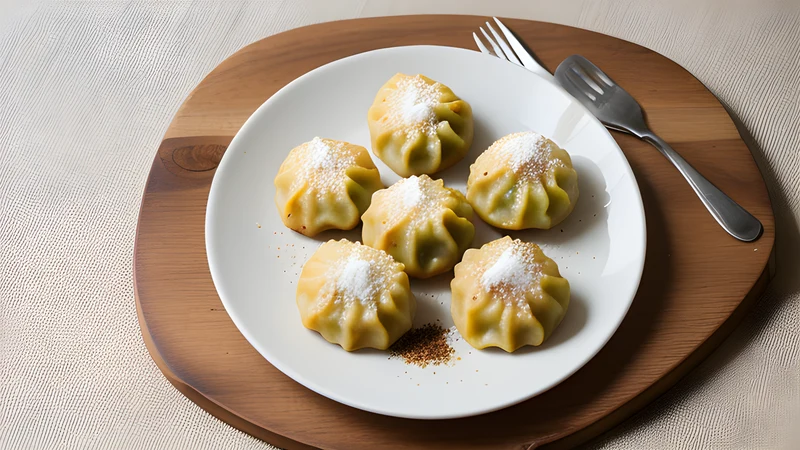
Sour cherry is the one that matters in July. Use morello or another genuinely sour variety — sweet dessert cherries are flat and cloying once cooked with sugar. Frozen sour cherries are excellent and available year-round; thaw and drain them but keep 2 tablespoons of the juice.
Do not pre-cook them. Raw cherries, sugar and semolina go in cold, and the three minutes in the boiling water is enough to cook them through. The semolina — two tablespoons for 400g of fruit — absorbs the juice released during cooking and thickens it into a syrup, so the dumpling holds together on the fork. Cornflour does the job too and gives a slightly gluey, translucent set that I like less.
Sugar them at 80g for 400g of fruit. Sour cherries want more sweetening than you expect and still land tart.
Boiling, and what goes wrong
Four litres, a hard rolling boil, a tablespoon of coarse salt, and batches of ten to twelve. Crowding the pan drops the temperature, the dumplings sit in water below boiling for a minute while it recovers, and the dough goes slack and starts dissolving.
Three minutes from floating. They float when the dough gelatinises fully and trapped steam gives them buoyancy, and that is roughly when the wrapper is cooked; the extra three minutes finishes the filling. Longer and they bloat and go slimy.
Lift them out with a slotted spoon. Tipping the pan into a colander stacks forty hot dumplings on top of each other and half of them tear.
They split in the pan. Air in the seam, or flour on the seam, or a boil so violent they are being thrown against the sides. Reduce to a steady rolling boil.
The dough is tough. Over-kneaded after the scald, or rolled too thick. 2mm.
They stuck to the tray. Flour the tray properly and do not let them sit more than 30 minutes before cooking or freezing — the filling’s moisture migrates into the wrapper and welds it down.
The case against
Making forty varenyky by hand takes an hour of solid, repetitive work, and the first eight will be ugly. This is a dish that assumes a kitchen with more than one pair of hands in it, which is exactly the kitchen it comes from. Alone on a weeknight, it is a slog.
They are also, in the potato version, a plate of starch under butter with soured cream on it. Ukrainians serve them with something sharp on the side for a reason — pickled cucumbers, or a spoon of the same fermented instinct that produces sauerkraut. Without it, the fourth dumpling tastes the same as the first and you stop.
Freezing, which is the real answer
Freeze them raw, on the floured tray, in a single layer, uncovered, for two hours until solid. Then bag them. They keep three months and they cook straight from frozen — same rolling boil, 5 minutes from floating instead of 3.
This changes what the dish is. An hour of work on Sunday puts four dinners in the freezer, and a portion of frozen varenyky is on the table eight minutes after you decide you want them. This is precisely how Ukrainian households actually operate, and it is why the making session is a big batch rather than a single meal.
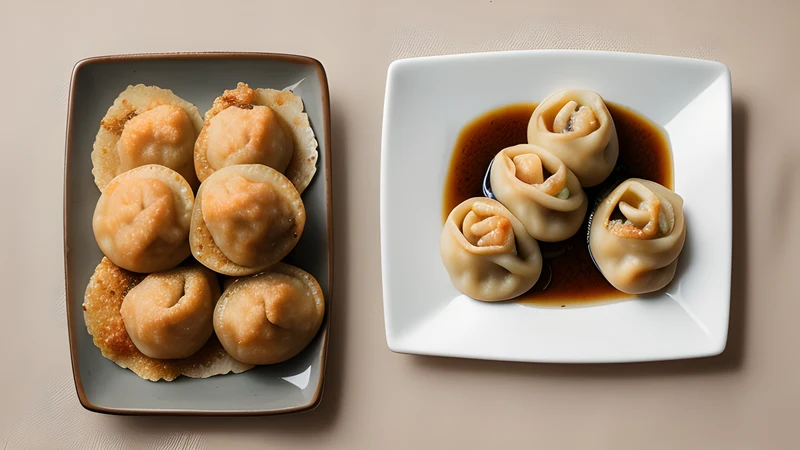
Cooked leftovers keep two days in the fridge. Fry them in butter until the flat sides blister and crisp — this is smazheni varenyky and it is arguably better than the boiled original.
Browned butter over the top is worth the four extra minutes. Melt it, keep it moving, and stop the moment the solids go hazelnut-brown and it smells of toast; ten seconds later it is black and acrid. Pour it over hot and serve immediately.
Related Content