Vanilla Panna Cotta with Berry Coulis
Silky set cream with a tart ripple
Contents
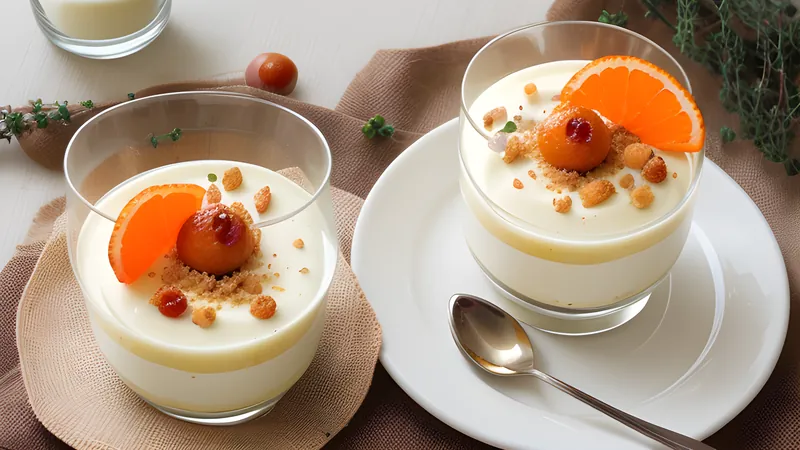
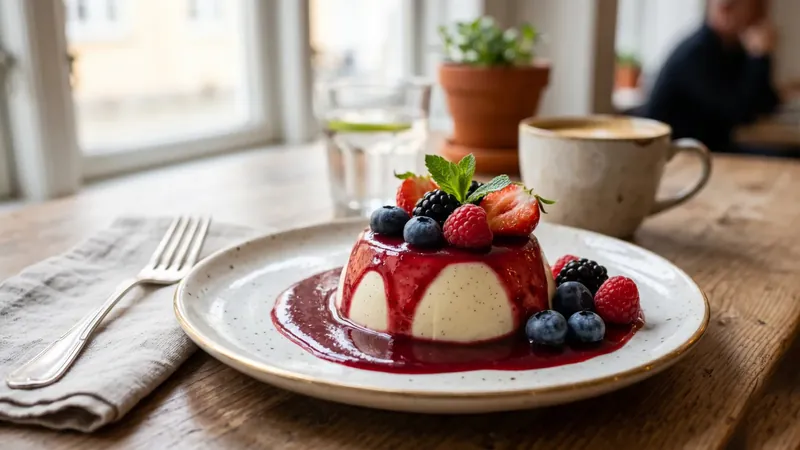
↓ Jump to recipePanna cotta is the most elegant of puddings and one of the simplest: barely-set cream, just firm enough to hold a wobble, scented with real vanilla. The twist is in the contrast, a quick homemade berry coulis whose sharpness ripples through the rich, silky cream and stops it cloying. Use a whole vanilla pod for those tell-tale flecks of seed, and aim for the softest set you dare. The reward is a dessert that quivers when you tap the plate.
Vanilla Panna Cotta with Berry Coulis
Ingredients
- 3 sheets of leaf gelatine
- 500ml double cream
- 100ml whole milk
- 60g caster sugar
- 1 vanilla pod, split and seeds scraped
- For the coulis: 250g mixed berries (raspberries, strawberries, blackberries)
- For the coulis: 2 tbsp caster sugar
- For the coulis: 1 tsp lemon juice
Method
- Soak the gelatine sheets in a bowl of cold water for about 5 minutes until soft and floppy.
- Put the cream, milk, sugar and the vanilla seeds and empty pod into a saucepan.
- Warm gently over a low heat, stirring, until the sugar dissolves and the mixture is steaming but not boiling, then remove from the heat.
- Squeeze the excess water from the gelatine and stir it into the warm cream until fully dissolved.
- Fish out the vanilla pod, then pour the mixture through a fine sieve into a jug.
- Divide between four glasses or lightly oiled moulds, cool to room temperature, then chill for at least 4 hours until set.
- For the coulis, gently heat the berries, sugar and lemon juice in a small pan until the fruit collapses, about 5 minutes.
- Blend or mash the fruit, then push through a sieve to remove the seeds, and leave to cool.
- To serve, spoon the coulis over the set panna cotta, or turn the moulds out onto plates first if using moulds.
A pudding from Piedmont
Panna cotta means simply “cooked cream” in Italian, and the name tells you almost everything about it: cream sweetened, gently warmed and set into a tender, trembling pudding. The dessert is associated above all with Piedmont, the region of north-west Italy famous for its dairy, its hazelnuts and its cream-forward puddings. In a corner of the country where good cream is plentiful, a dessert built almost entirely from it feels at home.
Its history is shorter than its air of tradition suggests. Panna cotta does not appear in Pellegrino Artusi’s landmark 1891 cookbook La scienza in cucina, and food historians generally treat it as a twentieth-century Piedmontese invention rather than an ancient one. It was included in Italy’s official regional-products list for Piedmont, which describes it as a dessert of the Langhe hills, an area otherwise known for Barolo and hazelnuts. One persistent local story credits a Hungarian woman living in the region in the early 1900s, though this is undocumented and probably folklore, so I would not repeat it as fact. What is certain is that the modern version, set with gelatine and served with fruit or caramel, spread well beyond Italy from the 1960s onwards.
The setting is the whole game
For all its refinement, panna cotta is built from a short list of ingredients, and the art lies almost entirely in the setting. Gelatine is the traditional setting agent, and the goal is to use just enough to hold the shape and no more. Too much produces a firm, rubbery block; too little and it slumps into a puddle. The ideal sits between the two, so barely set that it shivers when the plate is moved and softens the moment it touches the tongue. Three sheets of leaf gelatine (about 5g) to 600ml of dairy gives that trembling set in a glass; use four sheets if you intend to turn it out of a mould, where it needs to stand up.
Leaf gelatine, soaked in cold water and squeezed before use, gives a cleaner result than powder and is easy to measure by the sheet. Two practical warnings. Do not let the cream boil after the gelatine goes in: sustained boiling weakens gelatine’s setting power, and you risk a pudding that never firms up. And stir the softened, squeezed gelatine into cream that is hot but only steaming, off the heat, until it fully dissolves; undissolved shreds leave rubbery streaks. If you want to make this vegetarian, agar works but sets much firmer and needs a proper boil to activate, so it behaves quite differently and is not a like-for-like swap.
Real vanilla, and why the pod matters
Vanilla is the classic flavouring, and there is a real difference between a whole pod and a splash of extract. Splitting the pod and scraping out the tiny seeds perfumes the cream with a rounded, floral warmth and leaves behind the characteristic black flecks that signal the real thing. Steep the scraped pod in the cream as well, then strain it out, so nothing of its fragrance is wasted. Rinse and dry the spent pod and bury it in a jar of caster sugar for vanilla sugar later. If you must use extract, one teaspoon of a good extract stands in, but you lose the flecks and some of the perfume.
Cream, milk and the texture you are after
The 500ml cream to 100ml milk ratio here is deliberate. All cream gives a luxurious, almost buttery pudding, but it can feel heavy and coat the palate; the splash of milk lightens the body without thinning the set. If you want something less rich, you can shift the balance towards milk, but keep at least two-thirds cream or the result tastes thin and the mouthfeel loses its silkiness, because it is the fat in the cream that carries the vanilla and gives panna cotta its characteristic softness on the tongue. Whole milk, not skimmed, matters for the same reason.
Warm the mixture only to a bare steam, stirring so the sugar dissolves and the vanilla infuses; you are not cooking it, just melting the sugar and coaxing out the flavour. Then straining the finished mixture through a fine sieve before you pour it into glasses catches any stray shreds of undissolved gelatine or vanilla debris and gives a flawless, glassy surface once set. Let it cool to room temperature before it goes in the fridge, or the residual heat can create condensation and a slightly grainy top.
The coulis, and the balance
The fruit coulis is where a plain cream pudding becomes something more interesting. Panna cotta is rich by nature, and a sharp, brightly coloured sauce gives it the acidity and contrast it needs. A coulis is nothing more than fruit cooked briefly with a little sugar and lemon, then sieved smooth. Berries are the natural partner: raspberries, strawberries and blackberries all bring tartness and a vivid colour that pools against the pale cream. The lemon juice is not decorative; it lifts the fruit and stops the sugar tipping into flat sweetness. Made well, the two halves balance, the cream soft and soothing, the fruit keen and fresh.
You can vary the coulis with the seasons and with what you have. Frozen berries work as well as fresh here, since they are going to be cooked and sieved anyway, which makes this a dessert you can throw together in the depths of winter. A couple of tablespoons of the fruit reserved and stirred through whole at the end gives little bursts of unbroken berry against the smooth sauce. Taste before you cool it and adjust: more lemon if the berries are very sweet, a touch more sugar if they are sharp. The coulis should be pourable but not watery, coating the back of a spoon; if it is too thin, simmer it a minute or two longer to drive off water.
Set it in pretty glasses for an easy life, or turn it out from moulds for a more dramatic finish. To unmould cleanly, lightly oil the moulds first, dip them briefly (three or four seconds) in just-boiled water, then invert onto a plate and give a firm sideways shake to break the seal. Made a day ahead, it sits happily in the fridge for up to three days and needs only its ruby sauce spooned over at the table. Cover the surfaces once they are cold so they do not pick up other flavours from the fridge or form a skin. This make-ahead quality is what makes panna cotta such a useful dinner-party pudding: the work is all done the day before, and the only task left at the table is spooning over the coulis, so it earns its keep for very little last-minute effort. Serve it cold, straight from the fridge, so it keeps its cool, trembling set right through to the last spoonful. If you like this style of set cream, the olive-oil panna cotta with blood orange and thyme is a more savoury, grown-up cousin, and for a similar make-ahead custard with a brittle top, try crème brûlée.
Related Content