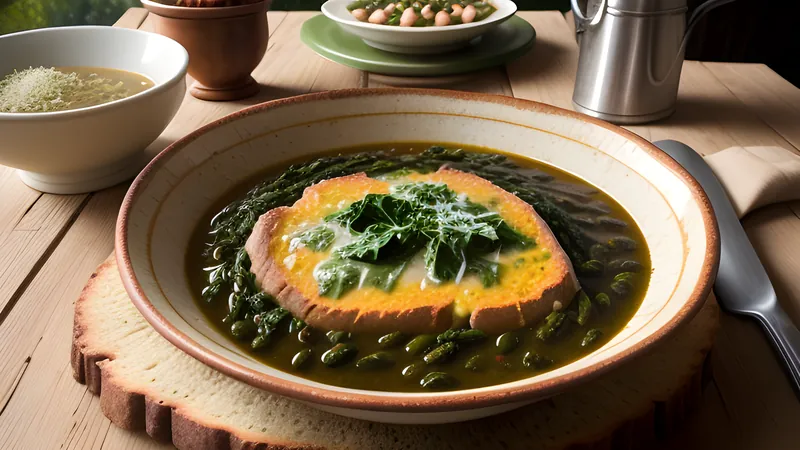
Tuscan White Bean and Cavolo Nero Soup
A peasant ribollita-style bowl thickened with bread and finished with charred garlic oil
Contents
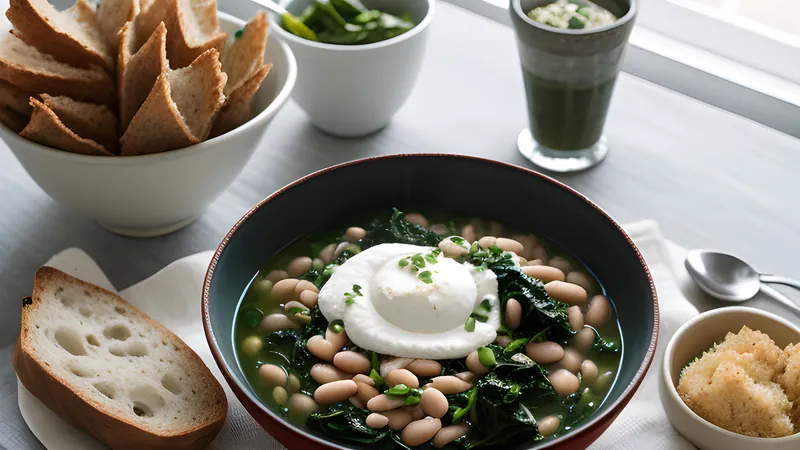
↓ Jump to recipeThere is a particular kind of soup that does not so much feed you as resettle you, and this Tuscan bowl is firmly in that camp. It is built from the cheapest things in the kitchen, white beans, dark winter greens and stale bread, yet it tastes generous and almost luxurious. The clever twist here is a spoonful of charred garlic oil swirled in at the end, which lifts what is essentially a humble pot of vegetables into something with real depth and a faint, smoky sweetness. It is the bowl I want on a grey October evening when the heating has just gone on.
Tuscan White Bean and Cavolo Nero Soup
Ingredients
- 4 tbsp good olive oil, plus extra to finish
- 1 onion, finely diced
- 2 carrots, finely diced
- 2 celery sticks, finely diced
- 4 garlic cloves, 3 sliced and 1 left whole
- 1 tbsp tomato purée
- 1 x 400g tin chopped tomatoes
- 2 x 400g tins cannellini beans, drained
- 200g cavolo nero, stalks stripped and leaves shredded
- 1.2 litres vegetable stock
- 1 Parmesan rind (optional)
- 2 thick slices stale sourdough, torn
- 1 sprig rosemary
- Salt and plenty of black pepper
- A pinch of chilli flakes
Method
- Warm the olive oil in a large heavy pan over a medium-low heat and add the onion, carrot and celery with a good pinch of salt. Cook gently for 12 to 15 minutes until soft and sweet but not coloured.
- Stir in the sliced garlic and rosemary and cook for a minute, then add the tomato purée and fry for another minute until it darkens.
- Add the chopped tomatoes, half the cannellini beans, the stock and the Parmesan rind if using. Bring to a simmer and cook for 15 minutes.
- Mash the remaining beans roughly with a fork and stir them in to thicken the soup, then add the cavolo nero and simmer for 10 minutes until tender.
- Stir in the torn bread and let it slump into the soup for 5 minutes, then season well with salt, pepper and chilli flakes. Fish out the Parmesan rind.
- Meanwhile, warm 2 tbsp olive oil in a small pan, add the whole garlic clove sliced thin and fry until deep golden and nutty, then tip oil and garlic into a small bowl.
- Ladle the soup into warm bowls, spoon over the charred garlic oil and finish with extra olive oil and a grinding of pepper.
The thrift of ribollita
This soup descends directly from ribollita, the famous Tuscan dish whose name means “reboiled”. It was never a recipe so much as a method for survival. Cooks in the countryside around Florence and Siena would make a big pot of vegetable and bean minestrone, eat some, then thicken the leftovers the next day with yesterday’s bread and reheat it, building flavour with each warming. Nothing was wasted. Bread that had gone hard was too precious to bin, so it was torn into the pot, where it dissolved into a soft, spoonable mass that sits somewhere between soup and stew.
Cavolo nero is the soul of the thing. This dark, blistered Tuscan kale, sometimes sold as black cabbage or lacinato, has been grown in Tuscany since at least the eighteenth century and holds up beautifully to long cooking, giving the broth a deep, mineral, faintly bitter backbone that ordinary cabbage cannot match. Traditionally it was cut only after the first frost, which converts some of the leaf’s starch to sugar and mellows its bitterness. If you cannot find it, curly kale or savoy cabbage will stand in honourably, but the soup loses a little of its brooding character. The beans, traditionally cannellini, do double duty: half stay whole for texture, half are mashed to thicken and enrich the liquid into something closer to a purée.
A word on the name and the pedigree. Ribollita belongs to Tuscany’s cucina povera, the “cooking of the poor” that turned scarcity into some of Italy’s best-loved food. It is a close cousin of pappa al pomodoro, the Tuscan bread-and-tomato soup, and of acquacotta, “cooked water”, both built on the same principle that yesterday’s stale bread is not rubbish but the thickening body of tomorrow’s meal. Tuscan bread is famously unsalted, a habit said to date to a medieval salt tax dispute with Pisa, and that saltless loaf goes stale in a way that is perfect for soaking up soup rather than turning to sour mush.
Olive oil is an ingredient, not a lubricant
In Tuscan cooking, olive oil is a flavour in its own right, and this soup uses a fair amount of it, both to build the base and to finish the bowl. Do not treat it as mere frying fat. The oil you cook the soffritto in can be an everyday oil, but the oil you pour over at the table should be the best peppery, grassy extra-virgin you can afford, because raw and warm it delivers its full flavour, while cooking would drive off the very aromatics that make it worth having. A good Tuscan or Umbrian oil has a distinctive throat-catching bitterness and a green, herbaceous kick that is a large part of what makes this soup taste of somewhere rather than nowhere.
That generous finishing glug is not indulgence, it is the seasoning. It carries the flavours, coats the tongue, and turns a bowl of soft beans and greens into something that feels complete. If your soup ever tastes a touch flat or thin at the table, the answer is almost always more olive oil and a firm grinding of black pepper before you reach for anything else.
Building the soup
Everything starts with a proper soffritto, the slow-cooked trinity of onion, carrot and celery that underpins so much Italian cooking. Resist the temptation to rush it. Fifteen patient minutes over a low heat coaxes out a natural sweetness that becomes the foundation of the whole bowl, and no amount of stock can fake it later. Once that base is soft and fragrant, the garlic, rosemary and tomato purée go in to deepen things, then the tomatoes, stock and half the beans simmer together until the flavours marry.
The thickening is where the magic happens. Mash the remaining beans and stir them through, then add the shredded cavolo nero and let it soften. Finally the torn sourdough goes in and is allowed to collapse into the soup, drinking up the broth and giving the whole pot a comforting, porridgey body. If you have a Parmesan rind lurking in the fridge, drop it in early; it melts away to nothing but leaves behind a savoury richness that is hard to place and impossible to do without once you have tried it.
The charred garlic finish
The single thing that makes this version sing is the garnish. In a small pan, fry a sliced clove of garlic in olive oil until it turns deep gold and smells toasty and almost nutty, then pour the lot, oil and crisp garlic together, over each bowl. It is a tiny step that adds a charred, savoury top note and a glossy slick of flavour that cuts through the soft, starchy soup beneath. Watch it carefully, because garlic goes from golden to acrid in seconds; the moment it is the colour of pale honey, it is done.
The reason for the tightrope is chemistry. As garlic browns it develops warm, nutty flavour compounds, but push it a shade too far and it produces bitter, burnt notes that no amount of seasoning will rescue. Start it in cold oil rather than dropping it into an already-hot pan, so it toasts evenly from the inside as the oil heats, and take the pan off the heat a heartbeat before you think it is ready, because it keeps cooking in the residual warmth of the oil. Slicing the clove thinly rather than crushing it helps too; even slices colour at the same rate, whereas crushed garlic has fine shreds that scorch while the rest is still pale.
Beans, tinned and dried
Tinned cannellini beans are what make this a genuine weeknight soup, and there is no shame in them; a good tin, drained and rinsed, is soft, creamy and ready in seconds. If you want to go further, dried beans reward the effort. Soak 250g of dried cannellini overnight, then simmer them gently with a bay leaf and a peeled garlic clove until tender, anywhere from forty-five minutes to well over an hour depending on their age, and keep the cooking liquid. That starchy, bean-flavoured broth can replace some of the stock and gives the soup a silkier, more integrated body than water-packed tins ever will. Salt the beans only once they are soft, because adding salt too early can toughen their skins and slow the cooking.
Whichever you use, the trick of mashing half the beans is doing real work. Mashed beans release their starch into the broth and thicken it naturally, so you get a soup with a rounded, almost creamy body without a drop of cream or a spoon of flour. It is the same principle behind a good bowl of dal or a proper minestrone: part of the pulse is cooked to collapse and thicken, part is left whole for texture and bite.
Tips and make-ahead
Like all good peasant soups, this one improves with time. Made a day ahead and reheated, it deepens and thickens further; just loosen with a splash of water or stock when you warm it, as the bread will keep drinking. It freezes well too, although it is best to add the bread only when reheating if you plan to freeze it, so it does not turn to mush. Freeze it in portions before the bread goes in, and you have a proper meal waiting for the evening you cannot face cooking; defrost overnight, warm it through, tear in fresh stale bread and make the garlic oil to order.
For a meatier version, start by frying a little diced pancetta with the soffritto. To keep it fully vegetarian, leave out the Parmesan rind and finish with a shower of grated pecorino alternative or simply a good lash of peppery olive oil. Stale, sturdy bread is non-negotiable; fresh slices will dissolve into paste, so use the heel of yesterday’s loaf. Season boldly at the end, taste, and add the chilli flakes to your liking. Serve it with nothing more than more bread and a glass of something red.
If this is your kind of cold-weather bowl, the ribollita it descends from is worth cooking in its purest form, and a chorizo and white bean stew takes the same beans somewhere spicier and heartier. For a smoother, blended alternative on the same thrifty spirit, there is the spiced carrot and ginger soup.
Related Content