Turrón de Jijona: Alicante's Soft Almond Slab
Marcona, honey, and a great deal of grinding
Contents
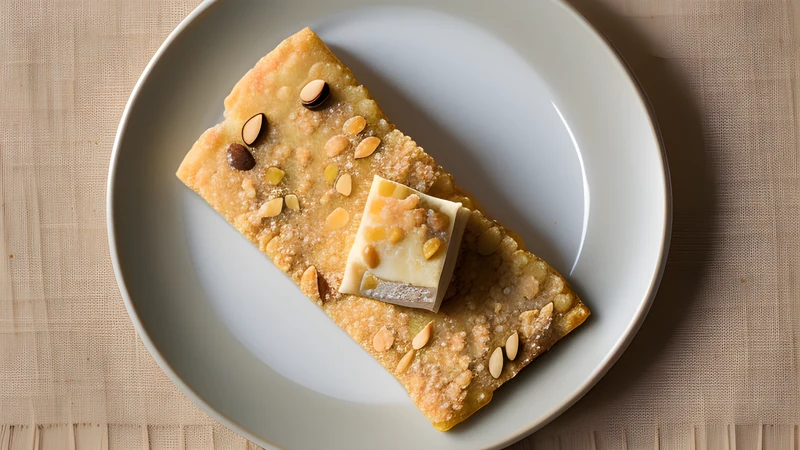
↓ Jump to recipeThere are two turróns and Spain argues about them every Christmas. Turrón de Alicante is the hard one: whole almonds set in a brittle nougat, a slab you could break a tooth on. Turrón de Jijona is the soft one, and it is the interesting one — the same almonds and honey ground down to a dense, oily, faintly gritty paste the colour of wet sand, so rich that a 2 cm bar is a serious proposition.
Jijona is the harder of the two to make at home, because the industrial version involves granite mills and a piece of equipment called a boixet, a mechanised mortar that pounds the paste for hours while heating it. My twist is a workaround for that: a tablespoon of tahini. It is not traditional and Jijona would be appalled. What it does is supply extra sesame oil and the finely-milled sesame solids that help the almond paste stay loose and homogeneous under a domestic food processor, which will otherwise stall and leave you with a stiff, grainy brick. The sesame flavour vanishes under 400 g of almonds. The texture it buys you is the difference between a decent slab and a sandy one.
Turrón de Jijona: Alicante's Soft Almond Slab
Ingredients
- 400 g blanched Marcona almonds
- 200 g mild honey (orange blossom or rosemary)
- 80 g caster sugar
- 1 large egg white (about 35 g)
- 1 tbsp light tahini
- 0.5 tsp fine salt
- 2 sheets of edible wafer paper (papel de oblea), optional
Method
- Heat the oven to 160C fan. Spread the almonds on a baking tray and roast for 12 to 15 minutes, stirring twice, until they are golden through the centre when you snap one open. Do not let them brown darkly. Leave to cool for 10 minutes — they should still be warm to the touch when they go into the processor.
- Tip the warm almonds into a food processor with 0.5 tsp fine salt. Blitz for 4 to 6 minutes, stopping every minute to scrape the sides down. The almonds pass through flour, then clumped paste, then finally slacken into a thick, oily butter. Be patient; this is the whole dish.
- Add 1 tbsp tahini and blitz for 30 seconds more. The paste should now be loose enough to fall slowly from a spoon.
- Put the honey and sugar in a heavy saucepan over medium-low heat. Stir until the sugar dissolves, then stop stirring and cook to 118C on a digital thermometer, about 8 to 10 minutes. Skim any foam.
- Whisk the egg white in a clean bowl to soft peaks. With the whisk running, pour the hot honey syrup down the side of the bowl in a thin stream. Keep whisking for 4 to 5 minutes until the mixture is thick, glossy and has cooled to just warm.
- Fold the almond paste into the honey meringue in three additions. It will seize and go stiff and look ruined. Keep working it with a spatula until it comes together into a uniform pale brown paste.
- Scrape the mixture into a heavy saucepan or a wide pan over the lowest possible heat. Cook for 15 to 20 minutes, stirring and pressing constantly with a wooden spoon, until the paste darkens slightly, smells strongly of toasted almond, and you can see oil beading on the surface and at the edges of the pan. This weeping is the sign it is ready.
- Line a 20 x 10 cm loaf tin or a shallow rectangular mould with greaseproof paper, or with a sheet of wafer paper cut to fit the base.
- Scrape the hot paste into the tin. Lay a second sheet of wafer paper or greaseproof on top and press down hard with the flat base of a glass or a small board, working from the centre out, until the slab is dense, level and free of air pockets.
- Put a weight on top — a couple of tins of tomatoes on a board — and leave at cool room temperature for 24 hours, then refrigerate for a further 24 hours.
- Turn out and cut into bars about 2 cm wide with a large sharp knife, wiping the blade between cuts. Serve at room temperature.
A town, a guild and a protected name
Jijona — Xixona in Valencian — is a town of about seven thousand people in the hills behind Alicante, and it has been making this stuff for a very long time. Turrón appears in Spanish documents by the sixteenth century, and Jijona’s town council was regulating its production by the seventeenth. There is an argument that the technique arrived with Al-Andalus, from Arab confectionery traditions of nut-and-honey pastes, and a competing argument tracing it to the Roman cuppedia. Both are plausible and neither is settled.
What is documented is the economics. Jijona sits in a landscape of almond terraces and rosemary scrub, which means almonds and honey in the same square kilometre, and turrón was the way to turn an autumn almond harvest into something that could be sold at Christmas and stored in between. The town’s makers took their slabs to Madrid on carts each December. By the nineteenth century, Jijona turrón was on the royal table.
Turrón de Jijona has held a protected geographical indication since 1996. The rules are strict: a minimum of 52 per cent almonds by weight for the top suprema grade, honey as the principal sweetener, and production within the municipal boundary. My recipe runs at about 57 per cent almond, which is on the generous side and where I think it tastes best.
The almond is the point
Marcona almonds, if you can get them, and it is worth trying. They are a Spanish variety — round, flat, noticeably sweeter and considerably higher in oil than the Californian almonds that dominate the world market. That oil content is the whole mechanism of soft turrón: you are trying to grind almonds until their own fat comes out and turns the solids into a paste. A dry, low-oil almond fights you the entire way.
Roast them, and stop before they go dark. Somewhere around a pale gold through the centre is right — you want the Maillard flavour without the bitterness that comes with a deep roast. Snap one open to check; the outside colours long before the inside does, and an almond that looks perfect can still be raw in the middle.
Grind them warm. This matters more than almost any other instruction here. Warm almonds release their oil far more readily than cold ones, because the fat is fluid rather than semi-solid, and a food processor working on cold almonds will simply produce almond flour and refuse to go further. Give them ten minutes out of the oven and no more.
Then commit to the grinding. Four to six minutes, and it goes through stages that look like failure: flour, then a stiff clumping paste that climbs the sides, then — suddenly, usually between minutes three and four — it slackens and goes glossy as the oil breaks free. Scrape down often. This is the same transformation that happens when you make any nut butter, and the same one that underpins romesco on a coarser scale.
Honey, sugar and 118C
The honey should be mild. Orange blossom is the Alicante choice and rosemary honey is the other local one; both are floral and light. A strong dark honey — chestnut, buckwheat, heather — bulldozes the almonds and makes something that tastes of honey with almonds in it, which is the wrong way round.
The syrup goes to 118C, the soft-ball stage, and a digital thermometer is worth more here than any amount of experience with cold water and teaspoons. Below 116C the finished slab stays tacky and never sets properly. Above 122C it goes hard and you have accidentally made a chewy Alicante-style nougat. The window is narrow and the syrup moves through it fast at the end.
Pour the syrup onto the whisking egg white slowly and down the side of the bowl. Hit the whisk directly and it flings molten sugar at 118C around your kitchen and onto your hands, which is the most genuinely dangerous moment in this recipe. Take it seriously.
The egg white earns its place structurally: it gives the paste enough aeration to stay soft and sliceable, and its proteins help hold the almond oil in suspension so the slab does not weep in storage.
The cooking-out, and the oil you are waiting for
This is the stage that makes Jijona what it is, and the stage nobody expects. Once the almond paste and the honey meringue are combined, you cook the whole thing in a pan, over very low heat, stirring hard, for fifteen to twenty minutes.
You are looking for one specific thing: oil beading on the surface. The industrial boixet does this by pounding, which generates friction heat and drives the almond cells apart; you are doing it with a wooden spoon and a low burner. When the oil weeps out and the mixture goes slightly darker and smells overwhelmingly of toasted almond, it is done. Before that point, the turrón will be pale, dull and slightly floury in the mouth.
The heat must stay low. The paste is dense and full of sugar, and it will catch and scorch on the base without much warning. Keep the spoon moving and press the paste against the pan as you go.
Wafer paper, and whether you need it
Every commercial slab of turrón arrives sandwiched between two sheets of papel de oblea — edible wafer paper, made from potato starch, the same stuff communion hosts are pressed from. It has been part of the dish for centuries and people are often surprised to learn they have been eating it.
It does a real job. Turrón de Jijona is an oily paste, and the wafer stops it welding itself to the wrapper, absorbs a little of the surface oil that migrates out over weeks, and gives you something to hold that will not leave your fingers greasy. It contributes nothing to the flavour.
You can buy it from baking suppliers and some Spanish grocers. If you cannot find it, greaseproof paper works perfectly well for a slab you are going to eat within a month; peel it off before serving. Rice paper of the kind used for spring rolls is a different product and turns tacky against the turrón.
Things that go wrong
The paste never turned to butter. Cold almonds, low-oil almonds, or an underpowered processor. Warm them, add the tahini earlier, and keep going for another two minutes. A small food processor genuinely struggles with 400 g — do it in two batches if the motor is straining.
The slab is grainy and sandy. The grinding stopped too early. Once it is combined with the syrup there is no way back, so the time to be stubborn is at the processor stage.
It never set and stays tacky. The syrup did not reach 118C. A slab like this can be salvaged: scrape it back into a pan and cook it out for another ten minutes over low heat to drive off moisture, then press and weight it again.
It set hard and snaps. The syrup went past 122C. You have made something closer to turrón de Alicante, which is a perfectly good sweet, so cut it thin and pretend it was deliberate.
It weeps oil badly in storage. Under-cooked at the pan stage, or the egg white was over-whisked and broke. Press the oil back in and eat it sooner.
Pressing, waiting and cutting
Press it hard. Air pockets are the difference between a professional slab and a crumbling one, and the mixture is stiff enough that it will not settle on its own. Weight it and leave it 24 hours at room temperature, then a day in the fridge.
Cut with a long knife in one downward press. Sawing tears it.
Variations from the same region
Once the base paste works, Alicante offers a small family of related slabs.
Turrón de yema tostada takes the same almond paste, folds in egg yolks and sugar, presses it, and blowtorches the top to a caramelised crust — a crème brûlée in slab form, and the best of the modern turróns. Turrón de chocolate, which appeared in the twentieth century and horrifies purists, replaces some of the honey with dark chocolate and rice crisps.
Closer to home, adding 50 g of candied orange peel, chopped fine and folded in at the end of the cooking-out, gives a version common around Valencia. A teaspoon of ground cinnamon and the finely grated zest of a lemon is the other classic seasoning, and both are in the PGI rules as permitted additions.
The one worth trying if you like the technique is a pistachio version: swap 150 g of the almonds for blanched pistachios. It grinds the same way, sets the same way, and comes out an unnerving green.
Storage
Wrapped tightly, turrón de Jijona keeps for two months in a cool cupboard and improves for the first week as the flavours marry. Some oil separation over time is normal and correct — press it back in with a knife. Refrigerating it long term makes it hard and dulls the flavour; take any bar out an hour before eating.
Serve it at the end of a long Spanish meal in small pieces, with coffee or a glass of PX sherry. If you want the other Spanish almond sweet at the same table, an almond, olive oil and orange blossom cake covers the same ground in a lighter register, and crema catalana is the classic Christmas alternative for people who have had enough almonds.
Related Content