Tteokguk: Korean Rice Cake Soup
The New Year bowl that adds a year to your age with every serving
Contents
↓ Jump to recipeTteokguk is eaten specifically on Seollal, the Lunar New Year, and the tradition attached to it is direct enough that Koreans use it as an actual measure of age: asking someone “how many bowls of tteokguk have you eaten” is a real, commonly understood way of asking how old they are, since eating a bowl on New Year’s Day is popularly held to add a year. The custom isn’t universally taken literally by every generation, but the phrase persists in everyday speech regardless, which says something about how deeply the dish is embedded in the specific ritual of marking a new year rather than just being a soup people happen to eat in winter.
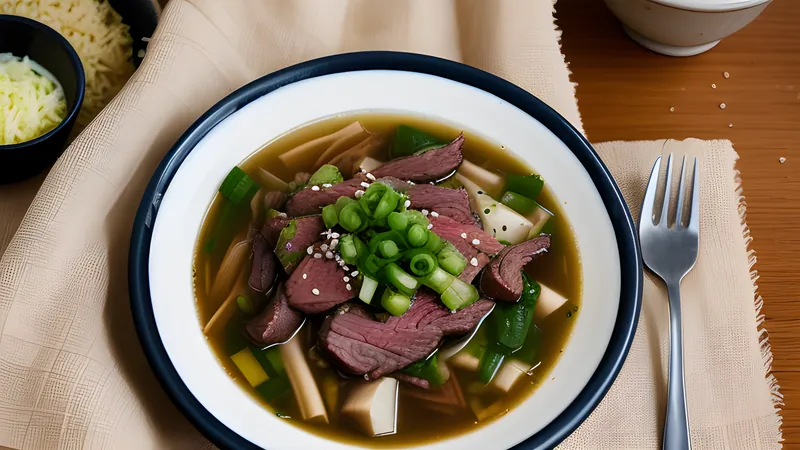
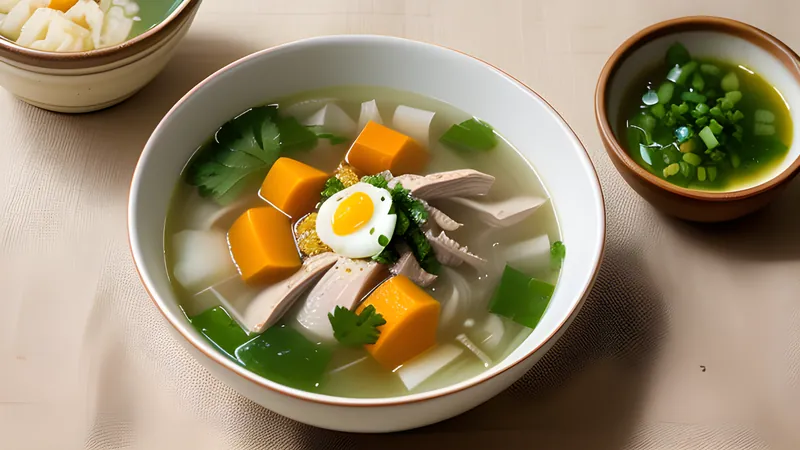
The white colour of the sliced rice cake carries its own symbolic weight, tied to ideas of purity, a clean start and clarity for the year ahead — a fairly common thread across East Asian New Year foods, where white or pale ingredients recur specifically around the new year in contrast to the reds and golds more associated with general good fortune the rest of the year. The clear beef broth reinforces the same idea visually: this is one of the least visually rich Korean soups, deliberately so, standing in contrast to the deep red of something like yukgaejang precisely because the occasion calls for a different kind of symbolism.
Tteokguk: Korean Rice Cake Soup
Ingredients
- 400g beef brisket or shin, in one piece
- 1.8 litres water
- 1 onion, halved
- 4 garlic cloves, crushed
- 500g sliced rice cake (garae-tteok ovals), soaked in cold water for 20 minutes
- 2 tbsp soy sauce, plus more to taste
- 1/2 tsp salt, plus more to taste
- 2 eggs, separated
- 1 tsp neutral oil, for the egg garnish
- 2 spring onions, thinly sliced
- 1 sheet roasted seaweed (gim), crumbled
- 1 tsp minced garlic
- black pepper, to taste
Method
- Place the beef in a large pot with the water, onion and crushed garlic, bring to the boil, then skim off any scum.
- Reduce to a low simmer, cover, and cook for 45 minutes to 1 hour, until the beef is tender enough to shred.
- Remove the beef, shred or slice it thinly once cool enough to handle, and strain the broth through a fine sieve.
- Beat the egg whites and yolks separately, then cook each into a thin sheet in a lightly oiled pan over low heat, without browning, and slice into fine strips once cooled.
- Drain the soaked rice cake slices and rinse briefly under cold water.
- Return the strained broth to the pot, add the soy sauce, salt and minced garlic, and bring to a simmer.
- Add the rice cake slices and cook for 4-5 minutes, until they float to the surface and turn slightly translucent and chewy-soft.
- Return the shredded beef to the pot and warm through for 1-2 minutes.
- Season to taste with more soy sauce, salt and black pepper, then ladle into bowls.
- Top each bowl with the yellow and white egg strips, sliced spring onion and crumbled seaweed before serving hot.
The rice cake itself
Garae-tteok, the long cylindrical rice cake used here, is made from steamed and pounded glutinous or non-glutinous rice flour, then sliced into thin ovals for this specific soup — a distinct shape and cut from the thicker cylinders or chewier styles used in dishes like tteokbokki. Pre-sliced garae-tteok is sold frozen or refrigerated at Korean grocers, and it needs a short soak in cold water before cooking regardless of whether it’s fresh or previously frozen, since the slices dry out and stiffen in storage and won’t rehydrate properly with just the few minutes they spend simmering in the broth.
Don’t skip the soak even if the packet looks moist — dry or under-soaked slices stay tough at the centre even after simmering, while properly soaked ones turn tender and slightly translucent at the edges within four or five minutes, which is the texture you’re aiming for. Rice cake that’s overcooked, on the other hand, turns gummy and starts to dissolve into the broth, thickening it in a way that isn’t traditional to this specific soup — pull the slices the moment they float and turn translucent.
Building a clear broth
The broth here is meant to be clear rather than richly reduced, a lighter, more restrained style than a long-simmered bone broth. Beef brisket or shin, simmered for under an hour rather than the two-plus hours a heartier soup like yukgaejang might need, gives enough body and savoury depth without needing the extended cooking time — the goal is a clean, delicate broth that lets the rice cake and egg garnish stand out rather than a thick, assertive one.
Skimming matters more here than in a soup with a lot of competing flavour, since any cloudiness or fat left in the broth is far more visible and noticeable in a dish this pared-back. Skim thoroughly in the first few minutes of boiling, and strain the finished broth through a fine sieve before returning it to the pot for the second stage — even small fragments of onion or garlic left in will muddy what’s supposed to be a clear, presentable broth.
The egg garnish, done properly
The yellow-and-white egg strips, called jidan, are a standard garnish across several Korean soups and rice dishes, but they matter especially here given how plain the rest of the presentation is. Separate the eggs fully, cook the whites and yolks in separate thin sheets over genuinely low heat — the goal is a thin, evenly cooked, unbrowned sheet, not a fried or scrambled texture, since browning introduces colour and flavour notes that clash with the intentionally clean, pale presentation. Let each sheet cool fully before slicing into fine strips; slicing while warm tends to tear rather than cut cleanly.
A well-made pair of jidan sheets should look almost like thin fabric, uniform in colour and thickness, and the contrast between the pale broth, white rice cake and the two distinct shades of egg is a large part of what makes a bowl of tteokguk look considered rather than plain, despite the genuinely simple ingredient list underneath.
Regional and family variations
Some households add a handful of thin-sliced garlic or a few strands of dried anchovy to the broth base for extra depth, and northern-influenced versions sometimes use a pheasant or chicken broth instead of beef, a preference that traces back to pre-division regional habits similar to the ones affecting dishes like bindaetteok. Dumplings are a common addition in many families’ version, turning the dish into tteok-mandu-guk, rice cake and dumpling soup together — a variant on the base recipe, but common enough at New Year tables that it’s worth mentioning as a legitimate tradition in its own right.
The soup’s simplicity also makes it a dish where family recipes diverge more in small proportions — how much soy sauce versus salt, how thick the beef is sliced, whether garlic goes into the broth itself or stays as a garnish — than in any structural way, since the core combination of clear beef broth, sliced rice cake and egg garnish stays remarkably constant across regions and generations.
Common mistakes worth naming
Skipping the rice cake soak is the most frequent shortcut, usually because the slices look pliable enough straight from the packet. Frozen and even fresh garae-tteok slices are firmer than they appear, and a twenty-minute soak in cold water makes a genuine difference to how evenly they cook through in the brief four or five minutes they spend in the broth — without it, the outer edge of each slice can turn tender while the very centre stays slightly stiff.
Overcooking the rice cake is the opposite and equally common problem, usually from treating tteokguk like a soup that benefits from longer simmering the way a stew does. Once the slices float and turn translucent, they’re done — leaving them in for an extra five or ten minutes past that point starts breaking down their structure, releasing starch that clouds and thickens what’s supposed to be a clear broth.
Browning the egg sheets is the third common miss. The temptation is to cook them the way you’d cook a thin omelette for other purposes, over reasonably brisk heat, but any golden colour on the jidan clashes visually with the pale, restrained presentation the dish is going for. Keep the heat low and be patient — a sheet that takes an extra minute to set without colouring is worth the wait over one that’s ready quickly but browned.
The New Year context in more detail
Seollal itself is a multi-day holiday built around ancestral rites, family gatherings and a specific sequence of foods, and tteokguk’s placement as the first thing eaten on the morning of the new year — often immediately after or alongside a formal bow to older family members called sebae — gives the dish a ceremonial weight that has nothing to do with its ingredient list, which by Korean standards is genuinely humble. Beef, rice cake and egg were all historically more accessible than some of the ingredients found in richer holiday dishes, and part of what makes tteokguk work as a New Year food is exactly that accessibility: a dish simple enough that nearly every household, regardless of means, could put a version of it on the table on the one morning of the year when doing so mattered most.
The custom of counting age in bowls of tteokguk also connects to the way Korea historically calculated age more broadly, with everyone traditionally gaining a year on New Year’s Day rather than on their individual birthday — a system that has shifted in recent years towards international age-counting conventions, but the tteokguk phrase has outlasted the underlying calendar logic that originally made it literal, and it’s still used casually and affectionately regardless of which age-counting system someone actually follows. Shape carries a second layer of meaning too: the classic diagonal-cut oval slices are said by some to resemble old coins, tying the dish to hopes for prosperity in the coming year alongside its more commonly cited symbolism of purity and a clean start. Not every family repeats this particular explanation, and it sits alongside rather than replaces the age-counting tradition, but it’s part of the wider bundle of meaning that’s been layered onto what began as a genuinely practical, humble bowl of soup.
Serving and pairing
Tteokguk is traditionally the first dish eaten on New Year’s morning, often preceded by a bow to elders and followed by other seasonal dishes, but it stands on its own as a complete, warming meal at any time of year outside that specific occasion too. If you’re building a broader New Year spread, japchae is a common accompanying dish on the same table, offering a completely different texture — chewy glass noodles rather than soft rice cake — while staying within the same generally mild, savoury-sweet register appropriate to a celebratory rather than fiery meal.
Storage
The broth keeps for up to three days refrigerated and reheats well on its own, but store the rice cake separately once cooked if you’re not eating the whole batch immediately — tteok left sitting in broth continues to absorb liquid and soften past the point of pleasant chewiness, eventually breaking down and clouding the broth. Reheat gently and add fresh rice cake to the reheated broth rather than trying to revive slices that have already sat soaking for a day, since they won’t regain their proper texture once fully softened. A well-stocked freezer batch of unsliced garae-tteok, kept whole and sliced fresh as needed, holds its quality for months longer than pre-sliced packets tend to once opened, which is worth knowing if you only make this dish once a year and don’t want to buy a fresh batch each time.
Related Content