Treacle Tart with Ginger Breadcrumb
An old-school pud with a warming kick
Contents
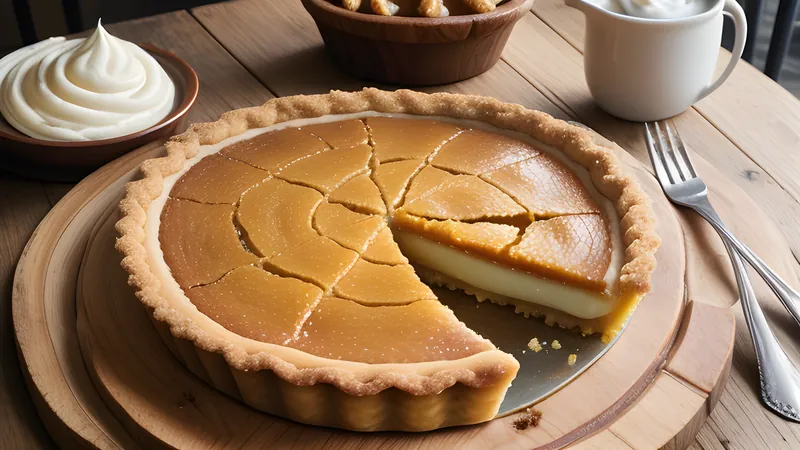
↓ Jump to recipeTreacle tart is one of those nursery puddings that sounds modest and tastes anything but. A short, biscuity case filled with what is essentially set golden syrup and breadcrumbs, baked until it is chewy at the edges and just-set in the middle, sweet enough to make your teeth sing. It is the pudding Harry Potter is famously fond of, the kind of thing wheeled out at school dinners and Sunday lunches for generations. My version keeps all of that comfort but threads warming ginger right through it, which cuts the sweetness and gives the whole thing a grown-up, gently spicy backbone.
Treacle Tart with Ginger Breadcrumb
Ingredients
- 200g plain flour
- 100g cold unsalted butter, cubed
- 1 tbsp caster sugar
- 1 large egg yolk
- 2 to 3 tbsp ice-cold water
- 400g golden syrup
- 150g fresh white breadcrumbs
- 40g stem ginger, finely chopped, plus 2 tbsp of its syrup
- 2 tsp ground ginger
- zest and juice of 1 lemon
- 1 large egg, beaten
- pinch of fine salt
Method
- Rub the cold butter into the flour and sugar until the mixture resembles fine crumbs, then bind with the egg yolk and just enough cold water to form a dough.
- Wrap and chill the pastry for 30 minutes, then roll out and line a 23cm loose-bottomed tart tin, and chill again for 20 minutes.
- Blind bake the case at 180C fan with baking beans for 15 minutes, remove the beans, and bake a further 8 minutes until pale gold and dry.
- Warm the golden syrup gently until loose, then stir in the breadcrumbs, chopped stem ginger and its syrup, ground ginger, lemon zest and juice, and salt.
- Leave the mixture to stand for 10 minutes so the breadcrumbs swell, then beat in the egg.
- Pour the filling into the baked case and level the top.
- Bake at 170C fan for 30 to 35 minutes until set with a gentle wobble and deeply golden.
- Cool for at least 20 minutes before slicing, and serve warm with cold cream.
Treacle, and Why There Isn’t Any
The first thing to clear up is the name, because treacle tart contains, traditionally, no treacle at all. The word treacle in Britain covers a spectrum of dark sugar syrups, but the classic treacle tart is made almost entirely from golden syrup, the pale, mild, butterscotch-scented refiner’s syrup that Abram Lyle began selling in 1885 from his refinery at Plaistow Wharf on the Thames, in the famous green tin with the lion and the swarm of bees. That tin, with its motto “out of the strong came forth sweetness”, has claims to being the world’s oldest unchanged branded packaging. Black treacle, the dark and bitter end of the spectrum, is sometimes added in a small amount for depth, but golden syrup is the heart of the thing.
The tart itself is a Victorian invention, born more or less the moment cheap tinned golden syrup became a kitchen staple in the 1880s. It is thrift cookery at its finest: stale bread turned into crumbs, a tin of syrup, a squeeze of lemon to stop it cloying, all baked into a humble pastry case. That frugal origin is part of its charm. There is nothing rare here, no exotic ingredient, just clever use of what most kitchens already have. It sits in the same tradition as bread-and-butter pudding and jam roly-poly, puddings invented to make something joyful out of a heel of yesterday’s loaf.
The Ginger Twist
The classic recipe is wonderful but, if I am honest, relentlessly sweet. A treacle tart can sit on the palate like a sugar cube. The fix I have settled on, after years of nudging the recipe about, is a proper triple hit of ginger. Stem ginger in syrup, chopped fine, gives little soft, fiery pockets and a touch more moisture. Its bottling syrup goes in too, replacing some of the golden syrup so you lose nothing in volume. Then ground ginger laces the whole filling with a steady, warming heat.
The ginger does something clever beyond just tasting good. Ginger contains gingerol, a pungent compound that reads on the tongue as heat and gentle bitterness, and that pushes back against the sugar so each forkful tastes balanced rather than simply sweet. The lemon, which is traditional, does similar work from the acid side, and the two together turn a one-note pudding into something with proper length and warmth. It is still unapologetically a treacle tart. It just has opinions now.
The Pastry
A treacle tart lives or dies by its case, so it is worth getting the shortcrust right. Keep everything cold: cold butter, ice-cold water, and chilled hands if you run warm, because the aim is to coat the flour in fat without melting it, which is what keeps the pastry short and crisp rather than tough. Rub the cubed butter into the flour with your fingertips until it looks like fine crumbs, then bind it with the egg yolk and only as much cold water as you need to bring it together. Add the water a tablespoon at a time; too much and the dough turns elastic and shrinks in the oven.
Rest the wrapped dough in the fridge for a full 30 minutes so the gluten relaxes and the butter firms up, then roll it out and line the tin, and chill it again before it goes in the oven. That second chill is the single best insurance against a shrunken, slumped case. Blind baking, weighing the case down with baking beans, sets the walls before the wet filling can soak in and turn the base soggy; the extra few minutes with the beans removed dries the base out properly so it stays crisp under all that syrup.
Getting the Texture Right
Two things govern the texture of a treacle tart: the breadcrumbs and the bake. Use fresh white breadcrumbs, not dried, and not the sandy shop-bought kind. Soft fresh crumbs from a day-old loaf swell and soften into the syrup, giving that characteristic dense, chewy, sliceable set. Let the filling stand for ten minutes before it goes in the case so the crumbs can drink up the syrup; pour it in too soon and you risk a loose, weeping tart. The beaten egg goes in last and, as it cooks, sets the whole thing into a sliceable custard-like mass rather than a runny puddle.
Then bake the filled tart at a moderate temperature until it has a gentle wobble in the very centre, like a set custard. It firms further as it cools, so pulling it slightly early gives you that lovely yielding middle rather than a solid slab. If the top is browning too fast before the centre sets, lay a loose sheet of foil over it; the deep golden colour is good, but a scorched top turns bitter.
The proportion of breadcrumbs to syrup is what decides whether you get a firm, sliceable tart or a soft, gooey one, and both are legitimate. More crumbs give a denser, cakier set that holds a clean slice and travels well in a lunchbox; fewer crumbs give a wetter, more molten filling that oozes slightly when you cut it warm. The quantities here sit in the middle, firm enough to slice but still yielding. If you want to shift it, add or subtract twenty grams of breadcrumbs and adjust nothing else. One thing not to skimp on is the lemon: without its acid the filling is flatly sweet, and the citrus is doing structural work on the flavour, not just decoration.
Choosing your ginger
The three forms of ginger each pull in a slightly different direction, which is why the tart uses all three rather than a bigger dose of one. Stem ginger, the young rhizome cooked and preserved in sugar syrup, is soft, sweet and only mildly hot, so the chopped pieces melt into the filling and give warm little pockets rather than aggressive bursts. Its syrup is worth its weight: cloudy, gingery and thick, it slips straight into the golden-syrup base and adds fragrance without thinning it. Ground dried ginger is the sharpest and most pungent of the three, because drying concentrates the gingerol and converts some of it to the hotter, spicier shogaol, so a little goes a long way and it perfumes the whole tart.
You can lean the balance whichever way you like. For a gentler, more child-friendly tart, use only the stem ginger and its syrup and drop the ground ginger to a single teaspoon. For a fierier, more grown-up pudding, keep the full two teaspoons of ground ginger and add a small pinch of ground white pepper, which sounds odd but amplifies the warmth without adding a flavour of its own. Fresh grated ginger works too, though its raw enzymes can slightly thin a filling that relies on the egg to set, so if you use it, add no more than a tablespoon.
Serving and Keeping
Treacle tart wants something cold, plain and unsweetened alongside to balance it: a jug of cold double cream, a spoonful of crème fraîche, or a scoop of vanilla ice cream slowly melting into the warm filling. Custard works too, though I find it doubles down on the sweetness. The contrast of temperature, hot tart and cold cream, is half the pleasure.
It keeps well for three or four days in a tin, and is one of the rare puddings that is arguably nicer on the second day, once the flavours have settled and the ginger has bloomed. Warm a slice gently in a low oven before serving to bring it back to life. It also freezes well, whole or in slices, for up to two months; defrost fully and warm through. It is honest, old-fashioned, faintly ridiculous in its sweetness, and with the ginger running through it, properly delicious.
A note on the lattice
Some cooks finish a treacle tart with a pastry lattice across the top, and it is a handsome thing, but I usually leave it off. A lattice looks traditional and gives a pleasing contrast of crisp pastry against the gooey filling, yet it also means rolling and cutting a second batch of pastry and it makes the tart noticeably richer and more filling. If you want one, roll your pastry offcuts thin, cut them into strips a centimetre wide, and lay them in a diagonal crosshatch over the filling before baking, brushing them with a little beaten egg for shine. Bake as normal; the lattice will crisp and colour in the same time the filling sets. Without it, the bare top caramelises into a burnished, faintly chewy skin that I happen to prefer.
If you like a fruit-and-spice tart, the pear and cardamom frangipane tart works the same trick of warm spice against sweetness, and for a richer bake there is the chocolate, hazelnut and sea salt tart. And if it is the ginger you are here for, the chicken congee with ginger oil shows it off from the savoury side.
Related Content