Tom Yum Goong: The Hot and Sour Prawn Soup
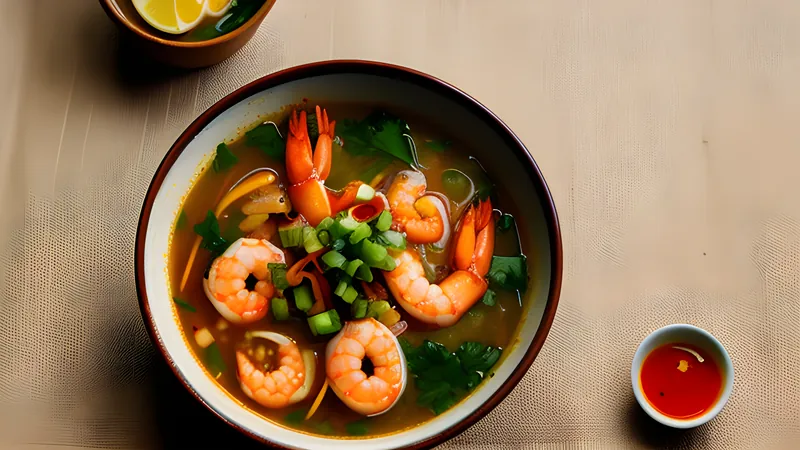
Lemongrass, kaffir lime and bird's eye chilli, sharpened with prawn heads and a spoon of chilli oil
Contents
↓ Jump to recipeTom Yum Goong: The Hot and Sour Prawn Soup
Ingredients
- 500g large raw prawns, shell-on, heads reserved
- 1.2 litres water
- 3 stalks lemongrass, bruised and cut into 5cm lengths
- 5 slices galangal
- 6 kaffir lime leaves, torn
- 6 bird's eye chillies, bruised
- 200g straw mushrooms or oyster mushrooms, halved
- 4 tbsp fish sauce
- 4 tbsp lime juice
- 1 tbsp palm sugar
- 3 tbsp Thai chilli oil (nam prik pao), plus the crisp shallot solids
- 100ml evaporated milk or coconut milk (for the creamy version, optional)
- coriander leaves, to serve
- 2 spring onions, sliced, to serve
Method
- Peel the prawns, reserving the shells and heads. Devein the prawns and set aside in the fridge.
- In a dry pot, fry the prawn shells and heads over medium-high heat for 3-4 minutes, pressing to release the orange fat, until fragrant.
- Add the water, lemongrass, galangal and half the kaffir lime leaves. Bring to a boil, then simmer for 15 minutes to build the stock.
- Strain the stock through a fine sieve, pressing the shells to extract all the liquid. Discard the solids. Return the strained stock to the pot.
- Bring the stock back to a simmer. Add the bird's eye chillies, mushrooms and remaining kaffir lime leaves. Simmer for 3 minutes.
- Stir in the fish sauce, palm sugar and chilli oil with its shallot solids. Add the prawns and simmer for 2-3 minutes, until just curled and pink.
- Remove from the heat and stir in the lime juice — never boil after adding lime juice, or the soup turns bitter. For the creamy version, stir in the evaporated milk now.
- Taste and adjust: it should hit sour and hot before salty or sweet. Serve immediately, scattered with coriander and spring onion.
A soup built to hit you in a specific order
Tom yum goong has a flavour sequence that’s almost engineered — sour first, a jolt of chilli heat close behind, salt and a whisper of sweetness rounding it out, and all of it riding on a stock that tastes unmistakably of prawn. Get that order wrong and it stops being tom yum, no matter how many of the individual ingredients are technically present. This is one of the most internationally recognised Thai dishes, and also one of the most frequently flattened in translation — the version served in a lot of restaurants outside Thailand skews sweet and orange and creamy, closer to a mild bisque than the sharp, aromatic, genuinely spicy soup it’s meant to be.
Tom means boiled, yum refers to the specific hot-and-sour flavour profile shared with the yum salad family, and goong means prawn — swap in gai for chicken or pla for fish and you get the same base soup built around a different protein. The prawn version is the most iconic specifically because prawn heads and shells make such an efficient, fast stock, extracting a deep savoury sweetness in fifteen minutes that would take hours to coax from most other proteins.
The stock is not optional
A lot of home versions skip straight to simmering lemongrass and galangal in plain water or a chicken stock cube, treating the aromatics as the whole flavour base. That’s a real shortcut, and it shows — proper tom yum starts with the prawn shells and heads fried hard in a dry pot until the fat inside the heads turns a deep orange and releases into the pan, then simmered briefly with the aromatics to pull every bit of that flavour into the liquid. Fifteen minutes is enough; longer doesn’t extract meaningfully more and risks the stock turning slightly bitter from over-extracted shell. Press firmly on the solids when straining — most of the concentrated flavour clings to the shells rather than dissolving freely into the water, and a hard press with the back of a ladle recovers a surprising amount of it.
Nam prik pao carries more weight than the recipe suggests
Thai chilli jam — nam prik pao, a thick paste of roasted chilli, shallot, garlic, dried shrimp and tamarind cooked down in oil — does two jobs at once in this soup: it deepens the colour toward that recognisable reddish-orange, and it adds a layered, slightly smoky sweetness that plain fresh chilli alone can’t provide. Use a good jarred version rather than skipping it or substituting fresh chilli paste; the fried shallot and dried shrimp solids that settle at the bottom of a good jar are worth spooning in along with the oil rather than using just the oil on its own.
Clear versus creamy, and why they’re both legitimate
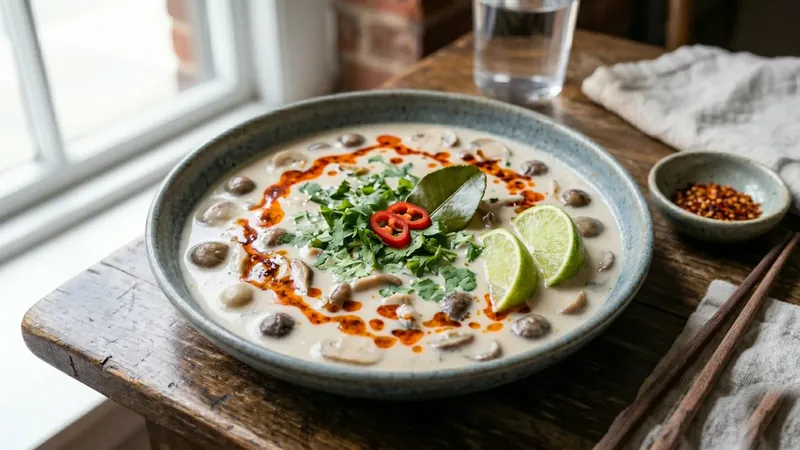
The clear version — tom yum goong nam sai — is the older, more traditional style: a bright, sharp broth with visible oil droplets from the chilli jam floating on the surface, but no dairy or coconut milk mixed through. The creamy version — tom yum goong nam khon — adds evaporated milk or coconut milk at the very end, mellowing the sourness and giving the soup a pale orange, slightly opaque appearance that’s become the more internationally recognisable version thanks to its wider presence on restaurant menus outside Thailand. Neither is more correct than the other; they’re simply different registers of the same soup, and the creamy version is a reasonable choice if the sourness of the clear version is more than you want to take on directly.
Getting the citrus right at the end
Lime juice goes in only after the pot comes off the heat, and this matters more than it sounds like it should — boiling lime juice breaks down its flavour compounds and introduces a flat bitterness that no amount of extra sugar will fix afterward. Stir it in off the heat, taste immediately, and adjust with more lime, more fish sauce, or more sugar as needed before serving. Kaffir lime leaves, by contrast, are added early and can simmer without harm; their aromatic oils are far more heat-stable than the juice’s acidity.
Bird’s eye chillies are bruised rather than sliced, releasing their heat gradually into the broth without dissolving into visible flecks throughout — anyone who wants more direct heat can crush one against the side of their bowl once served. Bruising rather than finely chopping also makes it easy to warn guests which pieces are pure chilli rather than lemongrass or galangal, since all three can look similar floating in the broth.
What not to eat
Lemongrass stalks, galangal slices, kaffir lime leaves and the bruised chillies are all aromatics meant to flavour the broth, not to be eaten whole — they’re tough, fibrous or intensely concentrated in a way that makes chewing them unpleasant. Thai diners routinely push these aside in the bowl rather than eating them, and it’s worth mentioning this to anyone unfamiliar with the dish before they bite into a whole piece of galangal expecting it to be soft.
Make-ahead and storage
The stock, once strained, keeps for up to three days refrigerated or two months frozen, and it’s genuinely worth making a double batch when you’ve already got the shells and heads on hand, since prawn stock this good doesn’t come along often without buying whole shell-on prawns specifically. Do not add the prawns, lime juice or fresh mushrooms until you’re ready to serve — reheated tom yum with the prawns already cooked in it tends to turn the prawns rubbery and tough on the second pass. Store the finished stock separately from any cooked prawns you’re planning to reheat into it, and simmer the two together only just before eating.
For more of Thailand’s sour-and-hot register, gaeng som takes a similar tamarind-forward sourness in a thicker, curry direction, while tom kha shows what the coconut-forward, gentler end of the same soup family looks like. If you’re building out a full Thai spread, pad thai makes a solid noodle course alongside a pot of this soup.
Where the dish comes from
Tom yum’s exact origins are murky in the way most genuinely old, widely-cooked dishes are — there’s no single inventor on record, and versions of hot-sour soup built around lemongrass and lime appear across central Thai home cooking well before the dish became the internationally exported symbol of Thai food it is today. What’s better documented is its rise to prominence outside Thailand: tom yum goong was one of the dishes most heavily promoted during Thailand’s “Global Thai” campaign in the early 2000s, a government-backed push to expand Thai restaurants internationally, which is part of why so many diners outside the country encountered the creamy, milder restaurant version as their first and sometimes only reference point for the dish. The sharper, clearer home-style version has always existed alongside it, cooked daily in Thai households with far less ceremony than its international reputation might suggest.
Building the aromatics properly
Lemongrass needs bruising before it goes into the pot — a firm whack with the flat of a knife or the back of a rolling pin along the length of each stalk, enough to split the fibrous layers open without pulverising it, so the oils inside can actually escape into the simmering stock. A whole, unbruised stalk dropped into the pot will simmer for the full cooking time and contribute almost nothing, since the tough outer layers seal in the aromatic oils that make lemongrass worth using in the first place.
Galangal looks similar to ginger and gets mistaken for it constantly, but the flavour is meaningfully different — more piney, sharper, with a slight medicinal quality that ginger doesn’t have — and it’s not a fair substitute in either direction. If you genuinely can’t find fresh or frozen galangal, dried galangal slices rehydrated in warm water for twenty minutes are a reasonable fallback, though the flavour is noticeably muted compared to fresh. Do not substitute ginger; the resulting soup will taste like a different dish entirely, missing the specific sharpness that makes tom yum’s aromatic base recognisable.
Adjusting the heat level sensibly
The six bird’s eye chillies specified here produce a properly hot soup by most standards, but the honest range across Thai households is wide, and it’s reasonable to scale this up or down depending on who’s eating. Halving the chilli count still produces a soup that reads as “hot” to most palates unused to Thai food’s typical spice level, while doubling it approaches what a Thai diner might order specifically as extra spicy. What you shouldn’t do is remove the chillies from the broth before serving in an attempt to keep the flavour without the heat — much of the soup’s characteristic aroma comes from the chilli’s volatile oils released into the stock during simmering, not solely from the flesh and seeds, so a chilli-free tom yum tastes conspicuously incomplete even if it’s technically milder.
A note on the prawns themselves
Buying shell-on, head-on prawns specifically for this dish is worth the extra trouble it takes to source them, since headless, pre-peeled prawns leave you with no shells or heads to build the stock from in the first place, forcing a reliance on a weaker stock cube or plain water base instead. If shell-on prawns genuinely aren’t available, a good-quality shop-bought shellfish or fish stock is a reasonable substitute for the prawn-shell stock described here, though the finished soup will taste noticeably less concentrated and prawn-forward. Cook the peeled prawns only briefly once they go into the finished broth — two to three minutes at a gentle simmer is enough for them to curl and turn pink, and pulling the pot off the heat as soon as they’re done prevents the rubbery, overcooked texture that a few extra minutes of simmering produces.
Pairing it into a full meal
Tom yum is rarely eaten as a stand-alone dish in Thailand — it’s one component of a shared meal alongside rice and at least one or two other dishes, meant to be spooned over rice in small amounts between bites of something else rather than consumed as a Western-style starter course on its own. Keeping that context in mind when you serve it at home changes how you might plan the rest of the meal: a simple stir-fried vegetable and a plate of rice alongside the soup rounds it out properly, letting the tom yum’s intensity work as a sharp counterpoint rather than the entire meal’s flavour profile.
Related Content