Tom Kha: Thai Coconut Soup with Lemongrass and Lime
Creamy, zingy and soothing
Contents
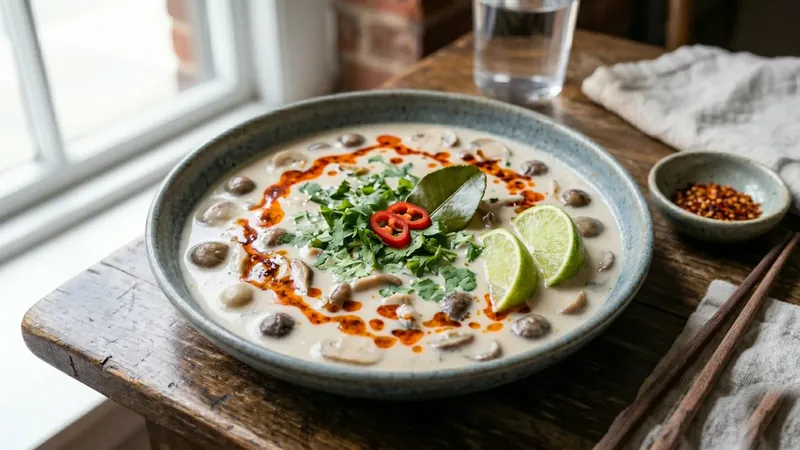
↓ Jump to recipeTom kha gai is the gentler, creamier cousin of tom yum — a soothing Thai soup of coconut milk perfumed with lemongrass, galangal and lime, and a good place to start if fierce Thai heat isn’t your thing. The twist is a swirl of roasted chilli oil to finish, which floats in glossy ruby pools on the pale broth and brings a smoky, mellow warmth without turning the soup fiery. Creamy, sour and savoury all at once, it is genuinely restorative: a light supper on its own, or a cold-weather pick-me-up with rice alongside.
It comes together in under half an hour and asks nothing more of you than a gentle hand with the coconut milk and the discipline to add the lime off the heat. Get the balance right at the end — tasting and adjusting — and you have something that tastes like a takeaway but far fresher.
Tom Kha: Thai Coconut Soup with Lemongrass and Lime
Ingredients
- 2 stalks lemongrass, bruised and cut into lengths
- 5cm piece galangal (or ginger), sliced
- 6 kaffir lime leaves, torn
- 400ml chicken or vegetable stock
- 1 tin (400ml) coconut milk
- 300g boneless chicken thighs, sliced (or 250g mushrooms for a veggie version)
- 200g mushrooms, halved
- 2 tbsp fish sauce
- 1 tsp palm sugar (or brown sugar)
- 2-3 tbsp lime juice
- 2 tbsp roasted chilli oil (nam prik pao or chilli oil)
- Handful of fresh coriander
- 1 red chilli, sliced, to serve
Method
- Put the stock in a saucepan with the lemongrass, galangal and torn lime leaves. Bring to a simmer and infuse for 5 minutes so the aromatics perfume the broth.
- Pour in the coconut milk and return to a gentle simmer; avoid a hard boil, which can make it split.
- Add the sliced chicken and poach gently for 6-8 minutes until cooked through.
- Stir in the mushrooms and cook for a further 4-5 minutes until tender.
- Season with the fish sauce and palm sugar, stirring until the sugar dissolves.
- Take the pan off the heat before adding the lime juice, so its fresh sourness is not dulled.
- Taste and balance: it should be creamy, salty, sour and faintly sweet all at once.
- Fish out the woody lemongrass and galangal pieces if you prefer a tidier bowl.
- Ladle into bowls and drizzle a generous swirl of roasted chilli oil over each.
- Finish with fresh coriander and sliced red chilli, and serve hot.
The Story
Tom kha, most often made with chicken as tom kha gai, is one of the most comforting dishes in the Thai repertoire. The name is wonderfully literal: tom means to boil or simmer, kha is galangal, and gai is chicken, so it is simply boiled galangal soup with chicken. That galangal is the key to its identity. Though it looks like ginger and is sometimes substituted with it, galangal has a sharper, more piney and citrusy bite that gives the soup its distinctive fragrance.
Where the fiery tom yum relies on a clear, sour-and-spicy broth, tom kha softens everything with coconut milk. The coconut tames the heat and acidity into something rounded and creamy, which is why this soup is often the gateway dish for people new to Thai flavours. It is rich without being heavy, and deeply aromatic thanks to the trio of lemongrass, galangal and makrut lime leaves that infuse the broth. These aromatics are meant to flavour rather than be eaten, so it is normal to leave the woody pieces on the side of the bowl.
Balance is everything in Thai cooking, and this soup is a clear lesson in it. Salty fish sauce, sour lime, a little sweetness from palm sugar and the creaminess of coconut all have to find equilibrium. Adding the lime juice off the heat keeps it bright and fresh, since prolonged heat dulls its sharpness. Taste as you go and adjust; the exact amounts will depend on your fish sauce, your limes and your own palate.
Keeping the coconut milk silky
The commonest way to spoil this soup is to boil it. Coconut milk is an emulsion of fat and water held loosely together, and a hard, rolling boil breaks that emulsion so the fat separates out into greasy specks and the broth turns grainy. Keep it at a bare simmer — the odd lazy bubble, no more — from the moment the coconut milk goes in. That gentle heat is also all you need to poach the chicken thighs through without toughening them; six to eight minutes at a simmer leaves them tender rather than rubbery. Full-fat coconut milk gives a rounder body than a light one, which can taste thin here.
Why the lime goes in last
Lime juice is your source of the sour note that defines the soup, but heat is its enemy. Prolonged simmering drives off the volatile aromatic compounds that make fresh lime smell alive, leaving a flat, cooked sourness behind. Take the pan off the heat before you stir the lime in, and it stays bright and fragrant. This is why the seasoning is done in stages: the fish sauce and palm sugar can go in while the soup simmers, but the lime waits for the very end. Then taste. Thai cooking is about balance rather than fixed quantities, and the exact amounts depend on how salty your fish sauce is, how sharp your limes are and your own palate — it should land as creamy, salty, sour and faintly sweet all at once.
The roasted chilli oil, and other swaps
The roasted chilli oil finish is a genuine flourish rather than an invention. Nam prik pao, a Thai roasted chilli paste of dried chillies, shallots, garlic and a little sugar, is a classic enrichment for tom yum, lending a smoky sweetness and gentle warmth. Swirled over tom kha just before serving, it floats in glossy pools on the coconut surface and adds depth without tipping the soup into fierce heat. A good plain chilli oil works too if that is what you have, and a spoonful of the paste itself stirred into the broth deepens the whole soup if you want more of that smoky sweetness carried through rather than sitting on top.
For a vegetarian version, use vegetable stock and swap the chicken for 250g of extra mushrooms, and replace the fish sauce with light soy or a vegan fish-sauce alternative — you lose a little of the marine savouriness but keep the balance. Galangal is worth seeking out for its sharp, piney, citrusy note that ginger only roughly imitates, but ginger will stand in if you must. The soup is best eaten fresh; if you reheat leftovers, do it gently and add the lime and coriander only after reheating.
A note on the aromatics, since they are what give the soup its identity. Bruise the lemongrass stalks with the flat of a knife before slicing them into lengths — crushing the fibres releases far more of the oils that carry the fragrance. The galangal wants to be sliced thinly across the grain, and the makrut lime leaves torn rather than left whole so their perfume leaches into the broth. All three are there to flavour the liquid rather than to be eaten; it is normal, and expected, to leave the woody pieces at the side of the bowl or to fish them out before serving. If you can only find them dried, use half as much and give the broth a couple of extra minutes to infuse, though fresh or frozen aromatics are far superior.
Mushrooms are the usual companion — straw mushrooms in Thailand, but chestnut or oyster mushrooms work beautifully — and they should go in late so they keep some bite. For a more substantial bowl, a handful of cherry tomatoes added with the mushrooms brings a gentle sweet-sourness that plays into the balance. Prawns can stand in for the chicken; add them for the last three minutes only.
The soup keeps for a couple of days in the fridge, though the aromatics soften and the lime fades, so it is at its best on the day it is made. It does not freeze well: the coconut milk separates and turns grainy when defrosted. If you want to get ahead, infuse the aromatic broth (the first step) in advance and keep it in the fridge, then finish the soup with the coconut milk, chicken and mushrooms just before serving — that is the part that suffers from sitting.
Serve it on its own as a starter, or with steamed jasmine rice to make a fuller meal. A wedge of lime on the side lets everyone sharpen their own bowl, and a little extra coriander never hurts. If you are cooking your way through Thai flavours, the same lemongrass-galangal-lime trinity carries the Thai green curry, and for another warming, coconut-rich bowl there is the spiced carrot and ginger soup.
Related Content