Three-Cheese Quesadilla with Caramelised Onion
Crisp, golden and gloriously gooey
Contents
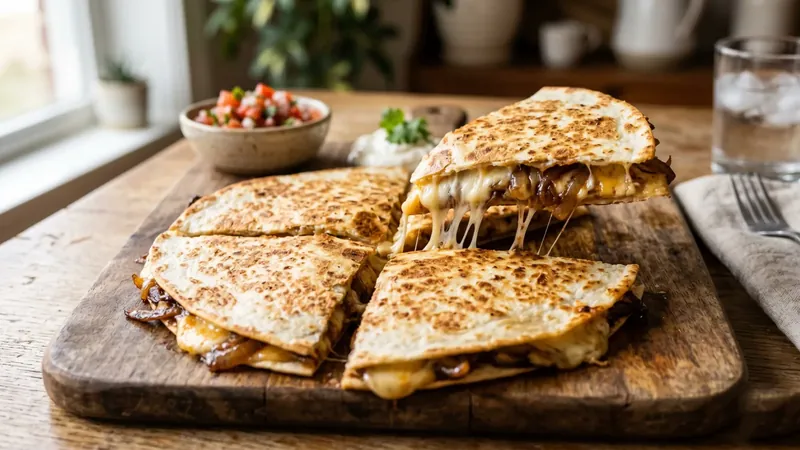
↓ Jump to recipeA quesadilla lives or dies on its cheese, so this one leans into three: sharp Cheddar for backbone, mozzarella for the long stretchy pull, and mild Monterey Jack to bind the two into a clean, molten centre that never turns oily. The twist is a tangle of slow-caramelised onion folded through, sweet and jammy against the salt of the cheese. Crisp outside, properly gooey within, and on the table in under half an hour once the onions are done.
Most of that half hour is the onions cooking themselves down while you do nothing much. The assembly and frying take ten minutes at the end, and the one decision that raises this above a fridge-clearout snack is frying in butter rather than oil — it gives the tortilla a lacquered, golden crust that a dry pan simply cannot.
Three-Cheese Quesadilla with Caramelised Onion
Ingredients
- 2 large flour tortillas (about 25cm)
- 1 large onion, thinly sliced
- 1 tbsp olive oil
- 1 tsp soft brown sugar
- 75g mature Cheddar, grated
- 75g mozzarella, grated
- 50g Monterey Jack, grated
- 1 tbsp unsalted butter
- A pinch of sea salt
- Soured cream and coriander, to serve
Method
- Warm the olive oil in a frying pan over a low heat and add the sliced onion with a pinch of salt.
- Cook gently for 18-20 minutes, stirring now and then, until soft and golden. Stir in the brown sugar for the final two minutes, then set aside.
- Combine the three grated cheeses in a bowl.
- Lay one tortilla on a board. Scatter half the cheese over one half, spoon over the caramelised onion, then top with the remaining cheese.
- Fold the tortilla over to make a half-moon, pressing gently.
- Melt half the butter in a clean frying pan over a medium-low heat.
- Lay the quesadilla in the pan and cook for 3-4 minutes until the underside is crisp and golden.
- Add the remaining butter, flip carefully and cook the second side for a further 3-4 minutes until the cheese has melted.
- Slide onto a board, rest for a minute, then cut into wedges.
- Serve hot with soured cream and a scattering of coriander.
The Story
The quesadilla is one of Mexico’s oldest and most adaptable street foods, its name drawn from the Spanish word for cheese, queso. In its purest form it is simply a tortilla folded around melting cheese and warmed until soft, a dish that has fed market stalls and home kitchens across the country for generations. Regional habits vary wildly: in much of Mexico a quesadilla means a corn tortilla, while in the north wheat-flour tortillas, introduced through the territory’s wheat-growing tradition, are the norm. Famously, in Mexico City the question of whether a quesadilla must actually contain cheese remains a point of cheerful, unresolved debate.
The cheese itself is where this recipe takes its liberties. A traditional quesadilla relies on a single good melting cheese, often a stringy Oaxaca cheese whose texture recalls mozzarella. Here the principle is honoured but expanded into a trio chosen for what each contributes. Cheddar brings the sharp, savoury depth that an all-mild blend can lack. Mozzarella provides the dramatic pull, the long strands that make a quesadilla so satisfying to tear apart. Monterey Jack, a soft, buttery cheese that melts cleanly, smooths the two together and keeps the filling from turning oily.
Caramelised onion is the second departure, and it earns its place. Slowly cooking onion draws out its natural sugars through gentle browning, transforming its raw bite into something mellow, jammy and almost sweet. That sweetness is a natural foil for salty cheese, a pairing long understood by cooks far beyond Mexico. The key is patience and a low heat: rushing the onion over a high flame scorches the edges before the sugars have a chance to develop, leaving bitterness rather than depth. A whisper of brown sugar at the end is a gentle nudge, not a shortcut.
Getting the onions right
Caramelising onions is the one part of this recipe you cannot hurry, and it is worth understanding why. Slow heat drives off the onion’s water and coaxes out its natural sugars, which then brown gradually into that mellow, jammy sweetness. Push the heat up to speed things along and the edges scorch before the sugars have developed, giving you bitterness instead of depth. Keep the pan on a genuine low, stir every few minutes, and give it the full eighteen to twenty minutes. If the pan looks dry or the onions start to catch, a tablespoon of water lifts the browned bits off the base and buys you a little more time. The teaspoon of brown sugar at the end is a gentle nudge towards colour, not a substitute for the slow cooking.
Melting, folding and frying
Grate the cheese rather than slicing it — grated cheese melts faster and more evenly, so the centre is molten before the tortilla scorches. Build the filling with cheese both under and over the onions so it seals the onion in and glues the tortilla shut as it melts. Cook over a medium-low heat, not high: you want the cheese fully melted by the time the outside is crisp, and a hot pan browns the tortilla long before the middle has softened. Let the finished quesadilla rest for a minute before you cut it, or the molten cheese slides straight out of the wedges.
A little history, and why three cheeses
The quesadilla takes its name from queso, the Spanish for cheese, and in its plainest form is a tortilla folded around a melting cheese and warmed through. Regional habit differs sharply: much of Mexico uses corn tortillas, while the wheat-growing north favours the flour tortillas used here. In Mexico City there is a long-running, good-natured argument about whether a quesadilla even has to contain cheese at all. The classic filling is a stringy Oaxaca cheese, close in texture to mozzarella. This version honours that stretchy character but spreads the work across three: Cheddar supplies the savoury sharpness a single mild cheese lacks, mozzarella gives the dramatic pull, and Monterey Jack — soft, buttery and clean-melting — smooths the two together and keeps the filling from splitting into grease.
Swaps, storage and serving
No Monterey Jack? A mild Gouda or a young Emmental binds in much the same way. Keep the Cheddar as the flavour anchor and the mozzarella for stretch, and the trio still works. If you can find it, a genuine Oaxaca or a low-moisture, block mozzarella melts more cleanly than the wet buffalo sort, which can weep water into the pan and steam the tortilla. Grate cheese from a block rather than reaching for the pre-grated bags, too: the anti-caking starch dusted over ready-grated cheese stops it melting into the smooth, molten pool you are after.
For a heartier version, add a spoonful of cooked chorizo, some shredded leftover roast chicken, or a scatter of black beans alongside the onion. Sliced pickled jalapeño cuts through the richness nicely, and a few coriander leaves or a spoon of salsa folded in before you close the tortilla lift the whole thing. Keep the total filling modest, though — an overstuffed quesadilla splits at the fold and leaks cheese into the pan, and the joy of it is the balance of crisp shell to gooey centre, not sheer volume.
Quesadillas are best straight from the pan while the crust is crisp, but leftovers reheat well in a dry frying pan over a medium heat for a couple of minutes a side — the microwave turns the tortilla leathery, so avoid it. Serve hot with soured cream and coriander.
The caramelised onion can be made well ahead. It keeps in a sealed jar in the fridge for up to five days and only improves as the flavours settle, so it is worth cooking a double batch while you have the pan out; the surplus is excellent in a cheese toastie, folded into an omelette, or piled onto a burger. If you are cooking quesadillas for a crowd, make them one at a time and keep the finished ones warm on a rack in a low oven at 120°C rather than stacking them, which traps steam and softens the crust you worked for.
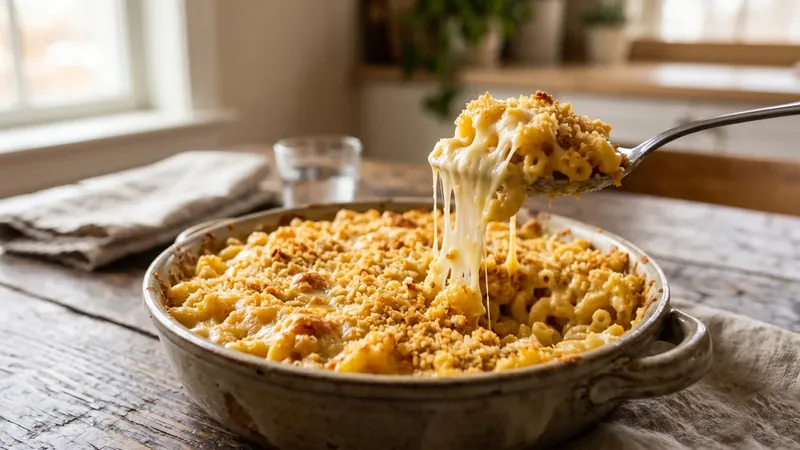
A quick word on the tortillas: 25cm flour tortillas fold neatly into a half-moon that is easy to flip in one piece, which is why I use them here. If you only have smaller ones, use two per quesadilla in the traditional stacked style — filling sandwiched between two flat tortillas — and slide the whole thing rather than folding it. Corn tortillas are the more traditional choice but tear more easily when folded, so if you want to use them, keep them small and stack rather than fold. However you build it, get the cheese right up to the edges so it melts into a seal and holds the wedges together when you cut. If you liked the slow-cooked onion here, it is the star of my caramelised onion and thyme focaccia; and for another cheese-first comfort dish that rewards the right melting blend, there is always mac and cheese.
Related Content