Thiéré: Steamed Millet Couscous
Senegal's triple-steamed grain that predates wheat couscous in the region
Contents
↓ Jump to recipeLong before wheat couscous became the pan-Maghreb staple most people picture at the word “couscous,” millet was already being steamed into small, separate grains across the Sahel — and in Senegal, that method survives today as thiéré, the base of the country’s two great stew traditions, mafé and soupe kandia. It’s a slower, more hands-on process than boiling rice, and Wolof cooks treat the three-stage steaming as non-negotiable: rush it, and the grains come out either gluey or gritty, never the light, separate texture the dish is built around.
Thiéré: Steamed Millet Couscous
Ingredients
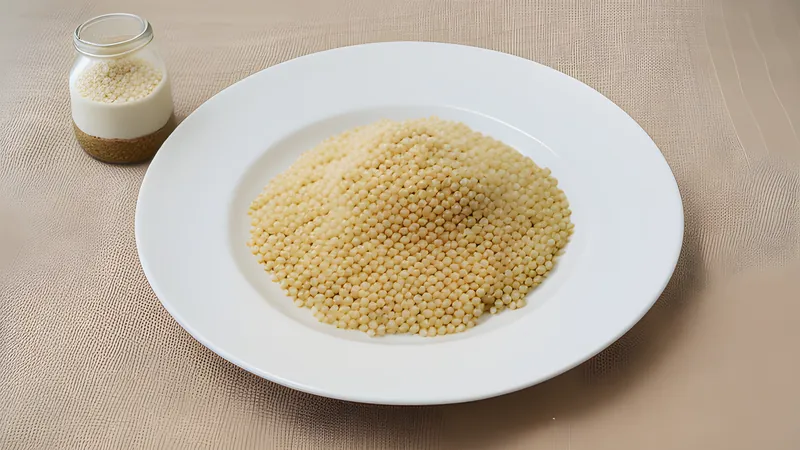
- 500g millet couscous (thiéré, coarse-ground, sold at African and Middle Eastern grocers)
- 700ml cold water, divided
- 2 tablespoons vegetable oil or melted butter
- 1 teaspoon fine salt
- 500ml stew broth or stock (from mafé, soupe kandia, or plain vegetable stock)
Method
- Tip the millet couscous into a large bowl and sprinkle with 300ml of the cold water, working it through with your fingers to dampen every grain evenly without clumping.
- Leave to absorb for 10 minutes, then rub the grains gently between your palms to break up any lumps.
- Line a steamer basket with muslin, tip in the dampened grains in an even layer, and steam uncovered over boiling water for 20 minutes.
- Turn the steamed grains out into the bowl, break up any clumps with a fork, and sprinkle with a further 200ml water and the oil or butter, working it through by hand.
- Return to the steamer for a second 20-minute steam.
- Turn out again, fluff with a fork, sprinkle with the remaining 200ml water and the salt, and rub through by hand one final time.
- Steam a third and final time for 20 minutes, until the grains are light, tender and fully separate.
- Fluff thoroughly with a fork, mound onto a large platter, and ladle the hot stew broth over just before serving.
Not the same thing as wheat couscous
Thiéré is made from millet, not durum wheat semolina, and the two grains behave differently enough that treating thiéré like Moroccan-style instant couscous — pouring boiling water over it and covering for five minutes — produces something closer to porridge than to the intended texture. Millet couscous needs actual steaming, not just hydration, because the starches need heat as well as moisture to set into the light, separate grain structure that defines the dish.
The couscous itself is usually bought pre-processed — dried millet ground and pre-steamed at some point during production, then dried again for sale — rather than made entirely from scratch at home, which is a genuinely labour-intensive process involving pounding whole millet, sieving, and hand-rolling the ground meal into tiny granules before the first steam. Pre-made thiéré, sold dried in bags at West African and increasingly at general international grocers, still needs the full three-stage steam-and-rehydrate process described here; it just skips the initial grinding and rolling stage.
Why three steams, not one
The triple steaming isn’t tradition for tradition’s sake — each round does a genuinely different job. The first steam sets the initial structure of the dampened grains, cooking the outer layer of starch just enough to hold their shape. The second, after a fresh sprinkle of water and fat worked through by hand, separates any grains that clumped during the first steam and starts building the light, fluffy texture. The third and final steam, after salting, finishes the cook and lets the salt distribute evenly without ever having touched raw, unsteamed grain directly.
Skip a round, or try to compress the process into a single longer steam, and the texture suffers noticeably — either the centre of the grains stays underdone while the outside softens too much, or the whole batch clumps into a solid mass that no amount of fork-fluffing at the end can properly separate. It’s a genuine forty-minute-plus commitment split across three stages, and that time is doing real work.
Mafé and soupe kandia: the two classic partners
Thiéré is rarely eaten plain — it’s built to be a bed for one of Senegal’s two great stews. Mafé is a peanut-based stew, usually built on beef or lamb, simmered with tomato and a rich groundnut sauce until deeply savoury and slightly sweet from the peanuts. Soupe kandia is built on okra instead, cooked down until it develops a deliberately thick, slightly mucilaginous texture (the same quality okra brings to gumbo), often with palm oil and a mix of fish and meat.
Both stews are ladled generously over a mound of the steamed millet, and the couscous’s job is to absorb the sauce while staying light enough not to turn heavy or stodgy under it — which is exactly why the steaming technique matters so much. A gluey, under-steamed thiéré turns to paste the moment stew is poured over it; a properly steamed batch stays light and separate, soaking up flavour without collapsing into mush.
Getting the hydration right
The amount of water each round needs is more about feel than an exact measurement, since millet couscous varies in dryness from bag to bag. After the first sprinkle, the grains should look damp and slightly darker than dry, not wet or sticky — squeeze a small handful and it should hold together loosely, then fall apart easily when you rub it between your palms. Too little water and the grains stay hard and undercooked even after three steams; too much and they clump into dense balls that never properly separate.
Working the water through by hand rather than stirring with a spoon matters here too — rubbing the dampened grains gently between the palms breaks apart clumps as they form, in a motion closer to rubbing butter into flour than to stirring a pot. It looks fussy the first time you do it and becomes fast and automatic after a batch or two.
Substitutions
If millet couscous isn’t available, fine bulgur wheat steamed the same three-stage way gets reasonably close in texture, though it carries a slightly different, more neutral flavour than millet’s faint nuttiness. Standard wheat couscous can be used in a genuine pinch, prepared the quick-hydration way rather than steamed three times, but the result reads as a different, lighter dish rather than a faithful stand-in for thiéré — worth knowing rather than pretending otherwise.
For the stew half of the plate, a simple vegetable or chicken stock works if you don’t have time for a full mafé or soupe kandia, though the dish loses a lot of its character without one of the two classic pairings; even a quick peanut-tomato sauce, simmered for twenty minutes with whatever protein is on hand, gets you much closer to the real experience than plain stock.
Storage
Steamed thiéré keeps for up to three days refrigerated in an airtight container. Reheat by resteaming for five to ten minutes rather than microwaving, which tends to dry the grains out unevenly; a light sprinkle of water before resteaming helps restore the original texture. It doesn’t freeze especially well on its own — the texture turns slightly gritty on thawing — so it’s best made fresh or eaten within a few days rather than stockpiled.
A Wolof staple older than most people assume
Millet cultivation in the Senegal River valley and across the wider Sahel predates the arrival of both rice (which came to dominate coastal Senegalese cooking through colonial-era irrigation projects) and wheat couscous (which arrived from further north, largely through Maghrebi trade and migration). Millet was the grain the Wolof, Serer and Fulani peoples of the region built their staple starches around for centuries before either of those newer grains reshaped what “everyday food” meant in Senegal. Thiéré, in that sense, isn’t a regional variant of Maghrebi couscous so much as an independent tradition that happens to share a steaming technique and a name — the resemblance is real, but the lineage runs through millet-growing communities in the Sahel rather than through North Africa.
That older status is part of why thiéré still carries strong associations with rural life and family tradition even as rice-based dishes like thieboudienne have become more prominent internationally as Senegal’s signature export dish. Within Senegal, particularly outside Dakar, thiéré remains an everyday staple in a way that has less to do with nostalgia than with millet simply being a hardier, more drought-resistant crop than rice in much of the country’s growing regions — a practical reason the grain never disappeared even as rice imports grew through the twentieth century.
Serving beyond mafé and soupe kandia
While mafé and soupe kandia are the two dishes most closely associated with thiéré, it’s also served, particularly in rural households, with simpler preparations — a light vegetable stew, a bowl of soured milk (sow, a fermented dairy product similar to a thin yoghurt) mixed with sugar, or simply with a drizzle of oil and a scatter of dried fish. This lighter styling turns thiéré into something closer to a breakfast or light-meal grain than the substantial stew-topped main course it becomes with mafé, and it’s worth trying at least once to appreciate the grain’s own flavour, which the richer stews tend to dominate.
Special-occasion thiéré, served at weddings and naming ceremonies, is sometimes prepared with extra butter and a garnish of raisins or dates worked through during the final steaming stage, giving the finished grain a faint sweetness that’s a genuine departure from the everyday savoury version but not an uncommon one at Senegalese celebrations.
Common mistakes
The most frequent error is treating thiéré like instant wheat couscous and pouring boiling water over it instead of steaming, expecting a five-minute fix. This produces a wet, gluey mass that never develops the light, separate grain the dish depends on — millet starch behaves differently under direct water contact than durum wheat does, and there’s no shortcut around the actual steam.
Adding all the water and fat at once, rather than across the three separate stages, is the second common mistake. It might seem more efficient to hydrate and season everything up front, but the staged approach exists because grains that are fully saturated before the first steam clump together far more readily than grains dampened gradually across three rounds — each round gives the previous layer of moisture time to distribute and set before more is added.
Steaming in a covered pot rather than an open steamer basket is the third issue. Thiéré needs the steam to pass through the grain layer and escape, not build up as trapped condensation that drips back down and oversaturates the bottom layer — a lidded steamer basket over a pot of boiling water, left uncovered on top, is the right setup, not a fully sealed pot.
Related on the site
Thiéré sits alongside attiéké, Côte d’Ivoire’s fermented cassava couscous, as one of West Africa’s two great non-wheat couscous traditions — both rely on multi-stage steaming rather than a simple boil, though attiéké’s granules come from fermented cassava rather than millet. For the debate that defines rice cookery across the wider region, jollof rice and the argument that never ends covers the dish thiéré is often positioned against when Senegalese and Nigerian cooks compare their respective staple grains. And for a Central African stew built on a similarly rich, oil-based sauce to mafé, moambe, the Congo’s palm butter chicken, is worth cooking to compare two very different approaches to a thick, nut-and-oil-based sauce.
Related Content