Thieboudienne: Senegal's National Rice and Fish
The one-pot Sunday feast that Senegal built its reputation on
Contents
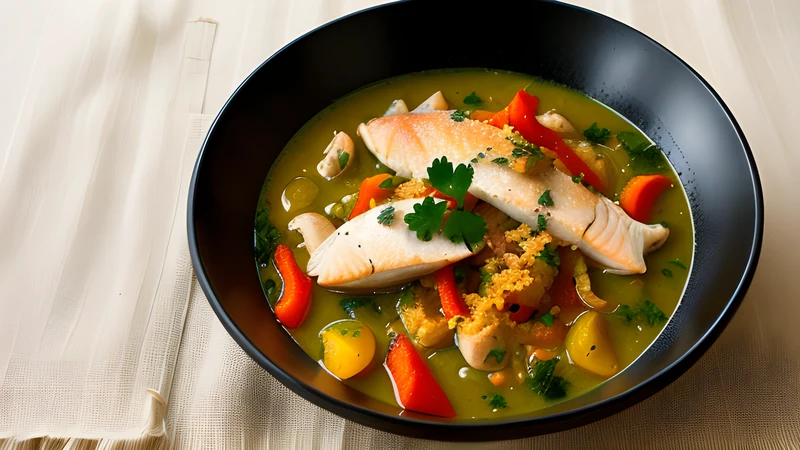
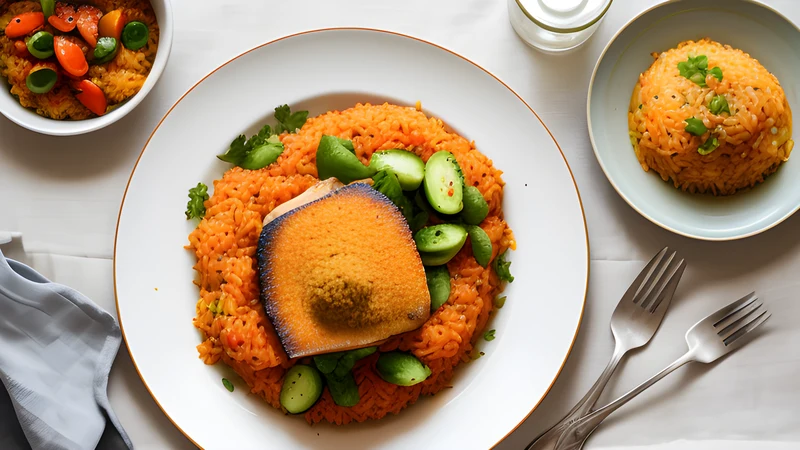
↓ Jump to recipeIf Senegal has a single dish that carries the whole country’s cooking on its shoulders, it is thieboudienne. The name, from Wolof, means simply “rice and fish”, and that plainness is a joke played on anyone who has never eaten it, because thieboudienne is one of the great one-pot feasts of the world, a slow, layered production of stuffed fish, a rainbow of vegetables, and rice cooked in the fish’s own red broth until the bottom of the pot forms a caramelised crust that people genuinely argue over. In 2021 UNESCO added it to its list of intangible cultural heritage, which is a formal way of saying what every Senegalese cook already knew: this dish is the country.
Thieboudienne: Senegal's National Rice and Fish
Ingredients
- 1kg firm white fish steaks (grouper, snapper or cod), skin on
- 500g broken rice, or long-grain white rice
- 1 large bunch parsley
- 6 garlic cloves
- 1 Scotch bonnet chilli, plus 1 whole for the pot
- 1 stock cube
- 3 large onions, sliced
- 3 tbsp tomato purée
- 400g tin chopped tomatoes
- 5 tbsp neutral oil
- 2 carrots, cut into chunks
- half a small cabbage, in wedges
- 1 aubergine, in chunks
- 2 turnips, quartered
- 1 cassava piece (about 200g), peeled and chunked (optional)
- 2 tbsp dried tamarind or 1 tbsp lime juice
- 2 tsp salt, plus more to taste
- 1.5 litres hot water
Method
- Blitz the parsley, garlic, one Scotch bonnet, half the stock cube and a pinch of salt into a green paste (roff).
- Cut a slit in each fish steak and stuff it with the roff paste; reserve any leftover paste.
- Heat the oil in a wide heavy pot and brown the stuffed fish for 2 minutes a side, then lift out and set aside.
- Fry the sliced onions in the same oil for 8 minutes until soft, add the tomato purée and cook 3 minutes, then the tinned tomatoes and any leftover roff, and cook 10 minutes to a thick red base.
- Pour in the hot water, add the remaining stock cube, the whole Scotch bonnet, the tamarind and salt, and bring to a simmer.
- Add the hard vegetables (carrot, turnip, cassava) and cook 15 minutes, then the cabbage and aubergine for 10 minutes more, until all are tender; lift the vegetables out and keep warm.
- Return the fish to the sauce for 8 minutes to finish cooking, then remove and keep warm with the vegetables.
- Rinse the rice well, stir it into the simmering red sauce, cover, and cook on low for 25–30 minutes until the rice is tender and a crust forms on the bottom; do not stir once it settles.
- Pile the rice on a large platter, arrange the fish and vegetables on top, scrape up the prized crust (xoon), and serve with lime wedges.
The dish that defines a nation
Thieboudienne was born in the coastal city of Saint-Louis in the nineteenth century, and it is credited to a Senegalese cook named Penda Mbaye, who is said to have created it in the colonial-era kitchens of the town. Saint-Louis sits where the Senegal River meets the Atlantic, so fish was abundant, and the dish became the Sunday meal of the whole region, then of the whole nation. Its red colour and the technique of cooking rice in a tomato-rich fish stock make it the clear ancestor of the entire jollof family that stretches across West Africa; the endless jollof rice argument that never ends between Nigeria, Ghana and Senegal often forgets that Senegal has a strong claim to being where the whole idea started, in this very pot.
Eating thieboudienne is a communal event. It is traditionally served on one enormous shared platter, the rice spread out, the fish and vegetables arranged on top, and everyone gathered around it eating from their own section with a spoon or with the right hand. It is a Sunday-and-celebration dish because it takes real time and fills a big pot, and it is the natural companion piece to Senegal’s other great ambassador, yassa poulet, the onion-and-lemon chicken; between them, those two dishes are how the world knows Senegalese food.
Roff: the green paste that stuffs the fish
The signature of thieboudienne is roff, a punchy green paste of parsley, garlic, Scotch bonnet and stock, blitzed together and pushed into slits cut in the fish steaks. As the fish cooks, the roff perfumes it from the inside, and any leftover paste goes into the sauce. This herby garlic hit is what stops the dish being a plain fish stew and gives it its distinctive fresh, savoury backbone. Do not skimp on the parsley; a big bunch is correct, and a little spring onion or a scrap of Scotch bonnet in the mix is welcome. The paste should be thick enough to hold in the fish, so keep the liquid to a minimum when you blend it.
The broken rice question
Traditional thieboudienne uses broken rice, the fragmented grains that were historically the cheaper by-product of milling and became the Senegalese staple during the colonial period. Broken rice cooks up softer and clumpier than whole long grain, absorbs the red broth beautifully, and forms the coveted crust more readily. If you can find broken rice at an African or Asian grocer, use it; if not, plain long-grain white rice works well, rinsed thoroughly to keep the grains from turning to paste. Whatever you use, rinse it until the water runs clear, or the excess starch will make the finished rice gluey rather than tender and separate.
Xoon: the crust worth fighting over
The genuine prize of thieboudienne is xoon (also spelled khong or xóon), the layer of rice at the very bottom of the pot that caramelises against the metal into a chewy, deeply savoury crust. Good cooks deliberately encourage it by cooking the rice covered and undisturbed over low heat for the last stretch, letting the bottom catch just short of burning. When the dish is served, the xoon is scraped up and shared out, and it is the piece everyone secretly hopes to get, the West African cousin of Persian tahdig or Spanish socarrat. The trick is nerve: you must trust the low heat and resist stirring, listening for the faint crackle that says the crust is forming, and pulling the pot off before it tips into acrid burning.
Cooking it, stage by stage
This is a project, so give it an unhurried afternoon and work in order. First make the roff, blitzing parsley, garlic, one Scotch bonnet, half a stock cube and a pinch of salt to a thick green paste. Cut a slit in each fish steak and stuff it with roff, keeping any leftover for the sauce.
Brown the stuffed fish in hot oil for a couple of minutes a side, then lift it out; it finishes cooking later. In the same oil, fry the sliced onions until soft, stir in the tomato purée and cook it out for three minutes, then add the tinned tomatoes and any leftover roff and cook it all down for ten minutes into a thick red base. This tomato-and-onion foundation is where the flavour of the rice comes from, so let it darken and concentrate.
Pour in the hot water, add the rest of the stock cube, a whole Scotch bonnet for perfume, the tamarind for its characteristic sour note, and the salt. Bring to a simmer and cook the vegetables in stages by hardness: carrots, turnips and cassava first for fifteen minutes, then cabbage and aubergine for another ten, until everything is tender. Lift the vegetables out and keep them warm. Slide the fish back in to finish for eight minutes, then remove and keep it warm with the vegetables.
Now the rice. Stir the well-rinsed rice into the simmering red broth, cover, and cook on low for twenty-five to thirty minutes. Once it has settled, leave it alone so the crust can form. When the rice is tender and you can smell that the bottom is caramelising, pile it onto a big platter, arrange the fish and vegetables on top, scrape up the precious xoon, and serve with lime wedges.
The tamarind and the sour note
Senegalese cooking loves a sour edge, and thieboudienne usually carries it in the form of tamarind or fermented ingredients. The tamarind here brightens the rich red rice and stops it tasting heavy. If you cannot get tamarind, a good squeeze of lime at the end does a similar job, though the flavour is a little different. Some cooks add small dried fermented items like guedj (dried fish) or yeet (fermented sea snail) for a deep funky umami; they are wonderful if you can find them at an African grocer, and entirely optional if you cannot.
Red and white: the two thieboudiennes
There are two main schools of thieboudienne, and Senegalese cooks hold opinions. Thiebou dien bou weug is the red version, the one in this recipe, coloured and flavoured by a tomato-heavy base, and it is the most familiar abroad. Thiebou dien bou weiss is the white version, made without tomato, paler and more delicately savoury, leaning on the fish stock, fresh herbs and vegetables rather than a red sauce; some Senegalese regard it as the older, more refined form. Beyond colour, the dish shifts by region and season with whatever fish and vegetables the market offers. The stuffed-fish technique, the roff paste, the staged cooking of the vegetables and the pursuit of the crust are constant across both. What also travels through the whole tradition is the deliberate building of nokoss, the aromatic base of onion, garlic, herbs and chilli that Senegalese cooks pound together as the foundation of countless dishes; roff is really a herb-heavy cousin of it. Learn to make a good nokoss and roff and you hold the key to a whole cuisine, not just this one dish. It is the same principle that runs through the region: a patiently built aromatic base is what separates a great West African pot from a dull one, and thieboudienne, being the grandest of them, demands the most attention to that foundation of anything on the Senegalese table.
Reading the pot as you cook
The hardest part of thieboudienne for a first-timer is judging the rice and the crust by feel rather than a timer, so it helps to know what to listen and look for. When you add the rinsed rice to the red broth, there should be roughly enough liquid to cover it by a finger’s width; too little and the top cooks dry before the bottom is done, too much and you get soup. Once it settles to a low simmer and the surface liquid has been absorbed, the rice steams in its own trapped moisture, and this is when the crust begins. You want to hear a faint crackle from the base and smell a toasty, almost popcorn note, which tells you the xoon is forming; the moment that toasty smell edges toward burnt, pull the pot off the heat. If in doubt, a folded tea towel between the lid and the pot traps steam and helps the rice cook through evenly, a trick borrowed from the same logic as Persian rice. The vegetables and fish, kept warm off to the side, reheat in a minute against the hot rice at serving. Master the feel of that final rice stage and the rest of the dish, laborious as it is, becomes straightforward, because everything else is just careful, patient assembly around that one crucial pot of red rice.
Tips, storage and variations
Fish choice. Firm, meaty white fish that holds its shape is essential: grouper is traditional, snapper and cod both work, and thick steaks on the bone give the most flavour and are least likely to fall apart. Handle the fish gently and it will stay in neat pieces.
Vegetable mix. The vegetables vary by season and cook, but the spirit is generous variety: carrot, cassava, cabbage, aubergine, turnip, sweet potato, okra. Use what you can get, and cut everything into large chunks so they hold up to the long cooking.
Make-ahead. The sauce and vegetables can be cooked ahead and the rice finished fresh, since rice is best just made. Leftovers keep three days in the fridge and reheat well, though the xoon is a first-day pleasure and never quite the same reheated.
If it goes wrong: gluey rice means it was not rinsed enough or was stirred too much once it settled, so rinse harder and keep your hands off next time; a burnt bottom means the heat was too high for the crust stage, so go lower and trust it; and bland rice almost always means the tomato-onion base was not cooked down and concentrated enough before the water went in. Build that red base properly, cook the rice in the fish’s own broth, coax up the crust, and you will have made the dish an entire nation is proud enough of to take to UNESCO.
Related Content