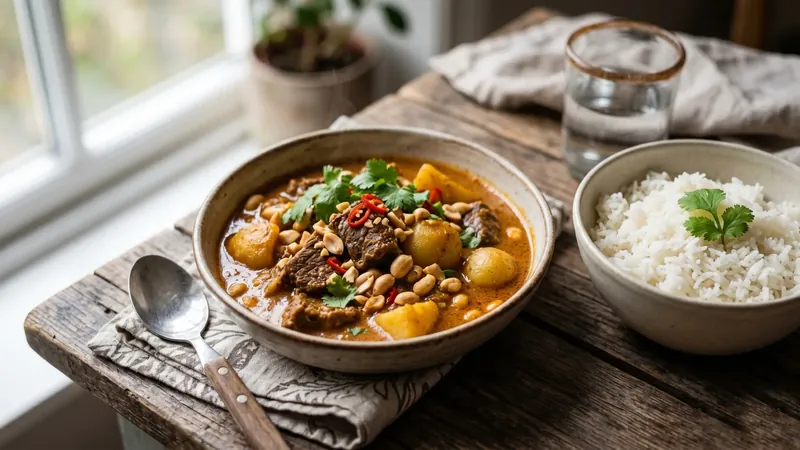
Thai Green Curry with Roasted Coconut and Kaffir Lime
Fragrant, fresh and a little smoky
Contents
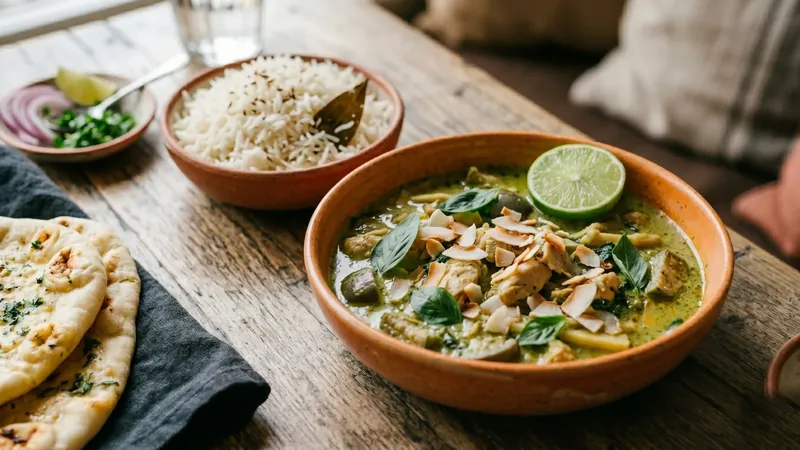
↓ Jump to recipeA good green curry is about fragrance more than heat: makrut lime leaves, Thai basil and fresh chilli lifting over creamy coconut. The twist here is a small one borrowed straight from southern and north-eastern Thai kitchens — a couple of tablespoons of desiccated coconut dry-roasted until deep gold, then stirred through at the end. It adds a nutty, gently smoky warmth and a little body, and it is the difference between a curry that tastes of the jar and one that tastes considered.
The rest is technique you can lean on any weeknight: crack the coconut cream and fry the paste in it until the oil splits, build the sauce, then balance it with fish sauce, palm sugar and lime until it sings. Thirty-odd minutes, one wok, and a bowl that smells unmistakably Thai.
Thai Green Curry with Roasted Coconut and Kaffir Lime
Ingredients
- 4 tbsp desiccated coconut
- 600g boneless chicken thighs, sliced
- 3-4 tbsp Thai green curry paste
- 1 tin (400ml) coconut milk
- 200ml chicken stock
- 1 tbsp fish sauce
- 1 tsp palm sugar (or brown sugar)
- 6 kaffir lime leaves
- 1 aubergine, cut into chunks (or a handful of pea aubergines)
- 100g green beans, trimmed
- 1 red chilli, sliced
- Handful of Thai basil leaves
- 1 lime, to serve
- Vegetable oil, for frying
Method
- Toast the desiccated coconut in a dry pan over medium heat, stirring constantly, until deep golden and fragrant. Tip onto a plate immediately so it does not burn.
- Heat a splash of oil in a wok or wide pan. Spoon in the thick cream from the top of the coconut milk tin and fry for 2-3 minutes until it splits and smells sweet.
- Add the curry paste and fry for another 2 minutes until darkened and aromatic.
- Stir in the sliced chicken and turn it to coat in the paste, cooking for 3-4 minutes.
- Pour in the rest of the coconut milk and the stock, then add the fish sauce and palm sugar.
- Tear in the kaffir lime leaves and drop in the aubergine. Simmer gently for 10 minutes.
- Add the green beans and cook for a further 4-5 minutes until just tender.
- Stir in most of the toasted coconut, reserving a little to finish.
- Taste and balance with more fish sauce, sugar or a squeeze of lime as needed.
- Off the heat, stir through the Thai basil and sliced chilli.
- Scatter with the reserved toasted coconut and serve with jasmine rice and lime wedges.
The Story
Thai green curry, or gaeng keow wan, is among the best loved dishes of central Thai cooking. Its name translates roughly as sweet green curry, though the sweetness is gentle and relative; the green comes from a vivid paste built on fresh green chillies, lemongrass, galangal, coriander root, shallots and shrimp paste, pounded together until smooth. That fresh, herbal heat sets it apart from the deeper, drier red and Massaman curries.
Coconut is the soul of the sauce. Traditionally, cooks would crack the thick coconut cream first and fry it until the oil separated, a step that carries the paste and blooms its aromatics before any liquid is added. It is worth doing even with tinned milk, as it gives the finished curry a richer, glossier texture. The balance of salty fish sauce, a little palm sugar and the sourness of lime is the trinity that makes the whole thing sing.
The roasted coconut twist nods to a genuine Thai technique. In dishes from the country’s south and north-east, desiccated or freshly grated coconut is dry-roasted until golden and nutty, then pounded or stirred in to add body and a toasty fragrance. Borrowed here, it lends the green curry a subtle smokiness and a pleasant texture without changing its character. Just keep a close eye on the pan, as coconut goes from golden to bitter in moments.
Kaffir lime, more correctly makrut lime, is the other essential. Its glossy double leaves carry an extraordinary citrus perfume that no ordinary lime can replace, and torn into the simmering sauce they release their oils slowly. This recipe is generous with them because they are what makes the curry smell unmistakably Thai. The leaves freeze beautifully, so buy a bag and keep them to hand.
Thai basil, called horapha, with its aniseed note and purple stems, goes in right at the end so it stays fresh and fragrant; it is not the same as the Italian sweet basil, though that will do at a pinch. Chicken thighs are ideal for their forgiving juiciness, but the same method welcomes prawns, firm tofu or a mix of vegetables.
Cracking the cream, and why the paste needs frying
The single step that separates a flat curry from a glossy one is frying the paste in coconut cream until it splits. When you spoon the thick cream from the top of an unshaken tin into a hot wok, the water cooks off and the coconut oil separates out — you will see it pool and hear the sizzle change. Frying the green curry paste in that hot oil for a couple of minutes blooms its aromatics, dissolving the fat-soluble flavours from the lemongrass, galangal and chilli in a way that simply simmering never achieves. The paste will darken and smell sharply fragrant; that is your cue to add the chicken.
Two things to watch. First, use full-fat coconut milk, not a light one, or there will be no cream to crack. Second, keep the heat gentle once the rest of the milk goes in: a hard, rolling boil can make coconut milk grainy and cause it to separate unpleasantly rather than staying silky. A steady simmer is all you want.
Getting the roasted coconut right
The coconut goes from pale to golden to acrid in the space of about a minute, so this is not a step to walk away from. Keep the pan dry and over a medium heat, and stir it constantly; the moment it turns the colour of a digestive biscuit and smells toasty, tip it straight onto a cold plate to stop the carry-over heat taking it too far. Burnt coconut is bitter and there is no rescuing it. Stir most of it in at the end for body and hold a little back to scatter over the top for texture.
Substitutions, storage and heat
Makrut (kaffir) lime leaves freeze beautifully, so buy a bag and keep them in the freezer — there is no good dried substitute for their perfume. If you cannot find aubergine, courgette or a handful of mangetout work in the same way. Green curry paste varies wildly in strength between brands, so start with three tablespoons, taste after the sauce has simmered, and add more only if you want it hotter; the fresh red chilli and the balancing lime at the end matter more to the final flavour than raw paste does.
The curry keeps in the fridge for up to three days and, if anything, deepens overnight as the aromatics settle. Reheat it gently so the coconut milk does not split, and add the fresh basil and a squeeze of lime only after reheating. It does not freeze especially well — the coconut can turn grainy — so it is best made fresh or kept for a day or two.
If you want to build the whole thing from scratch, a green curry paste pounded fresh in a pestle and mortar is a different order of fragrance from the jarred kind: green bird’s-eye chillies, lemongrass, galangal, garlic, shallots, coriander root, makrut lime zest, a little shrimp paste and toasted coriander and cumin seeds, worked down in stages from the hardest ingredients to the softest until you have a smooth, vivid paste. It takes ten minutes of arm work and keeps for a week in the fridge or freezes in an ice-cube tray. On a weeknight a good shop-bought paste is no shame at all, but it is worth doing once to taste the difference.
A few variations round it out. For a vegan version, swap the chicken for chunks of firm tofu or a mix of aubergine, bamboo shoots and butternut squash, and use a vegetarian curry paste (many contain shrimp paste) with light soy in place of fish sauce. Prawns are excellent here too: add them for the last three or four minutes only, so they stay plump rather than turning to rubber. And if you like a looser, more brothy curry, add an extra 100ml of stock and serve it in bowls almost like a soup.
Serve with plenty of steamed jasmine rice to soak up the sauce, and let everyone squeeze over their own lime. If you like this style of Thai cooking, the same coconut-and-aromatics balance runs through tom kha coconut soup, while red lentil coconut dal puts the toasted-coconut idea to work in a gentler, spiced register.
Related Content