Tendon: Tempura Prawns on a Rice Bowl
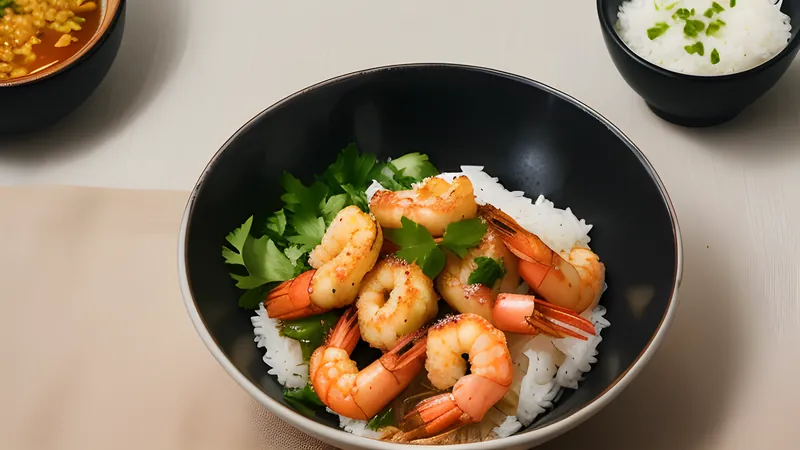
Crisp tempura prawns draped in a sweet-savoury sauce over hot rice
Contents
↓ Jump to recipeTendon takes the most fragile thing in Japanese cooking — tempura, whose whole point is a coating that shatters the second you bite it — and deliberately pours warm sauce over it. That should ruin it. Done right, with the sauce added at the very last moment and only over the tempura itself, it doesn’t: you get a few minutes of contrast between crisp batter and soaked rice before the whole bowl settles into something softer and just as good.
Tendon: Tempura Prawns on a Rice Bowl
Ingredients
- 8 large raw prawns, peeled, deveined, tails left on
- 100g plain flour, chilled
- 1 egg yolk
- 150ml ice-cold sparkling water
- 1 small sweet potato, sliced into 5mm rounds
- 1 shiitake mushroom per person, stem trimmed
- 4 shiso leaves or a handful of green beans
- Neutral oil (rapeseed or vegetable), for deep-frying
- 80ml dashi
- 40ml soy sauce
- 40ml mirin
- 1 tsp sugar
- 2 servings cooked short-grain rice, kept hot
- Grated daikon, to serve (optional)
Method
- Score the underside of each prawn in 3-4 places and press gently to straighten it — this stops it curling up in the hot oil.
- Make the tentsuyu sauce: combine dashi, soy sauce, mirin and sugar in a small pan, bring to a simmer for 2 minutes, then set aside.
- Heat oil in a deep, heavy pan to 170-180C.
- Whisk the egg yolk into the ice-cold sparkling water, then tip in the flour and stir with chopsticks only 3-4 times, leaving visible lumps.
- Dust the prawns and vegetables lightly with extra flour, then dip in the batter and lower straight into the hot oil.
- Fry the vegetables for 2-3 minutes and the prawns for 90 seconds to 2 minutes, turning once, until pale gold and crisp.
- Drain on a wire rack so trapped steam can escape from underneath and the coating stays crisp.
- Pile the hot rice into bowls, arrange the tempura on top, and pour the warm tentsuyu sauce over just the tempura immediately before serving.
- Serve at once with grated daikon on the side if using.
A dish built on contradiction
Tempura on its own is meant to be eaten within seconds of leaving the oil, dipped lightly into a cold tentsuyu sauce that barely touches the coating. Tendon inverts that logic entirely: the tempura sits directly on hot rice and gets doused in warm sauce, guaranteeing the crust will soften. Edo-period street food vendors developed the dish in the eighteenth and nineteenth centuries specifically because it solved a practical problem tempura alone didn’t — a bowl of rice with a sauced topping was heartier, more filling, and easier to eat quickly while standing at a stall than a plate of delicate fried food dipped piece by piece.
That practical, working-class origin is part of why tendon reads as more casual than a formal tempura course served in a specialist restaurant, even though the two share almost identical technique. A proper tempura-ya will serve each piece the moment it leaves the oil, timed to the second; a tendon counter accepts that the tempura will sit for a minute or two under sauce and rice heat, and builds the dish around managing that decay gracefully rather than avoiding it. Some tendon specialists in Tokyo lean into this further still, deliberately saucing the tempura a little more heavily than a purist would ever allow on a plain tempura course, treating the softened crust as its own texture worth pursuing rather than a compromise to be minimised.
The batter is the whole game
Tempura batter has exactly three real rules, and breaking any one of them produces a heavy, greasy coating instead of a light, shattering one. First, everything must be cold — the flour chilled in the fridge beforehand, the water iced, even the mixing bowl set over ice if your kitchen runs warm. Cold batter develops less gluten on contact with flour, and gluten is the enemy here; it’s what makes a batter chewy and bread-like instead of brittle and light.
Second, never overmix. Stir the batter only three or four times with chopsticks, just enough to bring it together — it should still look lumpy, with visible dry patches of flour floating in it. A smooth, lump-free batter has developed exactly the gluten network you’re trying to avoid. Third, use the batter within a few minutes of mixing it; it degrades fast as it sits, both because the flour keeps hydrating and the ice keeps melting and warming the mixture. Mix it last, in the couple of minutes right before you’re ready to fry.
A splash of ice-cold sparkling water in place of some of the still water gives an extra edge of crispness — the bubbles add tiny pockets of aeration to the coating as it fries, and the carbonation dissipates fast enough that it doesn’t affect flavour.
Prawns done properly
Score the underside of each prawn — the side without the natural curve — in three or four shallow cuts, then press down gently to straighten it out. Prawns naturally curl as they cook because the muscle on the outer curve contracts faster than the flesh on the straight side; scoring interrupts that muscle just enough to stop the curl without cutting all the way through. A straight prawn fries more evenly and looks far better sitting on the rice, since a tightly curled prawn cooks unevenly at its bent point.
Pat the prawns fully dry before dusting with flour and dipping in batter — any surface moisture stops the batter adhering properly and causes it to slide off in the oil, leaving bald patches that burn. The thin dusting of dry flour before the wet batter goes on is what gives the batter something to grip; skip it and the coating peels away in the fryer.
Vegetables that belong in the bowl
Sweet potato, shiitake and green beans or shiso leaves are the standard tendon vegetable trio, chosen partly because their different water contents cook at genuinely different rates, which is useful information for timing your fry. Sweet potato needs the longest — slice it thin, around 5mm, or the outside will be done long before the centre softens. Shiitake, with its high moisture content, cooks fast and can turn soggy if left too long; two to three minutes is usually enough. Shiso leaves need only a very brief dip, ten to fifteen seconds a side, since they’re thin enough to crisp almost instantly and will scorch if treated like a heartier vegetable.
Frying vegetables before the prawns is generally the better order, since vegetable tempura holds its crispness slightly longer while it waits, whereas prawns lose their best texture fastest of anything in the bowl and are worth frying as close to serving as possible.
Getting the oil right
Use a neutral, high-smoke-point oil — rapeseed or a plain vegetable oil rather than olive oil, whose flavour and lower smoke point both work against tempura. Traditional tempura-ya often blend in a little sesame oil for aroma, but it’s easy to overdo at home and turn the coating bitter, so keep it to no more than ten percent of the total oil if you use it at all.
Temperature control matters more than almost any other variable. Too cool, below 160C, and the batter absorbs oil before it sets, producing a heavy, greasy result. Too hot, above 190C, and the outside burns before the inside cooks through. Aim for 170-180C and use a thermometer rather than guessing — a small offcut of batter dropped into properly heated oil should sink briefly, then rise back to the surface within a second or two and start sizzling immediately.
Assembling and timing the sauce
Tentsuyu, the dipping sauce that normally accompanies plain tempura served cold on the side, becomes the tendon sauce when warmed slightly and poured directly over the fried pieces. Dashi, soy sauce and mirin in roughly equal parts, with a touch of sugar, gives a sauce that’s savoury-forward with a gentle sweetness — warm it through but don’t let it boil hard, which can make it taste flat.
Pour the sauce over the tempura only, aiming to keep as much of the rice underneath dry as possible until the sauce naturally soaks down through the batter. This preserves a few extra seconds of contrast between crisp top and soft-soaking rice below, rather than drowning everything in sauce from the first bite. Serve the instant the sauce goes on; every minute of delay costs you crunch. If you’re cooking for more than two people, it’s worth building the bowls one at a time straight from the fryer rather than plating everything together and saucing at the end — the small delay between the first and last bowl matters far less than the delay between frying and sauce.
Common mistakes
Overcrowding the fryer is the most common home-kitchen error — dropping in too many pieces at once drops the oil temperature sharply and the batter never sets properly before it starts absorbing oil. Fry in small batches of two or three pieces and let the oil recover to temperature between batches. A digital probe thermometer clipped to the side of the pan is a cheap way to catch temperature drops in real time rather than guessing from how the batter sounds in the oil. Draining on paper towel rather than a wire rack is the second common mistake: paper towel traps steam underneath the tempura, and that trapped steam softens the coating from below within moments of leaving the oil.
Variations
Swap the prawns for a whitefish fillet, such as sustainably sourced cod or haddock cut into strips, for a version closer to what many home cooks make on a budget — the frying and sauce technique carries over unchanged. A version using anago, saltwater conger eel, sits closer to unagi don in spirit, trading the crisp tempura coating for a different kind of richness, though the two dishes are built quite differently in technique.
Choosing your prawns
Size and freshness matter more here than species. Look for large, firm prawns with translucent, tightly segmented shells and a clean, faintly sweet smell — anything ammonia-scented is past its best regardless of what the sell-by date says. Frozen raw prawns, properly thawed overnight in the fridge, work perfectly well and are often fresher than “fresh” prawns that have already been sitting on ice for days at the counter; the freezing happens at sea within hours of the catch on most commercial boats. Whatever you buy, pat the prawns thoroughly dry with kitchen paper before flouring — this single step affects the final crispness more than almost any other variable in the whole recipe.
What to serve alongside
A small bowl of miso soup and a few slices of pickled vegetable round out tendon into a full meal without competing against the main bowl’s richness. If you’re building a larger spread, tendon sits well next to lighter dishes like zaru soba, whose cold dipping sauce and chilled noodles offer a genuine textural contrast to the hot, crisp bowl. Avoid pairing it with another deep-fried dish in the same meal — the point of tendon is the specific tension between crunch and soaking sauce, and a second fried dish on the table just dilutes that contrast rather than adding to it.
Storage
Tendon doesn’t keep — the entire dish depends on textural contrast that exists for a matter of minutes. If you have leftover plain tempura without sauce, it will crisp back up reasonably well in a hot oven or air fryer for a few minutes, though it never quite matches fresh. Leftover tentsuyu sauce keeps in the fridge for up to a week and works well drizzled over grilled fish or vegetables. Cook rice fresh each time rather than reheating it, since tendon depends on genuine heat from the rice working with the sauce, alongside crisp tempura on top — a combination that only really exists in the first few minutes after the bowl is built, much like the timing that makes tonkatsu worth eating the moment it’s sliced.
Related Content