Teh Tarik: The Pulled Tea
Malaysia's frothed milk tea, stretched between two cups until it foams
Contents
↓ Jump to recipeThe first time I tried to pull tea properly, I did it over the sink, because I’d read enough about the technique to know I was going to lose half the cup on the first attempt. I did. The tea went everywhere except the second cup, the foam I was chasing didn’t show up until the fourth try, and my forearm ached the next morning in a way that made me look up whether “tea elbow” was a real repetitive strain injury. It isn’t, officially. Ask anyone who has worked a mamak stall for a decade and they might disagree.
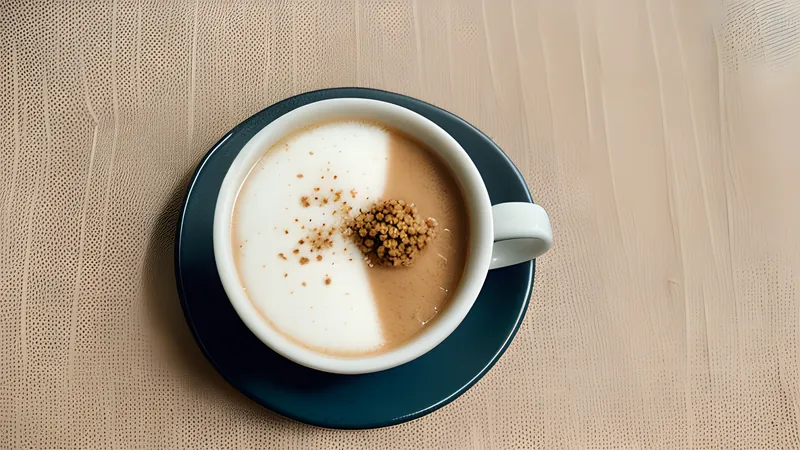
Teh tarik means “pulled tea” in Malay, and the name describes exactly what happens to it before it reaches your hands: hot, sweetened black tea gets poured back and forth between two vessels, held apart at a distance that would spill anything less committed to the exercise, until the surface goes from flat brown to a pale, foamy tan. The pulling isn’t decoration. It aerates the tea, cools it from scalding to drinkable in under a minute, and emulsifies the condensed milk into the liquid so it doesn’t just sink and pool at the bottom of the glass. A teh tarik that hasn’t been pulled is just milk tea. A teh tarik that has is something closer to a milk tea with a head on it, the way a well-poured stout has a head, and the resemblance to bartending isn’t accidental — the best pullers work with real showmanship, arcing the stream over their shoulder or behind their back without losing a drop.
Teh Tarik: The Pulled Tea
Ingredients
- 4 black tea bags, or 4 tablespoons loose CTC black tea (Boh or a strong Assam blend)
- 600ml just-boiled water
- 200ml sweetened condensed milk
- 100ml evaporated milk (optional, for a rounder finish)
- 1 tablespoon caster sugar, to taste
Method
- Warm two heatproof metal cups or a metal jug and a mixing cup under hot tap water, then dry them.
- Steep the tea bags or loose tea in the 600ml just-boiled water for 8 minutes, pressing the bags against the side of the jug once or twice with a spoon.
- Strain the tea into a clean jug, discarding the leaves or bags, so you have roughly 500ml of dark, strong tea.
- Stir the condensed milk and evaporated milk (if using) into the hot tea until fully dissolved, then taste and add sugar if you want it sweeter.
- Pour the tea from a height of about 30cm into an empty cup, letting the stream fall in a thin, steady line rather than a splash.
- Immediately pour it back into the first cup from the same height, and repeat this pass four or five times, watching the surface build a pale tan foam.
- Pour into serving glasses while the foam is still standing and serve immediately, before the froth has time to settle.
Where the pull came from
Teh tarik belongs to the mamak stalls of Malaysia and Singapore, the open-fronted eateries run largely by Tamil Muslim families whose ancestors arrived from South India during British colonial rule, many of them recruited as labourers and traders into the Straits Settlements through the nineteenth and early twentieth centuries. The word “mamak” itself comes from a Tamil term for uncle, and the stalls became a genuine third space in Malaysian life: open late, serving a menu that mixes South Indian, Malay and Chinese influences, and functioning as neutral ground where people of different backgrounds sit at the same plastic tables. Teh tarik grew out of that mixing. The base of strong, tannic black tea reflects Indian chai traditions, brewed the way tea would have been made across South India — boiled hard rather than steeped gently — while the sweetened condensed milk was a practical substitute for fresh milk, which spoiled fast in the tropical heat and was harder to keep reliably available before widespread refrigeration. Condensed milk, tinned and shelf-stable, solved that problem and added its own thick sweetness at the same time.
The pulling technique itself is contested territory when it comes to origin stories — some trace it to Indian dosa-makers who developed a habit of aerating drinks with dramatic pours as a form of stall theatre, others point to the practical need to cool tea fast enough to serve to a queue of customers without burning anyone’s tongue. Both explanations are probably true at once. A skill that started as necessity became a performance once mamak stalls realised customers would stop and watch, and once it became a performance it became a point of pride, which is how you end up with a national teh tarik association and an annual competition judged on how high pullers can arc the stream, how much foam they can raise, and how cleanly they can catch it without a splash. Malaysia has sent competitors to international coffee and tea shows specifically to demonstrate the pull, and it’s one of the few pieces of everyday street food theatre that’s been formally recognised as a piece of intangible cultural heritage in its home country.
Getting the tea right before you pull anything
The tea itself needs to be strong enough to survive dilution by condensed milk and to stand up against the sugar. A CTC tea — cut, tear, curl, the small hard pellets rather than long leaf — is traditional because it infuses fast and hard, giving you a tannic, almost bitter base in under ten minutes rather than the gentler, more floral character you’d get from a slow-brewed leaf tea. Boh, the Malaysian tea brand grown in the Cameron Highlands, is the classic choice if you can find it, but a strong Assam or even a supermarket own-brand “builder’s tea” bag will get you close enough. What you’re avoiding is anything delicate — Darjeeling, jasmine, anything marketed on subtlety — because subtlety disappears the moment condensed milk gets involved.
Brew it hot and strong, close to double the strength of a cup you’d drink black, because the milk and sugar are about to cut it substantially. Press the tea bags or strain the loose leaf hard; you want maximum extraction here, strong enough to stand up to condensed milk. Once it’s strained and mixed with the condensed milk, taste it before you do any pulling — this is your only chance to adjust sweetness, since the pulling process itself doesn’t add or remove flavour, only texture and temperature.
The pull itself
You need two vessels with some kind of handle or lip you can hold steady, and space to work — over a sink the first few times, honestly, until your aim improves. Traditional pullers use two metal cups or a cup and a small metal jug (a teko), because metal handles heat better than ceramic and won’t crack under a hot pour, but any two heatproof containers will do for home practice.
Start the pour from a modest height, maybe 20cm, until you get a feel for how the stream behaves, then work up toward 30cm as your confidence builds. The stream should be thin and continuous, closer to a poured ribbon of liquid than a dumped cupful. Pour steadily into the empty vessel, then lift that one and pour back into the first, and repeat. Each pass drags air into the tea and knocks the fat globules in the condensed milk into smaller, more stable bubbles, which is what builds the foam. Four to five passes is usually enough for a good, stable head; more than that and you risk cooling the tea past its ideal drinking temperature, which should still be hot but no longer scalding by the time you serve it.
Watch for the colour change as much as the foam. Freshly mixed tea and condensed milk look glossy and slightly separated, streaked rather than uniform. After a proper pull it turns a consistent, matte tan, almost like a flat white but thinner, with visible foam sitting on top rather than a few stray bubbles round the rim.
Variations worth knowing
Teh tarik has siblings that use the same technique with different bases. Teh o is black tea with sugar and no milk at all, still pulled for the aeration and cooling effect, and it’s what you’d order if you wanted something lighter. Teh c, sometimes called teh see, swaps the condensed milk for evaporated milk and sugar, giving a thinner, less cloying result that some drinkers prefer with a big meal. Teh tarik cham blends in a shot of coffee, borrowing the name cham (meaning “mixed”) from the wider kopitiam tradition of hybrid drinks, and it drinks like a Malaysian answer to a mocha, tea and coffee bitterness playing off each other under the same sweetened milk. If you want to try any of these, the method is identical — just change what goes into the cup before the pulling starts.
There’s also teh halia, tea pulled with fresh ginger juice added to the brew, which is a common variant in Singapore’s mamak-adjacent kopitiam scene and pairs well with something rich and savoury, the ginger cutting through fat the way it does in a good khao man gai, where ginger performs a similar job against poached chicken fat.
Serving it right
Teh tarik is drunk hot, always, straight after pulling, ideally alongside something fried or griddled — roti canai, a stack of buttery, flaky flatbread torn and dipped into curry, is the classic pairing at any mamak stall, and there’s a reason the two show up on the same menu at almost every one of them. The richness of the tea cuts the ghee in the roti, and the sweetness offsets any heat from a curry dip. It’s just as at home next to something eggy and simple — a slice of kaya toast with soft-boiled eggs shares the same kopitiam DNA, sweet and savoury handled with the same confident hand, and the two together make a proper Malaysian breakfast rather than an approximation of one.
Don’t let it sit. The foam collapses within a few minutes and the tea keeps cooling, so pull it as close to serving as you can manage, and pour it straight into the glass someone’s about to drink from. If you’re making a round for guests, brew a larger batch of the sweetened tea ahead of time and keep it hot in a flask, then pull individual cups to order — that’s effectively what a mamak stall does anyway, keeping a vat of prepared tea ready and doing the theatrical part fresh each time someone orders.
What goes wrong
The most common failure is tea that’s too weak to survive the milk. If your finished drink tastes mostly of condensed milk with a vague tea note somewhere underneath, your base brew wasn’t strong enough — go back and steep longer or use more tea next time, since you can’t fix weak tea by pulling harder. The second common failure is impatience with the pour: rushing the stream, pouring from too low, or doing only one or two passes will leave you with warm milky tea and no foam at all. Give it the full four or five passes and a genuine height before you decide it isn’t working. And if you’re getting splashes rather than a ribbon, slow the pour right down — the stream needs to stay thin and controlled for the aeration to happen cleanly.
Kept honest, it’s a five-minute drink that rewards a bit of practice over the sink, and once you’ve got the pull down it’s genuinely satisfying muscle memory, the kind you’ll keep doing long after the tea in the cup has gone cold.
Related Content