Tarte Tropézienne: The Brioche and Cream of Saint-Tropez
Pearl-sugar brioche, orange blossom, and a mousseline made with browned butter
Contents
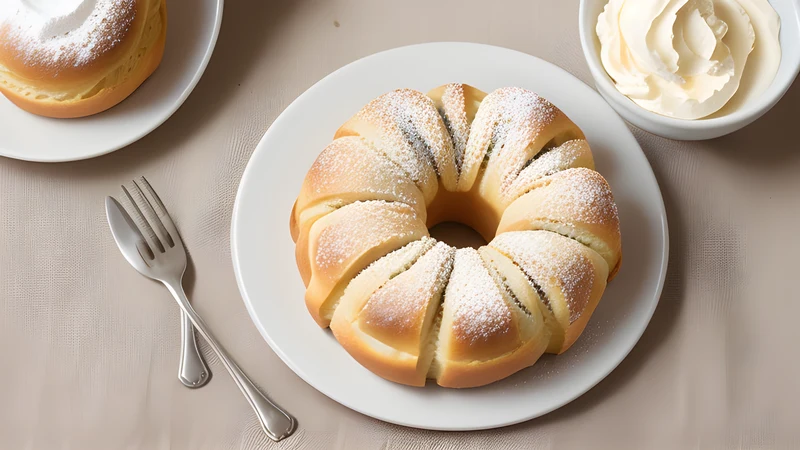
↓ Jump to recipeThe tarte tropézienne is a brioche with cream in it. That flat sentence undersells it in the same way “grilled bread with tomato” undersells pan con tomate, and it also explains why so many home versions disappoint: people treat it as a cake and it collapses into sweetness. It is a bread, enriched to the edge of what dough can hold, split and loaded with a cream stiff enough to slice. Get the bread right and the whole thing works.
Tarte Tropézienne: The Brioche and Cream of Saint-Tropez
Ingredients
- For the brioche: 250g strong white bread flour
- 30g caster sugar
- 5g fine salt
- 5g fast-action dried yeast
- 3 medium eggs, cold (about 150g)
- 30ml whole milk, cold
- 1 tbsp orange blossom water
- 125g unsalted butter, cold, cubed
- 1 egg yolk beaten with 1 tbsp milk, to glaze
- 40g pearl sugar (nibbed sugar)
- For the brown-butter mousseline: 150g unsalted butter
- 400ml whole milk
- 1 vanilla pod, split and scraped
- Pared zest of 1 unwaxed orange
- 4 egg yolks
- 90g caster sugar
- 35g cornflour
- 2 tsp orange blossom water
- 150ml double cream, cold
Method
- Make the brioche dough the day before. Put the flour, sugar, salt and yeast in a mixer bowl, keeping the salt and yeast apart until you start. Add the eggs, milk and orange blossom water and mix with the dough hook on low for 4 minutes, then medium for 6 minutes, until the dough is smooth and pulls off the bowl sides.
- With the mixer on medium, add the cold butter five or six cubes at a time, waiting until each addition disappears before adding more. This takes 8 to 10 minutes. Stop when the dough is glossy, slack and slaps the bowl. Cover and refrigerate for at least 8 hours or overnight.
- Brown the butter for the cream. Melt the 150g butter in a small pan over medium heat and keep cooking, swirling, until it foams, quietens, and the milk solids at the bottom turn hazelnut brown, about 6 minutes. Pour it into a bowl, solids and all, and leave until set but soft, roughly the texture of ointment. Chill it if your kitchen is warm, then bring it back to soft.
- Shape the brioche. Turn the cold dough out, press to knock out the gas, and shape into a tight ball. Flatten it into a 20cm disc on a lined baking sheet, cover loosely, and prove at warm room temperature for 2 to 3 hours until it is puffy, has spread to about 22cm and a floured fingertip leaves a dent that fills back slowly.
- Heat the oven to 170C fan. Brush the dough with the yolk glaze, scatter the pearl sugar over the top, and bake for 22 to 25 minutes until deep golden and 92C in the centre. Cool completely on a rack, at least 2 hours.
- Make the pastry cream. Heat the milk with the vanilla pod, seeds and orange zest until steaming, then leave 15 minutes to infuse and strain. Whisk the yolks, sugar and cornflour to a smooth paste, pour on the hot milk while whisking, return to the pan and cook over medium heat, whisking hard, until it thickens and boils for a full minute. Scrape into a tray, press cling film onto the surface and chill until cold.
- Beat the cold pastry cream smooth with a whisk or beater until it is loose and glossy. Beat the soft brown butter in a separate bowl until pale, then add the pastry cream a spoonful at a time, beating between each, until silky. Beat in the orange blossom water. If it looks curdled, keep beating; it will come together as the temperatures match.
- Whip the double cream to soft peaks and fold it into the mousseline in two goes. Chill 30 minutes.
- Split the cold brioche horizontally with a long serrated knife, cutting slightly above the middle so the sugared lid is the thinner piece. Pipe the cream onto the base in fat blobs from the centre outwards, leaving 1cm clear at the edge, then pipe a second layer over the joins to build height of about 3cm.
- Set the lid on, press gently until the cream just reaches the rim, and chill at least 1 hour before cutting. Serve within 24 hours.
Micka, Bardot, and a trademark
Alexandre Micka was born in Poland and opened a patisserie in Saint-Tropez in 1955, on the Place des Lices. The cake he sold was his grandmother’s — a sugared brioche filled with cream, the kind of thing that exists in a dozen versions across central Europe. The following year, the crew filming Et Dieu… créa la femme took him on to cater their lunches, and the cast ate his brioche. Brigitte Bardot, then twenty-one, is credited with suggesting he give it a proper name and call it after the town. Micka went with “tarte de Saint-Tropez”, shortened to Tarte Tropézienne, and registered the name in 1973. His shop still trades under it, and the cream recipe has never been published.
Micka’s own background matters more than the Bardot anecdote, which is the bit everyone repeats. Sugared brioche with cream is a central European form, and Poland has its own versions; what Micka did was land one on the Côte d’Azur at the exact moment the Côte d’Azur became famous. Saint-Tropez in 1955 was a fishing town with a few hundred residents out of season. By 1958 it was where France went to be photographed. The cake got caught in that updraught, and the perfume of orange blossom — a Provençal note, from the bitter orange groves of the region — is the one thing Micka added that ties the recipe to where it landed.
Two things follow from that history. The first is that the “authentic” recipe is a commercial secret, so every version you will ever cook is a reconstruction. The second is that the reconstructions all agree on the same architecture: crème pâtissière, softened with fat, sitting inside a brioche crowned with pearl sugar. The arguments are about which fat. Some bakers beat the pastry cream into butter to make a mousseline; some fold in whipped cream to make a diplomat; the Saint-Tropez original tastes, to my palate, like both at once, which is what I have done here.
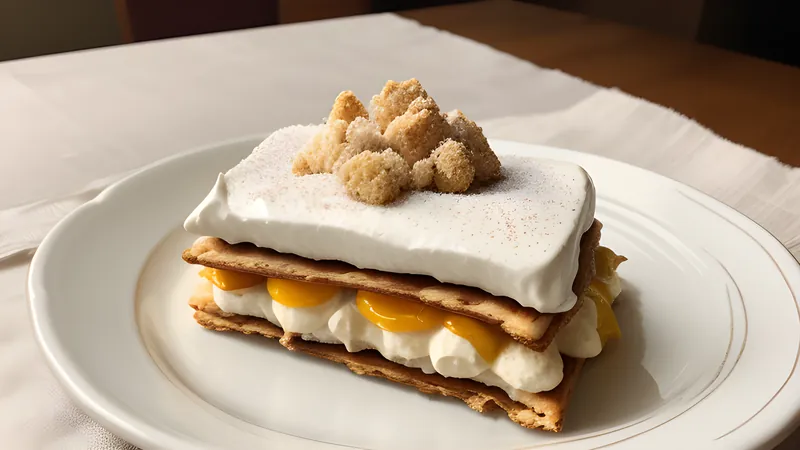
There is a third lesson, and it is about proportion. Photographs of tropéziennes tend to show a slab of cream two inches thick between two thin discs of bread. That is a modern bakery flourish and it eats badly — the cream goes claggy and the brioche is reduced to a wrapper. Micka’s cake, by every account of it, was a brioche first. A finished tart around 6cm tall, of which roughly half is bread, is the ratio that tastes right and the one I have built the quantities around.
The brown butter
My departure is browning the butter that goes into the mousseline. Standard mousseline is pastry cream and soft raw butter, and it carries vanilla well but tastes mostly of dairy. Browning drives off the water and toasts the milk solids, which builds nutty, caramel-adjacent flavour compounds through the Maillard reaction — and those sit next to orange blossom water beautifully, because the blossom’s floral top note has nowhere to go against plain butter but plenty to bounce off against toasted lactose.
The practical catch is that browned butter has lost about 15 per cent of its weight in water, and water is what makes an emulsion forgiving. Browned butter mousseline is therefore slightly stiffer and slightly more prone to looking broken when you first combine it. Folding whipped cream in at the end fixes the texture, drops the density, and keeps the slice tender in the fridge. Do scrape the brown solids in with the fat. They are where the flavour lives, and they disappear entirely into the cream.
One more reason the browning helps: pearl sugar and brioche crust are both sweet and one-dimensional, and vanilla pastry cream is sweet and one-dimensional too. Without something savoury or toasted in the middle, a whole slice reads as sugar with texture. The brown solids give the cream a low, roasted register that the crust echoes, and the finished thing tastes composed rather than merely rich.
Reading the dough
Brioche is the dough where people learn that mixing is a process with stages, and rushing any of them shows in the crumb. The order in this recipe is deliberate. Everything cold, eggs and flour worked to a strong, elastic, butterless dough first, and only then the fat — because fat coats gluten strands and stops them linking. Add butter to an underdeveloped dough and you get a batter that never comes together no matter how long you run the machine.
You are looking for three signals. After the initial mix, the dough should clear the sides of the bowl and pull into a rope on the hook. Under a stretched thumb it should go translucent without tearing — the windowpane, the standard test for developed gluten. Then, as the butter goes in, the dough will loosen and look wrong for a minute after each addition before it tightens again; that rhythm is the emulsion forming, and it is why you wait rather than dump the butter in at once.
The overnight fridge rest is doing two jobs. It firms the butter so the dough can be handled at all, and it gives the yeast a long, cold fermentation that builds flavour — the organic acids and alcohols that make good brioche taste of more than sweet bread. A dough proved warm and fast in three hours bakes into something perfectly edible and noticeably blander. If you are pressed, twelve hours is better than eight, and two days is fine.
What actually goes wrong
The dough looks like batter and you panic. A 50 per cent butter brioche is meant to be slack. Cold ingredients and a long mix are what let the gluten develop before the fat coats it. If your dough is soupy after ten minutes of mixing, the butter went in too fast or the bowl got warm — chill everything for 20 minutes and carry on.
The brioche over-proves. This is the real killer. Over-proved brioche bakes into something with a coarse, shreddy crumb that tears when you split it, and it stales by teatime. Prove until the disc is domed and a dent fills back slowly, and no further. Underdone by ten minutes beats overdone by ten.
The pearl sugar melts. Pearl sugar is compressed sugar that resists heat; ordinary granulated will liquefy and weld the crust to the paper. If you cannot find it, crush sugar cubes coarsely, which is close enough.
The mousseline splits. Almost always a temperature mismatch: cold pastry cream hitting warm butter, or the reverse. Both should be at cool room temperature, about 20C. If it does break, warm the outside of the bowl for ten seconds with a hairdryer or a warm cloth and keep beating. It comes back.
The split
Cut the brioche slightly above the equator. The base then has enough wall to hold the cream, and the sugared lid stays light enough to press down without squeezing the filling out of the sides. A long serrated knife and a sawing action, with the brioche fully cold, does this cleanly. Warm brioche compresses under the blade and you end up with a wedge.
Pipe rather than spread. Fat blobs of cream, piped from the centre out, trap a little air between them and give you the domed profile the cake is known for, and they let the lid settle without shearing. Spreading with a palette knife drags the surface and gives you a flat, dense filling.
On the cream, and why it is two creams
Crème pâtissière alone is too wobbly to slice; it is set with starch and it weeps when cut. Beat butter into it and you have mousseline, which slices like a dream and eats like a mouthful of butter. Fold whipped cream into pastry cream and you have crème diplomate, which eats beautifully and slumps out of the sides of a brioche under the weight of the lid.
The version here takes the middle road: browned butter for structure and flavour, whipped cream for lightness, in a ratio that holds a 3cm layer at fridge temperature and still gives way under a fork. The cornflour matters to this. Thirty-five grams to 400ml of milk is a firm set — noticeably firmer than the custard you would put in an éclair — and that firmness is what lets you dilute the pastry cream with all that whipped cream and still slice cleanly.
Boil the pastry cream properly. A full minute at a rolling boil, whisking hard, does two things: it gelatinises the starch completely, and it destroys the alpha-amylase enzyme in the egg yolks. Skip it and the enzyme keeps working in the fridge, breaking the starch down, and your cream will be a soup by morning. This is the single most common reason a home-made pastry cream fails overnight. The recipe is rarely at fault; the missing ingredient is sixty seconds of nerve.
Tips, swaps and keeping
Orange blossom water varies enormously in strength — Lebanese bottles tend to be gentler, French ones more aggressive. Start with the amounts given, taste the cream before you fold in the whipped cream, and add half a teaspoon at a time if it needs lifting. Overshoot and the whole thing tastes of soap, and there is no rescue.
For the vanilla, a pod is worth it here because there are so few flavours in the cake to hide behind. Good paste works; the flat, alcoholic taste of cheap extract does show.
Kirsch is a common addition in southern versions — a tablespoon in the cream, in place of one of the orange blossom teaspoons. It suits a summer table and dry rosé.
The finished tart keeps 24 hours in the fridge and is best two hours after assembly, when the cream has set and the brioche has softened slightly against it. Beyond a day the crumb dries and the sugar starts weeping. Unfilled brioche freezes well: wrap the cooled disc tightly and freeze for up to a month, then defrost overnight in its wrapping. Make the pastry cream up to two days ahead and beat it into the browned butter on the day.
If this sort of enriched dough is your kind of afternoon, the same patience pays off in brioche feuilletée, which laminates the dough instead of studding it with sugar. And if it is the pastry cream you are here for, millefeuille with vanilla crème pâtissière and éclairs with coffee crème pâtissière both use the same custard base to very different ends — the technique in this recipe transfers straight across. For something in the same showpiece register, fraisier is the other cake built entirely on mousseline.
Serve it cold, in wedges, in the afternoon, with coffee. It is a bakery cake and it behaves like one: forgiving of an amateur hand, unforgiving of an over-proved dough.
Related Content