Tarator: The Cold Bulgarian Cucumber and Yoghurt Soup
Six ingredients, no cooking, and the only Balkan soup served with ice in it
Contents
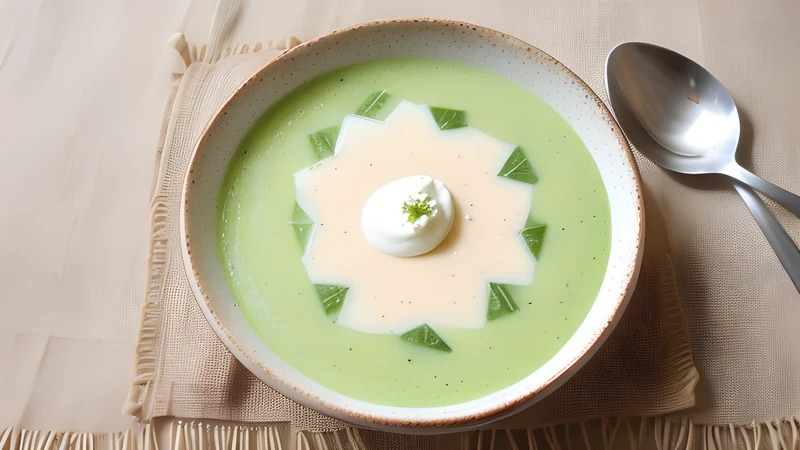
↓ Jump to recipeThe first time someone put ice cubes in my soup I assumed it was a mistake. It is the point. Tarator is served cold enough to make your teeth ache, and Bulgarians drop ice straight into the bowl so that it keeps getting colder while you eat it and thins slightly as it goes. By the last spoonful the soup is a different, lighter thing than it was at the first. This is deliberate.
It is also about ten minutes of work, requires no heat, and is one of the few dishes where the shopping matters more than the cooking.
Tarator: The Cold Bulgarian Cucumber and Yoghurt Soup
Ingredients
- 500 g full-fat Bulgarian or Greek natural yoghurt
- 2 medium cucumbers (about 500 g), or 1 large
- 1 tsp fine salt, plus more to finish
- 2 fat garlic cloves
- 60 g shelled walnuts
- 3 tbsp cold-pressed sunflower oil, or a mild olive oil
- 250–350 ml ice-cold water
- 1 small bunch dill (about 15 g), finely chopped
- 8 ice cubes, to serve
Method
- Peel the cucumbers if the skins are thick; leave them on if thin. Dice into 5 mm cubes — do not grate.
- Toss the diced cucumber with 1 tsp fine salt in a sieve set over a bowl. Leave for 10 minutes, then discard the liquid that collects. Do not rinse.
- Crush the garlic to a smooth paste with a pinch of salt, using the flat of a knife or a mortar.
- Crush 40 g of the walnuts to a coarse rubble in a mortar; chop the remaining 20 g roughly and set aside for the top.
- Whisk the yoghurt in a large bowl until smooth and pourable.
- Whisk in the garlic paste, then the crushed walnuts, then the oil, adding the oil in a thin stream.
- Whisk in ice-cold water a little at a time until the soup pours like single cream — start at 250 ml and stop when the texture is right.
- Stir in the drained cucumber and two-thirds of the dill. Taste and add salt; it should taste faintly too salty at room temperature.
- Chill at least 1 hour. Serve in shallow bowls with 2 ice cubes per bowl, the reserved walnuts, the remaining dill and a final drizzle of oil.
The yoghurt argument
Bulgaria has a genuine, defensible claim on yoghurt, and it rests on a bacterium. In 1905, a Bulgarian medical student named Stamen Grigorov, working in Geneva, identified the rod-shaped organism responsible for the fermentation in Bulgarian kiselo mlyako — soured milk. It was subsequently named Lactobacillus delbrueckii subsp. bulgaricus, and it is still, together with Streptococcus thermophilus, the standard starter pair for yoghurt across the world. The Nobel laureate Élie Metchnikoff seized on the finding and built a theory that Bulgarian peasant longevity was down to the stuff, which was mostly wrong and enormously good for exports.
What matters in your bowl is what those two organisms do together. S. thermophilus works first, consuming oxygen and dropping the pH; L. bulgaricus follows, producing lactic acid and acetaldehyde, which is the compound responsible for the specific sharp, green, slightly apple-like note of proper Bulgarian yoghurt. Set yoghurts fermented longer at higher temperatures push that acetaldehyde higher. This is why a supermarket “Greek style” yoghurt tastes creamy and blank next to a real Bulgarian one, which tastes distinctly of something.
For tarator, use full fat. Nothing else. The fat is carrying the garlic and walnut aromatics; a 0% yoghurt gives you a thin, sour liquid with a harsh raw-garlic edge and nowhere for it to land. If Bulgarian yoghurt is unavailable, full-fat Greek yoghurt works, though you will want slightly less water because it is strained and thicker to start with. Straining your own is the same principle as making labneh, just stopped much earlier.
Where it sits in the family
Tarator is the Bulgarian member of a cold yoghurt-and-cucumber group that spans the old Ottoman world: Turkish cacık, Greek tzatziki, Persian mast-o-khiar, Albanian and North Macedonian variants. The distinction is consistency and role. Tzatziki is a thick dip for bread and grilled meat. Cacık is looser, sometimes drinkable. Tarator is a soup, eaten with a spoon from a bowl, as a first course.
The walnuts are what make it Bulgarian. Neither tzatziki nor cacık uses them as standard, and they do more than add crunch — crushed into the base they emulsify slightly, thicken the soup, and contribute a tannic bitterness that stops the whole thing collapsing into bland dairy. Skip the walnuts and you have made cold cacık with dill.
Confusingly, “tarator” in Turkish and Lebanese cooking means something else entirely: a nut-and-garlic sauce, walnut or pine nut, thinned with vinegar and served with fish or vegetables. The word appears to travel back through Ottoman Turkish to a Persian root, and the shared thread across every version is pounded nuts plus garlic. Bulgaria took that base and poured yoghurt into it.
In Bulgaria it turns up on almost every restaurant table between May and September, usually next to a shopska salata and a glass of rakia, and it exists at that table for a specific reason: it is the counterweight to grilled meat and salt. The same job yayla çorbası does hot, tarator does cold.
The four decisions that make it good
Dice, do not grate. This is the one I will argue about. Grated cucumber releases far more water, dissolves into the yoghurt, and gives you a uniform pale-green sludge. Diced at 5 mm, the cucumber stays a distinct thing you bite. Tarator should have texture in it. If someone hands you a bowl of smooth green liquid, they grated it.
Salt the cucumber and throw the liquid away. Cucumber is roughly 96% water. Ten minutes with a teaspoon of salt draws out a surprising amount of it — usually 3 to 4 tablespoons from 500 g — through simple osmosis. If you skip this, that water goes into the soup instead, and thirty minutes into chilling your carefully judged consistency has gone watery and your seasoning has diluted. Do not rinse afterwards; the salt left on the cubes is part of the seasoning.
Garlic as paste, and enough of it. Two fat cloves for four servings sounds like a lot. It is correct. Crushing with salt matters mechanically: the salt crystals act as an abrasive and rupture the cells properly, which releases allicin evenly, rather than leaving you with chunks that ambush one person at the table. Bulgarian tarator is a garlic dish. Timid tarator is just cold yoghurt.
Season for the cold. Chilling flattens perception of salt and aromatics considerably. Season the soup at room temperature until it tastes a shade too salty and slightly too garlicky, then chill it. It will land right. Season it to taste when cold and you will have to fix it later, when the yoghurt has already set and the seasoning will not distribute.
Making it, step by step
Start with the cucumbers, because they need ten minutes to themselves. Two medium ones, around 500 g together. If the skin is thin and unwaxed, leave it on — the flecks of dark green are half the look of the finished bowl. If it is a thick-skinned supermarket cucumber that squeaks, peel it in stripes and keep some. Dice at 5 mm: slice into planks, planks into batons, batons across. Toss with a teaspoon of fine salt in a sieve over a bowl and walk away.
While that drains, deal with the garlic and walnuts. Two fat cloves, germ removed, crushed to a paste against the board with the flat of a knife and a pinch of coarse salt — press and drag, press and drag, until there is no grain left in it. Then 40 g of walnuts into a mortar and pound them to a coarse rubble, somewhere between gravel and sand. You want some pieces you can feel. Chop the remaining 20 g roughly and keep them back for the top, where they need to stay crunchy.
Now the base. Tip 500 g of yoghurt into a wide bowl and whisk it hard for thirty seconds. It will look thick and then it will suddenly loosen and go glossy — that is the gel network breaking down under shear, and it is exactly what you want before anything else goes in. Whisk in the garlic paste until it disappears. Then the crushed walnuts. Then pour in 3 tablespoons of oil in a thin stream, whisking, so it emulsifies rather than sitting on top in slicks.
Water next, and slowly. Start with 250 ml of ice-cold water, adding it in three or four goes and whisking between. Stop when the soup falls off the whisk in a ribbon and pours like single cream. Different yoghurts need wildly different amounts — a strained Greek one might take 350 ml, a loose Bulgarian one 200 ml. Judge by the pour, never by the measurement.
Shake the cucumber dry, discard the liquid in the bowl underneath, and fold it in with two-thirds of the dill. Taste, and salt until it tastes a shade too salty. Into the fridge for at least an hour.
To serve: shallow bowls, two ice cubes each, the reserved walnuts and dill scattered on top, a last thread of oil across the surface. Some cracked black pepper if you like, though no Bulgarian grandmother of my acquaintance would.
What goes wrong
It split, or it looks grainy. You added the water too fast, or the water was not cold. Yoghurt proteins are already sitting at the edge of stability at their fermented pH; dumping in liquid all at once shears the gel network and it breaks into curds and whey. Add water in stages, whisking, and use it fridge-cold or with ice in it.
It went watery an hour in. Unsalted cucumber. See above.
It tastes flat. Under-salted, or low-fat yoghurt, or you used the pale, wet, mass-market walnuts that have been in a warm shop for eight months. Rancid walnuts are extremely common and taste of cardboard and old paint. Buy them in shell if you can be bothered, or from a shop with turnover, and keep them in the freezer.
Harsh, hot garlic that sticks around for hours. Old garlic with a green germ through the middle. Split each clove and flick the germ out with a knife tip; it is bitter and disproportionately aggressive raw.
It is not cold enough. An hour in the fridge is the minimum, and the ice cubes are not garnish. Aim for something close to 4C in the bowl.
Variations and what to do with it
Some households add a splash of rakia or vinegar — about a teaspoon per litre — which brightens it. Others skip the walnuts in winter and switch to a thicker version, snezhanka (“Snow White”), which is the same ingredients with strained yoghurt and no water: a salad rather than a soup, eaten with bread. In North Macedonia you will find the same soup under different names, sometimes with mint alongside the dill.
The sunflower oil is worth taking seriously. Bulgarian cold-pressed sunflower oil is dark gold and tastes of toasted seeds, nothing like the neutral refined stuff. It is genuinely different, and if you can find a bottle it changes the soup more than any other substitution. Failing that, a mild olive oil is fine; a peppery Tuscan one will fight the dill and win.
A common restaurant shortcut worth stealing: chill the serving bowls in the freezer for twenty minutes beforehand. Tarator warms up in a room-temperature ceramic bowl faster than you would think, and a cold bowl buys you the whole meal at the right temperature. It is the sort of detail that separates a good bowl from a memorable one, and it costs nothing.
Serve it before anything grilled and heavy — a kavarma, lamb, pork, whatever is going — or alongside a warm wedge of banitsa, which is the combination I would happily eat every day of a Bulgarian July. It keeps two days in the fridge. Whisk it before serving; it will have separated a little, and that is fine. Beyond two days the garlic turns dominant and slightly stale-tasting, and the cucumber goes limp — the salting only buys you so much. Make it the morning you want it. It takes ten minutes, which is less time than you will spend deciding what else to cook.
Related Content