Taiyaki: Fish-Shaped Cakes Filled With Red Bean
A pancake batter pressed into a cast-iron fish and filled with sweet adzuki
Contents
↓ Jump to recipeTaiyaki: Fish-Shaped Cakes Filled With Red Bean
Ingredients
- 200g plain flour
- 1 tsp baking powder
- 1/4 tsp bicarbonate of soda
- 1/2 tsp fine salt
- 2 tbsp caster sugar
- 2 large eggs
- 280ml whole milk
- 1 tbsp honey
- 1 tsp vanilla extract
- 300g sweetened adzuki bean paste (anko), chilled
- Neutral oil for greasing the mould
Method
- Sift the flour, baking powder, bicarbonate of soda and salt into a bowl, then whisk in the sugar.
- In a separate jug, whisk the eggs, milk, honey and vanilla until smooth.
- Pour the wet mixture into the dry and whisk just until no dry flour remains; a few small lumps are fine. Rest the batter for 15 minutes.
- Divide the chilled anko into 8 portions of about 35g each and roll into short logs to match the fish's body cavity.
- Heat a cast-iron taiyaki pan over medium heat on both sides until a drop of batter sizzles on contact, then brush both halves with oil.
- Spoon batter into the bottom halves until three-quarters full, press a log of anko into the centre of each, then top with a little more batter to just cover the filling.
- Close the pan and cook for 2 minutes, flip the whole pan, and cook for a further 2 minutes.
- Open carefully and check the edges are deep golden brown and crisp; if pale, close and give another 60-90 seconds per side.
- Trim any batter that has leaked from the seam with a small knife while the cakes are still in the pan, then turn out onto a wire rack.
- Serve warm, ideally within 20 minutes of coming off the heat, when the shell is at its crispest.
The fish that started as a substitute
Taiyaki takes its name plainly: tai for sea bream, yaki for grilled or baked. Bream was the fish served to celebrate births, weddings and New Year in Japan for centuries, prized for a colour that turns a happy shade of red when cooked and for a name that sounds like medetai, the word for auspicious. Real bream was expensive. A Tokyo confectioner in the early 1900s worked out that a waffle iron shaped like the fish, filled with cheap sweetened bean paste, let ordinary people carry a lucky symbol home in their pocket for a few coins. The cake outlived the reason for its shape. Most people buying taiyaki from a street stall today aren’t thinking about bream at all; they’re thinking about the crunch of the tail fin, which cooks thinner than the body and turns nearly biscuit-crisp.
That crisp edge is the whole point of the fish shape, and it’s why a taiyaki pan looks nothing like a waffle iron despite doing a similar job. The cavity narrows dramatically towards the tail and fins, so batter there cooks through fast and browns hard, while the body stays a softer, cake-like crumb around the filling. A round mould gives you one texture throughout. The fish shape gives you two, in every bite, which is the reason taiyaki has stayed a specific, recognisable thing rather than folding into the generic category of “filled pancake.”
A cousin worth knowing: imagawayaki
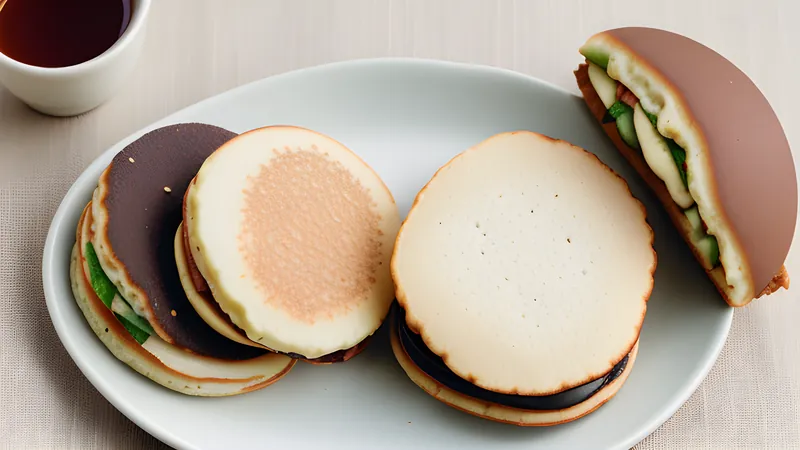
Taiyaki has a close relative called imagawayaki, a round, disc-shaped filled cake cooked in a similar hinged iron but without the fish detailing, named after a bridge in Edo-period Tokyo near where it was first sold. The batter and filling are nearly identical to taiyaki’s, and the two are often sold from the same stalls. What separates them in practice is texture distribution: because imagawayaki is round and roughly the same thickness all the way round, it lacks the crisp-tail, soft-body contrast that defines taiyaki. Some vendors treat the two as interchangeable and simply own whichever mould they inherited; purists insist the fish shape earns its keep through that tail crunch alone, and it’s a reasonable argument once you’ve eaten both side by side.
Batter, not cake mix
The batter for taiyaki sits closer to a thin pancake or waffle batter than to a Western cake batter, and treating it like cake batter is the most common way to ruin the texture. Overmixing develops gluten in the flour and turns the shell chewy and tough rather than tender with crisp edges; whisk only until the streaks of flour disappear, and expect a few small lumps to remain. Resting the batter for 15 minutes afterwards lets that flour hydrate fully and the gluten relax, which noticeably softens the crumb once cooked. Skip the rest and you’ll taste a slight rawness and toughness that no amount of extra cooking time fixes, because by the time the centre catches up the edges have gone from crisp to burnt.
Honey does two jobs beyond sweetness. It’s hygroscopic, so it holds a little moisture in the cake and keeps the shell from drying to hardness as it cools, and it browns faster than table sugar at the same temperature, which is why the recipe leans on it rather than adding more caster sugar to compensate. A cake that’s all sugar and no honey browns slower and paler, and cooks push the heat up to compensate, which then scorches the thin tail before the body sets.
Reading the pan instead of the clock
Cast-iron taiyaki pans vary a lot between manufacturers, and the biggest variable is how hot your stove gets a cast-iron surface before you start. That’s why the method here leans on a sizzle test rather than a fixed preheat time: drop a small spoonful of batter onto the empty, oiled iron and it should hiss and start setting at the edges within two or three seconds. If it sits there wet and pale, the pan isn’t hot enough and the finished cakes will be pale and slightly gummy no matter how long you cook them, because the surface never got hot enough to set a crust before the inside caught up.
Filling placement matters more than people expect. Push the anko log right up against one side of the cavity and the batter will be thin there, and thin batter over dense filling means that side never crisps properly and can even split. Centre the filling with a small margin of batter on every side, including the top, so the fish closes cleanly and the seam doesn’t leak. A little leakage happens anyway — it’s why the recipe has you trim the seam with a knife while the cakes are still hot in the pan, catching the thin skirt of overflow before it becomes a ragged burnt flap once you turn the fish out.
The 2-minutes-then-flip-the-pan approach, rather than opening to check, matters because opening the hinge before the batter has set on the bottom half risks tearing the fish in two when you try to close it again. Once you’ve flipped and given the second side its two minutes, you can open and inspect: the shell should be a deep amber-brown, almost mahogany at the fins, with visible small blisters on the surface where steam escaped. Pale gold means it needs another minute; anything past deep brown moving towards black at the edges has gone too far and will taste burnt rather than toasted.
Getting even heat across a hinged pan
A common frustration with home taiyaki pans, particularly the lighter, thinner cast-aluminium versions sold outside Japan, is uneven browning — one fish in the mould turns deep gold while its neighbour stays pale, because the burner underneath doesn’t distribute heat evenly across the whole pan surface. If your stove has this problem, rotate the pan a quarter turn halfway through the first side’s cooking time, before you flip the whole thing over. It’s a small habit that costs a few seconds and prevents the frustrating result of pulling out a batch where half the fish are perfect and half need another minute you didn’t plan for.
The filling, and why it should be cold
Sweetened adzuki paste, anko, comes in two textures worth knowing: tsubuan keeps some bean skins and texture, koshian is smooth and strained. Either works here, but the paste should come straight from the fridge, not room temperature. Cold paste holds its shape as a log while you’re loading the pan, and it means the centre of the cake, which cooks slowest, has slightly further to travel before it’s fully hot — giving the shell more time to crisp without the middle scorching first. Room-temperature paste slumps, spreads unevenly through the cavity, and tends to leak more at the seam.
Making anko from dried adzuki beans yourself is straightforward if you have three hours spare rather than three minutes: soak 200g dried adzuki overnight, simmer in fresh water until completely soft (about 90 minutes, topping up water as needed), drain, then cook down with 150g sugar and a pinch of salt over low heat, mashing as you go, until it holds a soft mounded shape when you drag a spoon through it. It keeps in the fridge for a week and freezes well in the 35g portions this recipe calls for, so a big batch covers several taiyaki sessions.
Buying a pan, and what to look for
Cast-iron taiyaki pans sold for home use range from heavy, well-seasoned traditional iron (heats slowly, holds heat superbly, browns evenly once hot) to lighter cast-aluminium versions with a non-stick coating (heats fast, cools fast, more prone to the uneven browning mentioned above). If you plan to make taiyaki often, the heavier iron pan is worth the extra weight and the seasoning upkeep — wipe it out while still warm after use rather than washing with soap, and a light film of oil before storage stops rust setting in on the cooking surface between uses.
Variations that keep the shape honest
Custard taiyaki (using a thick, cooled pastry cream instead of anko) is common in Japan and works with this same batter and technique, though the custard should be piped rather than rolled since it won’t hold a log shape — pipe a line down the centre of the batter-filled cavity instead. Chocolate-hazelnut spread works too, though it’s richer and best in smaller portions, about 20g, since it’s looser than anko and more prone to leaking through a thin batter wall. Savoury versions filled with sausage and cheese exist at some stalls, but they use a different, less-sweet batter — swap the sugar for a pinch more salt and drop the honey to a teaspoon if you want to try that route, otherwise the caramel-sweet base clashes badly with cheese.
A modern variant worth trying once you’re confident with the basic method is a double-tail taiyaki, where the filling is piped to run the full length of the fish rather than sitting only in the body — this needs a looser filling (thin the anko with a tablespoon of hot water until it’s pipeable) and slightly less batter on top, since a longer filling run leaves less room for the shell to fully seal.
Leftover taiyaki keep for a day in an airtight container at room temperature, though the shell softens noticeably. Reviving them in a dry frying pan over medium heat for a minute a side, rather than a microwave, brings back real crispness because it drives off the surface moisture that a microwave would only redistribute. Freezing works well for up to a month; thaw at room temperature first, then re-crisp in the pan the same way.
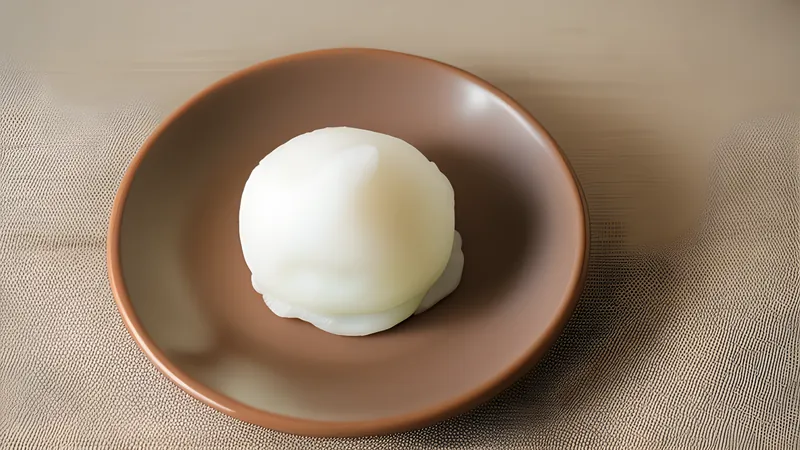
Taiyaki sit alongside dorayaki and daifuku as the three most common ways anko turns up in a Japanese sweet shop, each built around a different textural idea — taiyaki for the crisp-shell contrast, dorayaki for a soft pancake sandwich, daifuku for chewy pounded rice. If you’re building out a proper Japanese dessert spread, butter mochi with brown butter and coconut and a cup of properly whisked matcha round it out without repeating the same anko note twice in one sitting.
Related Content