Tacu Tacu: The Second Life of Rice and Beans
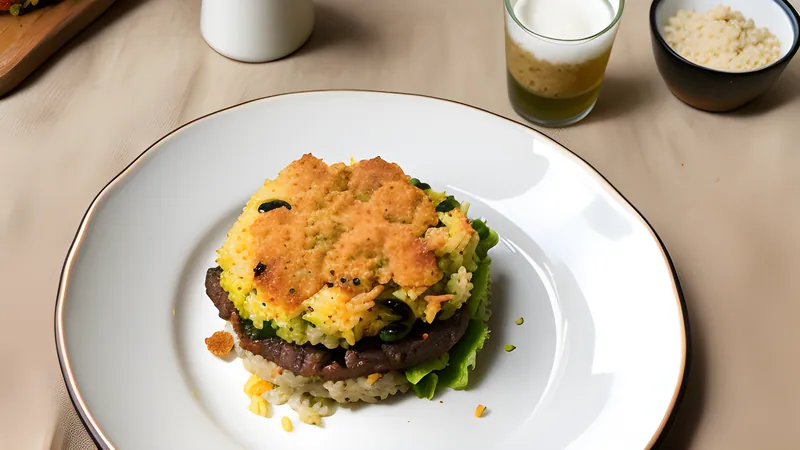
Peru's leftover rice cake, pan-fried crisp and topped with steak and a fried egg
Contents
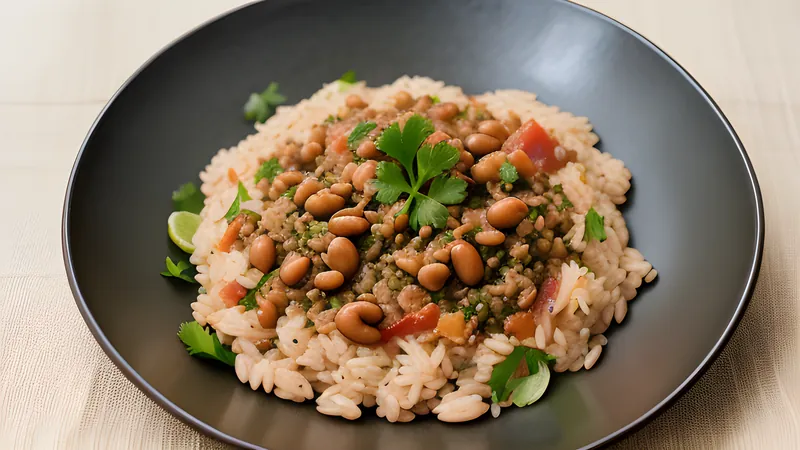
↓ Jump to recipeTacu tacu began as the answer to a question every cook eventually asks: what to do with the rice and beans left over from yesterday. Mashed together, packed into a firm patty and fried until a thick golden crust forms, the two leftovers become something better than either was the night before, crisp outside and creamy within. Piled with a seared steak, a fried egg and a sharp red-onion salsa, it turns a frugal habit into one of Lima’s most recognisable plates.
Tacu Tacu: The Second Life of Rice and Beans
Ingredients
- 500g cooked white rice, cold (ideally a day old)
- 400g tinned canary beans or pinto beans, drained, cooking liquid reserved
- 3 tbsp vegetable oil
- 1 tbsp achiote (annatto) oil, or 1 tsp smoked paprika stirred into 1 tbsp oil
- 1 onion, finely chopped, divided
- 3 garlic cloves, crushed
- 1 tbsp ají amarillo paste
- 4 sirloin or rump steaks (about 150g each)
- 4 eggs
- 1 red onion, thinly sliced
- Juice of 2 limes
- 1 tbsp chopped coriander
- 1 ripe plantain, sliced (optional, for frying)
- Salt and black pepper
Method
- Toss the sliced red onion with the lime juice and a pinch of salt, and set aside to pickle while you cook.
- Mash the drained beans roughly with a fork, loosening with a splash of their reserved liquid until thick and spreadable rather than smooth.
- Heat 1 tbsp of the vegetable oil in a wide pan and soften half the chopped onion for 4 minutes.
- Add the garlic and ají amarillo paste, and cook for 1 minute until fragrant.
- Stir in the mashed beans and cook for 3-4 minutes, stirring often, until the mixture dries out slightly and pulls away from the pan.
- Add the cold rice and the achiote oil, mixing thoroughly until every grain is coated and the mixture holds together when pressed.
- Season well with salt and pepper, then divide into four patties, pressing each firmly into a compact disc.
- Heat the remaining 2 tbsp oil in a non-stick pan over medium-high heat and fry each patty for 4-5 minutes a side, pressing gently with a spatula, until a deep golden crust forms on both sides.
- Meanwhile, season the steaks and fry or griddle for 2-3 minutes a side for medium, then rest for 5 minutes.
- Fry the eggs in a separate pan until the whites are set and the yolks still runny.
- Fry the plantain slices, if using, until caramelised at the edges.
- Plate each tacu tacu patty topped with a sliced steak, a fried egg, the pickled onion and a scattering of coriander.
The story
The name comes from Quechua, roughly translated as “mixed up” or “mixture”, and the dish traces back to the kitchens of enslaved and freed Africans in colonial Lima, who worked with whatever ingredients were left at the end of a household’s cooking. Rice and beans, staples across the criollo kitchen, were combined the following day into a fried cake rather than thrown away, a practical solution that turned into its own dish with its own following. That origin as frugal, resourceful cooking still shapes how tacu tacu is understood in Peru: it belongs to home cooking and cheap lunch counters as much as to any fine-dining plate, even as chefs have since dressed it up with steak, seafood or lomo saltado piled on top.
What separates a good tacu tacu from a mediocre one is almost entirely about the rice’s age and moisture. Fresh, warm rice turns to mush in the pan because the starch hasn’t had time to firm up; day-old rice, dried out slightly in the fridge overnight, holds its structure and lets the patty develop the crust that defines the dish. Peruvian cooks often use canary beans, small and pale yellow, for their creamy texture when mashed, though the dish adapts happily to whatever bean is on hand, which is very much in keeping with its origins as a way of using up whatever remained.
Lima’s version, topped with a fried egg and a piece of steak or a portion of lomo saltado, has become the most widely exported form of the dish, but tacu tacu also appears without any protein at all, served simply with fried plantain and salsa criolla as a lunch in its own right. Either way, the patty itself is the constant, and it’s worth getting that part right before worrying about the toppings.
Getting the crust right
The crust is the whole point, and it comes from two things working together: a hot enough pan and the discipline not to move the patty too soon. Press the mixture into a firm disc about 2cm thick, using slightly damp hands to stop the rice sticking, and lower it into oil that’s properly shimmering rather than lukewarm. Resist the urge to check the underside in the first two minutes; disturbing it before a crust has formed tears the patty apart and you lose the clean sear that makes the dish worth eating. Once it releases easily from the pan with a gentle nudge of the spatula, it’s ready to flip.
A wide, heavy non-stick or well-seasoned cast-iron pan makes this far easier than a flimsy one, since even heat across the base stops one side scorching while the other stays pale. If the patties feel like they might fall apart when you go to flip them, they need another minute or two on the first side to firm up further; a runny, poorly bound patty is nearly always a sign the bean-and-rice mixture wasn’t cooked down enough before shaping, so give that stage the full three to four minutes it needs to lose excess moisture.
Balancing the toppings
Tacu tacu is rich by design, dense with starch and fat, so the toppings need to cut through rather than add more weight. The pickled red onion, sharpened with lime and a little salt, is doing real work here: its acidity wakes up every other component on the plate, from the smoky beans to the runny egg yolk. Don’t skip the pickling step even if you’re short on time; five minutes in lime juice is enough to soften the onion’s bite while keeping its crunch, and it makes a genuine difference to how the finished plate tastes.
A runny egg yolk is traditional and worth defending against the temptation to overcook it for convenience, since it acts as an instant sauce once broken over the hot patty and steak. If you’re serving a crowd and don’t want to fry eggs to order, poach them in advance and reheat briefly in warm water just before plating; the texture holds up far better than eggs fried ahead and reheated in a pan. For those who want the full Lima experience, this pairs naturally with pollo a la brasa as a second course for a bigger spread, and the same rich, hangover-curing spirit runs through chupe de camarones, Arequipa’s answer to a heavy Sunday lunch.
The achiote question
Achiote oil, tinted deep orange-red by annatto seeds steeped in hot oil, is what gives a proper tacu tacu patty its warm colour and faint earthy sweetness, and it is worth making a small batch if you cook Peruvian or Caribbean food more than occasionally. Warm a few tablespoons of vegetable oil with a tablespoon of whole annatto seeds over low heat for five minutes, until the oil turns a rich orange, then strain out the seeds and store the oil in a jar; it keeps for weeks and turns up in everything from arroz con pollo to roast chicken marinades. Smoked paprika stirred into plain oil is a reasonable stand-in for colour and a hint of smokiness, though it will not carry quite the same faint bitterness that annatto brings.
Where the achiote goes matters as much as whether you use it. Stirred through the rice and beans right at the mixing stage, it colours the whole patty evenly rather than sitting as a surface glaze, so every bite carries the same warm tone rather than a patchy one. A little goes a long way: a full tablespoon of a strongly coloured oil can tip the whole dish towards a slightly bitter, overly orange result, so start with less and taste the raw mixture before committing to more.
Feeding a crowd
Tacu tacu scales up easily for a table of six or eight, since the mixing stage can be done well ahead and the frying happens in batches without much fuss. Keep the fried patties warm on a wire rack set over a tray in a low oven, around 90C, rather than stacking them on a plate, where trapped steam softens the crust you worked to build. Fry the steaks and eggs last, close to serving, since both lose their appeal quickly once they sit; a cold fried egg is one of the few genuine disappointments in this whole plate. If you are cooking for a mixed table with different tastes in spice, keep a small bowl of ají amarillo or rocoto sauce alongside so each diner can add heat to their own liking rather than baking it into a single batch meant to please everyone.
Substitutions, storage and make-ahead
Any leftover cooked rice works, though a firmer long-grain variety holds its shape better than a softer short-grain one once fried. Black beans or kidney beans stand in perfectly well for canary beans, and a vegetarian version, skipping the steak and doubling the fried plantain and a fried egg, is entirely traditional rather than a compromise. Ají amarillo paste, fruity and only moderately hot, is worth seeking out at a Latin American grocer, but a small spoonful of harissa or a mix of chilli flakes and a pinch of sugar gets close enough if you can’t find it.
The rice-and-bean mixture keeps well in the fridge for up to two days before frying, which makes tacu tacu a genuinely useful make-ahead dish for a midweek dinner built from a weekend’s leftovers. Shape and fry the patties fresh each time rather than storing them already cooked, since the crust turns soft and steamy if refrigerated and reheated. Steak and eggs, obviously, are best cooked to order, but you can have the patty mixture sitting ready in the fridge so the whole plate comes together in under fifteen minutes on a weeknight.
Related Content