Tacos Árabes: Puebla's Lebanese Inheritance
Spit-roasted pork on flatbread, decades before al pastor took the trompo
Contents
↓ Jump to recipeTacos al pastor gets the credit, but the technique arrived in Mexico by way of tacos árabes, and Puebla’s Lebanese community got there first by a couple of decades. Both dishes trace back to the same source — the vertical spit of shawarma and doner, brought to Mexico by Levantine immigrants in the early twentieth century — but where al pastor eventually swapped the flatbread for a corn tortilla and added achiote and pineapple to chase a more Mexican flavour profile, tacos árabes kept the original bread and a simpler, more Middle Eastern spice base. It’s the more direct descendant, and in Puebla it’s still treated as its own dish rather than a footnote to its more famous cousin.
Tacos Árabes: Puebla's Lebanese Inheritance
Ingredients
- 1kg pork shoulder, sliced into thin steaks
- 3 guajillo chiles, stemmed and seeded
- 2 ancho chiles, stemmed and seeded
- 3 garlic cloves
- 1/2 white onion, roughly chopped
- 60ml white vinegar
- 1 tsp dried oregano
- 1/2 tsp ground cumin
- 1/4 tsp ground cinnamon
- 1/4 tsp ground cloves
- 1 tbsp olive oil
- salt to taste, starting with 1.5 tsp
- 4 pan árabe flatbreads (or good pitta, split)
- For the chipotle salsa: 4 chipotle chiles in adobo
- 2 ripe tomatoes
- 1 garlic clove
- 1/2 tsp salt
- 1 tbsp lime juice
Method
- Toast the guajillo and ancho chiles in a dry pan for 30 seconds a side until pliable, then soak in hot water for 15 minutes.
- Blend the soaked chiles with garlic, onion, vinegar, oregano, cumin, cinnamon, cloves and 1 tsp salt until smooth.
- Coat the pork steaks in the marinade, cover, and refrigerate for at least 6 hours or overnight.
- Blend the chipotle chiles, tomatoes, garlic, salt and lime juice into a coarse salsa and set aside.
- Heat a heavy griddle or cast-iron pan until very hot, brush with oil, and cook the marinated pork steaks 3 to 4 minutes a side until charred at the edges and cooked through.
- Rest the pork for 5 minutes, then slice thinly against the grain.
- Warm the pan árabe or pitta directly on the hot griddle for 20 seconds a side until pliable and lightly charred.
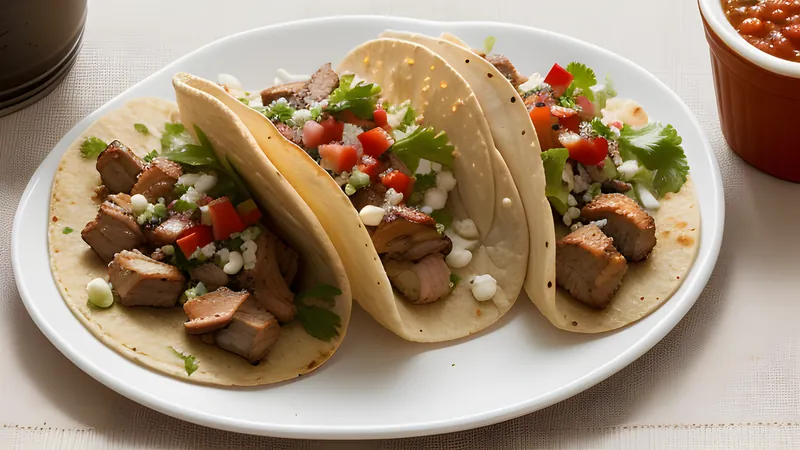
- Pile the sliced pork into the warmed bread, spoon over the chipotle salsa, fold, and serve immediately.
Immigration through a single port city
The wave of Lebanese and Syrian immigration into Mexico ran roughly from the 1880s through the 1930s, driven by economic hardship and, later, the collapse of Ottoman rule across the Levant. Many arrived carrying Ottoman travel documents, which is part of why Mexicans of Middle Eastern descent were broadly nicknamed “turcos” for generations regardless of whether their families were Lebanese, Syrian or Palestinian — a label that stuck around long after anyone understood or cared about the actual distinction.
Puebla became one of the largest settlement points outside Mexico City, and its Lebanese community brought the shawarma spit with them largely intact: thin-sliced meat, seasoned and stacked on a vertical rotisserie, shaved off in ribbons as the outer layer cooked. What they didn’t have access to, at least not at first, was the flatbread they’d have used at home — proper Levantine pita took specific ovens and techniques that weren’t readily available in early-twentieth-century Puebla. The workaround became pan árabe, a Mexican-baked flatbread developed specifically to fill that gap: closer to a thick pitta than a tortilla, sturdy enough to fold around sliced meat and salsa without tearing.
Where al pastor split off
The generally accepted story is that Mexican cooks working alongside or learning from these Lebanese immigrants adapted the spit technique using ingredients that were locally cheap and available — pineapple, achiote paste, dried chiles — and swapped the imported flatbread for corn tortillas, since tortillas were the everyday bread of the country these cooks were serving. That adaptation became tacos al pastor, which spread nationally and eventually internationally, while tacos árabes stayed comparatively local to Puebla and a handful of other cities with strong Lebanese-Mexican communities, like Mexico City’s Zona Rosa.
The flavour difference tells the story clearly if you make both back to back. Al pastor leans sweet and orange-red from achiote and pineapple; tacos árabes stay closer to a savoury, cumin-and-oregano spiced pork with a chipotle salsa doing the work that pineapple does in the other dish. Neither is a lesser version of the other — they diverged from the same root and kept developing on separate tracks for the better part of a century.
Two cities, two versions
Puebla isn’t the only place claiming tacos árabes, and the Mexico City version differs enough to cause genuine confusion if you order one expecting the other. Puebla’s version, the one this recipe follows, uses pan árabe and a chile-vinegar marinade closer to the original Lebanese seasoning the immigrants would have used at home. Mexico City’s version, associated with the Zona Rosa and Roma neighbourhoods where a later wave of Lebanese-Mexican families settled, more often uses a flour tortilla in place of pan árabe and leans on a simpler garlic-and-lemon marinade with less dried chile. Neither city considers the other’s version definitive, and asking a Puebla vendor about the Mexico City style is a reliable way to get a strong opinion delivered at length.
Chicken as a workable substitute
Pork shoulder is the traditional cut because its fat content keeps the meat from drying out under the intense heat of a spinning trompo or a hot griddle, but boneless chicken thigh takes the same marinade well if you want a lighter version. Marinate it for the same six to twelve hours, but reduce the sear to two to three minutes a side rather than the pork’s three to four, since thigh meat cooks through faster and turns rubbery if pushed past the point where it’s just cooked through. The chile marinade reads slightly differently against chicken’s milder flavour — a touch more oregano helps it stand up to the meat rather than getting lost.
Getting the spit flavour without a spit
Almost nobody has a vertical trompo at home, so the method here relies on thin-sliced pork steaks marinated and then seared hard on a screaming-hot griddle or cast-iron pan, which gets you most of the way to the charred, slightly crisp edges that a trompo produces as the outer meat cooks against direct heat. The key is slicing the pork thin before it goes into the marinade — steaks no more than a centimetre thick take on the chile marinade faster and cook through in the few minutes it takes to properly char the surface, mimicking the thin ribbons a trompo shaves off.
Marinating overnight matters more here than in most quick marinades, because the dried chile paste needs real time to penetrate past the surface of the meat; a couple of hours gets you flavour on the outside only, while six to twelve hours gets the vinegar and chile working through the whole cut.
Finding or making pan árabe
Proper pan árabe is a slightly thicker, chewier flatbread than standard pitta, baked without a full pocket so it folds rather than splits open. If you can’t find it at a Middle Eastern or Mexican grocer, good thick pitta bread is the closest widely available substitute — split it if it has a pocket, and warm it directly on the same hot griddle you used for the pork so it picks up a little char and stays pliable rather than going stiff and cracking when you fold it around the filling.
Building the marinade from what’s on hand
If guajillo chiles aren’t available, a mix of smoked paprika and a little extra vinegar gets you a workable approximation of the colour and mild heat, though you’ll lose some of the fruitier depth that dried guajillo carries. Ancho is the more forgiving of the two chiles to omit entirely if you’re short — the guajillo does most of the marinade’s colour and tang on its own. Whatever combination you use, the vinegar is doing real work tenderising the pork over the long marinating time, well beyond simply adding acidity, and a marinade made without it will leave the meat noticeably tougher after cooking.
The cumin and cinnamon in the marinade are the clearest fingerprint of the dish’s Levantine origin — that particular pairing, warm spice against vinegar-marinated meat, shows up across the eastern Mediterranean in exactly this combination, and it’s worth resisting the urge to swap in a more purely Mexican spice blend if you want the dish to taste like what it actually is rather than a chile-marinated pork taco with no connection to where the technique came from.
What tends to go wrong
The most common mistake is slicing the pork too thick, which means the outside chars past the point of pleasant bitterness before the inside is properly cooked through. A centimetre or less is the target; if your steaks are thicker, pound them slightly with the flat of a knife before marinating.
The second is skipping the rest after cooking. Pulling the pork straight off the griddle and slicing immediately lets all the juice run out onto the board rather than back into the meat — five minutes covered loosely with foil is enough for a thin steak to reabsorb most of what it would otherwise lose.
The third is a bread that’s gone stiff by the time it reaches the table. Pan árabe and pitta both firm up fast once they cool, so warm the bread last, right before assembly, and serve the tacos the moment they’re folded rather than plating them ahead and letting them sit.
Getting the char right on a home stove
A trompo cooks by radiant heat against a spinning vertical column of meat, browning the outer layer continuously as it turns past a gas flame. A flat griddle can’t replicate that motion, but you can get close to the same effect by not crowding the pan — cook the pork steaks in batches with space between them rather than all at once, since steaks touching each other steam instead of char, and a steamed edge never develops the slightly crisp, blistered texture that makes tacos árabes worth making at home rather than just buying from a stand. Cast iron holds heat better than a nonstick pan for this reason and is worth using if you have it.
Storage, make-ahead and variations
The marinade keeps in the fridge for up to a week on its own, so it’s worth doubling the batch and freezing half — either as a paste to use later or already coating a second batch of pork, ready to thaw and cook on a night you don’t want to start from scratch. Cooked, sliced pork keeps for three days refrigerated and reheats well in a hot dry pan for a couple of minutes, though it won’t regain quite the same char as fresh off the griddle.
Some Puebla vendors add a garlicky white sauce alongside the chipotle salsa, closer to the toum used with Levantine shawarma, which cuts the smoke of the chipotle with a cooling, sharp garlic note — worth trying if you want the dish to lean a little further towards its Lebanese roots. Others swap chipotle for a straightforward pico de gallo when chipotle in adobo isn’t on hand, which loses some smokiness but keeps the essential structure of charred meat, warm bread and fresh salsa intact.
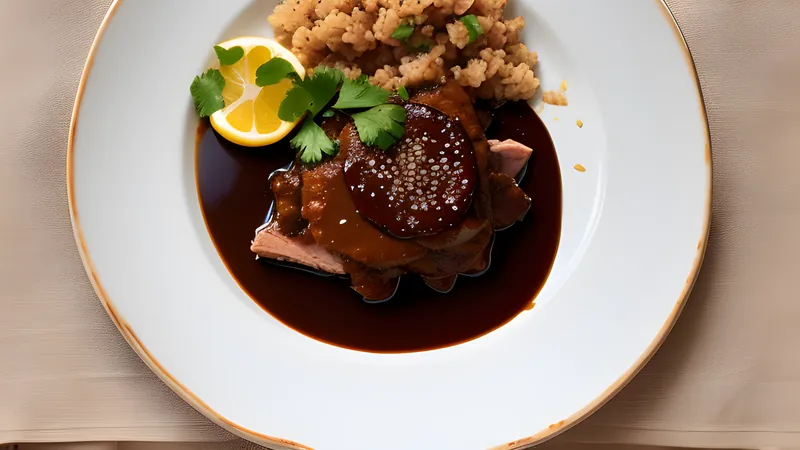
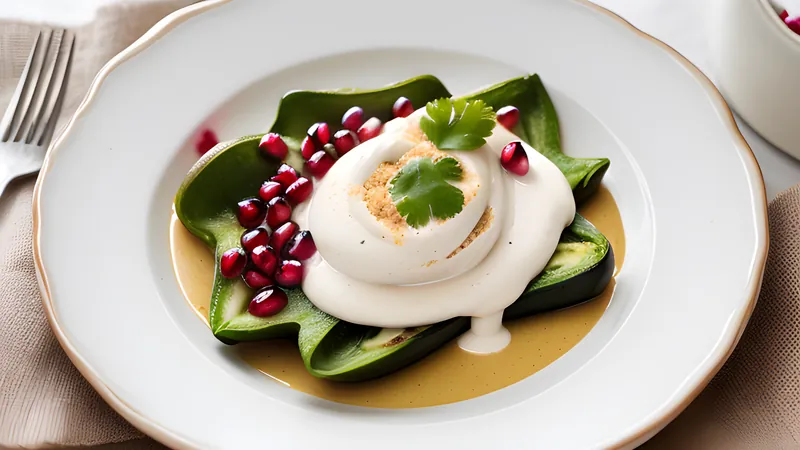
If Puebla’s layered food history interests you, our chiles en nogada piece covers the city’s convent-invented walnut sauce dish, and mole poblano traces the other great Puebla sauce built from a similarly long list of ingredients. Between the three, you get a fair cross-section of what four centuries of migration into one Mexican city actually tastes like.
Related Content