Tacos al Pastor with Pineapple and Achiote
Sweet, smoky and properly homemade
Contents
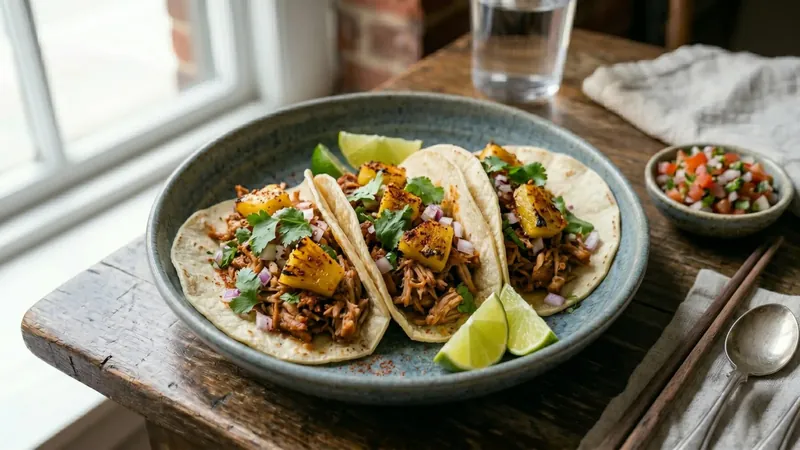
↓ Jump to recipeReal tacos al pastor are built around a spit you don’t have at home, so this version recreates the magic in a hot pan instead. A homemade marinade of guajillo chilli and earthy achiote stains the pork a deep red and lends its signature savoury warmth, while chunks of pineapple, caramelised until golden, bring the essential sweet-and-smoky counterpoint. Pile it into warm corn tortillas with onion, coriander and a squeeze of lime.
Tacos al Pastor with Pineapple and Achiote
Ingredients
- 800g pork shoulder, thinly sliced
- 3 dried guajillo chillies, stems and seeds removed
- 2 tbsp achiote (annatto) paste
- 3 garlic cloves
- 1 tsp dried oregano
- 1 tsp ground cumin
- 2 tbsp cider vinegar
- 2 tbsp pineapple juice
- 1 tbsp olive oil
- 1 tsp salt
- 300g fresh pineapple, cut into thick rings
- 12 small corn tortillas, to serve
- 1 small white onion, finely chopped, to serve
- Small bunch of coriander, chopped, to serve
- Lime wedges, to serve
Method
- Soak the dried guajillo chillies in just-boiled water for 15 minutes until soft, then drain.
- Blend the soaked chillies with the achiote paste, garlic, oregano, cumin, vinegar, pineapple juice, oil and salt into a smooth marinade.
- Coat the sliced pork thoroughly in the marinade and leave to sit for at least 30 minutes, or overnight in the fridge.
- Heat a heavy frying pan or griddle until very hot. Cook the pork in batches for 3-4 minutes per side until charred at the edges and cooked through.
- Rest the cooked pork briefly, then chop into small pieces.
- Grill or fry the pineapple rings for 2-3 minutes per side until caramelised and golden, then chop into small chunks.
- Warm the corn tortillas in a dry pan until soft and pliable.
- Pile the chopped pork onto the tortillas and top with the caramelised pineapple.
- Finish with chopped white onion and coriander, and serve with lime wedges to squeeze over.
The Story
Tacos al pastor are one of Mexico City’s most recognisable street foods, and their story is a tale of migration and adaptation. The name means “shepherd style”, and the technique behind them arrived with Lebanese immigrants who settled in Mexico in the late nineteenth and early twentieth centuries, particularly in Puebla. They brought shawarma: spiced lamb stacked on a vertical rotisserie and shaved off as the outside cooked. Their early Mexican version, sometimes called tacos árabes and still sold in Puebla on pita-like bread, kept the lamb. Over the 1960s Mexico City cooks reworked the idea for local tastes, swapping the lamb for pork, the flatbread for corn tortillas, and the Middle Eastern spicing for a marinade built on dried chillies and achiote. That hybrid became al pastor.
The vertical spit on which the meat cooks is called a trompo, Spanish for spinning top. Thin slices of marinated pork are stacked into a tall cone against a gas flame, and a pineapple is usually perched on top, dripping its juice down as the outer layer crisps and chars. The taquero shaves the meat straight into a small tortilla with a long knife, often flicking a slice of charred pineapple off the top of the trompo in the same motion, sometimes catching it mid-air. No home kitchen has that kit, so this recipe trades the spit for a very hot pan. You lose the theatre but keep the flavours: the deep marinade, the char, the sweet fruit against the savoury pork.
The colour and much of the character come from achiote, a paste built around annatto seeds. Those hard little brick-red seeds are ground and blended with garlic, oregano, cumin, vinegar and other spices into a firm block. They give the meat its distinctive rust-red hue and an earthy, peppery, faintly resinous flavour that runs through the cooking of the Yucatán and southern Mexico, most famously in cochinita pibil. Achiote paste is sold in blocks in Latin American shops and increasingly in larger supermarkets; a block keeps for months in the fridge. Guajillo chillies, the dried form of the mirasol chilli, are fruity and mild rather than fiercely hot, with a raisiny, faintly tannic warmth that gives the marinade its backbone. Seeding them keeps the bitterness down, and a fifteen-minute soak in just-boiled water softens them enough to blend smooth.
Pineapple here is not a garnish but a defining flavour, and there is real chemistry behind the pairing. Fresh pineapple contains bromelain, an enzyme that breaks down protein, so a short contact with the marinating pork helps tenderise it (which is one reason the fruit sits on top of the trompo in the first place). Caramelising the rings in a hot pan drives off water, concentrates the sugars and adds a smoky, slightly bitter edge from the browning. That sweet-sharp fruit cutting through rich, spiced pork is the heart of what makes al pastor so moreish, the same balancing act that makes sweet-and-sour dishes work the world over.
Getting it right at home
A few things make all the difference. Buy pork shoulder rather than loin: the fat and connective tissue keep it juicy under fierce heat, whereas leaner cuts dry out and toughen. Slice it thinly, no more than about 5mm, so it cooks quickly and crisps at the edges instead of stewing. Marinate for at least 30 minutes, but overnight is far better; the acid in the vinegar and pineapple juice and the enzymes in the fruit have time to work, and the achiote penetrates rather than just coating the surface. Do not marinate for more than about a day, though, or the enzyme action can turn the surface mushy.
Heat is the other half of the job. Get a heavy frying pan, griddle or cast-iron skillet properly hot before the pork goes anywhere near it, and cook in batches. Crowd the pan and the meat sheds its liquid, drops the temperature and steams grey rather than searing. You want dark, caramelised edges, so leave each batch undisturbed for a couple of minutes before turning. Chop the cooked pork small once it has rested; the classic al pastor texture is fine, well-charred pieces, not big slabs.
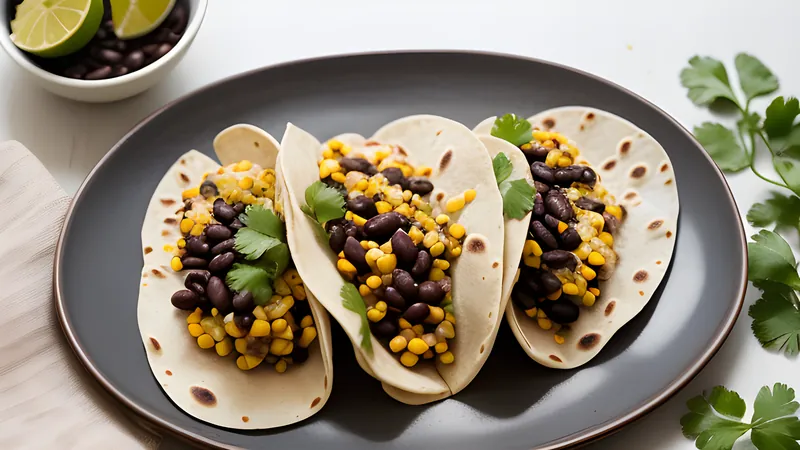
Warm the corn tortillas properly, either in a dry pan for 15 to 20 seconds a side or directly over a gas flame until they blister and go pliable. Cold tortillas crack and taste of cardboard. If yours are thin or fragile, double them up, which is standard on the street anyway. Then keep the toppings restrained: finely chopped raw white onion for bite, plenty of fresh coriander, and a hard squeeze of lime. That acid and freshness is what lifts the whole thing, so do not skip it. A little salsa verde or a smear of the lime crema from my black bean tacos is welcome, but the pork, pineapple, onion and lime are the essential four.
Substitutions, storage and variations
No achiote paste? You can approximate the colour and earthiness with a tablespoon of smoked paprika plus a pinch of ground turmeric, though the flavour will be rounder and less distinctive. Guajillos can be swapped for the slightly hotter, more chocolatey ancho, or a mix of the two; for more heat, add a single dried chipotle to the soak, which brings smoke as well as fire. If you cannot find fresh pineapple, tinned rings drained and patted dry will still caramelise, just watch them closely as the added syrup catches and burns fast. For a chicken version, use thigh fillets sliced thin, and for a vegetarian one, thick slabs of firm mushroom or cauliflower take the marinade well and char beautifully.
A note on the tortillas themselves: corn, not flour, is the traditional and, to my mind, correct choice, small ones about 10 to 12cm across, doubled up. Two small tacos with a modest pile of filling beat one overloaded giant every time, because the ratio of char, fat, fruit and lime stays in balance in each bite. Serve them with wedges of lime, a bowl of salsa verde or a smoky chipotle salsa, and cold beer or an agua fresca. Set everything out and let people build their own; three or four tacos a person is a generous plateful.
The marinated raw pork freezes well for up to three months, so it is worth marinating a double batch and freezing half flat in a bag; defrost fully before cooking. Cooked leftovers keep for three days in the fridge and reheat best in a hot dry pan to re-crisp the edges rather than in the microwave, which makes them soggy. Any spare chopped pork is excellent folded into quesadillas, piled onto nachos, or stirred through rice.
For a smokier result, finish the seared pork under a hot grill for a minute to mimic the trompo’s char, or cook it over coals if you have a barbecue lit. If you eat more beans than pork on a weeknight, the same onion-coriander-lime finish works beautifully over the black bean tacos, and for a full Mexican spread these sit happily alongside a tray of chicken enchiladas in red chilli sauce. Whichever way you go, the golden rule holds: hot pan, thin pork, charred pineapple, and don’t be shy with the lime.
Related Content