Swedish Cardamom Buns (Kardemummabullar)
knotted, sugar-crusted buns that smell of a Stockholm bakery
Contents
↓ Jump to recipeIf you have ever walked into a Swedish bakery, you will recognise the smell before you see anything: warm, sweet, and unmistakably perfumed with cardamom. It is the scent of fika, that sacred Swedish institution of stopping everything for coffee and something baked. For a long time I was a cinnamon bun loyalist, but one trip and one paper bag of kardemummabullar later, I switched sides completely. The cinnamon bun is comforting; the cardamom bun is sophisticated, floral, almost grown-up, and now it is the one I make when I want the house to smell like somewhere I would rather be.
Swedish Cardamom Buns (Kardemummabullar)
Ingredients
- 500 g (4 cups) strong white bread flour
- 80 g (⅓ cup) caster sugar
- 7 g (1 sachet) fast-action dried yeast
- 1 tsp fine salt
- 2 tsp freshly ground cardamom, plus extra for the filling
- 250 ml (1 cup) warm whole milk
- 80 g (⅓ cup) unsalted butter, softened, for the dough
- 1 egg, for the dough
- 100 g (7 tbsp) unsalted butter, very soft, for the filling
- 70 g (⅓ cup) soft light brown sugar, for the filling
- 2 tsp ground cardamom, for the filling
- 1 egg, beaten, to glaze
- 2 tbsp pearl sugar and extra ground cardamom, to finish
Method
- Mix flour, sugar, yeast, salt and cardamom. Warm the milk, then add it with the softened butter and egg to form a soft dough.
- Knead 10 minutes until smooth and elastic. Cover and prove 1 hour until doubled.
- Mix the filling butter, brown sugar and cardamom into a soft paste.
- Roll the dough into a 40 x 50 cm rectangle. Spread the filling evenly, then fold in three like a letter.
- Cut the folded dough into 12 long strips. Stretch each gently, then twist and knot around two fingers, tucking the end underneath.
- Place on lined trays, cover and prove 45 minutes until puffy.
- Glaze with beaten egg and bake at 220°C (200°C fan) for 12–15 minutes until golden.
- Brush the hot buns with a little syrup or melted butter, then scatter with pearl sugar and a dusting of cardamom.
Fika and the cult of the bun
Fika is not just a coffee break, it is a small daily ritual of pausing and being a bit civilised about it, and the bun is its constant companion. Swedes take their bullar seriously, to the point that there is a national Cinnamon Bun Day, Kanelbullens dag, on 4 October, instituted in 1999 by the Home Baking Council, Hembakningsrådet, to mark its fortieth anniversary. The date was chosen deliberately to avoid clashing with the semla, the cream-filled bun eaten around Shrove Tuesday, which tells you how carefully the Swedish baking calendar is guarded.
The cardamom bun is the slightly more refined cousin of the cinnamon roll, beloved by bakers who want the spice to do the talking. It is built on exactly the same enriched, milky dough, but where a cinnamon bun leans on sugar and cinnamon in the filling alone, cardamom runs through every layer here, the dough, the filling and the topping, so the flavour is deep rather than incidental. If you want to compare the two side by side, my cardamom cinnamon rolls sit exactly between the two traditions.
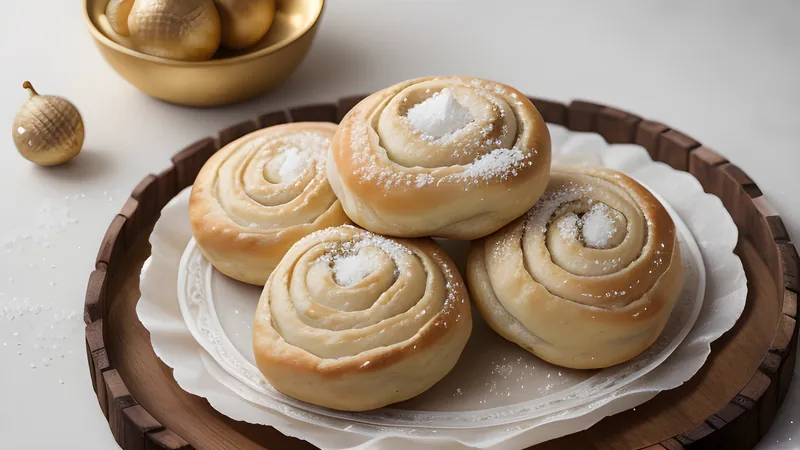
The knotted shape is part of the charm and part of the point. Those twists and folds create surfaces that catch the sugar and bake into crisp, caramelised edges, while the middle stays soft. They look impressive and complicated. They are not.
A note on the dough
This is a classic enriched bread dough, meaning it carries a good amount of butter, sugar and egg alongside the flour, milk and yeast. Those enrichments make for a soft, tender, cake-like crumb, but they also slow the yeast down, because fat coats the flour proteins and sugar competes with the yeast for water. That is why the proves here take a little longer than a plain white loaf, and why patience matters more than usual. Use strong white bread flour rather than plain: its higher protein content builds the gluten network that lets the dough stretch thin enough to knot without tearing.
Warm the milk to no hotter than blood temperature, around 37C, before adding it. Too hot and you risk killing the yeast; too cold and the first prove will crawl. If your kitchen is cold, an oven warmed for a minute and then switched off makes a reliable proving spot.
The twist: cardamom three ways, freshly ground
Cardamom is the whole personality of this bun, so it is worth treating well. My one strong piece of advice is to grind your own. Cardamom loses its fragrance fast once ground, and the pre-ground stuff in jars is a pale ghost of the real thing. Buy green pods, crack them open, and grind the little black seeds in a pestle and mortar or a spice grinder. The difference is night and day: vivid, citrusy, almost piny, with a warmth that fills the kitchen.
I layer it in three places. Into the dough itself, so the base flavour is built in. Into the buttery filling, where it goes rich and almost savoury against the brown sugar. And finally a dusting over the top, hitting you the moment you bite in. This is the same logic I use with garlic in savoury cooking, hit the dish at more than one stage and the flavour feels rounded instead of one-note. Three modest additions of fresh cardamom beat one heavy-handed shake of stale powder every time.
Green cardamom is the sort to buy, not the smoky black cardamom used in savoury Indian cooking, which is a different spice entirely and would be wrong here. You need roughly the seeds of fifteen to twenty green pods to yield the two teaspoons of ground cardamom the dough and topping call for, plus more for the filling; it is worth grinding a slightly larger batch at once and keeping the surplus in a small sealed jar for the days that follow, when you will want more buns. Discard the papery green husks after grinding, or grind the whole pod and sieve out the fibrous bits, whichever you find easier.
The fold-and-knot method
The filling here is not rolled up like a Chelsea bun. Instead you spread it across the rolled-out dough and fold the whole sheet into thirds, like a letter, creating layers. Then you slice the folded dough into strips, and each strip gets twisted and knotted. The technique sounds fiddly written down, but in the hand it is quick: stretch a strip a little, wind it around two fingers a couple of times, and tuck the loose end underneath. Even your wonky first attempts will bake up looking handsome, because the dough puffs and the imperfections turn into character.
Keep the dough soft and well kneaded so it is stretchy enough to twist without tearing. If a knot looks a mess, just press it back together; once proved and baked, nobody will know.
The reason for folding rather than rolling is worth understanding, because it changes the eating. A rolled bun, spiral-style, gives you one long coil of filling and a soft, almost gooey centre. The folded-and-knotted method distributes thinner seams of butter and sugar throughout the bun, so instead of a single sweet core you get cardamom running through every twist, with more of those craggy, caramelised surfaces exposed to the heat. It is a bun engineered for flavour and texture in every bite rather than one rich middle. Work reasonably quickly once the dough is rolled out and filled, too, as very soft butter left to sit will start to soak in and make the dough greasy and hard to handle; if your kitchen is warm, chill the filled sheet for ten minutes before cutting and shaping.
Glaze, prove, and patience
Two proves matter here. The first builds flavour and structure in the bulk dough; the second, after shaping, gives the buns their light, tender crumb. Do not rush either, especially the second, because under-proved buns bake up dense and tight.
The finishing touches make them. An egg glaze, brushed on before baking, gives a glossy, deep-golden crust as the proteins and sugars in the egg brown in the heat; brush it evenly but sparingly so it does not pool and stick the buns to the tray. A brush of syrup or melted butter the moment they leave the oven, while they are still hot enough to drink it in, keeps them moist and helps the pearl sugar stick. A simple syrup of equal parts sugar and water, briefly boiled and cooled a little, is traditional and gives the faint, tacky sheen you see on bakery buns. Pearl sugar, those little white nuggets that do not melt, gives the classic crunchy bakery finish, and a last whisper of ground cardamom over the top is the difference between good and properly authentic.
Storage and what goes wrong
Enriched buns like these stale faster than lean bread, because the sugar and butter that make them tender also mean they dry out once cut. Eat them the day they are baked if you can. To keep them longer, freeze them the moment they are cool, sealed in a bag, for up to two months; a frozen bun revives beautifully with thirty seconds in the microwave or a few minutes in a warm oven, far better than one left in a tin for three days.
Two faults account for most disappointing batches. Dense, heavy buns are almost always under-proved, so give that second prove its full forty-five minutes and look for buns that are visibly puffy and spring back slowly when pressed. Pale, doughy centres mean the oven was not hot enough or the buns were crowded, so bake at a genuine 220C (200C fan) with space between them. And if the cardamom flavour is faint despite a generous quantity, the culprit is stale pre-ground powder rather than the recipe, which brings me back to the one rule that matters most: grind it yourself.
For more of this fresh-cardamom obsession in a completely different, chewier format, my cardamom and white chocolate snickerdoodles put the same spice to work in a biscuit.
Eat them warm, with strong coffee, ideally with no plans for the next twenty minutes. Make a batch on a grey Sunday, put the kettle on, and call it fika. Your kitchen will smell, for hours, exactly like the best bakery you have ever been in.
Related Content